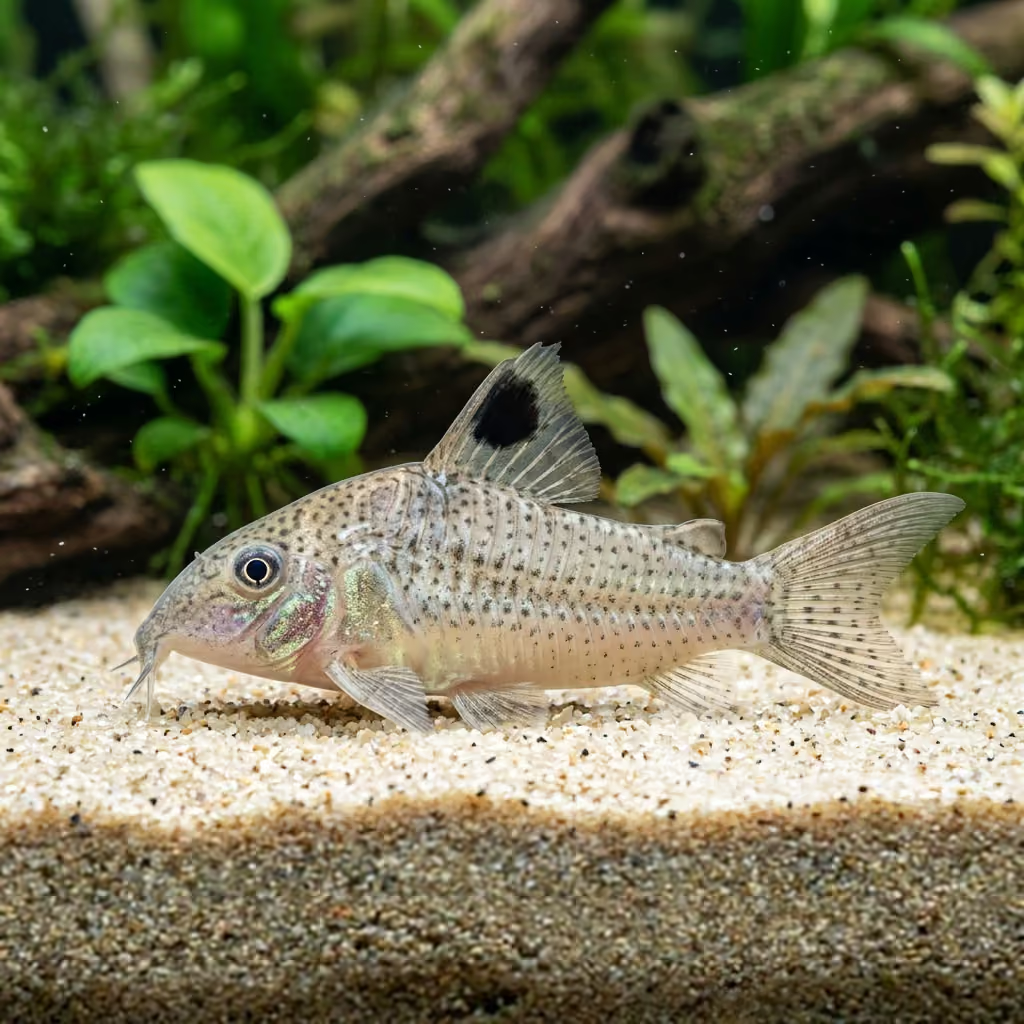
Madagascar Rainbowfish
Bedotia geayi
The Madagascar Rainbowfish is an elegant, stream-dwelling species. Active and peaceful, it requires a long aquarium with clear, oxygenated water and moderate flow for open swimming.
Water Temperature
22 - 26 °C
pH Value
6.5 - 8
Water type
Freshwater
Tank level
Surface and middle
Adult size
9 cm
Minimum tank volume
>= 100 L
Minimum group
>= 1
GH
8 - 15 dGH
KH
4 - 7 dKH
TDS
160 - 295 ppm
Conductivity
250 - 461 uS/cm

Species description
Geographical Origin and Habitat: Endemic to eastern Madagascar (Mananjary river). Inhabits mountain streams shaded by forests, characterized by clear, highly oxygenated waters with a moderate current, flowing over pebble and sand bottoms.
Taxonomy and Morphology: Madagascar Rainbowfish (Bedotia geayi / ex B. madagascariensis). An atypical Rainbowfish. The body is tapered and cylindrical (not high and compressed like Australian Melanotaenia), with a conspicuous second dorsal fin shifted towards the tail.
Social Behavior: Extremely peaceful but hyperactive. It is an obligate "schooling fish": it must live in groups of at least 6-8 specimens. The school is compact and tirelessly patrols the middle and upper levels of the aquarium in an endless swim.
Coloration and Sexual Dimorphism: Pale gray-golden body crossed by a thick horizontal black band. The magic is in the fins: dominant males sport fiery red or bright orange margins on the dorsal and caudal fins (which often end with intense red spots). Females have transparent fins.

Care, breeding and tankmates
Aquarium Setup: Requires very long aquariums (min. 100 cm / 40 inches). Needs a vast open space for swimming in the center and on the surface. On the sides, groves of plants and blunt river rocks with a moderate pump flow to simulate the stream.
Diet and Feeding: Omnivore (Micro-predator). In nature it consumes insects fallen on the surface. In the tank it accepts protein flakes, floating or freeze-dried bloodworms, and minute krill. It struggles to feed from the bottom due to the terminal-superior mouth.
Water Quality: Tolerates well medium-hard tap water (GH 8-15) and neutral to slightly alkaline pH. Excellent water quality and very strong oxygenation are fundamental (appreciates a thermal drop of 2°C / 4°F during the night).
Compatibility and Cohabitation: The perfect companion for endemic Madagascar Cichlids or for lively communities with Danios, large peaceful Barbs and Loricariids. It does not nip, but its frantic back-and-forth will exhaust slow or shy fish (e.g. Angelfish and Gouramis).
Aquarium Breeding: Relatively simple (Plant egg-scatterer). They lay large eggs daily equipped with adhesive filaments that hook onto mosses or acrylic wool mops. If well fed, parents do not prey on the eggs or young.
Risks and Diseases: Imminent extinction in nature due to deforestation in Madagascar; it is kept alive only by the aquarium hobby. Very sensitive to impact injuries: tanks that are too short cause them to crash into the side glass.

Geographic origin and distribution
Endemic to eastern Madagascar (Mananjary river). Inhabits mountain streams shaded by forests, characterized by clear, highly oxygenated waters with a moderate current, flowing over pebble and sand bottoms.
Origin
Tropical oceans and reefsAfrica and MadagascarAustralia, New Guinea, and Oceania

Fish profile
- Temperament
- Semi-aggressive
- Bedotia geayi is a peaceful but highly active and energetic fish that displays strong schooling behavior. While they do not show aggression toward other species, their constant and fast-paced swimming can startle shy or slow-moving tankmates. They spend the day swimming together in a coordinated group, displaying beautiful colors and dynamic social interactions.
- Diet
- Omnivore
- This species is omnivorous and will readily accept a wide variety of prepared foods in the aquarium. Their diet should consist of high-quality floating flakes or micro-pellets, supplemented regularly with live or frozen foods such as daphnia, brine shrimp, and bloodworms. They feed mostly at the surface or midwater, and generally ignore food that sinks to the bottom.
- Life expectancy
- 5-10 years
- Adult size
- 9 cm
- Sex ratio
- Group
- This species should always be kept in schools of at least 6 to 8 individuals to encourage natural behavior and reduce stress. A sex ratio of one male to two females is highly recommended to disperse the attention of courting males. Keeping multiple males is possible in larger setups, where they will display vibrant coloration during harmless competitive sparring.
- Feeding frequency
- Twice daily
- It is recommended to feed Bedotia geayi two to three times daily in small portions that can be consumed within a couple of minutes. Because of their fast metabolism and continuous swimming activity, frequent small meals are ideal for keeping them healthy. Ensure that most of the food is eaten quickly to prevent it from sinking to the substrate and spoiling the water.
- Bioload
- Medium
- Bedotia geayi produces a medium bioload due to its active shoaling lifestyle and relatively large size for a community tank, reaching up to 10 cm. A robust filtration system is essential to keep the water highly oxygenated and free of organic waste, as they are sensitive to elevated nitrates. Regular partial water changes and moderate water flow are recommended to maintain pristine conditions.
- Flow
- Stagnant
- Originating from the clear, flowing rivers and streams of Madagascar, this species prefers moderate to strong water flow. Active water movement stimulates their natural behavior of swimming against the current and helps maintain high oxygen levels. It is advisable to position filter outlets to create a noticeable current, while still leaving some quiet areas for resting.
- Jump risk
- Yes
- This species poses a high risk of jumping out of the aquarium, particularly when startled, during active courtship, or during feeding frenzies. A tight-fitting lid or cover slides are absolutely mandatory to prevent accidental escapes. Adding floating vegetation can also provide shade and security, reducing their tendency to jump when spooked.
- Reproduction
- Oviparous
- Breeding in captivity is considered moderately difficult and is similar to other rainbowfishes. They are egg scatterers that deposit their eggs among fine-leaved plants, such as Java moss, or artificial spawning mops. They display no parental care and will consume their own eggs, requiring the removal of the parents after spawning to protect the fry.
- Compatibility & tankmates
- Peaceful
- Bedotia geayi is an excellent candidate for community aquariums housing active, peaceful tankmates of a similar size, such as other rainbowfish, active tetras, or medium barbs. Shy, slow-moving, or long-finned fish should be avoided, as the energetic swimming behavior of the Bedotia can induce stress. Tiny shrimp or small fry may be viewed as food and preyed upon.
- Tank level
- Top/Middle
- Bedotia geayi is an exceptionally active swimmer that primarily occupies the middle and upper levels of the aquarium. They spend most of their time cruising the open water columns near the surface in search of food. It is vital to provide ample open swimming space in these zones, ensuring they are not overly obstructed by tall decorations or dense vegetation.

Scientific Parameters & Models
FishBase
Window to the official scientific data of the species
FishBase v25.04Data synced on: 06/15/2026
- Trophic level
- 2.7 ± 0.3 se
- Phylogenetic uniqueness (PD50)
- 0.502
- Bayesian Length-Weight
- a = 0.00389, b = 3.12
- VulnerabilityLow vulnerability (10 / 100)

Related species
Recommendations grouped by close relatives, companion choices, and similar care.