Demasoni Cichlid (Chindongo)
Chindongo demasoni
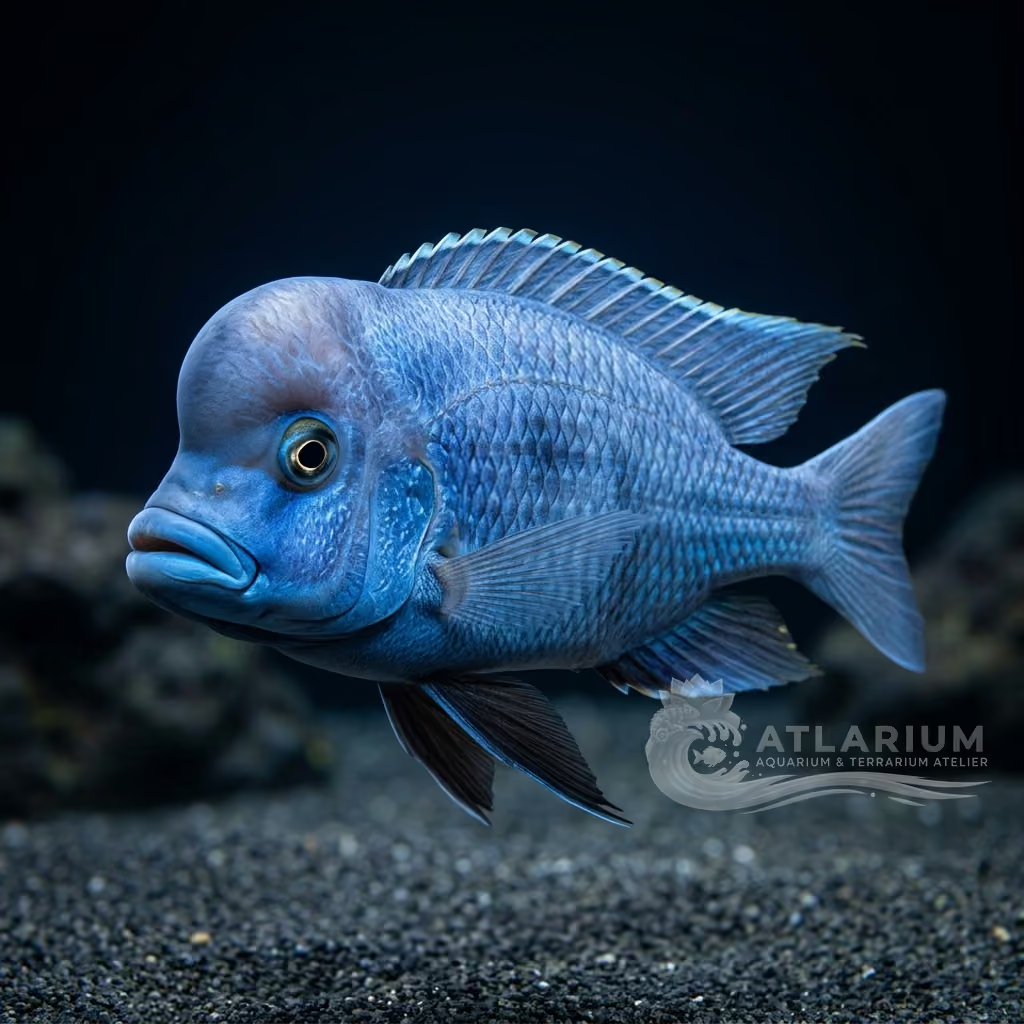
Splendid dwarf Malawi Mbuna (8 cm). Famous for its bright dark blue and electric blue zebra livery. Small, herbivorous, but of intolerant and brutal aggression towards its own kind if not in a large group.
Water Temperature
24 - 28 °C
pH Value
7.8 - 8.6
Water type
Freshwater
Tank level
Bottom
Adult size
8 cm
Minimum tank volume
>= 100 L
Minimum group
>= 1
GH
10 - 25 dGH
KH
5 - 12 dKH
TDS
200 - 495 ppm
Conductivity
313 - 773 uS/cm

Species description
Geographical Origin and Habitat: Endemic to Lake Malawi (Africa), located exclusively near the rocky reefs of Pombo Rocks (Tanzania). Swims in shallow, high-turbulence waters.
Taxonomy and Morphology: Demasoni Cichlid (Chindongo demasoni). Formerly known as Chindongo demasoni, it is a dwarf "Mbuna" cichlid that does not exceed 7-8 cm (3 inches) in length. Compact profile and flattened snout.
Social Behavior: EXTREMELY aggressive, fierce territorial defender. Tends to furiously attack conspecifics and any fish with a blue/black livery. MUST BE KEPT IN COLONIES of 12+ individuals to dilute the violence or they will kill each other.
Coloration and Sexual Dimorphism: Alternating vertical stripes of bright blue and dark navy blue almost black. Wonderful and unmistakable. The two sexes are indistinguishable (monomorphic); even submissive males fade to escape the attacks of the alpha.

Care, breeding and tankmates
Aquarium Setup: At least 100-120 cm (40-48 inches). Controlled overcrowding and massive rock barrier (piles of stones up to the surface) indispensable. The numerous dens allow submissive specimens or incubating females to save themselves.
Diet and Feeding: Strictly herbivorous ("Mbuna" means "rock hitter"). In nature it scrapes the algal cover ("Aufwuchs"). In the aquarium it needs flakes of only spirulina and vegetables. ANIMAL PROTEINS KILL IT.
Water Quality: Hard and alkaline water (pH 7.8-8.6, high GH). Exaggerated biological filtration is a must to manage the organic load of the overcrowding required by this species.
Compatibility and Cohabitation: Can only be paired with other non-blue and non-vertically striped Mbuna (e.g. yellow Labidochromis caeruleus), of similar temperament. Avoid peaceful Aulonocara or any normal river fish.
Aquarium Breeding: Prolific maternal mouthbrooder. The male attracts the female into a crevice with crazy vibrations. The female will hold the eggs in her mouth without eating for 3 weeks.
Risks and Diseases: "Malawi Bloat" is the #1 plague: caused by an elongated intestine blocked by incorrect food (e.g. bloodworms, discus food) or severe stress. Often fatal in 48 hours.

Geographic origin and distribution
Endemic to Lake Malawi (Africa), located exclusively near the rocky reefs of Pombo Rocks (Tanzania). Swims in shallow, high-turbulence waters.
Origin
Africa and Madagascar

Fish profile
- Temperament
- Semi-aggressive
- Demasoni cichlids are known for their extreme territoriality and aggressive temperament. They fiercely defend their chosen rocky crevices against almost any intruder. Careful monitoring is required to ensure weaker individuals are not harassed to death.
- Diet
- Omnivore
- They are strict herbivores that graze on algae covering rocks in the wild. Their diet must consist primarily of high-quality spirulina flakes or algae wafers. Avoid protein-heavy meaty foods to prevent severe digestive issues like Malawi bloat.
- Life expectancy
- 8-10 years
- Adult size
- 8 cm
- Sex ratio
- Group
- A large group with a ratio of one male to three or more females is ideal. Alternatively, keeping a large colony of twelve or more individuals disperses aggression. It is impossible to sex them visually, so buying a large group of juveniles is best.
- Feeding frequency
- Twice daily
- Feed them small portions two to three times a day. Careful observation during feeding ensures all fish get adequate nutrition despite tank hierarchy. Overfeeding must be avoided strictly to maintain optimal digestive health.
- Bioload
- Low to Medium
- This cichlid produces a moderate bioload typical for Mbuna species. Strong filtration is necessary to process their waste efficiently. Frequent water changes are vital to keep nitrate levels low.
- Flow
- Stagnant
- They inhabit rocky shorelines where wave action creates moderate to strong water movement. Providing robust water flow helps recreate their natural Lake Malawi environment. Powerful circulation also promotes superior oxygen exchange in the aquarium.
- Jump risk
- Yes
- Like many energetic cichlids, they can jump if frightened or chased violently. A secure tank lid is absolutely necessary to prevent tragic accidents. Make sure all equipment cutouts are properly covered or minimized.
- Reproduction
- Oviparous
- They are maternal mouthbrooders that breed readily in captivity. The female will hold the fertilized eggs in her mouth for about three weeks. Once the fry are released, they are independent and require very small foods.
- Compatibility & tankmates
- Semi-aggressive
- They are highly aggressive and should only be housed with other robust Mbuna cichlids. Never keep them with peaceful community fish or similarly colored blue striped fish. Overcrowding the tank slightly can help disperse their intense territorial aggression.
- Tank level
- Bottom
- They primarily occupy the middle and lower levels of the aquarium near rocky structures. They need elaborate rockwork with numerous caves and crevices for claiming territories. Open water swimming is relatively rare compared to rock-grazing activities.

Scientific Parameters & Models
FishBase
Window to the official scientific data of the species
FishBase v25.04Data synced on: 06/15/2026
- Trophic level
- 2.6 ± 0.3 se
- Resilience
- High (less than 15 months)
- Phylogenetic uniqueness (PD50)
- 0.5005
- Bayesian Length-Weight
- a = 0.00389, b = 3.12
- VulnerabilityLow vulnerability (10 / 100)

Related species
Recommendations grouped by close relatives, companion choices, and similar care.