Afra Cichlid (Dogtooth Cichlid)
Cynotilapia afra
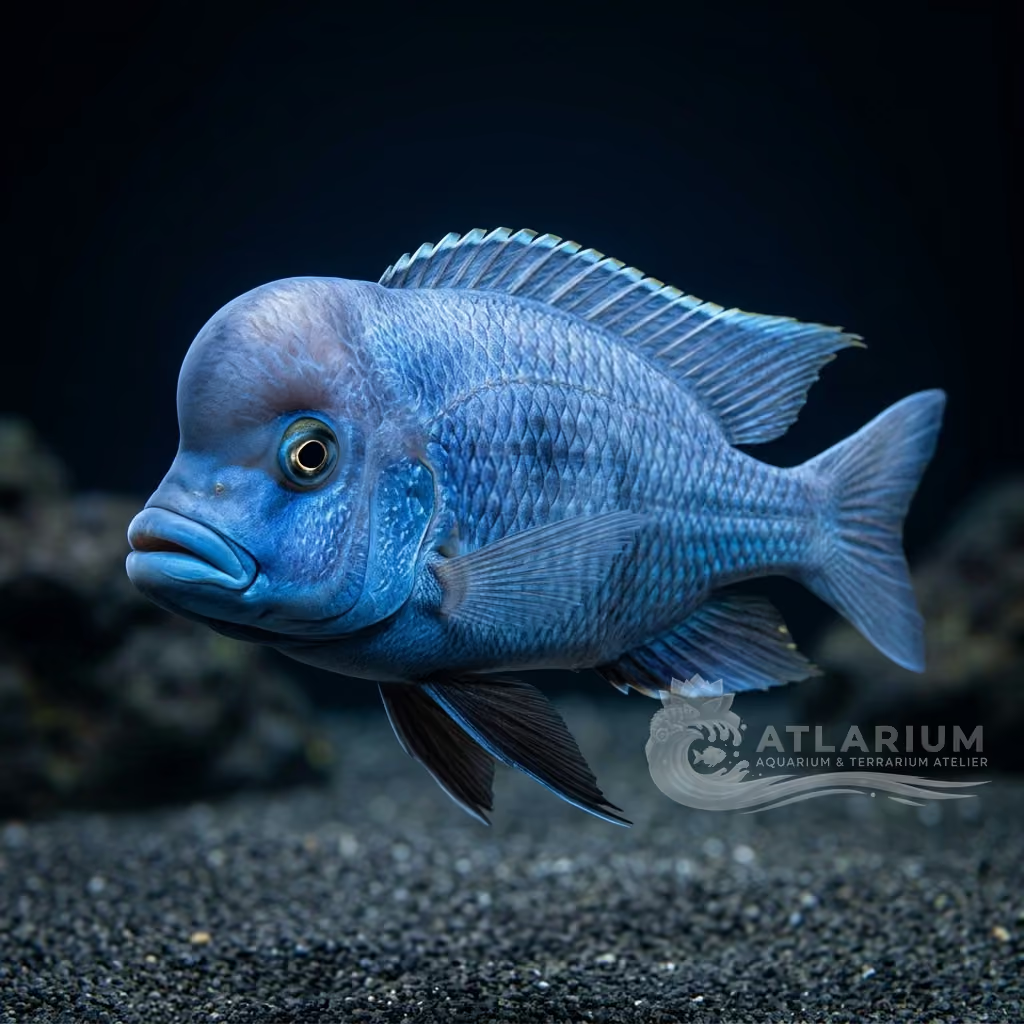
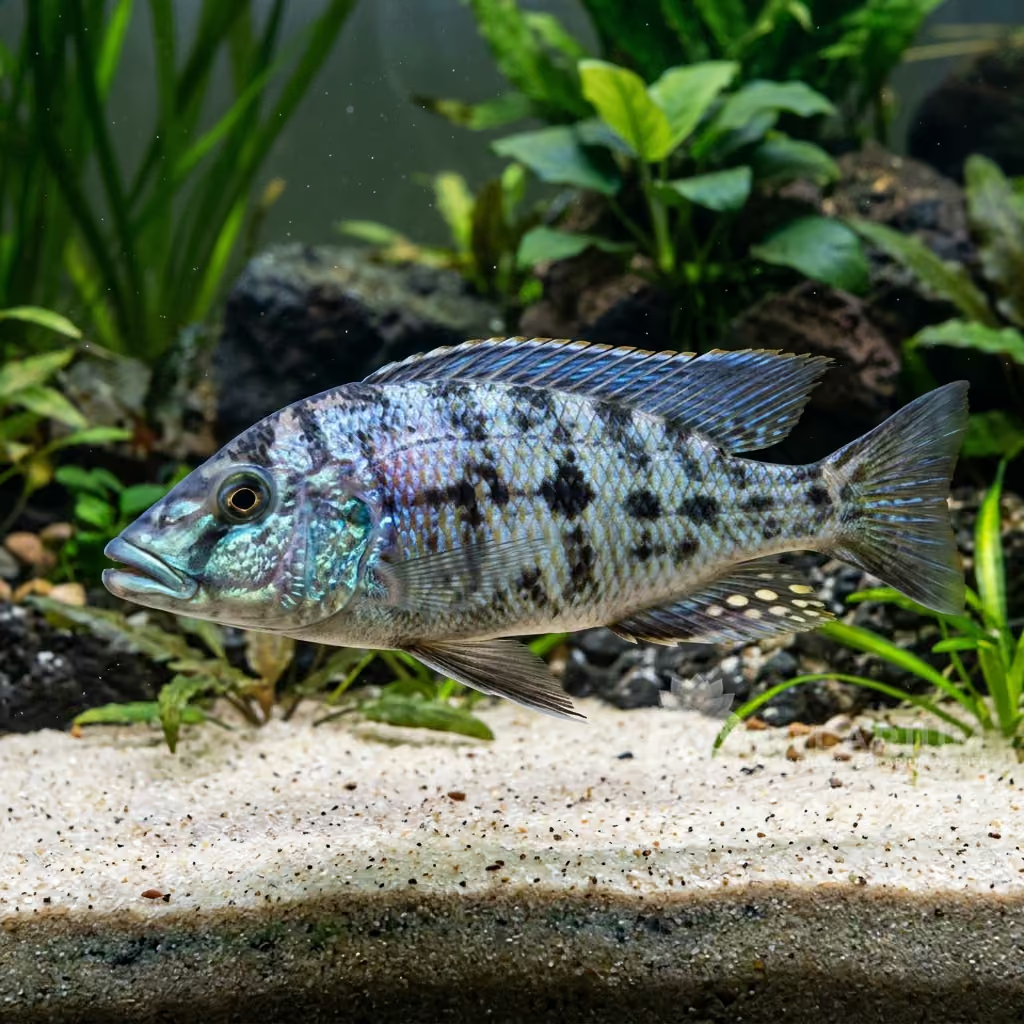
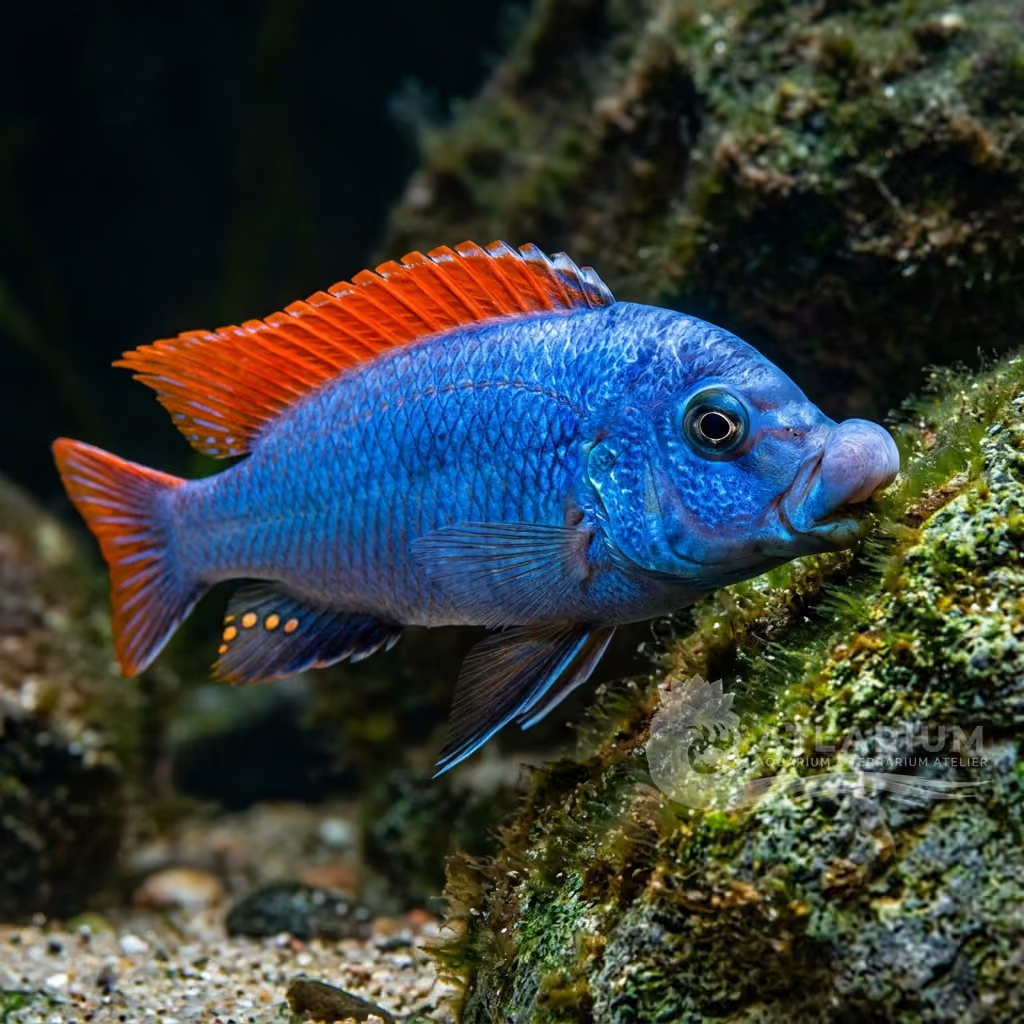
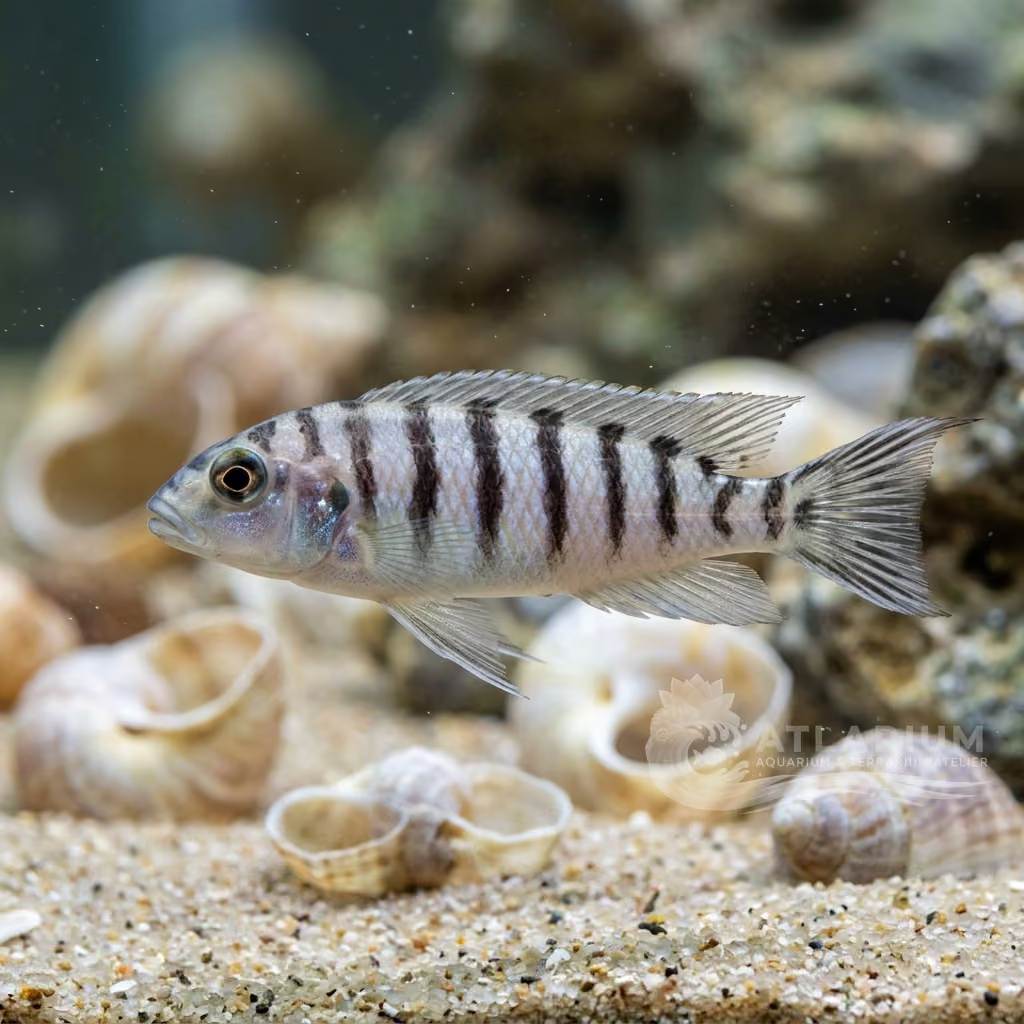
The Afra Cichlid (Cynotilapia afra) is one of the most sought-after visual gems of Lake Malawi. Also called 'Dogtooth Cichlid' for the unique conformation of its unicuspid teeth visible when it opens its mouth wide to threaten, it sports a dazzling sexual dimorphism: the males explode in colors ranging from cobalt blue to vibrant purple, split by bold and thick vertical black zebra stripes, and sometimes embellished by flushes of golden yellow on the head or back (like the famous 'Cobue' variant). Although not physically huge (it reaches 10 cm / 4 inches), it amply compensates with an open aggression and a leonine courage, often dominating fish much larger than him in the aquarium. It is a splendid fish but not for beginners, requiring strict management of harems and rocky spaces.
24 - 28 °C
7.8 - 8.6
Freshwater
Bottom and middle
10 cm
>= 200 L
>= 4
10 - 20 dGH
5 - 10 dKH
200 - 400 ppm
313 - 625 uS/cm

Species description

Care, breeding and tankmates

Geographic origin and distribution
Origin

Fish profile
- Temperament
- Territorial
- This is a fiercely aggressive and territorial mbuna, characteristic of the genus. Dominant males will attack and chase any fish that enters their territory, often claiming a large portion of the tank. Overstocking the aquarium slightly (with adequate filtration) is a common technique used to diffuse this aggression among many targets.
- Diet
- Omnivore
- Unlike many primarily herbivorous mbuna, this species is an omnivore that naturally feeds on zooplankton in the water column as well as algae. Their diet in captivity should be a mix of high-quality cichlid flakes, spirulina, and meaty foods like mysis shrimp or daphnia. Avoid mammalian proteins and tubifex worms, which can trigger 'Malawi bloat'.
- Life expectancy
- 5-10 years
- Adult size
- 10 cm
- Sex ratio
- Harem
- To manage aggression, they must be kept in a harem ratio of one male to at least three or four females. Keeping multiple males usually results in fatal conflicts unless the aquarium is exceptionally large with numerous distinct rock piles. The females provide a distraction, preventing the male's aggression from focusing on a single target.
- Feeding frequency
- Twice daily
- Feeding them small amounts two to three times a day mimics their constant natural foraging behavior. Care should be taken not to overfeed, as greedy mbuna will readily consume more than they can digest. Ensuring a mix of sinking and floating foods allows all fish in the hierarchy to get a share.
- Bioload
- Medium to High
- The Dogtooth Cichlid produces a moderate bioload, typical of dwarf mbuna from Lake Malawi. They are highly active and consume a significant amount of food, resulting in considerable waste production. Over-filtration and frequent water changes are necessary to maintain the pristine water quality they demand.
- Flow
- Strong
- They prefer moderate to strong water flow, which helps simulate the turbulent rocky habitats of Lake Malawi. Excellent water movement ensures high oxygenation and helps clear debris from the intricate rock structures they inhabit. Wavemakers or powerheads can be used to create an engaging and clean environment.
- Jump risk
- No
- Reproduction
- Oviparous
- They are maternal mouthbrooders that breed readily in the home aquarium if given the right conditions. A male will lure a female to a chosen cave or rocky crevice where spawning occurs. The female will hold the eggs in her mouth for roughly 21 days before releasing fully formed, free-swimming fry.
- Compatibility & tankmates
- With caution
- Like most mbuna, this species is aggressive and highly territorial, especially toward conspecifics or fish with similar coloration. They should only be kept with other moderately aggressive mbuna of dissimilar colors and patterns to avoid intense rivalries. Providing a large tank packed with rockwork helps diffuse aggression and establish clear territories.
- Tank level
- Middle/Bottom
- They are primarily bottom to mid-level dwellers, strongly associated with the rocky structures in the tank. Males will fiercely defend a specific cave or crevice, rarely straying far from their chosen territory. Females and juveniles may venture higher into the open water but will quickly retreat to the rocks if threatened.

Scientific Parameters & Models
Window to the official scientific data of the species
- Trophic level
- 3.4 ± 0.45 se
- Resilience
- High (less than 15 months)
- Phylogenetic uniqueness (PD50)
- 0.5312
- Bayesian Length-Weight
- a = 0.01445, b = 2.99
- VulnerabilityLow vulnerability (10 / 100)

Related species
Recommendations grouped by close relatives, companion choices, and similar care.