Saulosi Cichlid (Chindongo)
Chindongo saulosi
Dwarf Malawi jewel (8 cm). Famous for its stunning sexual dimorphism: males are blue/black zebras, females bright fluo golden yellow. Requires rocks, rigid algal diet and overpopulated monospecific tanks.
Water Temperature
24 - 28 °C
pH Value
7.8 - 8.6
Water type
Freshwater
Tank level
Bottom
Adult size
9 cm
Minimum tank volume
>= 100 L
Minimum group
>= 1
GH
10 - 25 dGH
KH
5 - 12 dKH
TDS
200 - 495 ppm
Conductivity
313 - 773 uS/cm

Species description
Geographical Origin and Habitat: Endemic to Lake Malawi (Taiwan Reef). Populates the rocky slopes battered by waves in warm and crystal clear waters.
Taxonomy and Morphology: Saulosi Cichlid (Chindongo saulosi, formerly Pseudotropheus). Classic dwarf Mbuna of about 8-9 cm (3.5 inches). Rounded profile and stocky snout.
Social Behavior: Moderately aggressive by Mbuna standards. The dominant male claims a cave and defends it energetically. Requires the Harem technique (1 male and 4-5 females) to dilute the persecutions.
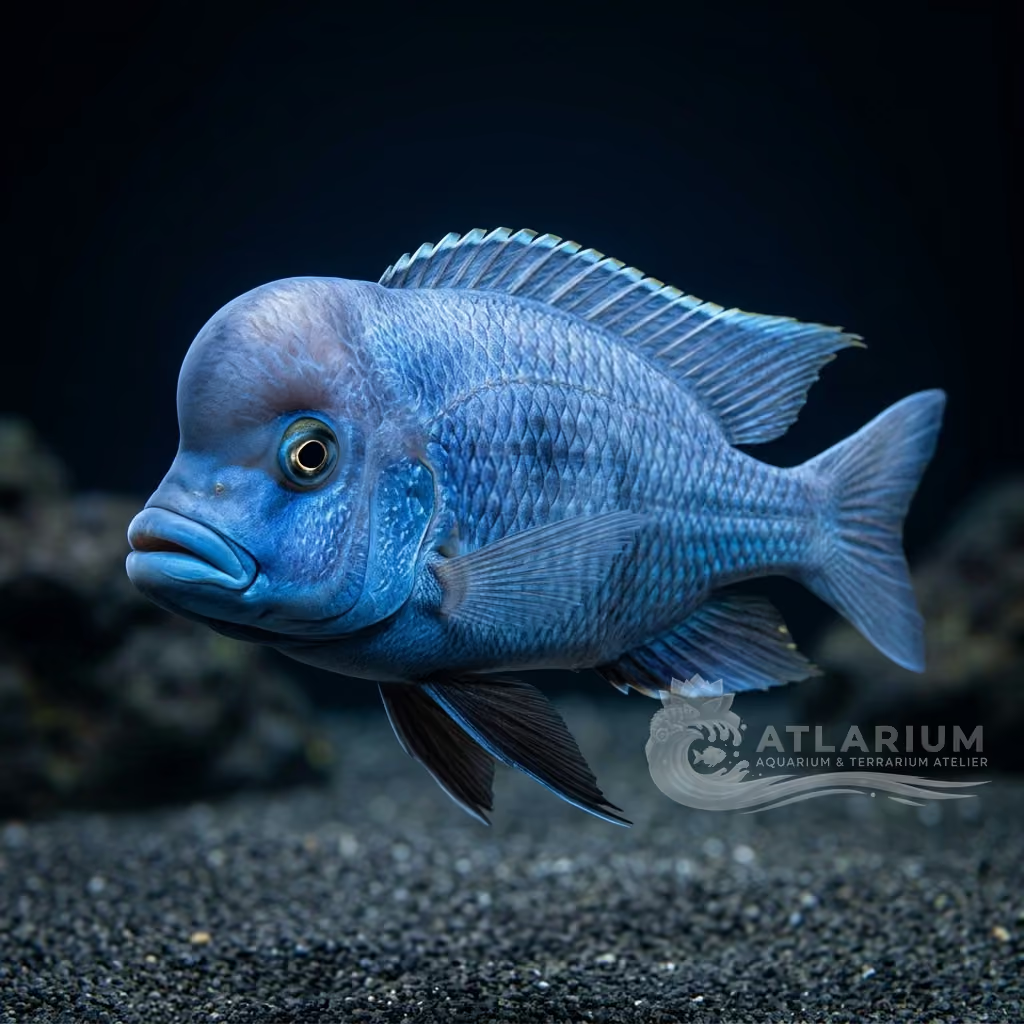
Coloration and Sexual Dimorphism: One of the most striking dimorphisms in the world: adult males are electric blue with heavy vertical black bands. Females (and juveniles) are a dazzling canary yellow/orange. In a tank they look like two different species.

Care, breeding and tankmates
Aquarium Setup: 100 cm (40 inches) tank (150-200 liters / 40-50 gallons). Light sandy bottom and massive barrier of stones piled along the back wall up to the water's surface. Do not insert wood (lowers the pH).
Diet and Feeding: Strict herbivore. Feeds by incessantly grazing the algal layer (Aufwuchs). Feed with excellently made vegetable pellets, spirulina flakes and blanched vegetables.
Water Quality: As endemic to Lake Malawi, the water must have a high and stable pH (7.8-8.6). Important requirement is a powerful oxygenator or strong surface movement to avoid oxygen deficiencies.
Compatibility and Cohabitation: Ideal for a species-specific tank: the incredible yellow/blue contrast is enough to animate the aquarium. Can be paired with other non-aggressive and differently colored Mbuna (e.g. Iodotropheus).
Aquarium Breeding: Maternal mouthbrooder. Very easy. The male guides the female on the sandy bottom of his nest and by vibrating fertilizes the newly released eggs, which the female swallows. Isolation of the female recommended to save the young.
Risks and Diseases: Hyper sensitive to intestinal blockages (Malawi Bloat) if it ingests protein frozen food (brine shrimp, bloodworms) intended for tankmates. Highly endangered in nature (IUCN status critically endangered).

Geographic origin and distribution
Endemic to Lake Malawi (Taiwan Reef). Populates the rocky slopes battered by waves in warm and crystal clear waters.
Origin
Selective breeding and cultivarsAfrica and MadagascarEast AsiaTropical oceans and reefs

Fish profile
- Temperament
- Semi-aggressive
- They display typical Mbuna territoriality but are considered a dwarf species. Males vigorously defend their chosen caves from rivals. They are very active and exhibit fascinating social dynamics within a species-specific colony.
- Diet
- Omnivore
- Saulosi are predominantly herbivorous, scraping algae from rocks in their natural habitat. Feed them a high-quality spirulina-based diet supplemented with fresh vegetables. High-protein meaty foods should be strictly avoided to prevent fatal digestive diseases.
- Life expectancy
- 7-10 years
- Adult size
- 9 cm
- Sex ratio
- Harem
- A ratio of one male to three or more females is strongly recommended. This harem structure protects individual females from relentless mating pursuits. Males are bright blue with stripes, while females are a striking solid yellow.
- Feeding frequency
- Twice daily
- Provide small meals two to three times daily. This mimics their natural continuous grazing behavior on rocky surfaces. Promptly remove any uneaten food to maintain pristine water conditions.
- Bioload
- Low to Medium
- This small Mbuna contributes a moderate bioload to the aquarium. Efficient biological filtration is essential to manage the waste of a typical colony. Consistent water changes are necessary to preserve optimal water quality.
- Flow
- Stagnant
- They favor moderate to strong water movement typical of rocky lake shores. Good circulation helps distribute oxygen and keeps suspended waste moving toward the filter. Powerheads are useful for creating an appropriate current across the rocks.
- Jump risk
- Yes
- Like most cichlids, they possess a strong jumping ability when startled. A tight-fitting lid is crucial to keep them safely contained within the aquarium. Ensure all access ports are covered to prevent escape attempts.
- Reproduction
- Oviparous
- Saulosi are maternal mouthbrooders, making captive breeding relatively straightforward. The female incubates the eggs and fry in her buccal cavity for about three weeks. During this period, she will hide among the rocks and refuse food.
- Compatibility & tankmates
- With caution
- They are moderately aggressive but generally less combative than other Mbuna species. They mix well with other mildly aggressive Malawi cichlids of different colors. Do not keep them with peaceful community species or delicate invertebrates.
- Tank level
- Bottom
- They inhabit the middle and lower zones, constantly swimming in and out of rockwork. Providing extensive rocky caves extending towards the water surface is ideal. They rarely venture into open water far from their protective crevices.

Scientific Parameters & Models
FishBase
Window to the official scientific data of the species
FishBase v25.04Data synced on: 06/15/2026
- Trophic level
- 2.6 ± 0.3 se
- Resilience
- High (less than 15 months)
- Phylogenetic uniqueness (PD50)
- 0.5005
- Bayesian Length-Weight
- a = 0.01445, b = 2.99
- VulnerabilityLow vulnerability (10 / 100)

Related species
Recommendations grouped by close relatives, companion choices, and similar care.