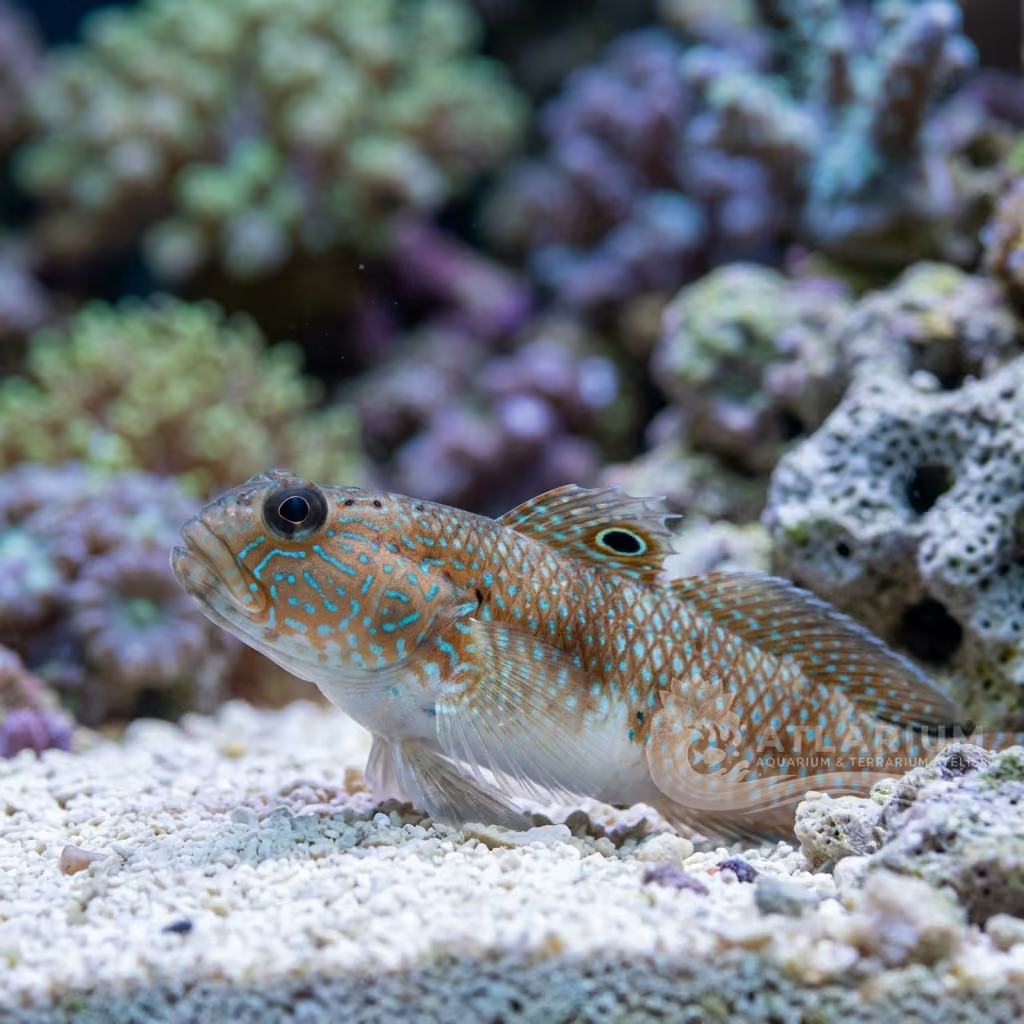
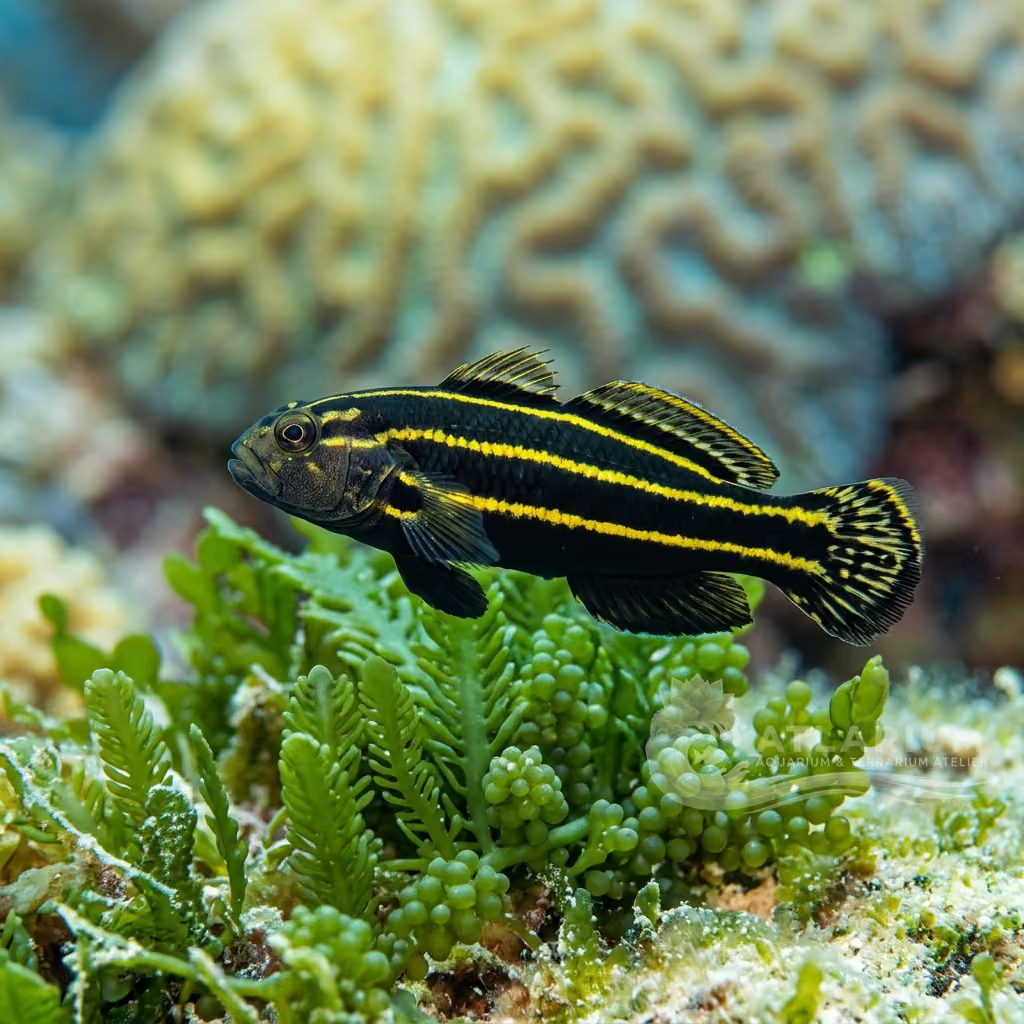
Marsh Hover Goby
Parioglossus palustris
A slender brackish goby from shallow Pacific tidal creeks. Needs a 50L mangrove-style setup and a diet of frozen zooplankton to maintain its active behavior.
Water Temperature
22 - 26 °C
pH Value
7.5 - 8.2
Water type
Brackish / Marine
Tank level
Bottom and middle
Adult size
4 cm
Minimum tank volume
>= 50 L
Minimum group
>= 6
KH
6 - 15 dKH

Species description
Geographical Origin and Habitat: Parioglossus palustris is found in the Western Pacific, including the Ryukyu Islands, Philippines, Palau, Indonesia, and Papua New Guinea. It inhabits shallow coastal brackish waters, mangrove swamps, and tidal creeks.
Taxonomy and Morphology: Classified within the Gobiidae family, subfamily Ptereleotrinae. It features a slender, elongated, laterally compressed body, large eyes, and an upturned mouth. It is a miniature species, reaching only about 4 cm in total length.
Social Behavior: Unlike most typical benthic gobies, this species hovers and swims actively in the mid-water column. They are highly social and school tightly. Keeping them in groups of 6 or more is essential to prevent stress and encourage open swimming.
Coloration and Sexual Dimorphism: Semi-translucent body with a pale cream or yellowish base, marked by a prominent dark brown or black horizontal stripe extending from the snout to the caudal fin. Mature males display larger, more ornate dorsal and anal fins.

Care, breeding and tankmates
Aquarium Setup: Minimum tank size of 50 liters. Design the aquarium to mimic a mangrove habitat with branching driftwood, roots, and hardy plants like Java Fern. A tight-fitting lid is absolutely required as they are excellent jumpers.
Diet and Feeding: Carnivorous micro-predator. Feeds on zooplankton in the water column. Provide small frozen foods such as cyclops, copepods, baby brine shrimp, and rotifers. They will also accept micro-granules and fine flakes if floating.
Water Quality: Maintain stable parameters: temperature 22°C to 26°C, pH 7.5 to 8.2, GH 12-25. Best kept in brackish conditions (specific gravity 1.005 to 1.015), but adaptable to marine or hard freshwater. Ensure gentle to moderate water flow.
Compatibility and Cohabitation: Excellent tankmates for peaceful brackish community tanks or nano reef tanks. Keep with calm species such as pipefish, bumblebee gobies, and small shrimp. Avoid large, fast, or predatory species.
Aquarium Breeding: Spawning can occur in captivity. They deposit eggs inside small caves or pipes, which are then guarded and fanned by the male until hatching. Successfully raising the tiny larvae requires rotifers and marine infusoria.
Risks and Diseases: Highly sensitive to rapid salinity changes and poor water quality. If kept singly or in too small a group, they will remain hidden, stress easily, and may refuse to feed. High jumping risk when startled.

Geographic origin and distribution
Parioglossus palustris is found in the Western Pacific, including the Ryukyu Islands, Philippines, Palau, Indonesia, and Papua New Guinea. It inhabits shallow coastal brackish waters, mangrove swamps, and tidal creeks.
Origin
Tropical oceans and reefsAfrica and MadagascarSouth and Southeast AsiaEast AsiaAustralia, New Guinea, and Oceania

Fish profile
- Temperament
- Active
- It is a highly peaceful but easily frightened fish that relies on its speed for safety. When kept in an appropriate group and peaceful environment, it is quite bold. It exhibits absolutely no territorial or aggressive behaviors toward other fish.
- Diet
- Carnivore
- It is a micro-predator that feeds exclusively on tiny zooplankton suspended in the water. In the aquarium, it requires extremely small foods like rotifers, baby brine shrimp, and crushed high-quality flakes. Ensuring the food stays suspended in the water column long enough for it to feed is critical.
- Life expectancy
- 2-5 years
- Adult size
- 4 cm
- Sex ratio
- Group
- They are a shoaling species and should ideally be kept in small groups. Keeping a single individual often results in extreme shyness and poor health. Groups of five or more display the most natural and interesting behaviors.
- Feeding frequency
- Twice daily
- Due to its active nature and small stomach, it requires frequent, small feedings. Feeding two to three times daily is essential to prevent malnutrition and weight loss. A mature aquarium providing natural microfauna is highly beneficial for its long-term success.
- Bioload
- Low
- This small dartfish species adds a very minimal bioload to the aquarium. It produces almost insignificant amounts of waste due to its diminutive size. Regular biological filtration easily handles any nutrients it adds to the system.
- Flow
- Strong
- It naturally occurs in estuarine environments and prefers a moderate, steady flow of water. The flow should be enough to keep planktonic food suspended but not so strong that it exhausts the fish. Quiet resting zones should be provided among the rockwork or plants.
- Jump risk
- Yes
- Like all members of its genus, it is extremely prone to jumping if startled. A secure, tight-fitting lid or mesh screen cover is absolutely required. It can easily slip through surprisingly small gaps in the aquarium hood.
- Reproduction
- Oviparous
- Breeding in home aquaria is practically unheard of due to its complex lifecycle. They are likely demersal spawners with a lengthy pelagic larval stage. Rearing the microscopic fry would require highly specialized live food cultures.
- Compatibility & tankmates
- Peaceful
- It is completely peaceful and should only be housed with similarly docile tank mates. Aggressive or large fish will quickly intimidate it and prevent it from eating. It poses no danger whatsoever to corals, small shrimp, or other delicate invertebrates.
- Tank level
- Middle/Bottom
- It predominantly occupies the mid to upper levels of the water column. It hovers in the open water to feed but retreats to crevices near the bottom when threatened. It does not burrow or spend significant time resting directly on the sand.

Scientific Parameters & Models
FishBase
Window to the official scientific data of the species
FishBase v25.04Data synced on: 06/15/2026
- Trophic level
- 3.1 ± 0.4 se
- Phylogenetic uniqueness (PD50)
- 0.5
- Bayesian Length-Weight
- a = 0.00389, b = 3.12
- VulnerabilityLow vulnerability (10 / 100)

Related species
Recommendations grouped by close relatives, companion choices, and similar care.