Staurogyne sp. "Porto Velho"
Staurogyne sp. "Porto Velho"
Staurogyne sp. "Porto Velho" is a spreading foreground plant from Brazil. It prefers medium-high light to maintain a creeping habit and a dense, colorful appearance.
Water Temperature
20 - 30 °C
pH Value
5 - 7.5
Water type
Freshwater
Light
Medium to High
CO2
Low - High
Expected height
10 cm
Expected width
10 cm
KH
0 - 10 dKH

Species description
Geographical Origin and Habitat: Originating from the Porto Velho region in the state of Rondônia, Brazil, this particular Staurogyne species thrives in well-oxygenated aquatic habitats, typically slow- to moderate-flowing streams where it is often found fully submerged or semi-submerged. Its presence in these clear, nutrient-rich waters, characteristic of Amazonian rainforests, has allowed it to adapt remarkably well to stable underwater conditions. The natural environment is characterized by warm temperatures and generally acidic pH, with soft to very soft water.
Taxonomy & Genetics: Staurogyne sp. "Porto Velho" belongs to the Acanthaceae family, a group of dicotyledonous plants that includes many aquatic and terrestrial species. The "sp." designation indicates that it is an unidentified species, not yet formally described, while "Porto Velho" specifies its geographical origin, distinguishing it from other Staurogyne variants. Taxonomically, it shares several characteristics with the more well-known Staurogyne repens, though it typically exhibits more lanceolate leaves and a slightly more upright growth habit under certain conditions. Its genetics lend it good robustness in an aquarium if optimal growing conditions are provided.
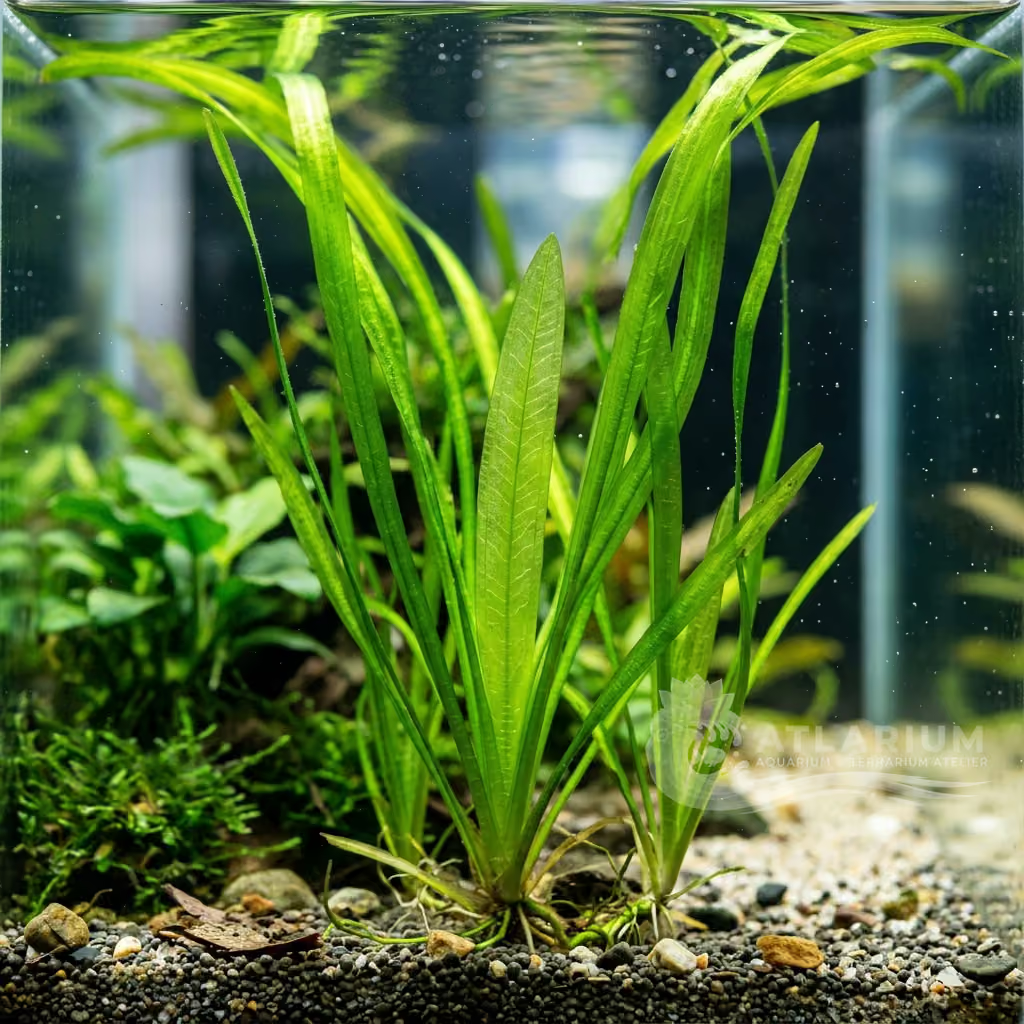
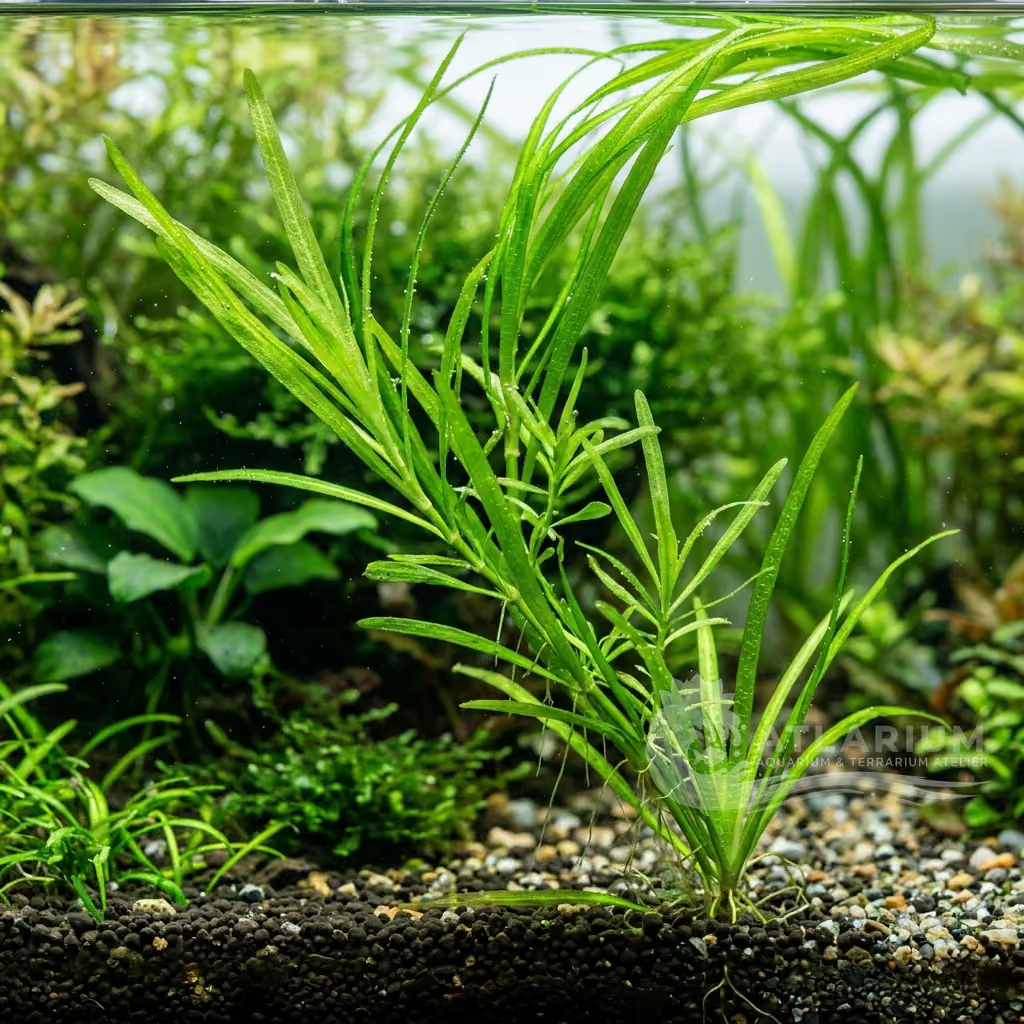
Physical Structure: This plant presents with robust, branching stems that tend to grow horizontally or slightly diagonally, forming a dense bush or carpet. The leaves are arranged oppositely along the stem, usually in pairs, and are attached with a short petiole. The leaf structure is generally lanceolate or narrowly oval, with smooth edges and a tapered tip, giving the plant a delicate yet structured appearance. Its root system is well-developed, firmly anchoring the plant to the substrate and contributing to nutrient absorption.
Color & Texture: The leaves of Staurogyne sp. "Porto Velho" display a vibrant and bright green color, which can intensify or shift towards reddish or brownish tones under intense lighting and with good iron availability. The leaf surface is smooth and slightly fleshy to the touch, possessing a subtle sheen that makes them particularly attractive. Stems, especially younger ones or those exposed to strong light, can take on a reddish hue, creating a captivating contrast with the green leaves. This combination of colors and fine texture contributes to a very pleasing visual effect in the aquarium foreground.

Care, breeding and tankmates
Lighting & CO2: Staurogyne sp. "Porto Velho" prefers medium to high lighting to best showcase its coloration and compact growth habit. Under insufficient light, stems may stretch (etiolate) and lose their desired density, compromising the carpet's appearance. Carbon dioxide (CO2) injection is considered essential for vigorous and healthy growth; without supplemental CO2, growth will be slow, and the plant may struggle to form a dense carpet. Good CO2 diffusion, combined with adequate lighting, promotes photosynthesis and plant robustness.
Nutrition & Substrate: For optimal growth, this plant requires a nutrient-rich substrate, such as those specifically designed for planted aquariums, to provide a constant supply of micro and macronutrients. Supplementation with complete liquid fertilizers, including nitrates, phosphates, and potassium, is crucial to support its medium growth rate and prevent deficiencies. The use of root tabs in the substrate, placed near the roots, can further enhance nutrient uptake, especially in aquariums with inert substrates. Balanced nutrition prevents yellowing or stunted growth, maintaining intensely vibrant green leaves.
Water Chemistry: Water parameters must be maintained within specific ranges for the health of Staurogyne sp. "Porto Velho". The ideal temperature ranges between 20.0 and 30.0 C, reflecting the conditions of its tropical habitat. A pH between 5.0 and 7.5 is optimal, indicating a preference for slightly acidic to neutral waters. As for carbonate hardness (KH), a range of 0.0 to 10.0 is acceptable, suggesting the plant tolerates both very soft and moderately hard water, although softer, more acidic conditions are often preferred for vigorous growth. Maintaining stable parameters is more important than hitting exact values, to avoid stressing the plant.
Space Management & Placement: Thanks to its compact growth habit and tendency to form dense bushes or carpets, Staurogyne sp. "Porto Velho" is an ideal choice for the aquarium foreground. It can be planted individually to create small accents or in larger groups to form a lush green lawn. To achieve a carpet effect, it is advisable to plant stems a few centimeters apart, allowing them to expand and intertwine. Its contained growth makes it manageable even in small to medium-sized aquariums, where it can help define the layout's perspective and depth.
Pruning: Regular pruning is crucial to keep Staurogyne sp. "Porto Velho" compact and to promote denser, bushier growth. When the plant becomes too tall or lower stems begin to be shaded, it is advisable to trim the tops of the stems. This operation stimulates the plant to produce new lateral shoots from the leaf axils, increasing the density of the carpet. The trimmed parts can be replanted directly into the substrate to propagate the plant and expand the covered area, making pruning also an effective means of multiplication.
Risks & Diseases: Despite being a relatively robust plant, Staurogyne sp. "Porto Velho" can be susceptible to some issues if conditions are not optimal. Nutritional deficiencies manifest as yellowing leaves (iron or other micronutrient deficiency) or stunted growth (macronutrient deficiency). Insufficient lighting or a lack of CO2 will lead to elongated, weak stems with falling leaves. The appearance of algae on the leaves may indicate an imbalance between light, CO2, and nutrients, while sudden "melting" of leaves can be a symptom of shock due to abrupt changes in water parameters or transition from emersed to submerged cultivation.

Geographic origin and distribution
Originating from the Porto Velho region in the state of Rondônia, Brazil, this particular Staurogyne species thrives in well-oxygenated aquatic habitats, typically slow- to moderate-flowing streams where it is often found fully submerged or semi-submerged. Its presence in these clear, nutrient-rich waters, characteristic of Amazonian rainforests, has allowed it to adapt remarkably well to stable underwater conditions. The natural environment is characterized by warm temperatures and generally acidic pH, with soft to very soft water.
Origin
Amazon, Orinoco, and Guianas

Plant profile
- Placement
- Foreground
- It is an excellent choice for the foreground and lower midground, naturally preferring to creep along the substrate. It works incredibly well when draped over small rocks or nestled tightly against the base of larger hardscape materials. High light must reach it unimpeded.
- Botanical form
- Stem
- This species features distinctly narrow, lanceolate leaves that are a unique purplish-grey or dull grey-green color under good light. It grows via highly creeping horizontal stems that root readily at every node. It looks quite different from S. repens due to its sharper leaf shape and darker, muted color palette.
- Growth
- Medium
- The growth rate is moderate to slow, requiring patience as it establishes a dense, creeping mat. With optimal CO2 injection and intense lighting, its growth rate improves, and it forms a much tighter carpet. In sub-optimal conditions, growth stalls significantly.
- Substrate
- High
- To achieve its characteristic dense, carpeting growth, Staurogyne sp. "Porto Velho" requires a nutrient-packed aqua soil. Its aggressive rooting behavior allows it to spread rapidly and anchor itself firmly in the soil. Providing a fine-grained substrate with a depth of 4-5 cm is optimal for nurturing its demanding root system.
- Column fertilization
- Recommended
- Liquid fertilization should be steady and balanced to support its slow but steady biomass increase. Since it has a somewhat delicate appearance, ensuring a continuous supply of trace elements prevents the newer leaves from becoming pale or stunted. Good water circulation is necessary to deliver these nutrients.
- Root fertilization
- Recommended
- A nutrient-packed substrate is virtually mandatory for this species to achieve its full potential. Root tabs or high-quality aquasoil provide the deep-seated nourishment required for its extensive adventitious root system. The stronger the root base, the denser the carpet.
- Trimming
- Regular
- Trimming should focus on cutting back any stems that dare to grow vertically. Frequent, careful pruning encourages the plant to branch aggressively and hug the substrate more tightly. Replant the healthy tops to expand the carpet.
- Propagation
- Cuttings
- Propagation is straightforward via stem cuttings. Simply snip the creeping stems into smaller sections, ensuring each piece has a few nodes, and gently plant them into the substrate. They take a little time to root but will eventually spread.
- Sensitivity
- Moderate
- It is notably more sensitive than other Staurogyne species, strongly disliking fluctuations in CO2 levels or water chemistry. It is prone to melting if conditions deteriorate or if it is heavily shaded. It demands high water quality and good flow to stave off algae.
- Layout role
- group, Foreground, Midground, Nano
- Its unique leaf shape and muted grey-purple coloration make it a premium choice for highly detailed aquascapes. It provides exceptional contrast when placed near bright green carpeting plants or bright red focal stems. It excels as a transitional creeping plant.

Related species
Recommendations grouped by close relatives, companion choices, and similar care.