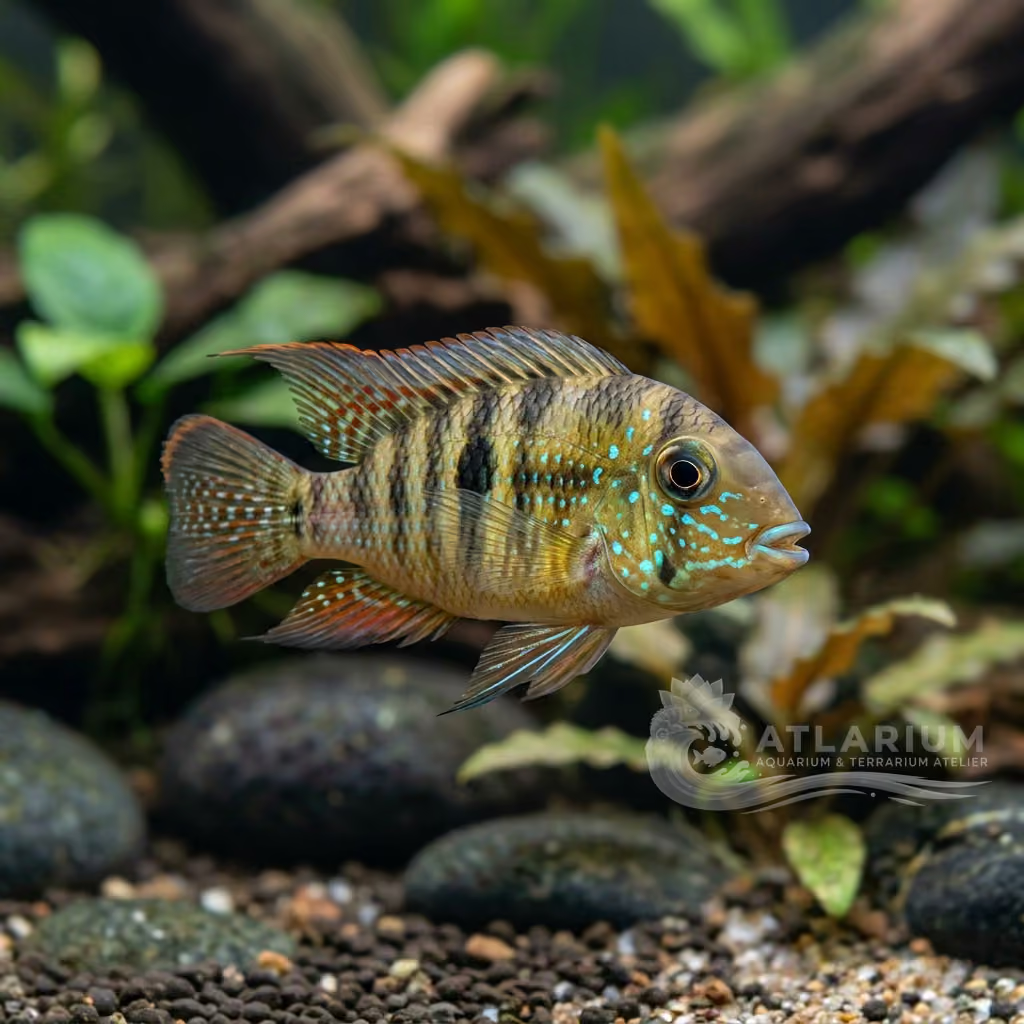
Xingu Goby Cichlid
Teleocichla centrarchus
The 'Xingu Goby Cichlid' (5-7 cm). An evolutionary miracle of the Brazilian rapids: the Teleocichla centrarchus has sacrificed its swim bladder to live flattened on smooth boulders, resisting extremely violent water currents. Morphologically similar to a marine goby, it rests on its large pelvic fins so as not to be swept away. Extremely territorial towards the bottom, it requires a specialized aquarium (River Manifold) with high temperatures and very strong water flow, under penalty of asphyxiation in a few hours. Totally unsuited for classic Amazonian community aquariums.
26 - 30 °C
6 - 7
Freshwater
Bottom
7 cm
>= 100 L
>= 1
1 - 5 dGH
1 - 2 dKH
25 - 95 ppm
39 - 148 uS/cm

Species description

Care, breeding and tankmates

Geographic origin and distribution
Origin

Fish profile
- Temperament
- Semi-aggressive
- They are highly aggressive and fiercely territorial despite their small size. They are fearless and will not hesitate to attack fish much larger than themselves to defend their chosen cave. Their ambush-predator nature makes them secretive, spending much of their time peering out from under rocks. They require an owner who understands and accommodates their highly specialized needs.
- Diet
- Omnivore
- They are strict carnivores and highly specialized predators in the wild. Their aquarium diet must consist of meaty, high-protein foods like frozen bloodworms, mysis shrimp, and chopped krill. They generally ignore dry flakes or pellets, requiring live or frozen foods to survive. Providing a varied carnivorous diet is essential to trigger breeding behavior.
- Life expectancy
- 5-8 years
- Adult size
- 7 cm
- Sex ratio
- Pair
- They are best kept as a single, established male-female pair. Intraspecific aggression is incredibly high, and males will fight relentlessly in anything but the largest aquariums. Even keeping multiple females can lead to severe bullying and death. Establishing a pair often requires growing out a group of juveniles and removing the others once a pair bonds.
- Feeding frequency
- Twice daily
- Feed them small portions one to two times a day. They are ambush predators that dart out from cover to snatch their food. Ensure that mid-water fish do not outcompete them before the food reaches the bottom. Uneaten meaty foods must be removed promptly to prevent fouling the pristine water they require.
- Bioload
- Low to Medium
- This dwarf pike cichlid generates a relatively low to moderate bioload due to its small size and carnivorous diet. However, they demand pristine, highly oxygenated water conditions. Excellent biological and mechanical filtration is absolutely critical to remove waste quickly. Frequent, significant water changes are non-negotiable to maintain the low nitrate levels they require to thrive.
- Flow
- Stagnant
- Originating from the fast-flowing Xingu river rapids, they absolutely demand strong, turbulent water flow. Powerful powerheads or specialized river-manifold systems are required to simulate their natural rheophilic environment. The water must be exceptionally well-oxygenated. They lack a functional swim bladder, allowing them to rest easily on the bottom despite the raging current.
- Jump risk
- Yes
- Because of the high flow environments they require, the jump risk is quite high. They are powerful swimmers capable of launching themselves out of the water if startled. A very tight, secure lid is absolutely mandatory for their aquarium. Any gaps around filter equipment should be carefully sealed.
- Reproduction
- Oviparous
- They are secretive cave spawners that are difficult to breed in captivity. They require a tight crevice or cave under a rock where the female will deposit her eggs. The female takes sole responsibility for guarding the eggs and fry, becoming viciously aggressive toward any intruders. The male guards the wider perimeter but is often chased away by the female.
- Compatibility & tankmates
- Semi-aggressive
- They are highly territorial bottom-dwellers that do not tolerate other benthic species well. They are best kept with fast-swimming, upper-level dither fish like large tetras or hatchetfish. They will aggressively attack Corydoras, loaches, or other dwarf cichlids that encroach on their space. Small fish or shrimp will be considered prey and quickly eaten.
- Tank level
- Bottom
- They are obligate bottom dwellers that virtually never leave the substrate. Their lack of a swim bladder means they move in quick, darting hops along the rocks and sand. The tank must be furnished with abundant smooth river rocks and tight crevices to mimic their natural rapids. Open swimming space in the upper levels is irrelevant to them.

Scientific Parameters & Models
Window to the official scientific data of the species
- Trophic level
- 3.1 ± 0.5 se
- Resilience
- High (less than 15 months)
- Phylogenetic uniqueness (PD50)
- 0.502
- Bayesian Length-Weight
- a = 0.00776, b = 3.12
- VulnerabilityLow vulnerability (10 / 100)

Related species
Recommendations grouped by close relatives, companion choices, and similar care.