Back to atlas
FishFreshwaterExpert

Encyclopaedia

Uaru (Triangle Cichlid)

Uaru amphiacanthoides

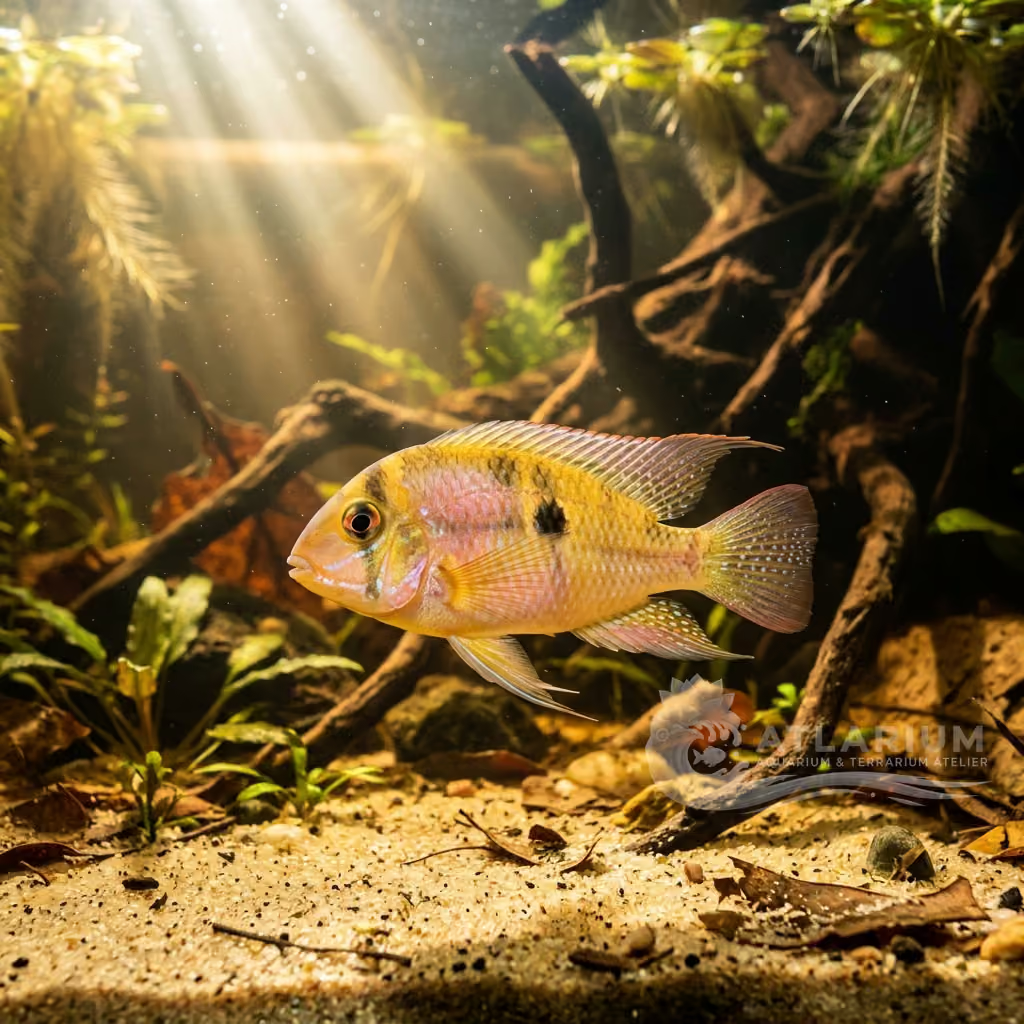
The *Uaru amphiacanthoides* is one of the most iconic and unusual South American cichlids, celebrated by connoisseurs and often avoided by beginners due to its unconventional appearance and specialized care. It possesses a massive oval body (up to 25-30 cm / 10-12 inches) of a sand or umber brown color, furrowed in the center by a gigantic and unique ink-black wedge-shaped spot, with piercing orange-gold eyes. Considered one of the most 'intelligent' cichlids ever (second only to the Oscar), the Uaru is famous for its melancholy gaze and surprisingly peaceful and shy temperament, combined with a strictly herbivorous biology.

Family
Cichlidae
Origin
Sud America (Acque chiare e nere del bacino del Rio delle Amazzoni e Rio Negro, Brasile e Guyana)
Origin
Tropical oceans and reefsAmazon, Orinoco, and Guianas
Tank use
Used in 0 tanks

Share

Species challenges
Temperature

27 °C - 30 °C

pH

5 - 7

Water type

Freshwater

Tank level

Bottom and middle

Adult size

25 cm

Description

Geographic Origin and Biotope: Originating from the colossal Amazon River basin (primarily Brazil and Guyana), it is strictly confined to the sluggish, undisturbed backwaters of the "Clearwater" and highly acidic "Blackwater" tributaries. It thrives exclusively in flooded marginal zones, deeply submerged swamp forests, and silent pools, hovering among dense tangles of submerged tree roots and a deep substrate of rotting wood and tannin-stained leaves.

Taxonomy and Morphology: Less famous but equally majestic to its cousin the Discus, the Uaru (also called the "Triangle Cichlid" or "Poor Man's Discus") is a massive, biologically unique species. Its body resembles a massive, flattened teardrop, heavily compressed laterally (though not a perfect circle like a Discus). It possesses an odd, mysterious eye placed very high on its sloped forehead. Adults are imposing, slow-swimming giants that can easily achieve 25-30 cm (10-12 inches) in length.

Social Behavior: An incredibly peaceful, phlegmatic, and strongly gregarious giant. Unlike the vast majority of massive South American cichlids, the Uaru is surprisingly gentle and tolerant. They are shy, highly intelligent, and retiring animals that vastly prefer retreating into the shadowy labyrinth of sunken roots rather than brawling. They form strong pairs and peaceful small schools; when startled, they huddle tightly together, instinctively shifting their color patterns as a defensive camouflage.

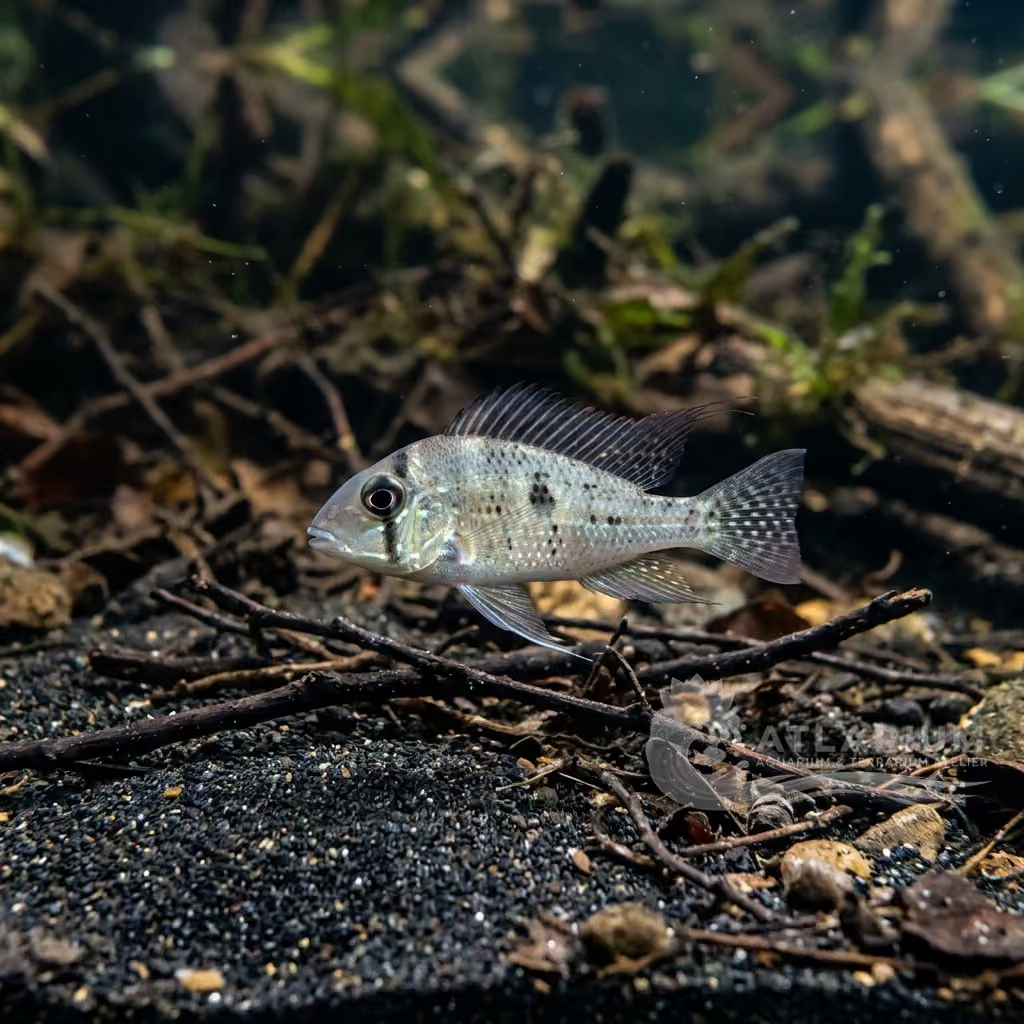
Coloration and Sexual Dimorphism: The Uaru possesses breathtaking ontogenetic color development (meaning it radically changes appearance as it grows). **Juveniles:** Exhibit insane cryptic camouflage, looking exactly like dead, rotting black leaves or heavily mottled with a honeycomb pattern to hide in the mud. **Adults:** The body matures into a matte, dusty dove-gray or pale mustard yellow. It is dominated by three iconic, pitch-black zones: a massive, wedge- or teardrop-shaped black patch covering the entire lower flank, a dark "collar" behind the gills, and a piercing, glowing gold/red eye. **Zero Dimorphism:** Males and females are completely identical physically.

Care and observations

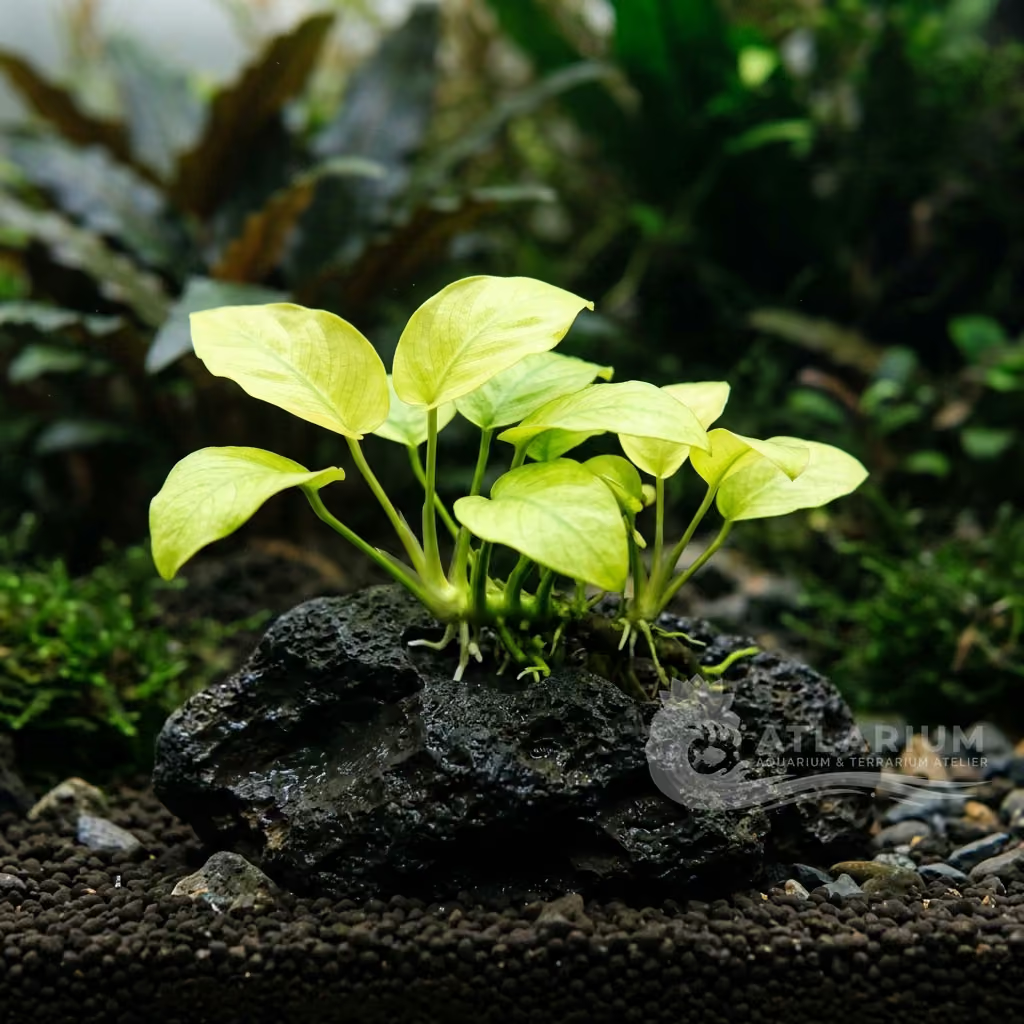
Tank Setup: Being massive, easily-spooked giants, they demand colossal aquariums: an absolute minimum of 400-500 liters (100-125 Gallons, 5+ feet long). The aquascape must flawlessly replicate an Amazonian "Blackwater" environment. Use soft sand, and fill the tank with massive, arching bogwood pieces to create dark, impenetrable shadow zones. Lighting must be intensely dim, shielded by heavy floating plants (like Frogbit or Water Lettuce). **Plant Warning:** ANY rooted plant, even tough Anubias or Java Fern, will be ruthlessly shredded, uprooted, and eaten. They are unstoppable underwater lawnmowers.

Feeding and Diet: A macro-omnivore with an incredibly strong (almost exclusive in the wild) inclination toward extreme vegetarianism. Their specialized teeth are built to macerate rotting wood and tough leaves. In the aquarium, they will annihilate any lettuce, zucchini, spinach, or aquatic plants you put in. They MUST be fed heavy rations of high-quality vegetable pellets (Spirulina, Kelp) or blanched vegetables. While they greedily accept bloodworms and insects in captivity, an overly meaty, high-protein diet will ultimately destroy their liver.

Water Quality: Just as fragile and intolerant as wild Discus. The Uaru absolutely cannot tolerate any trace of organic pollution, nitrate spikes, or cold water. They demand brutal South American heat (28°C - 30°C / 82-86°F), which kills many pathogens and keeps their metabolism running. Water MUST be soft (very low GH) and highly acidic (pH 5.5 - 6.5). The heavy tannins released by Catappa leaves or alder cones in the water act as a vital natural medicine for their slime coat and immune system.

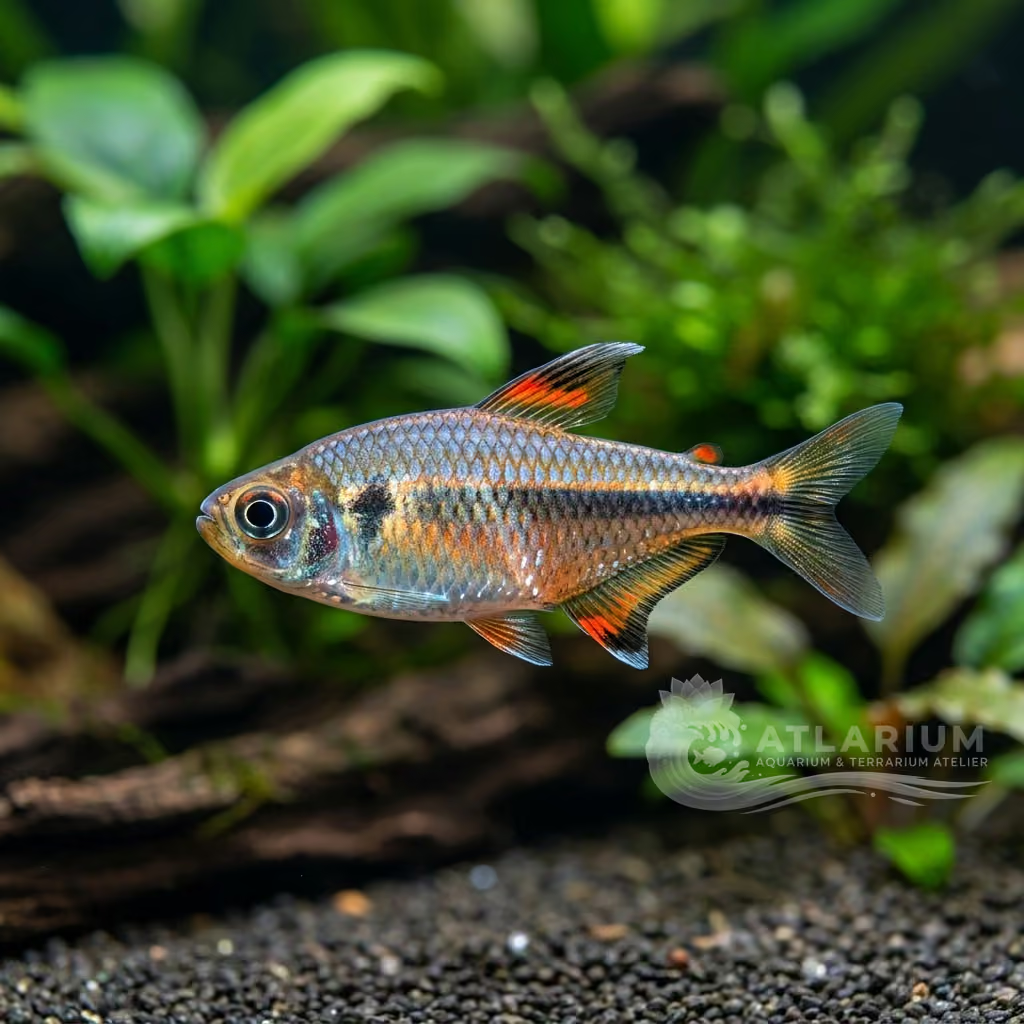
Compatibility: The ultimate, perfect tankmate for large, slow-moving Amazonian fish that love sweltering heat. It shares the tank in perfect harmony with schools of Discus (though Uarus are much faster eaters, so ensure the Discus get food), Altum Angelfish, peaceful Geophagus, or massive schools of deep-bodied Tetras (like Lemon or Bleeding Heart Tetras). NEVER, under any circumstances, house them with violent Central American brawlers (Midas, Flowerhorns, Jack Dempseys) which will mercilessly slaughter these "gentle giants".

Reproduction in Captivity: Exceedingly similar to Discus breeding, featuring a mind-blowing biological trait. The bonded pair will obsessively clean a horizontal or slanted piece of smooth wood or slate. After laying hundreds of adhesive eggs, the magic happens when the larvae hatch. The parents will allow the massive cloud of fry to physically attach to their bodies, where the babies furiously graze and feed on a *hyper-nutritious skin mucus* secreted by the parents, exactly like Discus. They are fiercely protective parents, but highly prone to panic-eating the babies if startled by sudden lights.

Risks and Diseases: 1. The Hexamita Demon ("Hole in the Head"): This lethal vulnerability, shared with Discus, flares up immediately if they are forced to live in hard, alkaline tap water or fed cheap, dirty flakes. It creates rotting, purulent craters on their face, accompanied by white stringy feces and agonizing death. 2. Overexposure Terror: A tank with bright, blazing LED lights and a white, bare bottom with no wood will terrify them into a permanent state of shock, suppressing their immune system until they die in a corner. 3. Beefheart blockage: Feeding them mammalian meat guarantees fatal intestinal blockage.

Fish profile

Temperament
Estremamente pacifico e spesso intimorito. I giganti del gruppo si nasconderanno al buio se l'acquario è troppo luminoso o ha compagni aggressivi. Estremamente gregari: un Uaru tenuto da solo morirà di depressione e stress.
Diet
Folivoro / Erbivoro rigoroso. In natura mangiano frutti caduti in acqua, spugne d'acqua dolce e foglie della giungla. In acquario, oltre a ottimi pellet alla spirulina, vanno ingozzati letteralmente di vegetali freschi o sbollentati quotidianamente (lattuga romana, spinaci, zucchine, cetrioli). Una dieta troppo ricca di proteine animali li ucciderà bloccando l'intestino.
Tank level
Bottom and middle
Minimum group
4
Adult size
25 cm
Minimum tank
400 L
GH
1 dGH - 8 dGH
KH
n/a
TDS
n/a
Conductivity
n/a
Sex ratio
Gruppi in branco. Quasi impossibile distinguere i sessi al di fuori della deposizione (le papille genitali si scoprono). I maschi dominanti sono talvolta leggermente più grandi.
Feeding frequency
2 volte al giorno, lasciando vegetali freschi agganciati in vasca per il brucaggio continuo.
Bioload
Altissimo (data la stazza enorme e l'alimentazione erbivora che genera enormi quantità di feci).
Flow
Corrente Nulla o Lieve. Prediligono la totale calma idrica delle foreste inondate del Rio Negro.
Reproduction
Difficilissima in acquario. Depongono le uova in buche o su rocce pulite, difendendo tenacemente (diventando violenti). Una particolarità unica (simile ai Discus) è che i genitori Uaru producono un muco cutaneo altamente nutriente che i minuscoli avannotti si attaccano a mangiare letteralmente dal fianco dei genitori per le prime settimane di vita.
Compatibility
Mantenimento perfetto con Symphysodon (Discus), Geophagus, Severum (Heros), Mesonauta e Corydoras in un biotopo Rio Negro. Evitare assolutamente grandi Ciclidi turbolenti, veloci o aggressivi (Oscar, Green Terror) che li sottometterebbero terrorizzandoli.

Image gallery

Licensed images linked to the species or, when marked, to the closest representative taxon.