Encyclopaedia

FishFreshwaterIntermediate

Big Spot Pleco (L075)

Hemiancistrus sabaji

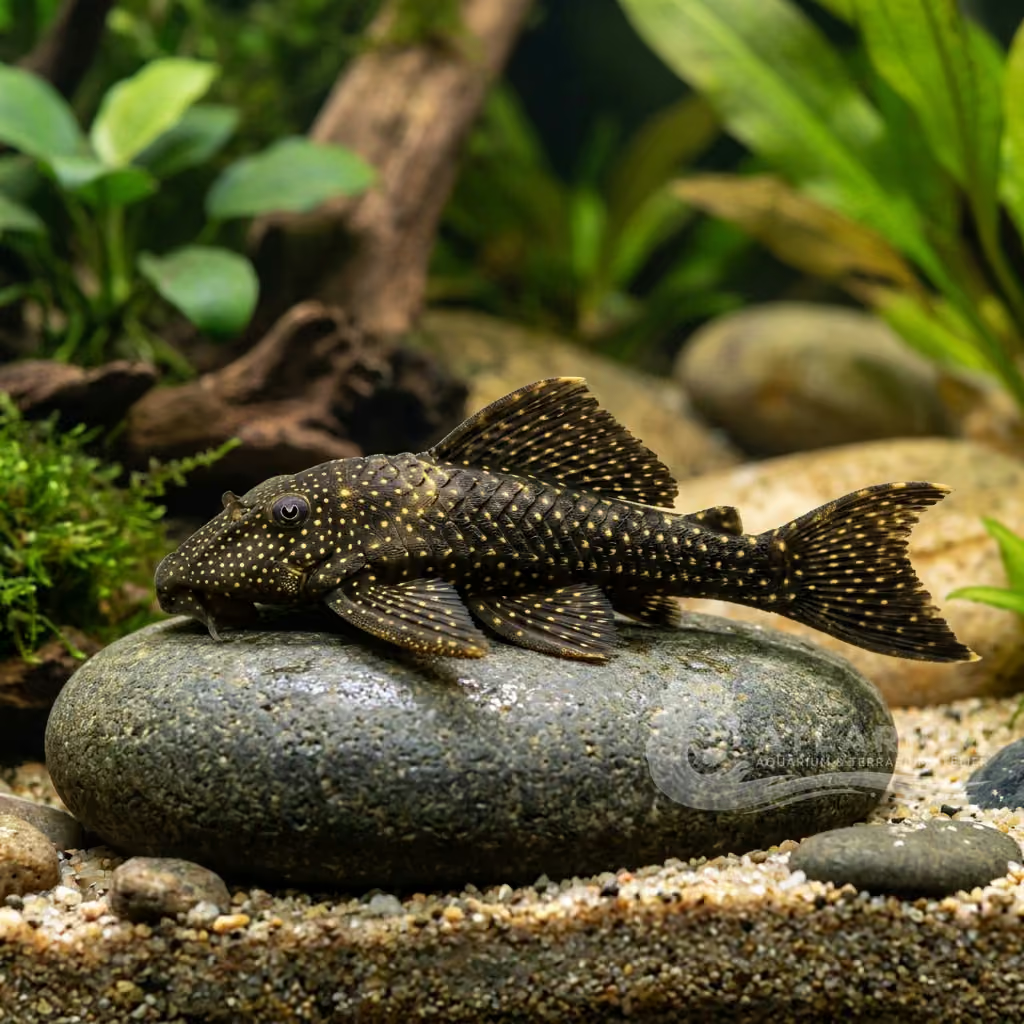
Sold in various regional variants, the Sabaji is a majestic and elegant Pleco. Despite the name Peckoltia, it easily exceeds 20 cm (8 inches), presenting itself as a giant and peaceful spotted armored fish, an avid devourer of crustaceans and protein tablets.

Taxonomy
Class:Actinopteri
Order:Siluriformes
Family:Loricariidae
Subfamily:Hypostominae
Genus:Hemiancistrus
Species:Hemiancistrus sabaji
Formerly known as:Peckoltia sabaji

Share

Check out Big Spot Pleco (L075) on Atlarium

PracticeRecognition quizzesPhotos, names, origins, and puzzles to review Atlas species.Open quizzes
Water Temperature

26 - 30 °C

pH Value

6 - 7.4

Water type

Freshwater

Tank level

Bottom

Adult size

20 cm

Minimum tank volume

>= 180 L

Minimum group

>= 1

GH

2 - 15 dGH

KH

1 - 7 dKH

TDS

40 - 295 ppm

Conductivity

63 - 461 uS/cm

Species description

Geographical Origin and Habitat: Widely distributed but circumscribed to the mighty clear Brazilian and Venezuelan waterways: rivers with endless beds of volcanic blocks such as the Tapajós, the Xingu, the Para, and the fringes of the Orinoco. These rivers, although enormous, in dry periods force these fish to engage in ruthless struggles of resistance anchored in the rock gorges lashed by the violent, but very hot, water turnover so as not to be swept downstream or sniffed out by pelagic predators.
Taxonomy and Morphology: Loricariidae family. For decades known in aquarium keeping with a series of L-numbers (L075, L124, L301, and LDA02) that indicate various slightly chromatic geographical catches, but today unified and scientifically recognized as Peckoltia sabaji. It is nevertheless a giant among the Peckoltia (usually small and stocky plecos): this beast, in mature aquariums, reaches a frightening 20-22 cm (8-8.6 inches) in total bulk in old age, rising like an armored mini-shark of impressive volume. Blunt spoon-shaped teeth, suitable for munching on animal shell remains and occasional detritus; it is NOT a crazy algae scraper.
Social Behavior: Lazy aquatic 'sofa' with flashes of extreme competitive violence towards the immobile. Tolerant and placid by day, prefers to doze for hours and hours totally lying on the bottom or anchored upside down against a huge root, disinterested in the surface world. But when darkness falls, it turns into a mighty nocturnal excavator: moving, it shifts heavy stones like marbles. If there are conspecific males of its monstrous bulk or competitive plecostomus, it will use its gill weapons to subjugate them and maintain dominance over its main cave with headbutts.
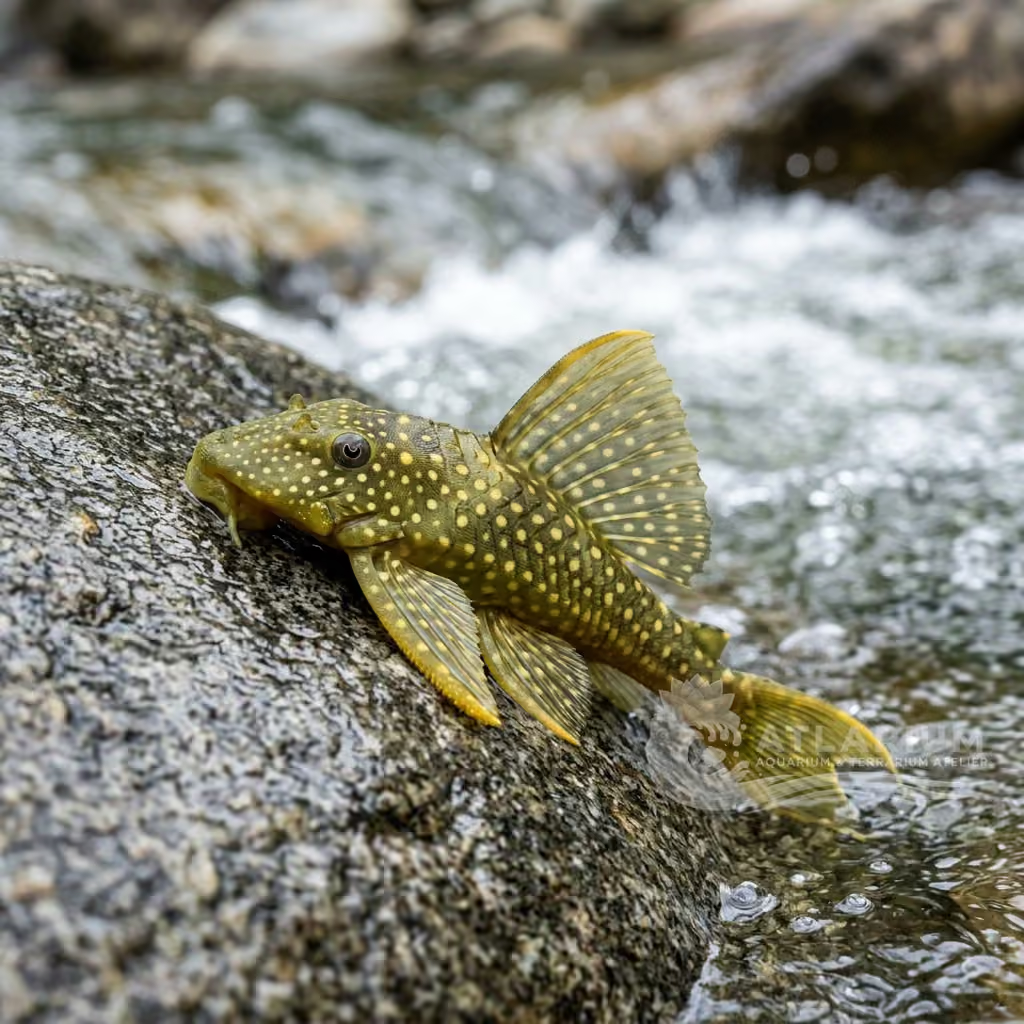
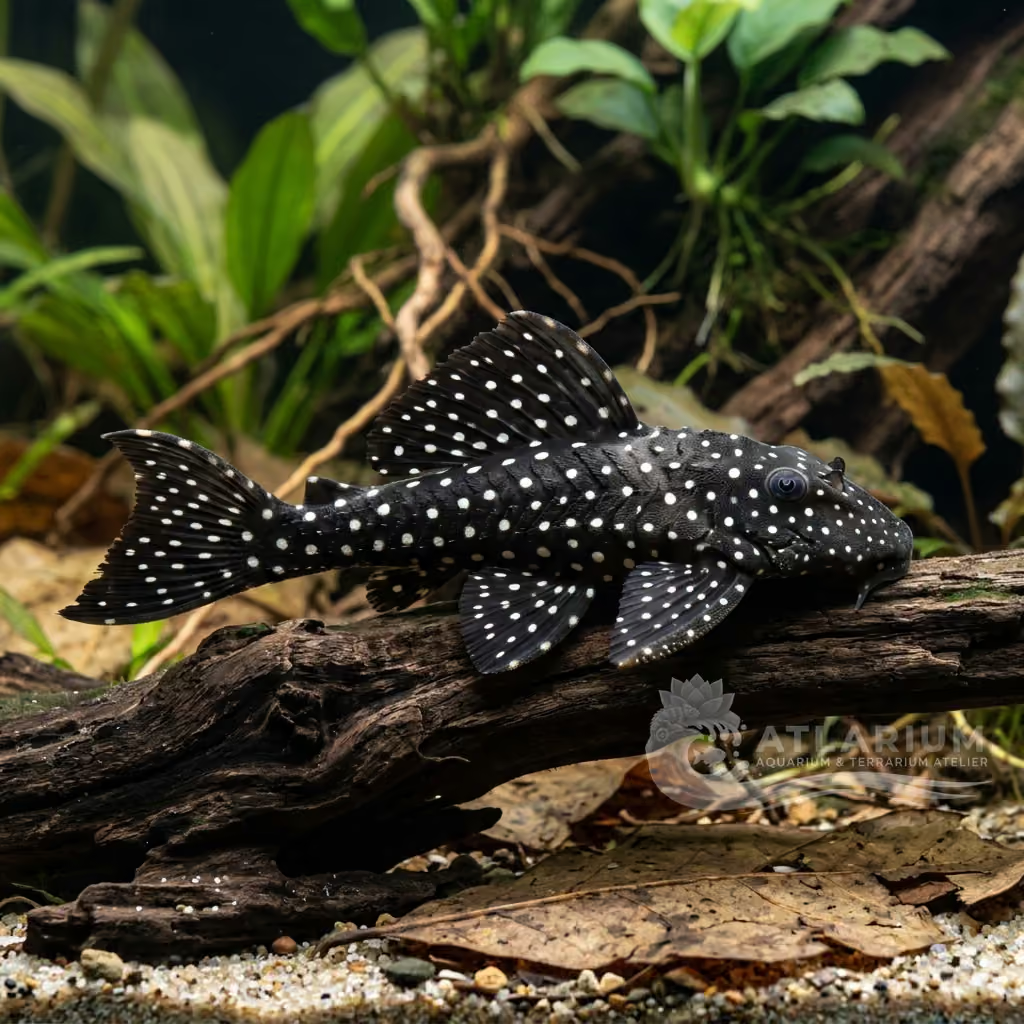
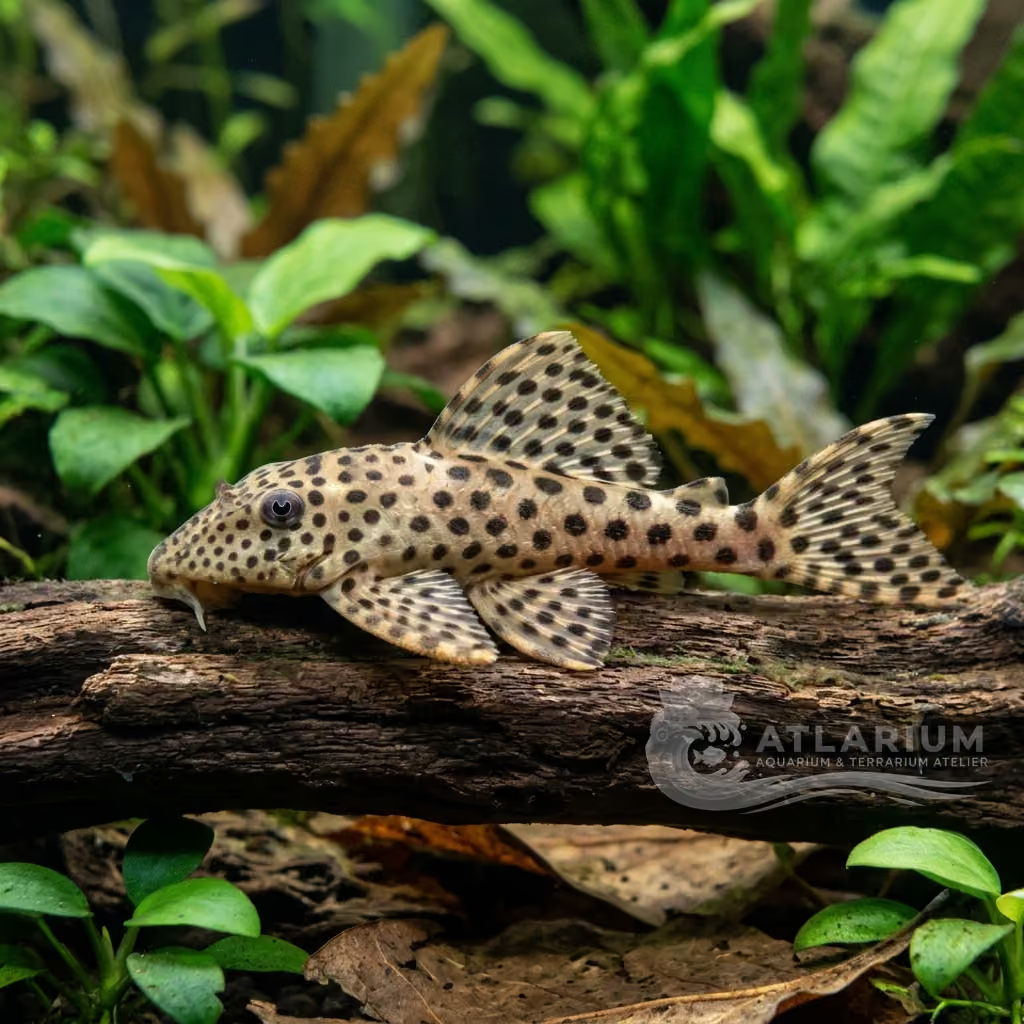
Coloration and Sexual Dimorphism: Hypnotic majesty given by the polka dot elegance. The robust scaly armored body has a stupendous vivid base of opaque cream, ochre yellow, dusty rust mustard, or a rare bright light gold-yellow (depending on river provenance). The hallmark is the pattern: the entire livery, from the head to the tip of the gigantic upper fin, is unmistakably dotted with round, immense, single, and fascinating black or dark chocolate spots (Big Spots), as sharp as ink spots dropped on the desert. Dimorphism: only huge, adult males flaunt bristly 'furs' (dense dart-like odontodes) that burst frighteningly from the rear half of the back to the tail, as well as very square and menacing jaws.

Care, breeding and tankmates

Aquarium Setup: Demands monumental respect for large tanks over 150 cm (60 inches) long. Bare Asian Iwagumi are a stressful, mortal life sentence for this beast. IT IS MANDATORY to stack enormous titanic boulder stones and gigantic massive roots of real bogwood on the bottom, to simulate the submarine chaos piled up by the current. The filtration must be cyclopean (boundless biological) and the water thrust pumps enormous to furiously move and oxygenate the entire aquarium: weak filters will collapse into a foul-smelling mess due to the gigantic and deadly polluting chemical fecal discharge generated by its monumental nocturnal fleshy digestion.
Diet and Feeding: IT WILL 100% IGNORE YOUR ENCRUSTING ALGAE PROBLEM; do not buy it to clean sponges or helpless glass. It is an opportunistic but large omnivorous predator. It will ravenously eat cadaverous remains and crush careless snails. Its diet in captivity revolves around the massive nocturnal use (with lights off) of large, heavy protein wafers, sinking krill tablets, huge handfuls of delicious frozen Chironomus, and shredded mussel meat. It will ignore the vegan spirulina tablet, wearing itself out in a few months.
Water Quality: Manageable difficulty solely if one possesses technical competence for demanding deep Amazonian fish. 'Turbid Tropical' Category: Absolute hatred and intolerance (inhibitory, strangulation of the intestinal flora, blocking, poisonous, fatal) for careless urban winter climates in the tank: it constantly demands the impressive torrid thermal barrier, extremely hot from 26°C (79°F) up to the constant and pitiless 30°C (86°F) of a fiery summer Discus environment; provided that the external air is powerfully pushed and oxygenated by enormous, furious aesthetic waterfalls (pushed aerators or surface wave breakers) in very acidic 6.0 water or moderate, pure, nitrite-zero neutral city water with very moderate and weak soft GH 2-15 (devoid of the deadly calcareous stone, osmotic poison).
Compatibility and Cohabitation: The mighty, colossal, armored, and immovable nocturnal queen species for the most extreme and peaceful torrid freshwater depths. Ideal and stainless 'shadow' cohabitant of majestic fish like gigantic Uaru, the slow Discus cichlid sovereigns, or imposing Altum Angelfish and schools of colossal but docile earth-eating Geophagus in extensive, hot South American schools; fabulous if in the invisible presence of countless darting and frantic Tetras. Lethally banned and bitter to mix it with harsh territorial African irruptions (Mbuna), frightening man-eating Morays and Asian sharks, or in the madness of lethally brawling enormous dark loricariid thugs like Panaque or Acanthicus, territorial, phobic, bitter, dominant, devouring assassins.
Aquarium Breeding: Happens in very large tanks but is almost a miracle in domesticity due to size and shelter. The titanic, large, sparse golden-ochre spherical eggs are fertilized inside cyclopean dark terracotta pipes an arm wide, where the furious alpha male, a suffocating segregator, will block the nest, exasperated in fatal starvation without food, an aerial fanatic flapping his fins, furious protector against predators in the crevice, and oxygenating with whiplashes of fins the immense vulnerable clusters and caring for faded, fragile, albino newborns prone to juvenile infant mortality from starvation if the food does not brush their extremely fragile and invisible exposed snouts blindly asphyxiated and alone on the dark isolated bottom.
Risks and Diseases: Lethal Putrescent Intestinal Occlusion due to carnivorous lack and deprivation or poor herbivorous tableting triggering an inauspicious chronic lethal suffocating slow agony obstruction; Asphyxiating heart attack collapse, lightning-fast paralysis in chilling digestive lethargy, fatal if guiltily housed bare and incautious in freezing asphyxiating winter static mediocre home aquariums kept at inexpert lethal inhibitory cold 22-23 degrees (71-73 F) pale bitter devastating and useless novice crass harmless aseptic assassin.

Geographic Origin and Distribution

Widely distributed but circumscribed to the mighty clear Brazilian and Venezuelan waterways: rivers with endless beds of volcanic blocks such as the Tapajós, the Xingu, the Para, and the fringes of the Orinoco. These rivers, although enormous, in dry periods force these fish to engage in ruthless struggles of resistance anchored in the rock gorges lashed by the violent, but very hot, water turnover so as not to be swept downstream or sniffed out by pelagic predators.

Origin

Amazon, Orinoco, and Guianas

Fish profile

Temperament
Semi-aggressive
The temperament of Hemiancistrus sabaji is largely territorial, especially towards tank mates. While they mind their own business mostly, they may become defensive during specific periods. Providing visual barriers and adequate space mitigates most behavioral issues.
Diet
Omnivore
Hemiancistrus sabaji is primarily omnivorous and enjoys a diverse diet. In captivity, they eagerly accept high-quality prepared foods, and appropriate frozen or live foods. Providing a varied menu ensures they receive all necessary nutrients for vibrant colors and health.
Sex ratio
Group
Maintaining a proper sex ratio of mixed group is advisable for this species. Males tend to be visually distinct from females in certain aspects, making sexing possible in mature specimens. In breeding setups, close monitoring is essential to prevent excessive harassment.
Feeding frequency
Twice daily
It is recommended to feed Hemiancistrus sabaji moderate portions twice a day. Only offer an amount they can completely consume within a few minutes to prevent water fouling. Occasional fasting days can also be beneficial for their digestive system.
Bioload
The bioload produced by Hemiancistrus sabaji is high due to their large size and metabolic rate. They require robust filtration to keep water parameters stable and pristine. Regular water changes are highly recommended to ensure their optimal health.
Flow
Stagnant
This fish prefers strong water currents that mimic its natural habitat. Proper water flow is crucial for maintaining adequate oxygenation levels. Position filter outlets or powerheads carefully to provide both flowing and calmer resting areas.
Reproduction
Oviparous
Breeding Hemiancistrus sabaji in captivity is challenging and requires specific water parameters. They are cave spawners and often exhibit fascinating courtship behaviors. Providing ample suitable structures will significantly increase the survival rate of the fry.
Compatibility & tankmates
This species is generally territorial and makes a specific addition to a home aquarium. They can be housed with other compatible species that occupy different water levels. Caution should be taken when selecting tank mates to avoid any conflicts.
Tank level
Bottom
These fish predominantly occupy the bottom levels of the aquarium. They enjoy exploring their surroundings and often interact with the tank decor. Ensuring sufficient space in their preferred zone is absolutely important for their well-being.

Window to the official scientific data of the species

Data synced on: 06/15/2026

Scientific Parameters & Models

Resilience
Medium (1.4 - 4.4 years)
Phylogenetic uniqueness (PD50)
0.5
Bayesian Length-Weight
a = 0.01479, b = 2.98
VulnerabilityLow vulnerability (14 / 100)

Image gallery

Licensed images linked to the species or, when marked, to the closest representative taxon.

Related species

Recommendations grouped by close relatives, companion choices, and similar care.
Variants and close relatives

Same atlas type, nearby scientific identity, genus, or family.

Ghost Pleco (L141/L215)

Ghost Pleco (L141/L215)

Hemiancistrus snethlageae

View details->
Green Phantom Pleco

Green Phantom Pleco

Hemiancistrus subviridis

View details->
Meandrinus Pleco

Meandrinus Pleco

Hemiancistrus

View details->
Guahibo Pleco

Guahibo Pleco

Hemiancistrus guahiborum

View details->
Sultan Pleco (L264)

Sultan Pleco (L264)

Leporacanthicus joselimai

View details->
King Tiger Pleco (L066)

King Tiger Pleco (L066)

Hypancistrus sp. L066

View details->
Yellow King Tiger Pleco (L333)

Yellow King Tiger Pleco (L333)

Hypancistrus sp. L333

View details->
Tapajós Royal Pleco (L027)

Tapajós Royal Pleco (L027)

Panaque armbrusteri

View details->
Hi-Fin Green Phantom Pleco (L200)

Hi-Fin Green Phantom Pleco (L200)

Baryancistrus demantoides

View details->
Snowball Pleco (L026)

Snowball Pleco (L026)

Baryancistrus niveatus

View details->
Snowball Pleco (L142/LDA033)

Snowball Pleco (L142/LDA033)

Baryancistrus sp. L142

View details->
Fine-Spot Golden Nugget Pleco (L081)

Fine-Spot Golden Nugget Pleco (L081)

Baryancistrus sp.

View details->
Orange-fin Xingu Pleco (L012/L013)

Orange-fin Xingu Pleco (L012/L013)

Peckoltia feldbergae

View details->
Para Pleco (L075)

Para Pleco (L075)

Ancistomus

View details->
Golden Vampire Pleco

Golden Vampire Pleco

Leporacanthicus heterodon

View details->
Zebra Pleco (L046)

Zebra Pleco (L046)

Hypancistrus zebra

View details->

Recommended companions

Compatible cards from coherent ecosystems with matching parameters.

Bacopa sp. "Japan"
Plant

Bacopa sp. "Japan"

Bacopa sp. "Japan"

View details->
Bolbitis heteroclita
Plant

Bolbitis heteroclita

Bolbitis heteroclita

View details->
Ammannia sp. 'Bonsai'
Plant

Ammannia sp. 'Bonsai'

Ammannia sp. 'Bonsai'

View details->
Arrowhead Anubias
Plant

Arrowhead Anubias

Anubias hastifolia

View details->
Bucephalandra pygmaea "Bukit Kelam / Sintang"
Plant

Bucephalandra pygmaea "Bukit Kelam / Sintang"

Bucephalandra pygmaea "Bukit Kelam / Sintang"

View details->
Bucephalandra pygmaea "Kapit"
Plant

Bucephalandra pygmaea "Kapit"

Bucephalandra pygmaea "Kapit"

View details->
Bucephalandra sordidula
Plant

Bucephalandra sordidula

Bucephalandra sordidula

View details->
Bucephalandra sp. "Bodok"
Plant

Bucephalandra sp. "Bodok"

Bucephalandra sp. "Bodok"

View details->
Bucephalandra sp. "Braun-rot narrow"
Plant

Bucephalandra sp. "Braun-rot narrow"

Bucephalandra sp. "Braun-rot narrow"

View details->
Bucephalandra sp. "Braun-rot" ("Serimbu")
Plant

Bucephalandra sp. "Braun-rot" ("Serimbu")

Bucephalandra sp. "Braun-rot"

View details->
Bucephalandra sp. "Gunung Sumpit"
Plant

Bucephalandra sp. "Gunung Sumpit"

Bucephalandra sp. "Gunung Sumpit"

View details->
Bucephalandra sp. "Kedagang"
Plant

Bucephalandra sp. "Kedagang"

Bucephalandra sp. "Kedagang"

View details->
Alternanthera reineckii "rosaefolia minor"
Plant

Alternanthera reineckii "rosaefolia minor"

Alternanthera reineckii "rosaefolia minor"

View details->
Ammannia mauritiana
Plant

Ammannia mauritiana

Ammannia mauritiana

View details->
Anubias
Plant

Anubias

Anubias barteri

View details->
Anubias nana
Plant

Anubias nana

Anubias barteri var. nana

View details->

Similar care

Cards with similar requirements, difficulty, habitat, and husbandry profile.

Marble Whiptail

Marble Whiptail

Loricaria simillima

View details->
Leopard Frog Pleco (L134)

Leopard Frog Pleco (L134)

Peckoltia compta

View details->
Contradens Pleco

Contradens Pleco

Hypancistrus contradens

View details->
Red Lizard Catfish (L010a)

Red Lizard Catfish (L010a)

Leliella sp.

View details->
Bristlemouth Pleco

Bristlemouth Pleco

Peckoltia multispinis

View details->
Snowball Pleco

Snowball Pleco

Hypancistrus inspector

View details->
Three Beacon Pleco (L091)

Three Beacon Pleco (L091)

Leporacanthicus triactis

View details->
Queen Arabesque Pleco (L260)

Queen Arabesque Pleco (L260)

Hypancistrus sp. L260

View details->
Twig Catfish

Twig Catfish

Farlowella vittata

View details->
Lamontichthys

Lamontichthys

Lamontichthys filamentosus

View details->
Giant-eye Otocinclus

Giant-eye Otocinclus

Hypoptopoma gulare

View details->
Monte Dourado Pleco (L411)

Monte Dourado Pleco (L411)

Hypancistrus sp. L411

View details->
Medusa Pleco (L034)

Medusa Pleco (L034)

Ancistrus ranunculus

View details->
Tentacle Lasiancistrus

Tentacle Lasiancistrus

Lasiancistrus tentaculatus

View details->
Super White Pleco (L236)

Super White Pleco (L236)

Hypancistrus sp. L236

View details->
Mango Pleco

Mango Pleco

Baryancistrus chrysolomus

View details->
Last updated: 06/30/2026
Big Spot Pleco (L075) (Hemiancistrus sabaji) Care Guide & Tank Setup | Atlarium