Scarlet Pleco (L025)
Pseudacanthicus pirarara
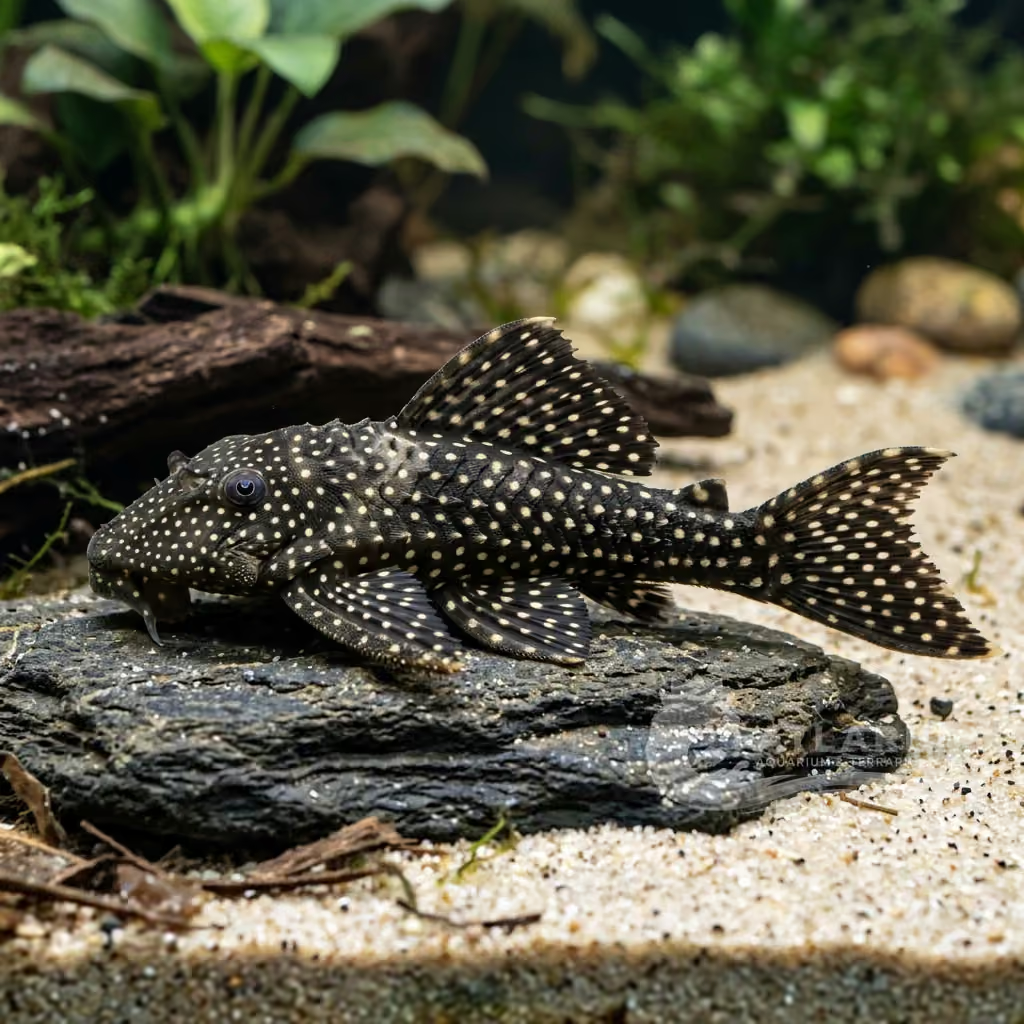
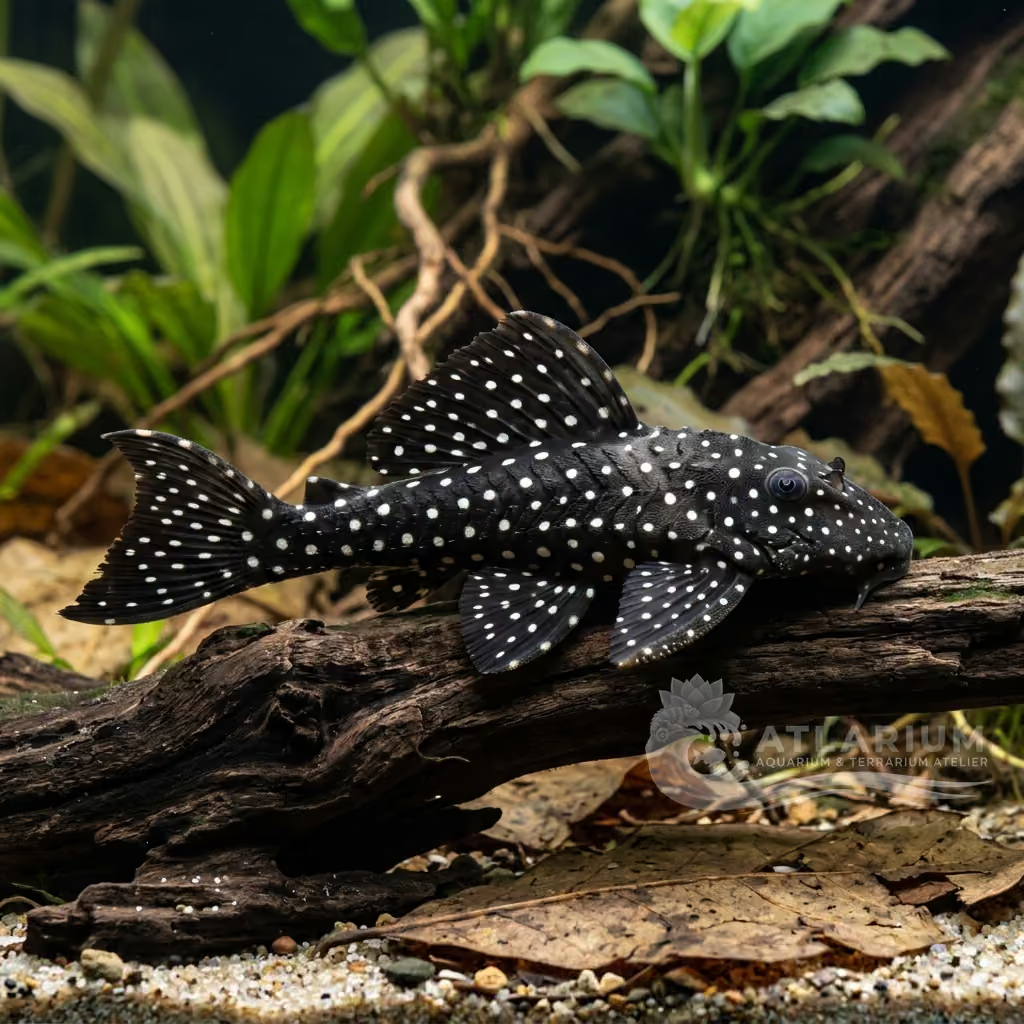
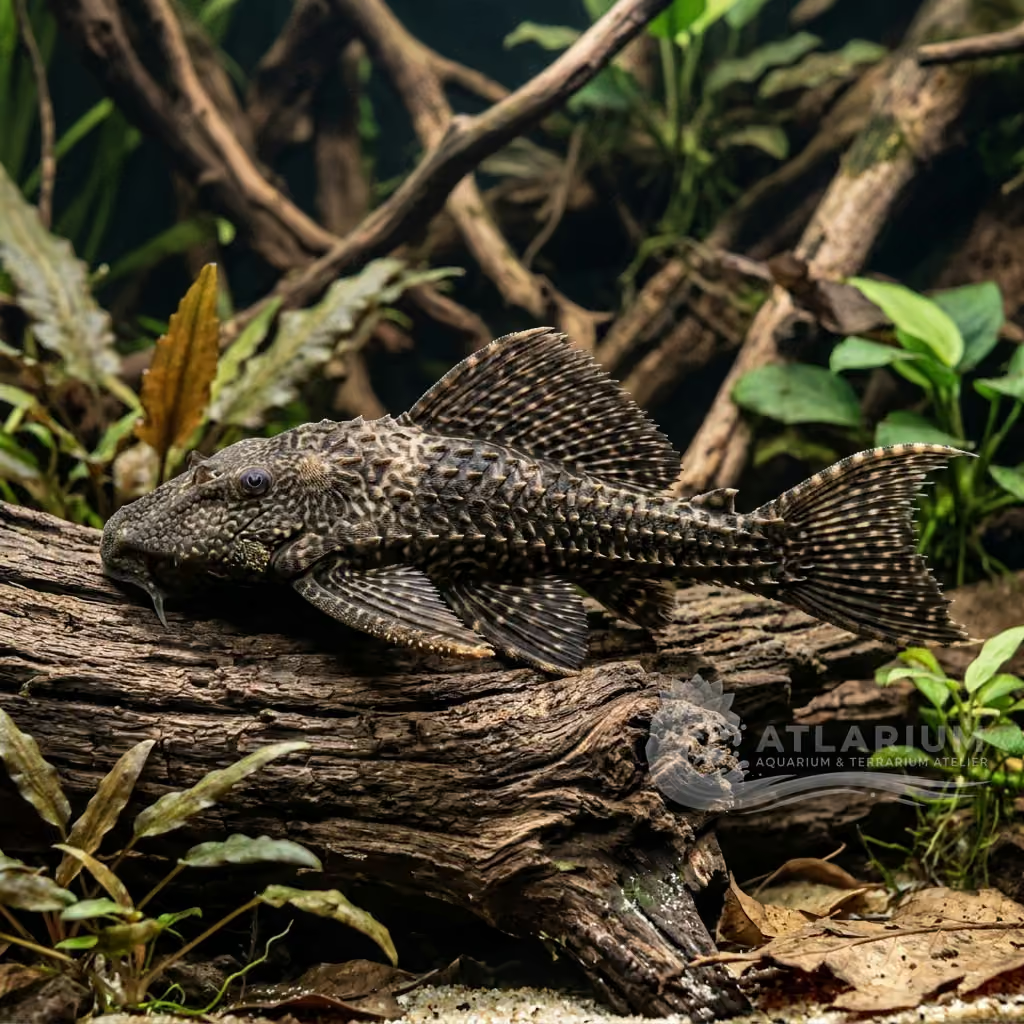
The king of armored carnivores: the 'Scarlet Pleco' (L025). The Holy Grail of South American enthusiasts. Weighs and scratches like a stone, armed with hundreds of thorns. It is dark with hypnotic and colossal full bright scarlet red fins.
Water Temperature
27 - 31 °C
pH Value
6 - 7.4
Water type
Freshwater
Tank level
Bottom
Adult size
40 cm
Minimum tank volume
>= 400 L
Minimum group
>= 1
GH
2 - 15 dGH
KH
1 - 7 dKH
TDS
40 - 295 ppm
Conductivity
63 - 461 uS/cm

Species description
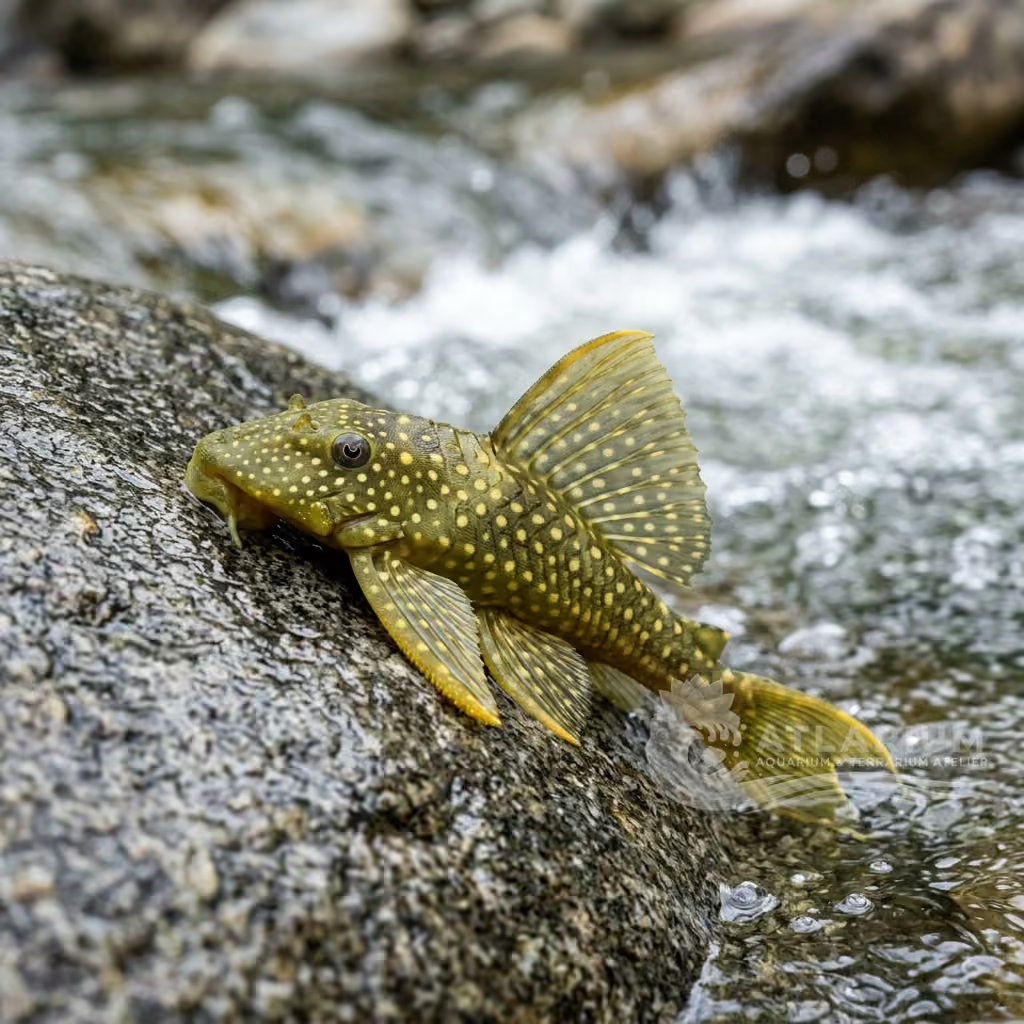
Geographical Origin and Habitat: The most coveted treasure of the turbulent and heavily exploited Rio Xingu (State of Pará, Brazil). Resides in the shadows of the abyssal crystal-clear water seabeds, clinging to or wedged in the claustrophobic labyrinth between huge granite boulders, stoically resisting jets of very hot and very fast water in deep and dark areas far from the soft and sandy banks.
Taxonomy and Morphology: Loricariidae family. World market icon with the golden initials L025. Finally baptized Pseudacanthicus pirarara. A spiked colossus that, in enormous mature aquariums, reaches close to 40-45 centimeters (16-18 inches) of lethal and very solid grandeur. It is not an algae eater: it possesses a large infernal maw armed with very rare but very powerful large massive and unique teeth that act as deadly carapace-crushing wire cutters for water crabs and snails. It is an armored 'Cactus Pleco': it has no bare skin, the entire body is covered with a thick rough armor bristling with countless sharp cutting horny claws (use bags without nets to catch it, under penalty of mutilation).
Social Behavior: Its undisputed majesty of the rocky abyss. Apparent diurnal apathy: remains buried in the titanic caves like a pungent statue in the dark. Formidable nocturnal territorial hunter: goes out with an open maw claiming dominance of the seabed and chasing away any other large Loricariid (especially other Pseudacanthicus or conspecific males) with deadly blows of a spiny whipping tail and lethal snouts. Absolutely does not disturb or ever interest itself in small mid-water or surface fish.
Coloration and Sexual Dimorphism: Monstrous and dazzling primordial beauty worth a thousand euros. Thick Asian-armored dull olive green, pitch, very dark ash sand or ink black background base, massively pitted by indistinguishable blurred dark mud spots. The exhibition that gives the fish its name ('Scarlet') reigns on the immense fins (Breathtaking sail dorsal, gigantic V-shaped caudal, pectorals): they are solid, thick, and uniformly dyed in frightening and dazzling blocks of a dense brilliant blood SCARLET RED and pure burning fire in blinding hypnotic contrast, without interrupted specks. MONSTER DIMORPHISM: Giant mature males extract thick, very dense, long, pungent hairy spears of spikes ('odontodes') on the gills of the cheeks (moflete) and the entire lateral abdomen near the tail; females are titanic swollen gravid spheres and bald of hairy pungent darts on the flanks.

Care, breeding and tankmates
Aquarium Setup: FishBase records Pseudacanthicus pirarara as freshwater, demersal, and tropical, with distribution in the Xingu River, Brazil. It reports a maximum length of 40.5 cm TL and a maximum published weight of 950.00 g.
Feeding and Diet: This recovery makes no source-backed statement about feeding or diet beyond the facts cited above.
Water Quality: This recovery makes no source-backed water-parameter statement beyond the facts cited above.
Compatibility and Coexistence: This recovery makes no source-backed statement about compatibility or coexistence beyond the facts cited above.
Aquarium Breeding: This recovery makes no source-backed statement about aquarium breeding beyond the facts cited above.
Risks and Disease: This recovery makes no source-backed claim about risks or disease beyond the facts cited above.

Geographic origin and distribution
The most coveted treasure of the turbulent and heavily exploited Rio Xingu (State of Pará, Brazil). Resides in the shadows of the abyssal crystal-clear water seabeds, clinging to or wedged in the claustrophobic labyrinth between huge granite boulders, stoically resisting jets of very hot and very fast water in deep and dark areas far from the soft and sandy banks.
Origin
Extra-Amazon South AmericaNorth America

Fish profile
- Temperament
- Semi-aggressive
- Highly territorial and aggressive, particularly towards other Pseudacanthicus or similar plecos. They will use their extensive odontodes as weapons. Care must be taken when selecting tankmates.
- Diet
- Omnivore
- Carnivorous scavengers that need a high-protein diet. Feed them prawn, cockle, earthworms, sinking carnivore pellets, and frozen foods. They do not eat algae and require minimal vegetable matter.
- Life expectancy
- 10-15 years
- Adult size
- 40 cm
- Sex ratio
- Flexible
- Maintain one male per tank to prevent severe territorial disputes. If attempting to breed, one male to several females in a very large setup is optimal. Sexing is based on head shape and odontode growth in adults.
- Feeding frequency
- Twice daily
- Feed once a day, preferably after lights out. They are nocturnal feeders. Ensure they get their share of food before faster tankmates consume it.
- Bioload
- High
- High bioload as they grow very large and consume substantial amounts of protein. Their waste output is significant. Heavy-duty biological and mechanical filtration is required.
- Flow
- Stagnant
- Thrive in environments with moderate to strong current. Highly oxygenated water is essential for their well-being. Powerheads or circulation pumps are beneficial.
- Jump risk
- No
- Reproduction
- Oviparous
- Cave spawners, but breeding in home aquaria is rare and difficult. Requires large caves, pristine water quality, and specific environmental triggers. The male assumes parental care of the eggs.
- Compatibility & tankmates
- Territorial
- Aggressive and fiercely territorial towards other bottom dwellers. They should only be housed with large, robust mid to top-water fish. Avoid keeping multiple males together unless the aquarium is exceptionally large.
- Tank level
- Bottom
- Bottom dwellers exclusively. They require numerous large caves, PVC pipes, or crevices for hiding. They will aggressively defend their chosen cave.

Scientific Parameters & Models
FishBase
Window to the official scientific data of the species
FishBase v25.04Data synced on: 06/15/2026
- Resilience
- Low (4.5 - 14 years)
- Phylogenetic uniqueness (PD50)
- 0.5039
- Bayesian Length-Weight
- a = 0.01259, b = 2.99
- VulnerabilityLow to moderate vulnerability (31 / 100)

Related species
Recommendations grouped by close relatives, companion choices, and similar care.