Encyclopaedia

FishFreshwaterIntermediate
©AI Generated·Proprietary

Green Phantom Pleco

Hemiancistrus subviridis

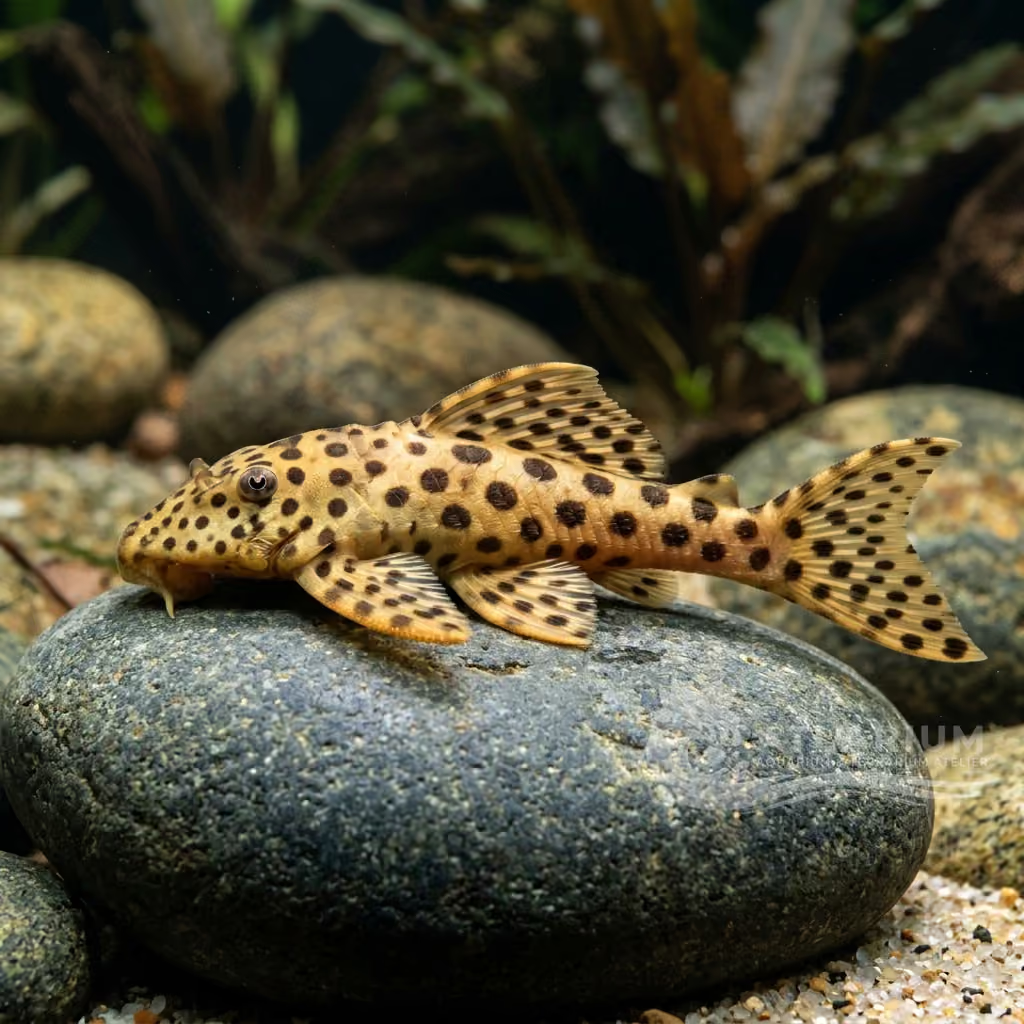
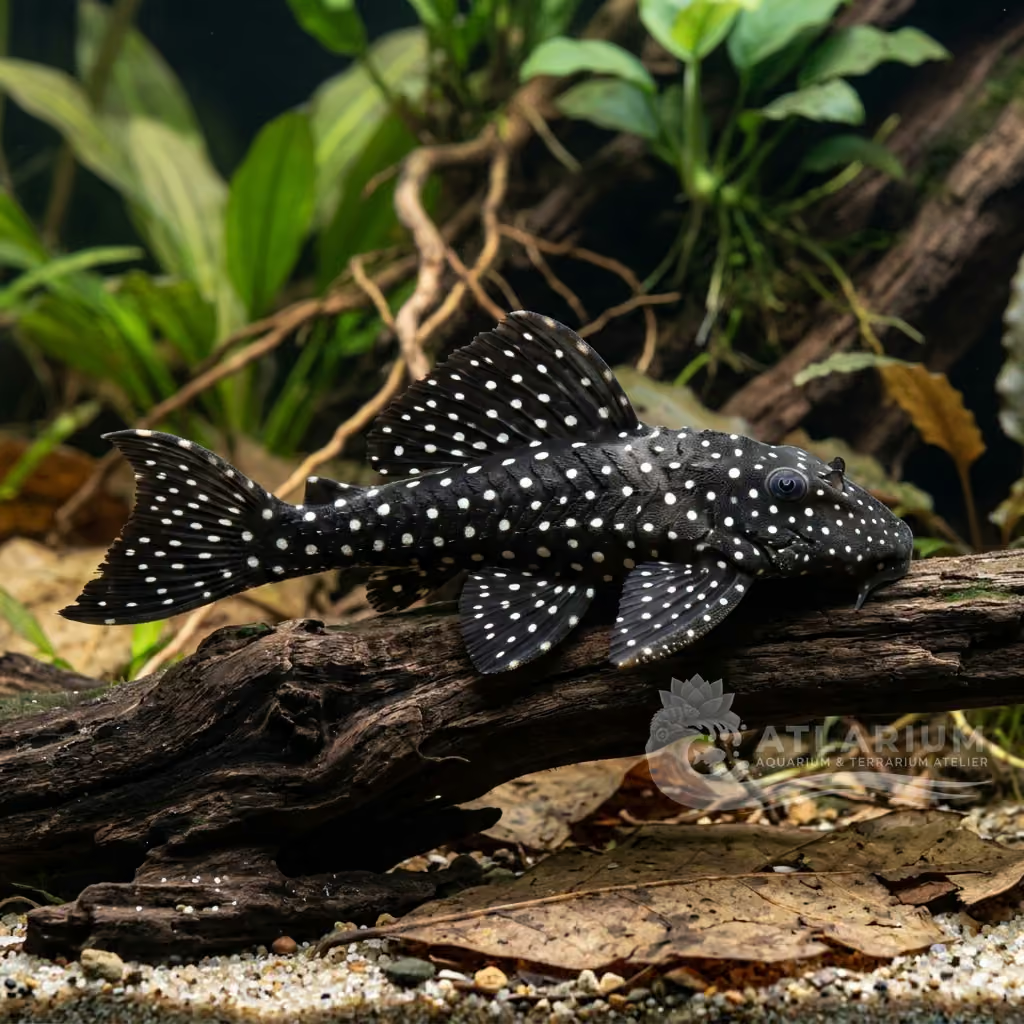
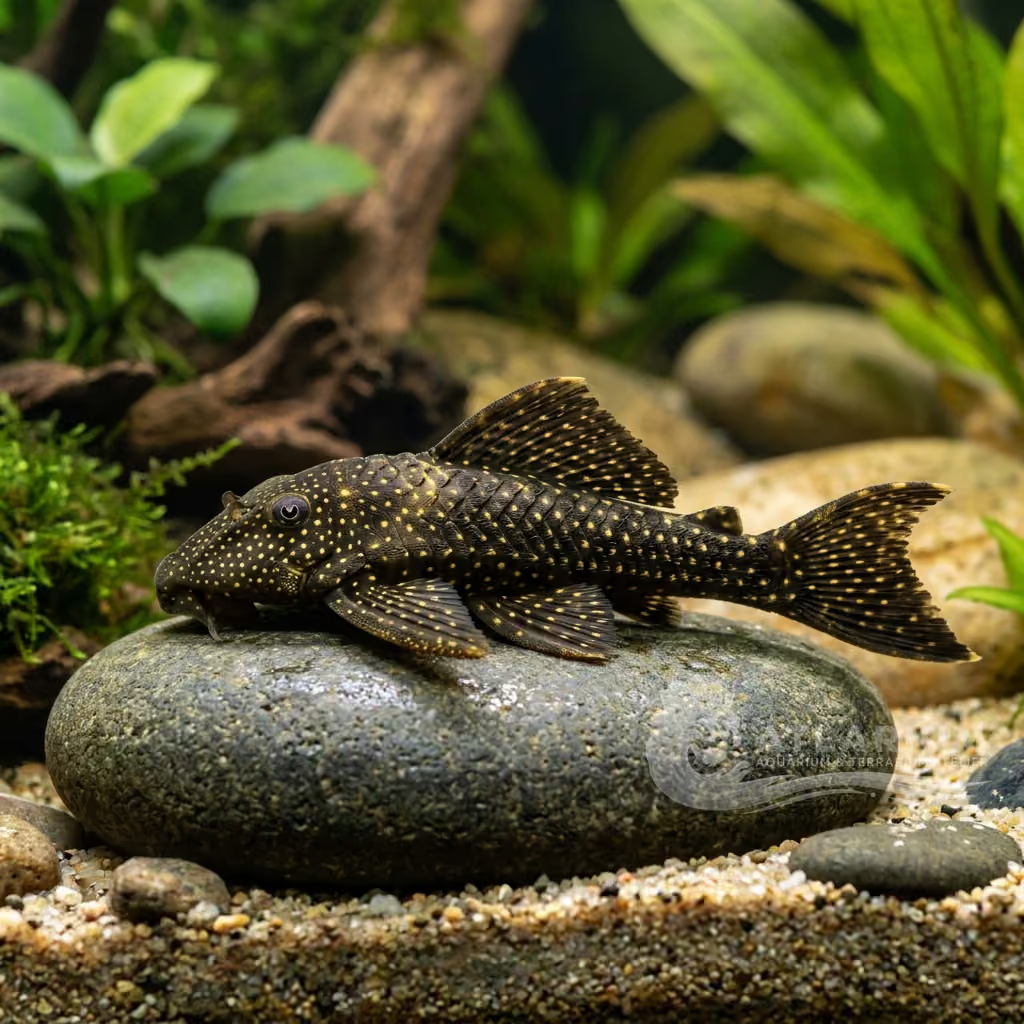
The Green Phantom Pleco (L200) is a breathtaking colossus that breaks the typical greyness of many bottom-dwelling fish. Reaching 20 cm (8 inches), this imposing species sports an intoxicating vibrant emerald or olive green color, punctuated by luminescent yellow spots on the front half of the body. Like many large Orinoco Loricariids, it is a demanding inhabitant of the rapids, requiring turbulent and extremely clean water management. Its bold green beauty makes it one of the most admired 'show-stopper' Plecos in large-capacity aquariums.

Taxonomy
Class:Actinopteri
Order:Siluriformes
Family:Loricariidae
Subfamily:Hypostominae
Genus:Hemiancistrus
Species:Hemiancistrus subviridis

Share

Check out Green Phantom Pleco on Atlarium

PracticeRecognition quizzesPhotos, names, origins, and puzzles to review Atlas species.Open quizzes
Water Temperature

25 - 30 °C

pH Value

6 - 7.5

Water type

Freshwater

Tank level

Bottom

Adult size

20 cm

Minimum tank volume

>= 300 L

Minimum group

>= 1

GH

2 - 12 dGH

KH

1 - 6 dKH

TDS

40 - 240 ppm

Conductivity

63 - 375 uS/cm

Species description

Geographical Origin and Habitat: Orinoco River (Venezuela, among the granite boulders). Lives in deep, fast, warm waters rich in dark rocky crevices and very little vegetation, where oxygenation is violent.
Taxonomy and Morphology: Green Phantom Pleco / L200 (Hemiancistrus subviridis). Often confused with Baryancistrus demantoides ("Hi-Fin"), it is distinguished by having the dorsal fin separated from the adipose fin (not attached). Massive armored head and sucking mouth.
Social Behavior: Strictly sedentary and nocturnal/crepuscular. Chooses "THE" cave and defends it to the death from its peers by brutally driving them away with headbutts and peduncle strikes, while completely ignoring other non-benthic fish.
Coloration and Sexual Dimorphism: A spectacle of nature: chartreuse green body color (bright/phosphorescent lime green), with faded white polka dots concentrated on the head that thin out towards the tail. The adult male has a colossal head and develops spiny odontodes on the snout.

Care, breeding and tankmates

Aquarium Setup: Requires tank (120+ cm / 48+ inches) in "River Rapids" style. Huge and heavy smooth rounded stones, wood crevices in which to settle and powerful directional circulation pumps to mimic waterfalls are needed. No need for bright light.
Diet and Feeding: Omnivorous scraper (Aufwuchs). Grazes live algae patina, but algae alone will make it starve to death. Offer massive rations of sinking wafers, spirulina/protein tablets, mussels and soft woods that help to rasp for digestion.
Water Quality: Requires very warm temperature always (27-30°C / 81-86°F) and almost surgical purity. Like all tropical current Plecos, with high nitrates it begins to secrete protective mucus, turning pale, before blocking and dying.
Compatibility and Cohabitation: The King of South American Cichlids. Perfect for aquariums with Geophagus, Discus (watch out for strong currents), large tetras (Rummy-Nose, Silver dollar). Do not join two L200 males unless you have tanks over 2 meters (6.5 feet).
Aquarium Breeding: Very difficult in captivity. Classic Cave-Spawner, the male blocks the entrance to a narrow crevice with his body, wedging the female until spawning, and broods the young for weeks fanning them in the dark.
Risks and Diseases: Post-import malnutrition. 60% of caught (Wild) L200s die within 3 months because the belly, already sunken by the long fast of naval transport, develops parasites and does not resume digestive functions (Sunken belly = avoid purchasing).

Geographic Origin and Distribution

Orinoco River (Venezuela, among the granite boulders). Lives in deep, fast, warm waters rich in dark rocky crevices and very little vegetation, where oxygenation is violent.

Origin

Amazon, Orinoco, and Guianas

Fish profile

Temperament
Semi-aggressive
To most fish, the Green Phantom is incredibly peaceful and shy. They prefer to stay out of sight during the day and mind their own business. However, they fiercely defend their chosen cave against any fish that comes too close.
Diet
Omnivore
This species is primarily an omnivore with a strong preference for aufwuchs and meaty foods. Offer high-quality sinking pellets, frozen bloodworms, and crustaceans alongside vegetable matter. Driftwood is essential for their digestion and should always be available in the tank.
Sex ratio
Solitary
Adult males develop a broader head and significantly larger odontodes than females. It is best to keep them solitary unless attempting to breed in a very large aquarium. Males are highly intolerant of each other and will aggressively fight over territory.
Feeding frequency
Continuous
Feed them once a day, preferably at night when they are most active. Ensure that enough food reaches the bottom without being intercepted by faster tank mates. Remove any uneaten fresh vegetables the following morning.
Bioload
High
The Green Phantom Pleco contributes a high bioload to the aquarium as it grows. It is a messy eater that produces significant amounts of waste constantly. A powerful canister filter and rigorous maintenance schedule are required to handle its biological output.
Flow
Strong
Originating from the fast-flowing Rio Orinoco, they demand high water flow and pristine water quality. Excellent oxygenation is non-negotiable for their long-term health and survival. Use strong powerheads to simulate the rushing rapids of their natural environment.
Jump risk
No
Reproduction
Rare / not documented
Breeding the Green Phantom Pleco is notoriously difficult but has been achieved by dedicated hobbyists. They are cave spawners that require tightly fitting breeding tubes and optimal water parameters. Cool water changes to simulate the rainy season are often used to trigger spawning.
Compatibility & tankmates
Community
It is generally peaceful and an excellent companion for a variety of community fish. It does well with tetras, peaceful cichlids, and mid-to-top dwelling species. However, it can be highly territorial and aggressive toward other plecos and bottom-dwellers.
Tank level
Bottom
They inhabit the very bottom of the aquarium, clinging to the substrate, rocks, and driftwood. They require a highly structured environment with plenty of smooth stones and deep caves. They will remain hidden in these crevices for most of the daylight hours.

Window to the official scientific data of the species

Data synced on: 06/15/2026

Scientific Parameters & Models

Resilience
Medium (1.4 - 4.4 years)
Phylogenetic uniqueness (PD50)
0.5
Bayesian Length-Weight
a = 0.01549, b = 2.96
VulnerabilityLow vulnerability (10 / 100)

Image gallery

Licensed images linked to the species or, when marked, to the closest representative taxon.

Related species

Recommendations grouped by close relatives, companion choices, and similar care.

Variants and close relatives

Same atlas type, nearby scientific identity, genus, or family.

Ghost Pleco (L141/L215)

Ghost Pleco (L141/L215)

Hemiancistrus snethlageae

View details->
Meandrinus Pleco

Meandrinus Pleco

Hemiancistrus

View details->
Big Spot Pleco (L075)

Big Spot Pleco (L075)

Hemiancistrus sabaji

View details->
Guahibo Pleco

Guahibo Pleco

Hemiancistrus guahiborum

View details->
Contradens Pleco

Contradens Pleco

Hypancistrus contradens

View details->
Hi-Fin Green Phantom Pleco (L200)

Hi-Fin Green Phantom Pleco (L200)

Baryancistrus demantoides

View details->
Leopard Frog Pleco (L134)

Leopard Frog Pleco (L134)

Peckoltia compta

View details->
Tapajós Royal Pleco (L027)

Tapajós Royal Pleco (L027)

Panaque armbrusteri

View details->
Golden Vampire Pleco

Golden Vampire Pleco

Leporacanthicus heterodon

View details->
Snowball Pleco (L026)

Snowball Pleco (L026)

Baryancistrus niveatus

View details->
Snowball Pleco (L142/LDA033)

Snowball Pleco (L142/LDA033)

Baryancistrus sp. L142

View details->
Zebra Pleco (L046)

Zebra Pleco (L046)

Hypancistrus zebra

View details->
Snowball Pleco

Snowball Pleco

Hypancistrus inspector

View details->
Sultan Pleco (L264)

Sultan Pleco (L264)

Leporacanthicus joselimai

View details->
Orange-fin Xingu Pleco (L012/L013)

Orange-fin Xingu Pleco (L012/L013)

Peckoltia feldbergae

View details->
Para Pleco (L075)

Para Pleco (L075)

Ancistomus

View details->

Recommended companions

Compatible cards from coherent ecosystems with matching parameters.

Ammannia sp. 'Bonsai'
Plant

Ammannia sp. 'Bonsai'

Ammannia sp. 'Bonsai'

View details->
Bacopa sp. "Japan"
Plant

Bacopa sp. "Japan"

Bacopa sp. "Japan"

View details->
Bolbitis heteroclita
Plant

Bolbitis heteroclita

Bolbitis heteroclita

View details->
Arrowhead Anubias
Plant

Arrowhead Anubias

Anubias hastifolia

View details->
Bucephalandra motleyana "Braun-rot narrow"
Plant

Bucephalandra motleyana "Braun-rot narrow"

Bucephalandra motleyana "Braun-rot narrow"

View details->
Bucephalandra motleyana "Riam Macam"
Plant

Bucephalandra motleyana "Riam Macam"

Bucephalandra motleyana "Riam Macam"

View details->
Alternanthera reineckii "rosaefolia minor"
Plant

Alternanthera reineckii "rosaefolia minor"

Alternanthera reineckii "rosaefolia minor"

View details->
Ammannia mauritiana
Plant

Ammannia mauritiana

Ammannia mauritiana

View details->
Bucephalandra motleyana "Braun-rot" ("Serimbu")
Plant

Bucephalandra motleyana "Braun-rot" ("Serimbu")

Bucephalandra motleyana "Braun-rot" ("Serimbu")

View details->
Bucephalandra motleyana "Kapit"
Plant

Bucephalandra motleyana "Kapit"

Bucephalandra motleyana "Kapit"

View details->
Bucephalandra motleyana "Pancuraji"
Plant

Bucephalandra motleyana "Pancuraji"

Bucephalandra motleyana "Pancuraji"

View details->
Bucephalandra sp. "Bukit Kelam / Sintang"
Plant

Bucephalandra sp. "Bukit Kelam / Sintang"

Bucephalandra sp. "Bukit Kelam / Sintang"

View details->
Bucephalandra sp. "Melawi"
Plant

Bucephalandra sp. "Melawi"

Bucephalandra sp. "Melawi"

View details->
Bucephalandra pygmaea "Bukit Kelam / Sintang"
Plant

Bucephalandra pygmaea "Bukit Kelam / Sintang"

Bucephalandra pygmaea "Bukit Kelam / Sintang"

View details->
Bucephalandra pygmaea "Kapit"
Plant

Bucephalandra pygmaea "Kapit"

Bucephalandra pygmaea "Kapit"

View details->
Bucephalandra sordidula
Plant

Bucephalandra sordidula

Bucephalandra sordidula

View details->

Similar care

Cards with similar requirements, difficulty, habitat, and husbandry profile.

King Tiger Pleco (L066)

King Tiger Pleco (L066)

Hypancistrus sp. L066

View details->
Marble Whiptail

Marble Whiptail

Loricaria simillima

View details->
Lamontichthys

Lamontichthys

Lamontichthys filamentosus

View details->
Giant-eye Otocinclus

Giant-eye Otocinclus

Hypoptopoma gulare

View details->
Red Lizard Catfish (L010a)

Red Lizard Catfish (L010a)

Leliella sp.

View details->
Golden Nugget Pleco (L018)

Golden Nugget Pleco (L018)

Baryancistrus xanthellus

View details->
Three Beacon Pleco (L091)

Three Beacon Pleco (L091)

Leporacanthicus triactis

View details->
Bristlemouth Pleco

Bristlemouth Pleco

Peckoltia multispinis

View details->
Mango Pleco

Mango Pleco

Baryancistrus chrysolomus

View details->
Queen Arabesque Pleco (L260)

Queen Arabesque Pleco (L260)

Hypancistrus sp. L260

View details->
Tentacle Lasiancistrus

Tentacle Lasiancistrus

Lasiancistrus tentaculatus

View details->
Super White Pleco (L236)

Super White Pleco (L236)

Hypancistrus sp. L236

View details->
Medusa Pleco (L034)

Medusa Pleco (L034)

Ancistrus ranunculus

View details->
Yellow King Tiger Pleco (L333)

Yellow King Tiger Pleco (L333)

Hypancistrus sp. L333

View details->
Monte Dourado Pleco (L411)

Monte Dourado Pleco (L411)

Hypancistrus sp. L411

View details->
Fine-Spot Golden Nugget Pleco (L081)

Fine-Spot Golden Nugget Pleco (L081)

Baryancistrus sp.

View details->
Last updated: 06/30/2026
Green Phantom Pleco (Hemiancistrus subviridis) Care Guide & Tank Setup | Atlarium