Encyclopaedia

Curated cards for behavior, feeding, and compatibility.

Copy the link or share this page so you can easily find it again.

FishFreshwaterExpert
©AI Generated·Proprietary

Sunshine Pleco (L014)

Scobinancistrus aureatus

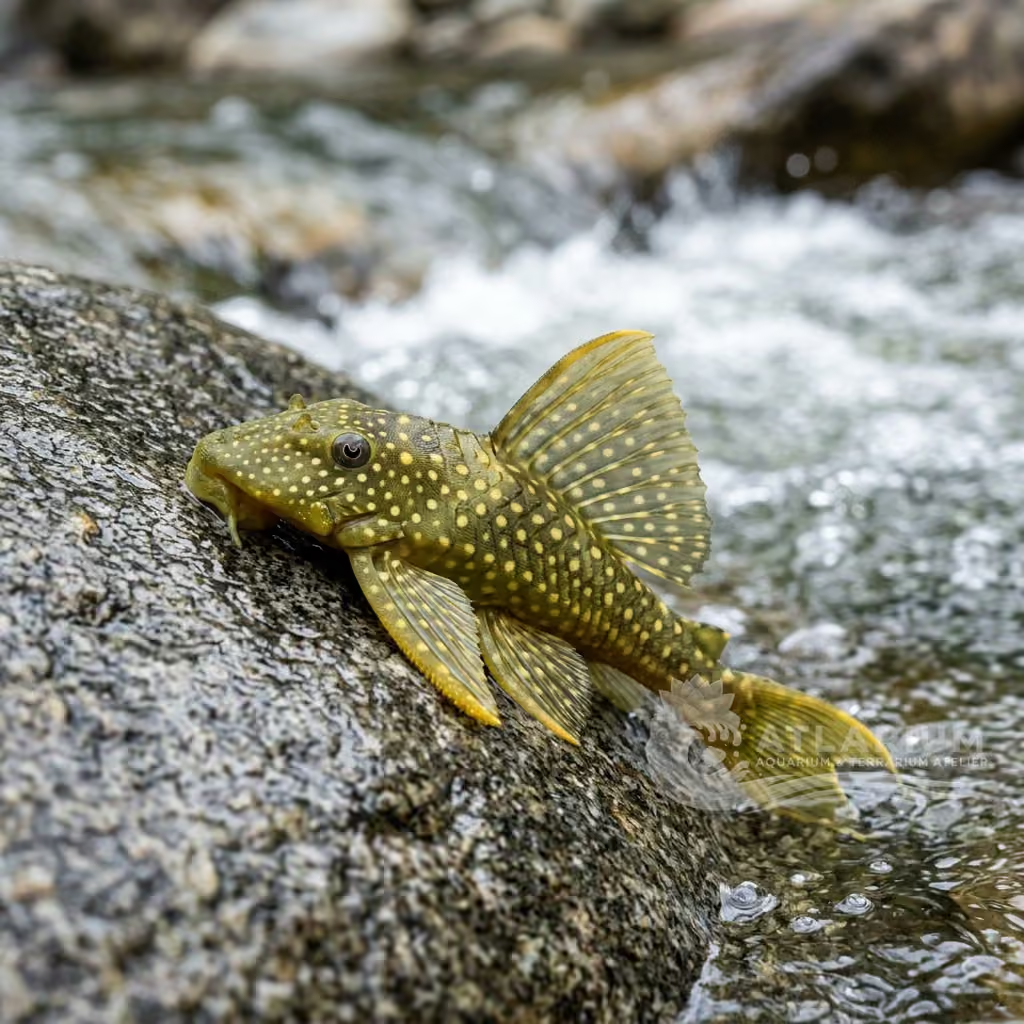
The Sunshine Pleco (Scobinancistrus aureatus or L014) is a golden colossus of the riverbed. Famous for its immense sun-yellow fins that contrast with a stocky sand-colored body with large polka dots, this magnificent loricariid easily reaches 30 cm (12 inches) in length. Belonging to the group of large carnivores of the Xingu river, it has specialized spatulate teeth (similar to those of the Panaque, but with a carnivorous function) to dismember snails and crustaceans. Highly sought after and of high value, it is a formidable fish that requires a long-term commitment and mammoth tanks.

Water Temperature

26 - 30 °C

pH Value

6 - 7.5

Water type

Freshwater

Tank level

Bottom

Adult size

30 cm

Minimum tank volume

>= 500 L

Minimum group

>= 1

GH

2 - 15 dGH

KH

1 - 7 dKH

TDS

40 - 295 ppm

Conductivity

63 - 461 uS/cm

Species description

Geographical Origin and Habitat: Xingu River in Brazil, known for its fast and warm waters. It inhabits deep water areas rich in rocky hiding places. It is a rheophilic species primarily found in rapids formed by large basaltic boulders.
Taxonomy and Morphology: Known as L014 or Sunshine Pleco, it belongs to the genus Scobinancistrus. It reaches a maximum size of about 30 cm (12 inches). It is characterized by specialized spatulate teeth arranged in tight rows, ideal for gripping and scraping meat out of snail and bivalve shells.
Social Behavior: Being a benthic hunter, it is not shy and will often show itself. However, zero tolerance for its own species or other meat-eating Plecos (like Pseudacanthicus). Territorial fights between these colossi leave horrid scars or result in death.
Coloration and Sexual Dimorphism: Features a stunning dark or olive background body color, completely covered in large bright golden-yellow spots. The large pectoral, dorsal, and caudal fins display an intense sun-yellow color. Mature males possess more pronounced odontodes on their pectoral fins and body sides, and a broader head than females.

Care, breeding and tankmates

Aquarium Setup: An adult L014 is a muscle tank. The tank (over 150 cm / 5 feet) must be set up with heavy smooth boulders, large flat roots, and thick PVC pipes that provide dark shelters large enough for it. Any unstable rock will be overturned. Plumbing is the heart of success: huge external filtration systems (Sump or 2-3 canisters) are needed combined with industrial *wavemakers* (flow pumps), since dissolved oxygen in water at 29°C (84°F) drops dramatically.
Diet and Feeding: Confusion about its diet is the main mistake made by hobbyists. Looking at its flat teeth (similar to the wood-eating Panaque), many offer it vegetables and logs, condemning it to malnutrition. In nature, these formidable teeth function like crustacean pincers: they are made to crush and scrape the meat of freshwater snails and mussels out of the shell. Its diet is strictly carnivorous, heavy and polluting (mussels, prawns, earthworms).
Water Quality: The high temperature combined with the organic pollution of meat requires titanic water changes. They do not tolerate ammonia or nitrite spikes in the slightest, a sign of insufficiently mature or poorly filtered tanks. Keep the water temperature between 26-30°C (79-86°F), pH 6.0-7.5, and GH 2-15.
Compatibility and Cohabitation: Great tankmate for large Cichlids (Severum, Geophagus), large characins, and Datnioides. Cohabitation is deadly if combined with large Pseudacanthicus or Leporacanthicus due to extreme territorial rivalry over caves. Can be kept with active midwater species.
Aquarium Breeding: Rare in home aquaria. It occurs in long, narrow clay or stone caves placed under extremely strong water currents. The male coaxes the female to spawn inside and then guards the clutch until the fry hatch.
Risks and Diseases: The most common risk is malnutrition caused by an incorrect diet (exclusively vegetarian). Due to the high organic load from a protein-rich diet and high water temperatures, a lack of oxygen or poor filtration can lead to asphyxiation or fatal bacterial infections.

Geographic Origin and Distribution

Xingu River in Brazil, known for its fast and warm waters. It inhabits deep water areas rich in rocky hiding places. It is a rheophilic species primarily found in rapids formed by large basaltic boulders.

Origin

Extra-Amazon South America

Fish profile

Temperament
Semi-aggressive
They are somewhat reclusive and nocturnal, spending much of the day hidden in caves. While peaceful to fish in the water column, they will vigorously defend their chosen cave against other bottom dwellers. Providing multiple hiding spots reduces aggression significantly.
Diet
Carnivore
Unlike many plecos, this species is primarily carnivorous and requires a protein-rich diet. They should be fed meaty foods such as frozen bloodworms, chopped shrimp, mussels, and high-quality carnivore pellets. Vegetable matter is largely ignored but can be offered occasionally.
Life expectancy
10-15 years
In captivity, the Sunshine Pleco can live for 10 to 15 years, and even longer when kept in optimal, highly stable water conditions. Achieving this lifespan requires maintaining clean water with high oxygenation and a strong flow. Proper nutrition and avoiding territorial stress are also crucial factors in preventing early mortality.
Adult size
30 cm
The catalog's scalar value is 30 cm. The FishBase SPECIES table (v25.04 snapshot) source reports a maximum adult measurement of 29 cm for this species, recorded as total length (TL). The taxonomic record consulted is Scobinancistrus aureatus (v25.04); male or unsexed record. These figures are not interchangeable: the first is the profile's editorial reference, whereas the second is a published maximum under a specific measurement convention; differences among sources can reflect sex, population, life stage and measuring method.
Sex ratio
Solitary
If attempting to breed or keep multiples, provide a large tank and a ratio of one male to one or more females. Males are heavily territorial and will fight if insufficient space and caves are provided. Keeping a single specimen is usually best for most setups.
Feeding frequency
Once daily
Feed them once a day, ideally just before or after the aquarium lights are turned off. They are nocturnal scavengers and prefer to eat in the dark. Adjust portions based on the amount they consume to avoid polluting the water.
Bioload
High
The Sunshine Pleco produces a heavy bioload typical of large loricariids. They consume significant amounts of meaty foods and generate a corresponding amount of waste. Robust mechanical and biological filtration, alongside large water changes, are vital to maintain water quality.
Flow
Strong
They originate from fast-flowing rivers and thrive in aquariums with strong water currents. High oxygenation is an absolute requirement for their survival. Powerheads and air stones should be utilized to keep oxygen levels elevated.
Jump risk
No
Reproduction
Oviparous
Breeding is uncommon in home aquariums but has been achieved by dedicated hobbyists. They are cave spawners, where the male will trap the female in a cave until eggs are laid. The male will then guard and fan the eggs until they hatch.
Compatibility & tankmates
Community
They are generally peaceful towards mid and top-water fish. However, they can be highly territorial and aggressive towards other bottom dwellers, especially other plecos. Best kept with large, robust community fish like Geophagus, Severums, or large characins.
Tank level
Bottom
They are strictly bottom dwellers that spend their time attached to driftwood, rocks, or the glass. They require plenty of caves and crevices to hide in during the day. They rarely venture into the upper levels of the aquarium.

Scientific Parameters & Models

FishBase

Window to the official scientific data of the species

Data synced on: 06/15/2026
Resilience
Medium (1.4 - 4.4 years)
Phylogenetic uniqueness (PD50)
0.625
Bayesian Length-Weight
a = 0.01413, b = 2.96
VulnerabilityLow vulnerability (19 / 100)

Image gallery

Licensed images linked to the species or, when marked, to the closest representative taxon.

Related species

Recommendations grouped by close relatives, companion choices, and similar care.

Last updated: 05/13/2026