Yellow King Tiger Pleco (L333)
Hypancistrus sp. L333
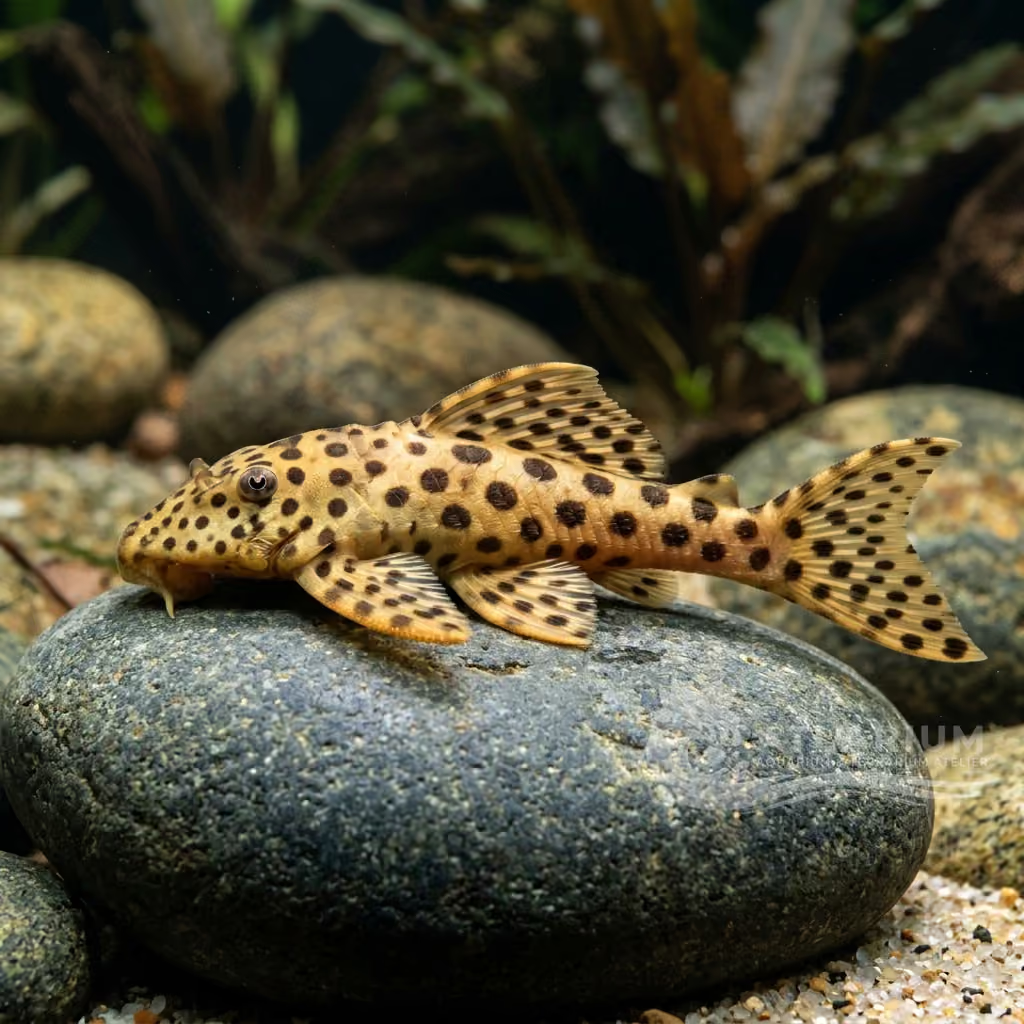
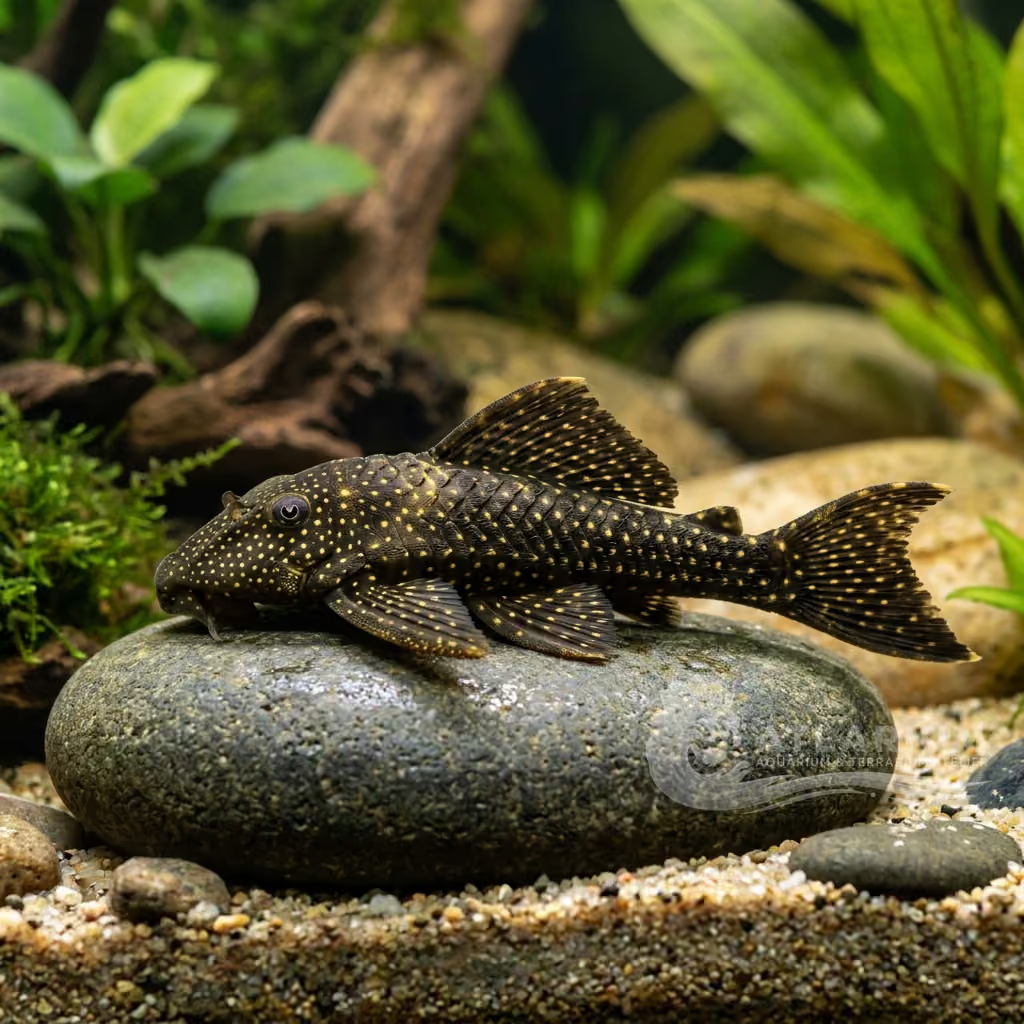
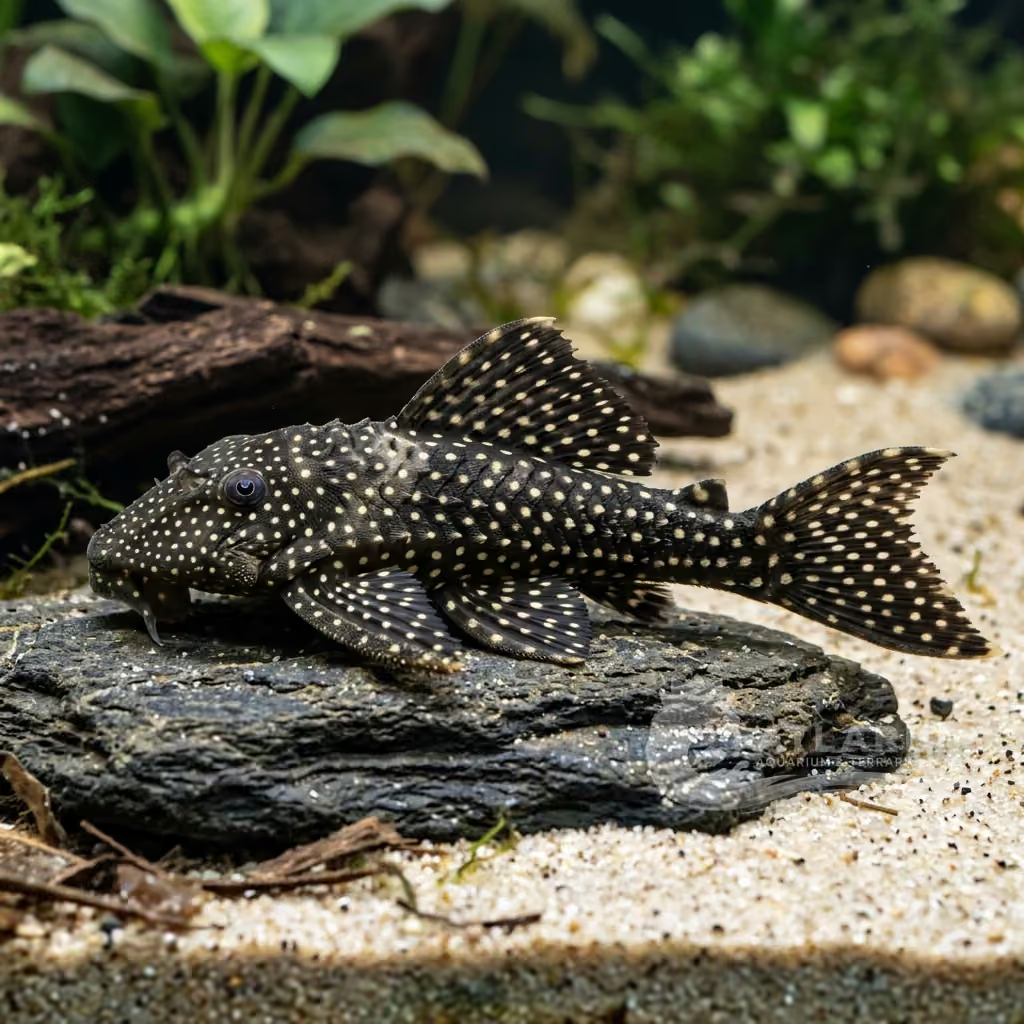
The 'Yellow King Tiger'. Very robust and majestic Loricariid, identical to L066 but noticeably stockier and adorned with intricate dark bands on a vivid yellow-gold or mustard base, sometimes off-white.
Water Temperature
26 - 30 °C
pH Value
5.8 - 7.4
Water type
Freshwater
Tank level
Bottom
Adult size
15 cm
Minimum tank volume
>= 180 L
Minimum group
>= 1
GH
2 - 15 dGH
KH
1 - 7 dKH
TDS
40 - 295 ppm
Conductivity
63 - 461 uS/cm

Species description
Geographical Origin and Habitat: Cohabitant of the deep Rio Xingu in Brazil, a famous hub of mega-diversity for Loricariids. Survives holed up in the endless and dark crevices of magmatic stone canyons sunk into high-flowing rivers, fighting against the impetuous current of the extremely hot and crystal-clear 'White Waters'.
Taxonomy and Morphology: Loricariidae family. 'Older' brother of the L066. Belongs to the endless and confusing family of Brazilian 'Tiger Plecos'. Larger and considerably stockier (comfortably reaches 14-16 cm / 5.5-6.3 inches as an adult in spacious tanks) compared to other zebra Hypancistrus. Possesses the classic massive armored skull and carnivorous dentition (sparse and pointed at the bottom, useful for tearing dead micro-invertebrates fallen in the dark and totally ineffective against annoying algal carpets on the glass).
Social Behavior: Lazy to the extreme limit of the absurd by day, where it lies paralyzed and invisible in the inaccessible depths of amphorae or blind terracotta tubes closed at the back. It is mortally frightened by powerful flashes or LED lamps for demanding plants without a sufficient mass of shading hiding places to retreat into, but at the fall of artificial darkness it rises boldly, arching to crawl like a large aquatic scorpion to ferociously comb every grain of very fine sand in its aquatic home. It is lethally intolerant to the challenges of adult male Loricariids or companions to grab the perfect crevice, driving them away brutally.
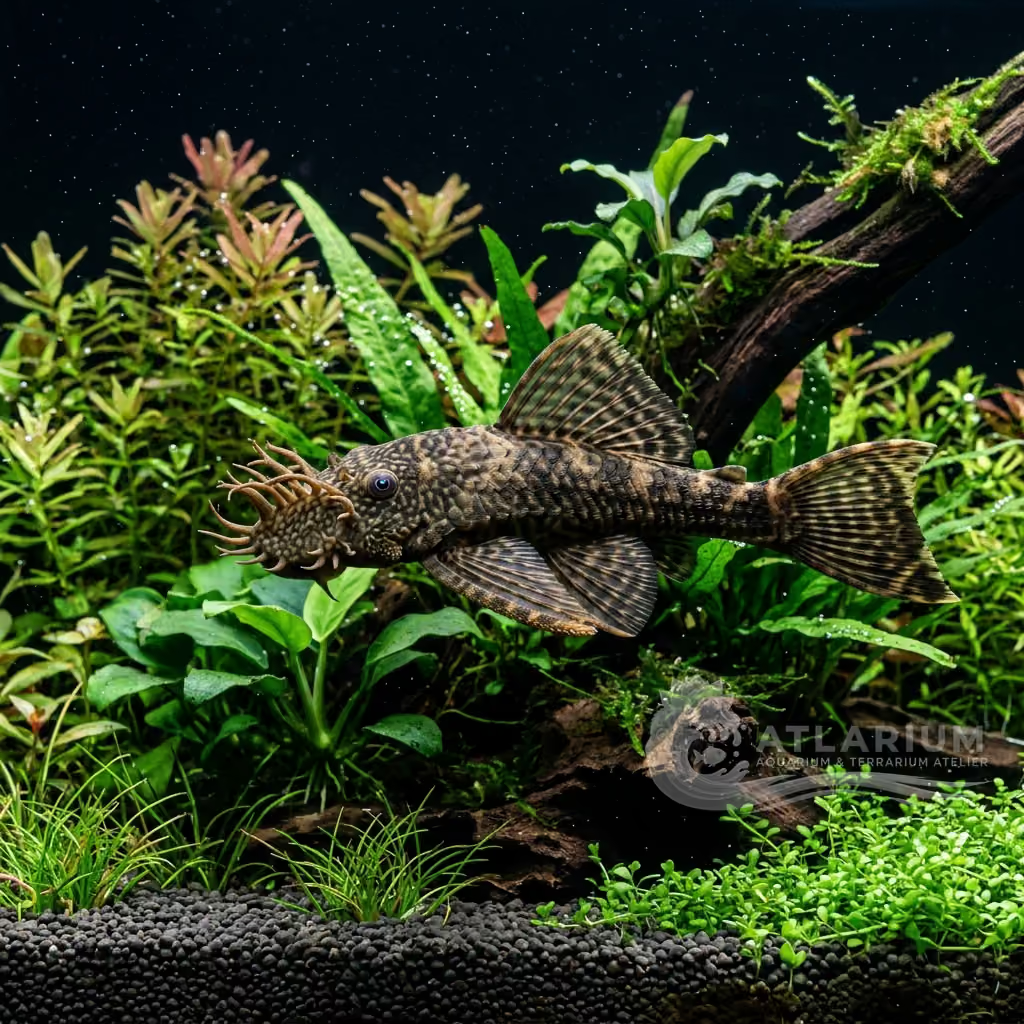
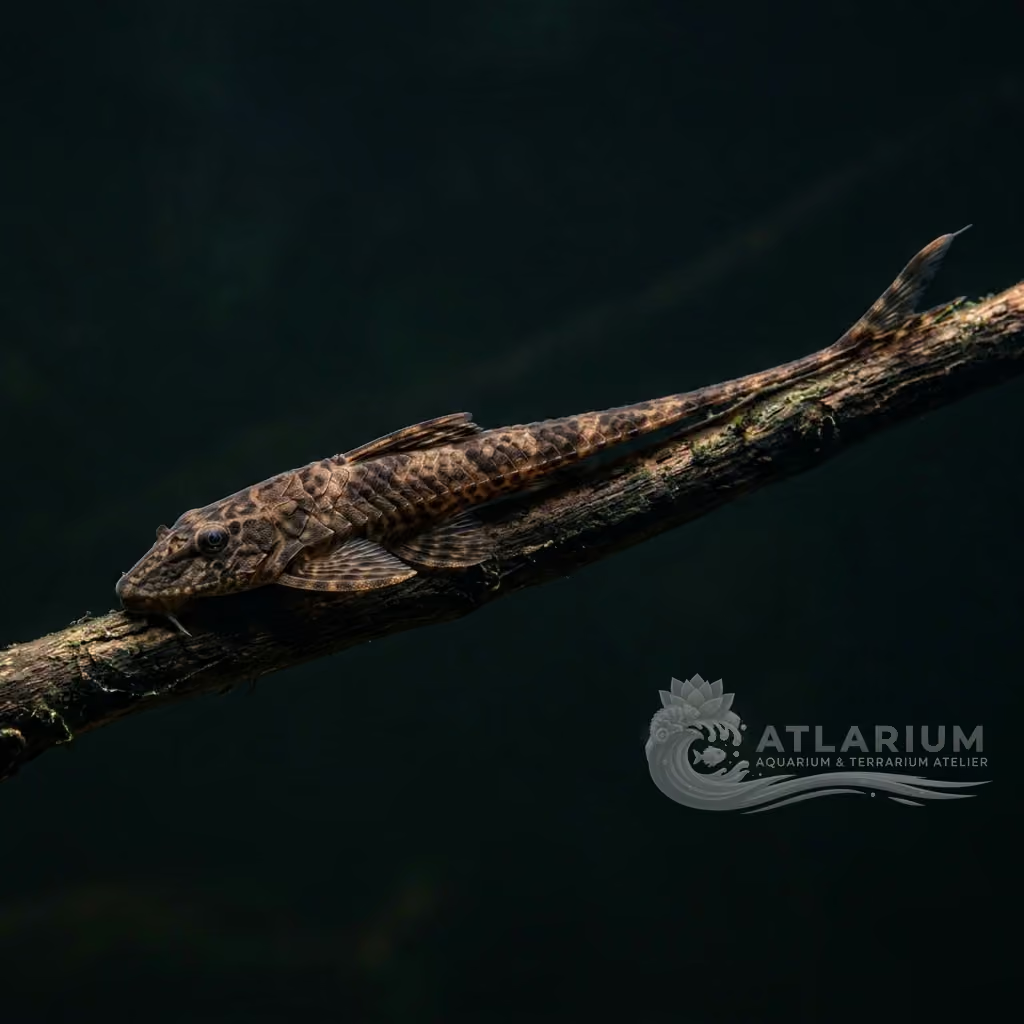
Coloration and Sexual Dimorphism: Magnificently unrepeatable. The base or background of the body is subject to extreme biological drifts and shades (from the very famous MUSTARD YELLOW OR DAZZLING OPALESCENT MOLTEN GOLD of pure 'Yellow' subjects, to faded ivory or dirty cream-white parchment). This substrate is violated, fragmented, and chaotically marked by an unusual dark mass or pitch and dense dark asphalt brown that draws crazy sinuous wavy geometric shapes, tortuous worm-like lines intertwined in a 'cobweb mosaic' by King Tiger where every fish is a true original and unique unrepeatable work of art in the world without a visual twin clone. Adult male dimorphism with the disturbing appearance, especially under strong summer Amazonian heat of furious reproduction, of very bristly and enormous spiny beards and thick pungent protuberances on the entire final section of the side of the tail and disdainful cheeks ('odontodes'); the poor plump round ovoid swollen females seem depilated and totally devoid of such daggers on the cheeks (more tapered in cranial height and massive in the reassuring spherical round abdominal bulk).

Care, breeding and tankmates
Aquarium Setup: Demands vital respect for currents and obstacles: AQUARIUM SET UP WITH LARGE CHAOTIC PILES OF ROUND BOULDER STONES OR SLATE SLABS, mixed without Japanese logic to wood, to create dark prisons and narrow, claustrophobic blind narrow tubes for reproduction and ceramic and terracotta hiding places without which the animal goes into total madness and asphyxiating phobic paranoia and asocial nervous wasting that will dry it up and kill it. WATER FILTRATION VIA STRONG WAVE MAKER, MUST BREAK THE WATER. Do not skimp on aerators turned on at dusk, requires extreme strong constant siphoning cleaning among free sands not triggering putrescent poisons of fecal manure from large and gigantic carnivorous fish. They adore sand, not sharp volcanic rock Manado gravel for lawns.
Diet and Feeding: WILL 100% IGNORE ANY VEGETABLE, ALGAE OR DEAD LEAF IN YOUR AQUARIUM. If you hope he cleans the aquarium, he will strip your bank account, emptying his skeleton in a month. He is a very smart, nocturnal carnivorous scavenger par excellence, furiously waiting for fleshy mush in massive heavy protein tablets that sink fast from excellent brands or better yet mollusk mash jellies (carnivorous Repashy). At night in dense darkness (the real lights off) you will have to hand out handfuls of fresh rinsed frozen food sinking to the bottom: bloodworms, bloody mosquito larvae, asthmatic daphnia, tiny and framed pieces of mussel pulp or enriched satiating brine shrimp that he will steal from frightened tetras.
Water Quality: Manageable difficulty but without serious errors: Scorching and hard Amazonian water. Requires, net of popular beliefs, constant and torrid heat (26°C to 30°C / 79-86°F fixed tropical summer/winter), water below these degrees stagnates in him mortal blocks of slow inhibiting constipation or total absence of digestion of the introduced fleshy matter that putrefies the gastric apparatus killing in peritonitis or asphyxiating wasting in a slow painful agony without appeal in 23° (73°F) water of inexperienced people from an off living room not adequately tropicalized to South American equatorial wild resistance of Xingu pure current boiled by the sun. They survive weak urban currents of hard calcareous water up to the bland moderate level (GH max 15 degrees hard or perfect low soft acid) at an acidic forest pH or urban mediums up to neutral or almost (5.8 to stable safe urban 7.5 tolerated and very safe clean filtered pushed very powerful for dissipation of toxins ammonia potent denitrifying bacteria in maturations and colonies).
Compatibility and Cohabitation: Excellent giant armored supporting actor reactive to lashes and immune in the dark to the large bites of curious fish. Strict cohabitation forced by large thick inexhaustible and cheerful Amazonian sedentary schools (Cardinals in platoons and fast red Rummy Nose on the surface) and fish of large Central American South American lakes or very slow placid large Discus, very hot round Cichlids or small inept slow defenseless faded blue Cichlids, like the dwarf altispinosus that he will ignore majestically passing by his side nocturnal angular like a massive shadow or arrogant Neocaridina shrimp unharmed by his unfamished toothless palate very slow in flight and ambush of small snails.
Aquarium Breeding: Prodigious species reproduced constantly and with success and monetary satisfaction by the dedicated, devoted and passionate amateur if induced with cool water jolts imitating furious Amazonian floods (dry season-deluge rains). Closing the furious little male inside the asphyxiating armored little caves the very round female and wedging the enormous brush tail closure until the exhausting effort of the bride forcing clear and massive ochre eggs to dozens laid in shelter that the hyper-protective tireless very brave dad will blow fanning frantically for weeks without eating, isolated as a fanatical ascetic proud for the safeguarding until the fatal or unhoped-for exit from the tube and lethal dark unleashing on the bottom for autonomous fleshy procurement of the minuscule and frightened exposed fragile miniature tigers, blind fry and very vulnerable desperate to the acute nocturnal hunger of dispersed live microfauna and in the absence of targeted fine pulverized fleshy food injected with precision.
Risks and Diseases: Lethal agony of the occluded and obstructed rotten digestive system causing explosive swellings of the internal abdomen caused by the abominable prolonged abuse of an insane exclusive vegetarian diet or asphyxiating block if prolonged cold of the water. Bloody tearing infected lethal deaths from bacteria in lethal putrescent wounds if induced to cohabit very limited territories forced against territorial Cichlids or fights to the last bite for blind crevices among crowded Loricariids like aggressive Panaque (if foolishly mixed in the dark).

Geographic origin and distribution
Cohabitant of the deep Rio Xingu in Brazil, a famous hub of mega-diversity for Loricariids. Survives holed up in the endless and dark crevices of magmatic stone canyons sunk into high-flowing rivers, fighting against the impetuous current of the extremely hot and crystal-clear 'White Waters'.
Origin
Extra-Amazon South AmericaNorth America

Fish profile
- Temperament
- Semi-aggressive
- They are generally peaceful, shy, and highly reclusive during the day, preferring to avoid conflict. Males, however, can become intensely territorial when defending their chosen spawning cave against conspecifics. Providing an excess of suitable caves easily mitigates aggression and allows multiple males to coexist peacefully.
- Diet
- Omnivore
- They are decidedly carnivorous, showing almost no interest in scraping algae or consuming plant matter. To thrive, they must be fed a varied diet of high-quality sinking carnivore pellets, frozen bloodworms, and chopped prawns. A strict vegetarian diet will ultimately lead to severe malnutrition and death in this species.
- Life expectancy
- 10-15 years
- Adult size
- 15 cm
- Sex ratio
- Group
- Sexual dimorphism becomes obvious in adulthood; males develop significantly longer and denser odontodes on their pectoral fins and cheeks. Males generally have a broader, squarer head, while females appear plumper and more rounded, particularly when carrying eggs. A ratio favoring more females to males is recommended for establishing a harmonious breeding group.
- Feeding frequency
- Twice daily
- Feeding should be conducted once a day, with the best results achieved by feeding after the aquarium lights go out. They are distinctly nocturnal and feel most secure searching for food under the cover of darkness. Sinking the food directly near their preferred caves ensures they get a meal before faster fish steal it.
- Bioload
- Medium
- This stunning pleco produces a moderate bioload that is quite typical for a heavily built, medium-sized Loricariid. Their protein-rich diet means their waste can quickly elevate nitrate levels if tank maintenance is consistently ignored. A strong, mature biological filter paired with rigorous weekly water changes will ensure a healthy environment.
- Flow
- Stagnant
- Originating from the lower Xingu River, they require an environment with strong water flow and high oxygen saturation. High water temperatures (82-86°F) are necessary, which inherently hold less oxygen, making vigorous surface agitation mandatory. Powerheads are highly recommended to simulate the rapid currents of their natural habitat.
- Jump risk
- Yes
- Like the vast majority of plecos, they are specialized bottom dwellers with an incredibly low risk of jumping. They are biologically driven to cling tightly to the substrate and hardscape, avoiding the upper water column entirely. A standard aquarium lid is all that is required to keep them safely enclosed.
- Reproduction
- Oviparous
- They are classic cave spawners and will breed relatively easily in captivity given the correct conditions. The male will choose a tight-fitting cave, entice the female inside, and vigorously guard the fertilized eggs. He will remain in the cave, fiercely protecting and fanning the eggs until the fry are fully mobile.
- Compatibility & tankmates
- Semi-aggressive
- They are excellent and highly peaceful residents for warmer Amazonian community aquariums. They will comfortably coexist with a wide variety of mid-to-upper water fish, such as tetras, discus, and angelfish. While mostly peaceful, males will squabble with other bottom dwellers if adequate hiding spaces are not provided.
- Tank level
- Bottom
- They are dedicated bottom dwellers that require a complex hardscape environment to feel secure. The aquarium must be furnished with abundant caves, stacked rocks, and tangled driftwood where they can hide. They will spend the vast majority of the daylight hours concealed within these structures.

Related species
Recommendations grouped by close relatives, companion choices, and similar care.