Encyclopaedia

Curated cards for behavior, feeding, and compatibility.

Copy the link or share this page so you can easily find it again.

FishFreshwaterExpert
©AI Generated·Proprietary

Redfin Cactus Pleco (L024)

Pseudacanthicus pitanga

The Redfin Cactus Pleco (L024 or Pseudacanthicus pitanga) is one of the most aggressive and impressive giant Loricariids in existence. The name "Cactus" derives from its armor literally covered with huge sharp spines all over its body, while "Redfin" refers to the stunning fiery orange and red that ignites its large fins. Reaching 40 cm (16 inches) in length, it is a powerful carnivorous predator that requires monstrous aquariums, extreme filtration, and tankmates capable of withstanding its fierce nature. It is absolutely not a fish for beginners.

Water Temperature

25 - 29 °C

pH Value

6 - 7.5

Water type

Freshwater

Tank level

Bottom

Adult size

40 cm

Minimum tank volume

>= 500 L

Minimum group

>= 1

GH

2 - 15 dGH

KH

1 - 7 dKH

TDS

40 - 295 ppm

Conductivity

63 - 461 uS/cm

Species description

Geographical Origin and Habitat: This species is native to Brazil, endemic to the Rio Tocantins basin. It inhabits deep, turbulent river channels with fast-flowing water and basaltic or volcanic rocky substrates filled with deep cracks and passages.
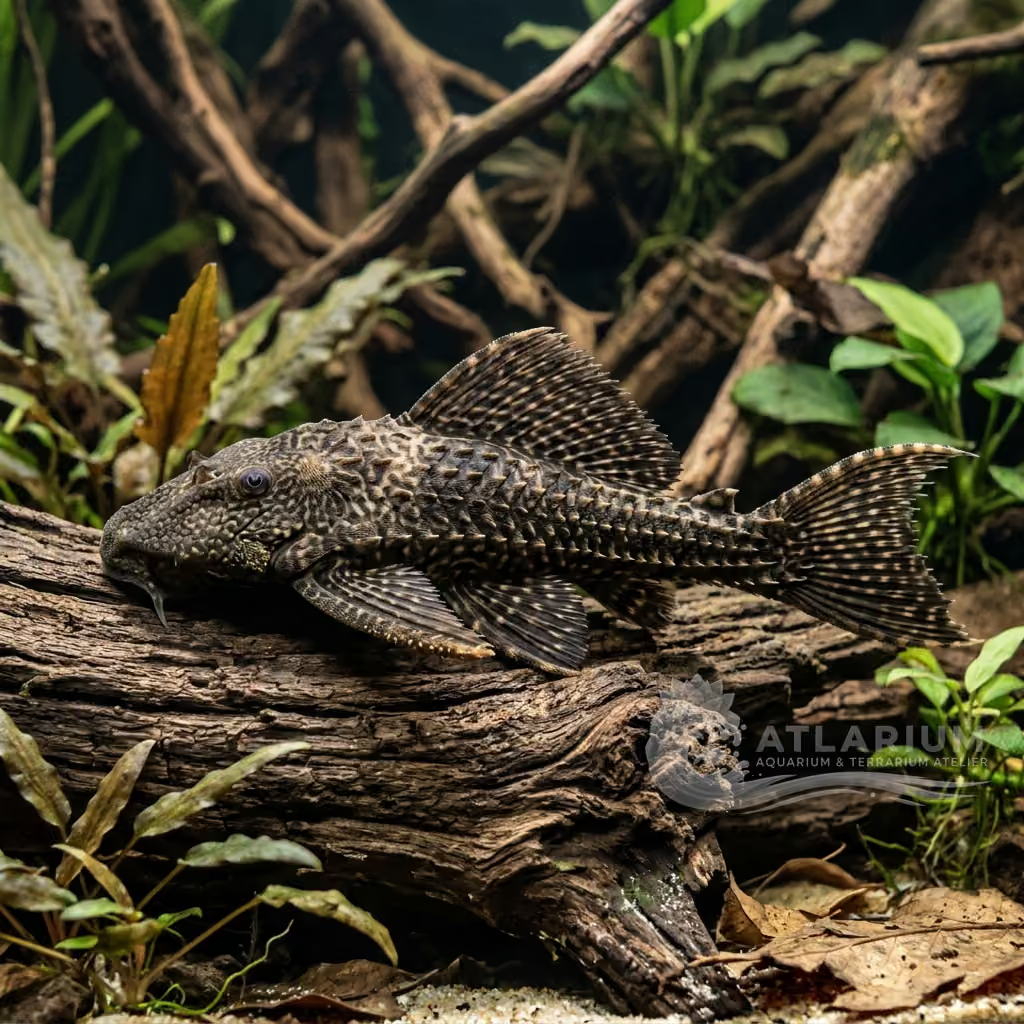
Taxonomy and Morphology: Commonly known as L024 or Redfin Cactus Pleco, it belongs to the genus Pseudacanthicus. It reaches 40 cm (16 inches) in length and features a heavily armored body covered in sharp, pointed odontodes, giving it the "Cactus" moniker. It has strong jaws and specialized teeth for crushing shelled prey.
Social Behavior: It is the pinnacle of benthic ferocity. It will literally kill and tear to pieces any other pleco or catfish that dares to enter its visual territory. Extremely territorial and aggressive toward conspecifics, it lives a solitary, nocturnal lifestyle.
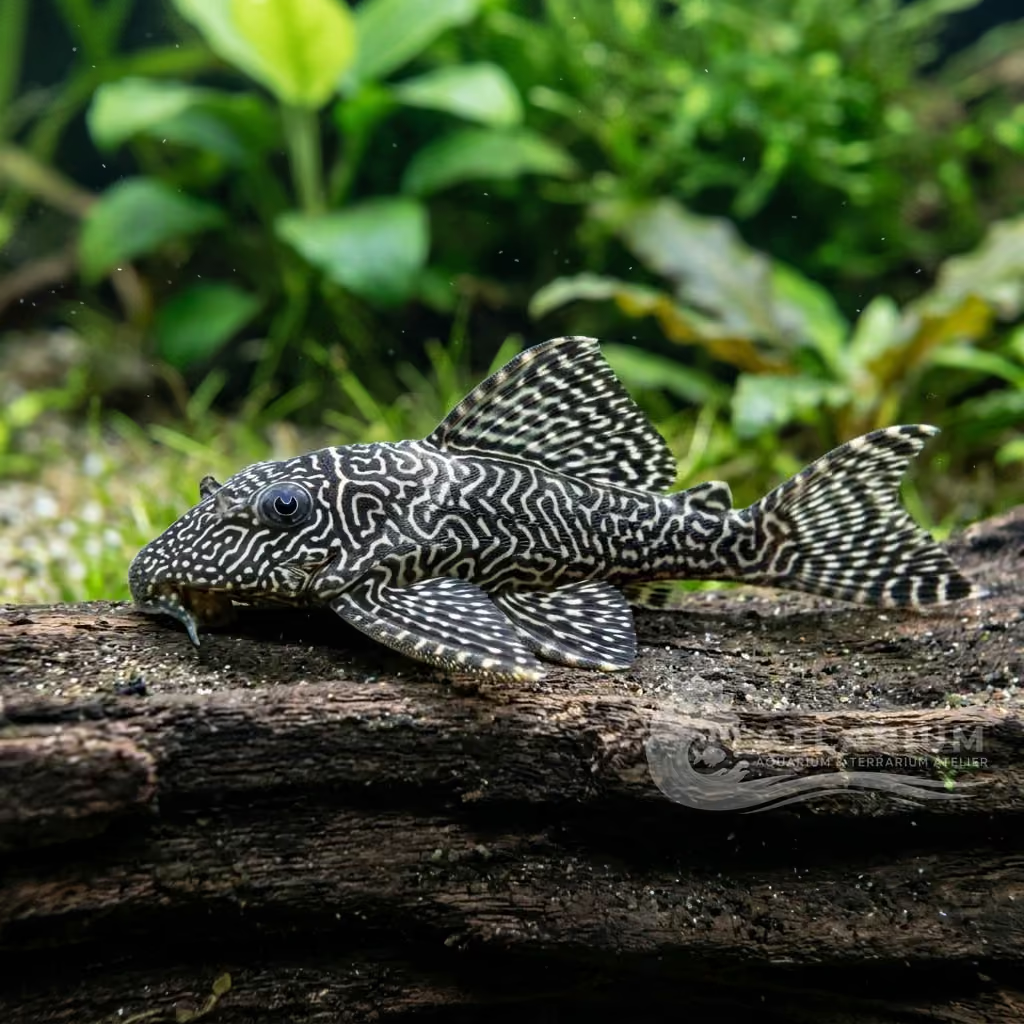
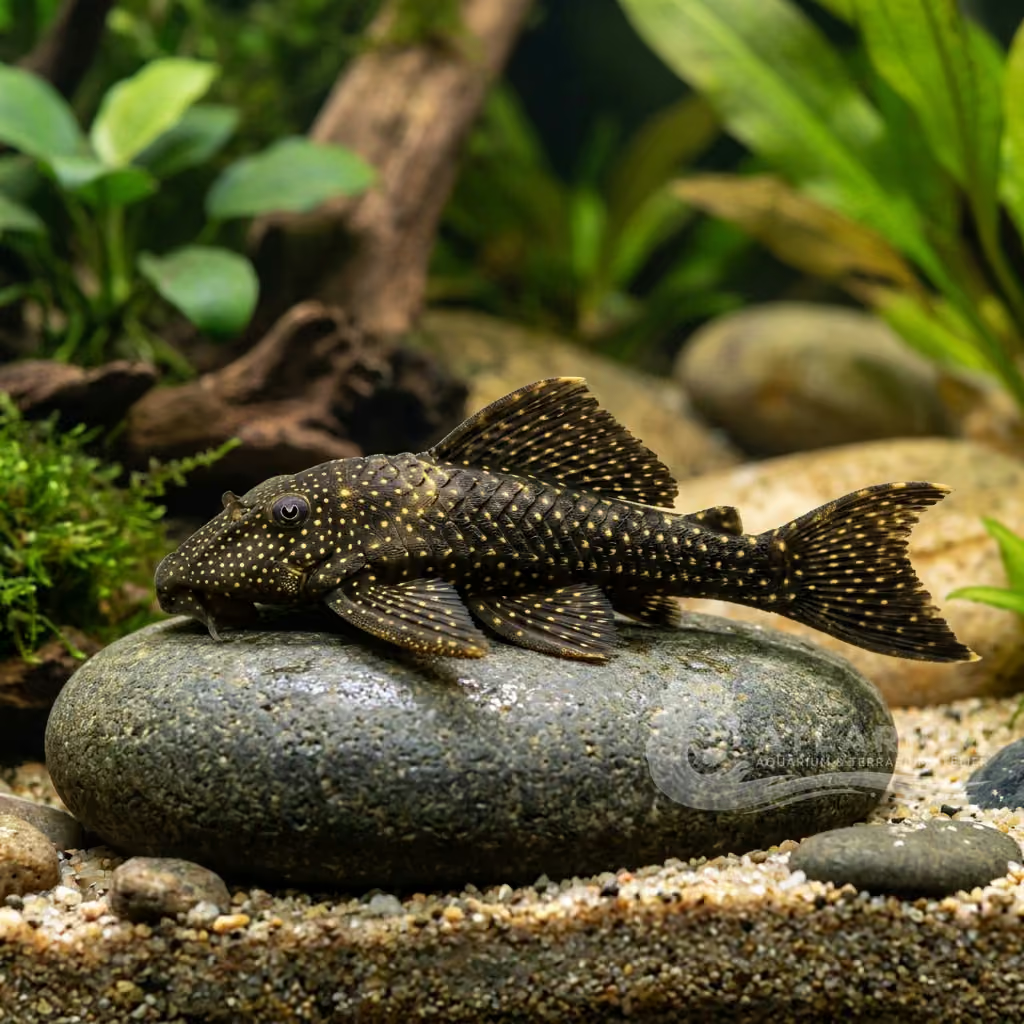
Coloration and Sexual Dimorphism: The body coloration is dark gray-brown or olive, covered in dark spines. The key feature is the stunning fiery orange-red color on its dorsal and caudal fins. Mature males possess a broader, wider head and significantly longer, denser odontodes on their pectoral fin rays compared to females.

Care, breeding and tankmates

Aquarium Setup: A 2-meter (6-foot) long aquarium of at least 500-600 liters is the basic requirement. The setup must be bare or composed of heavy immovable boulders. This spiny colossus will move any unglued decor. Provide huge thick PVC pipes to act as an impregnable den.
Diet and Feeding: Forget vegetables or scraping. It is a lethal carnivorous scavenger. Feed it with whole tilapia fillets, thawed prawns, and large earthworms. Handle with extreme caution: its spines (odontodes) are actual sharp blades that get tangled in nets; always use rigid plastic containers to move it.
Water Quality: The decomposition of fish-based meals requires giant sumps. Massive weekly water changes are mandatory. Maintain water temperature at 25-29°C (77-84°F), pH between 6.0 and 7.5, and GH between 2 and 15, ensuring high dissolved oxygen levels with strong powerheads.
Compatibility and Cohabitation: Must be kept as the sole bottom dweller. Suitable tankmates are limited to large open-water species (like large predatory Cichlids, Arowanas, large Characins, or large freshwater rays) that will not compete for caves or benthic territory.
Aquarium Breeding: Extremely rare in home aquaria. Requires giant breeding setups with massive caves. Spawning rituals are highly violent and can result in the female's death if inadequate escape routes are available. The male assumes sole care of the egg cluster within the cave.
Risks and Diseases: Due to the high organic load from its protein diet, poor water quality quickly leads to bacterial infections or fin rot. Injuries from territorial fights or violent mating attempts can become infected, requiring immediate water purification or treatment.

Geographic Origin and Distribution

This species is native to Brazil, endemic to the Rio Tocantins basin. It inhabits deep, turbulent river channels with fast-flowing water and basaltic or volcanic rocky substrates filled with deep cracks and passages.

Origin

Amazon, Orinoco, and Guianas

Fish profile

Temperament
Aggressive
Extremely territorial and aggressive towards benthic tankmates. They are heavily armored and possess sharp odontodes. Consider them as a centerpiece bottom fish in a specialized setup.
Diet
Carnivore
Strictly carnivorous. Their diet should consist of high-quality sinking carnivore pellets, shrimp, chopped fish, and bloodworms. They will not survive on an algae-based diet.
Life expectancy
10-15 years
The Redfin Cactus Pleco is a large, long-lived species that can survive for 10 to 15 years in captivity under optimal care. To support their long lifespan, they require highly stable, clean water parameters and a high-protein diet. Proper aquarium sizing and preventing territorial stress are also crucial factors for their long-term health.
Adult size
40 cm
The catalog's scalar value is 40 cm. The FishBase SPECIES table (v25.04 snapshot) source reports a maximum adult measurement of 30 cm for this species, recorded as standard length (SL). The taxonomic record consulted is Pseudacanthicus pitanga (v25.04); male or unsexed record. These figures are not interchangeable: the first is the profile's editorial reference, whereas the second is a published maximum under a specific measurement convention; differences among sources can reflect sex, population, life stage and measuring method.
Sex ratio
Solitary
Best kept singly. If multiple are kept, ensure a vast tank size with only one male and several females. Males will fight intensely over territory.
Feeding frequency
Twice daily
Feed once daily, ideally at night. They can be shy and may need targeted feeding to ensure they receive enough food. Monitor to ensure they are not outcompeted.
Bioload
High
Heavy bioload characteristic of large carnivorous plecos. They eat heartily and produce a lot of waste. Excellent filtration and regular water changes are mandatory.
Flow
Strong
Prefer moderate to high water flow with excellent aeration. They originate from fast-flowing rivers. Strong current helps maintain water quality and oxygen levels.
Jump risk
No
Reproduction
Oviparous
Cave spawners that are difficult to breed in captivity. Requires dedicated breeding setups with large caves and very clean water. The male will fiercely guard the spawn.
Compatibility & tankmates
Highly aggressive
Best kept with medium to large, fast-moving fish that occupy the upper levels of the tank. They are highly intolerant of other bottom dwellers, especially conspecifics. Only mix with other plecos in massive aquariums with broken lines of sight.
Tank level
Bottom
Bottom-dwelling species. They need plenty of hiding spaces formed by rocks and driftwood. They will claim a specific spot and defend it.

Scientific Parameters & Models

FishBase

Window to the official scientific data of the species

Data synced on: 06/15/2026
Resilience
Medium (1.4 - 4.4 years)
Phylogenetic uniqueness (PD50)
0.5039
Bayesian Length-Weight
a = 0.01549, b = 2.96
VulnerabilityLow to moderate vulnerability (27 / 100)

Image gallery

Licensed images linked to the species or, when marked, to the closest representative taxon.

Related species

Recommendations grouped by close relatives, companion choices, and similar care.
Last updated: 05/13/2026
Redfin Cactus Pleco (L024) (Pseudacanthicus pitanga) Care Guide &… | Atlarium