King Tiger Pleco (L066)
Hypancistrus sp. L066
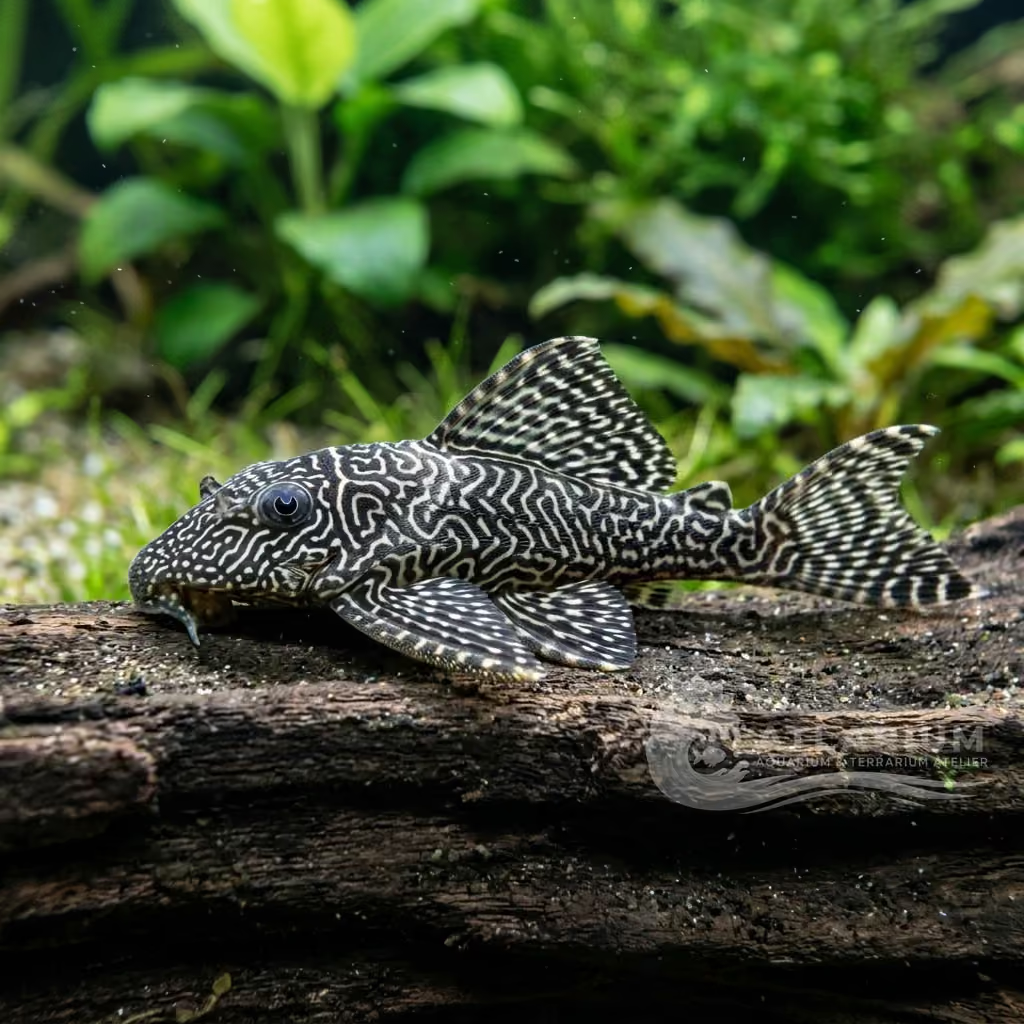
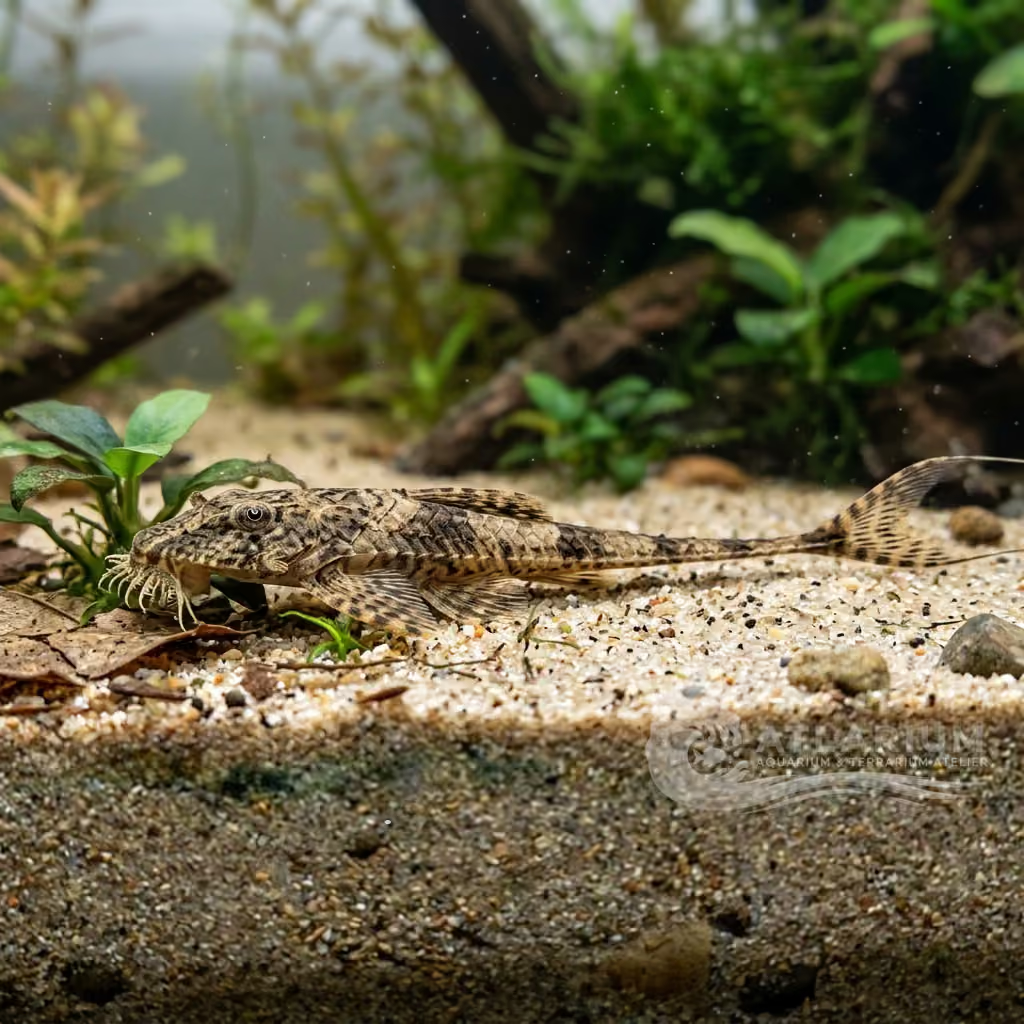
The 'King Tiger Pleco'. Exceptionally decorative Loricariid from the Brazilian Amazon. It flaunts a thick zebra or labyrinth coat, with thick and irregular high-contrast black and white bands.
Water Temperature
26 - 30 °C
pH Value
5.8 - 7.4
Water type
Freshwater
Tank level
Bottom
Adult size
14 cm
Minimum tank volume
>= 180 L
Minimum group
>= 1
GH
2 - 15 dGH
KH
1 - 7 dKH
TDS
40 - 295 ppm
Conductivity
63 - 461 uS/cm

Species description
Geographical Origin and Habitat: Endemic to the lower Rio Xingu basin (Brazil). Its kingdom is the river stretches swept by violent clear water currents, where it constantly lives clinging in the dark depths of countless tunnels formed among the dark granite boulders rubbed by the water and the relentless sun.
Taxonomy and Morphology: Loricariidae family. Known commercially as L-066. It is a 'classic' representative of the Hypancistrus genus. It easily reaches 12-14 cm (4.7-5.5 inches) (males grow considerably in bulk and width). The body is a flattened teardrop shape, typically armored with rough bony plates. The mouth is fleshy but equipped with few, strong pointed teeth, not wide spatulas (which reveals its non-algae-eating nature).
Social Behavior: Highly elusive and shy during daylight hours. It spends much of its time anchored horizontally or upside down inside a ceramic crevice or under a stone. Becomes frantic at night in search of food. Notable intraspecific competition (among peers): adult males are territorial, claiming a specific cave and not tolerating the entry of other males. Multiple specimens require long tanks equipped with multiple hiding places to disperse aggression.
Coloration and Sexual Dimorphism: Hypnotic. On a base color ranging from pale gray/cream to off-white (sometimes pale golden in adults), an imposing and thick labyrinth of ink-black irregular striations, scribbles, and bands is hand-drawn, chaotically resembling the coat of a tiger ('Tiger'). In very young fish, the white is preponderant and the black bands are wider and defined; as they grow, the lines tend to multiply and entangle. Obvious dimorphism in adulthood: dominant males are much thicker, with a squarer head and massive, highly visible, hairy spiny growths (odontodes) protruding laterally behind the gills (on the cheeks) and on the first hard rays of the pectoral fins (used to fight and block females in the nest).

Care, breeding and tankmates
Aquarium Setup: Demands an aquarium with high water turbulence. On the smooth or sandy bottom, it is mandatory to stack large smooth rocks and insert sturdy branches to break the lines of sight and create visual barriers for the territorial males. Artificial dens are INDISPENSABLE: the famous terracotta 'Loricariid tubes' (better if dark, with only one open side and closed at the bottom) where the fish will spend 90% of the day.
Diet and Feeding: LET'S DISPEL THE MYTH: HYPANCISTRUS ARE NOT ALGAE EATERS, AND THEY ARE NOT GLASS CLEANERS. They are primarily carnivores-omnivores. They die of chronic starvation if left to scrape green glass and roots. They feed by dropping strictly in the evening heavily protein sinking wafers (based on fish/shrimp meat), associated with rich frozen meals: giant bloodworms, shelled shrimp pieces, and chopped mussels.
Water Quality: Difficulty justified by the stringent heat requirement. They belong to the wild Xingu, so they require stable tropical water at dizzying levels (between 26 and 30°C / 79-86°F). Such extreme temperatures knock down the dissolved oxygen in the tank; therefore, IT IS IMPERATIVE TO USE POWERFUL CIRCULATION PUMPS (Wavemakers) or aerators that break the surface of the water to prevent the animal from suffocating. Tolerated pH: 5.8 - 7.4. Acute sensitivity to decomposing detritus (vacuum thoroughly).
Compatibility and Cohabitation: Excellent fish for the lower zones of ultra-hot Amazonian tanks (like high-movement Discus tanks). Cohabits docilely with thermophilic Tetras (Cardinals, Sterbai), or peaceful Cichlids of appropriate size. Ill-advised to pair it with other robust and hungry bottom-dwelling plecos in tanks under 120 cm (48 inches) (e.g. Clown Loaches), as the competition and assault for dark hiding places would lead the L066 to lethal stress. Tolerated with adult Cherry shrimp.
Aquarium Breeding: Among the most reproduced species by private individuals in captivity! If kept warm and hyper-fed on meat, the alpha male forcefully locks the female inside his cramped terracotta cave (the tube diameter must be slightly wider than the fish!). After a few days of violent seclusion, the female lays a huge compact cluster of orange eggs and flees. THE MALE barricades himself in the cave and fans them with his fins in an obsessive and maniacal way without ever eating until the young are born, ready to be fed egg yolk or protein powder.
Risks and Diseases: 1. Intestinal blockage from an incorrect solely vegetarian prolonged diet will lead to occlusion. 2. Apathy and asphyxiating loss (silent death due to lack of breath) in common tanks kept at 24°C (75°F) by amateurs without water disturbance to oxygenate.

Geographic origin and distribution
Endemic to the lower Rio Xingu basin (Brazil). Its kingdom is the river stretches swept by violent clear water currents, where it constantly lives clinging in the dark depths of countless tunnels formed among the dark granite boulders rubbed by the water and the relentless sun.
Origin
Amazon, Orinoco, and Guianas

Fish profile
- Temperament
- Semi-aggressive
- They are generally peaceful and shy, preferring to retreat into hiding when startled or during the day. However, males can be fiercely territorial towards conspecifics or similar-looking plecos when defending a chosen cave. Providing a surplus of suitable hiding places is the most effective way to manage and eliminate this aggression.
- Diet
- Omnivore
- As a primarily carnivorous pleco, their diet must be based on high-quality, protein-rich sinking foods. They eagerly accept frozen bloodworms, mysis shrimp, chopped seafood, and specialized carnivore pellets. They will generally completely ignore algae wafers or blanched vegetables, so these should not be their primary food.
- Life expectancy
- 10-15 years
- Adult size
- 14 cm
- Sex ratio
- Group
- Adult males are easily distinguished by their significantly longer interopercular odontodes and thickened pectoral fin spines. Males also develop a broader, more robust head shape, whereas females remain smaller with a plumper abdominal region. Keeping a group consisting of more females than males will generally lead to more successful breeding behavior.
- Feeding frequency
- Twice daily
- Feeding should be done daily, with the optimal time being just before the aquarium lights go out. They are nocturnal by nature and will actively search the substrate for food under the cover of darkness. Careful monitoring is necessary to ensure fast-swimming tank mates do not steal all the sinking food.
- Bioload
- Medium
- This beautiful species produces a moderate bioload that requires standard, efficient aquarium filtration. Their meaty diet results in waste that can slightly elevate nitrate levels if tank maintenance is neglected. Regular partial water changes and good biological filtration will easily keep the water quality pristine.
- Flow
- Stagnant
- They originate from the fast-flowing lower Xingu River, requiring strong water movement and excellent oxygenation. The use of powerheads and robust surface agitation is strongly recommended to simulate their natural riverbed environment. High temperatures (80-86°F) coupled with high oxygen are key to their successful husbandry.
- Jump risk
- No
- Reproduction
- Oviparous
- They are cave spawners, and captive breeding is highly achievable with the right diet and water conditions. The male claims a tightly fitting cave, traps the female inside to spawn, and then assumes sole parenting duties. He will diligently fan the egg cluster and protect the wrigglers until they are ready to emerge.
- Compatibility & tankmates
- Peaceful
- They are highly peaceful towards other species and make fantastic additions to Amazonian community aquariums. They mix perfectly with peaceful schooling fish like tetras, pencilfish, and appropriately sized cichlids. Some territorial squabbles may occur with other bottom-dwelling plecos, so providing ample space is recommended.
- Tank level
- Bottom
- They are strictly bottom-level residents that require a complex hardscape of rocks, driftwood, and specifically sized caves. They will spend most of the daytime hidden securely within their chosen crevices, venturing out mostly at night. The tank should be structured to provide multiple lines of sight breaks to reduce territorial stress.

Related species
Recommendations grouped by close relatives, companion choices, and similar care.