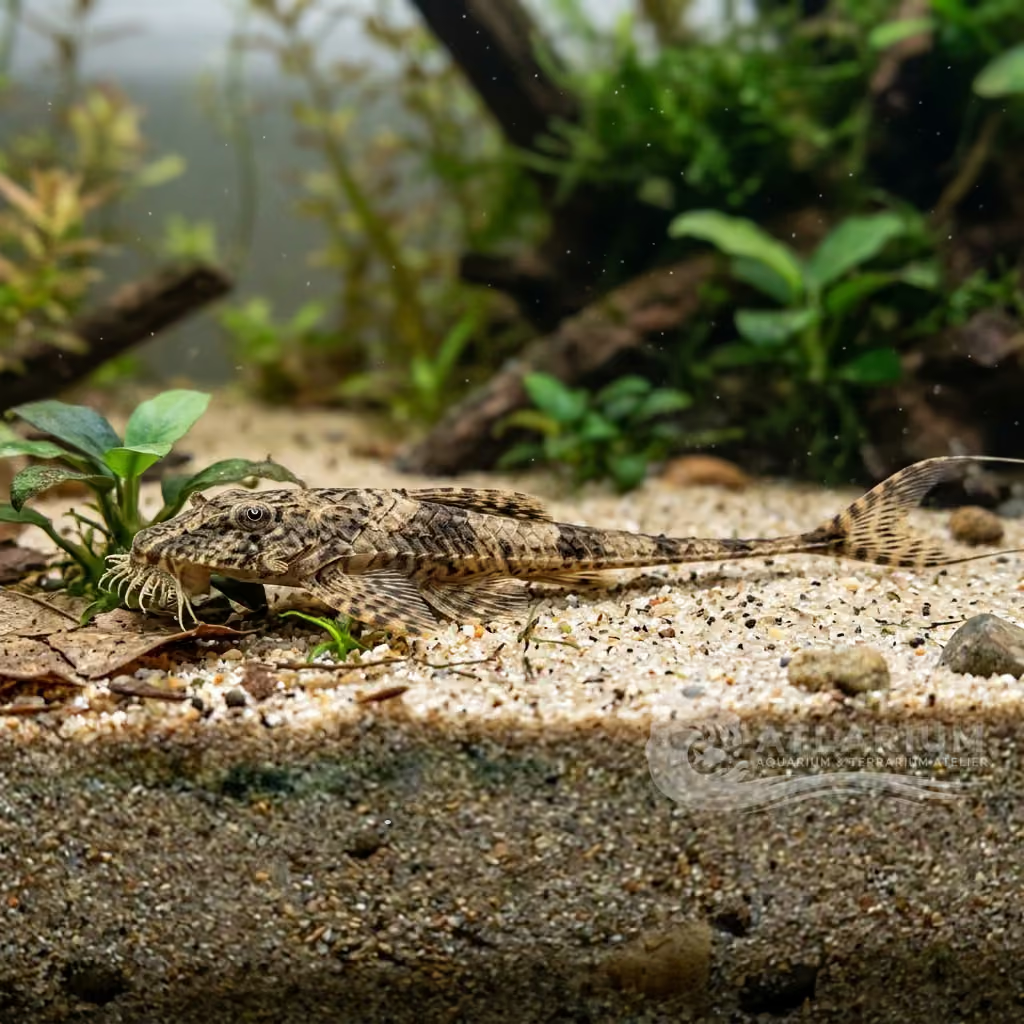
Ocelot Pleco (L174)
Hypancistrus sp. L174
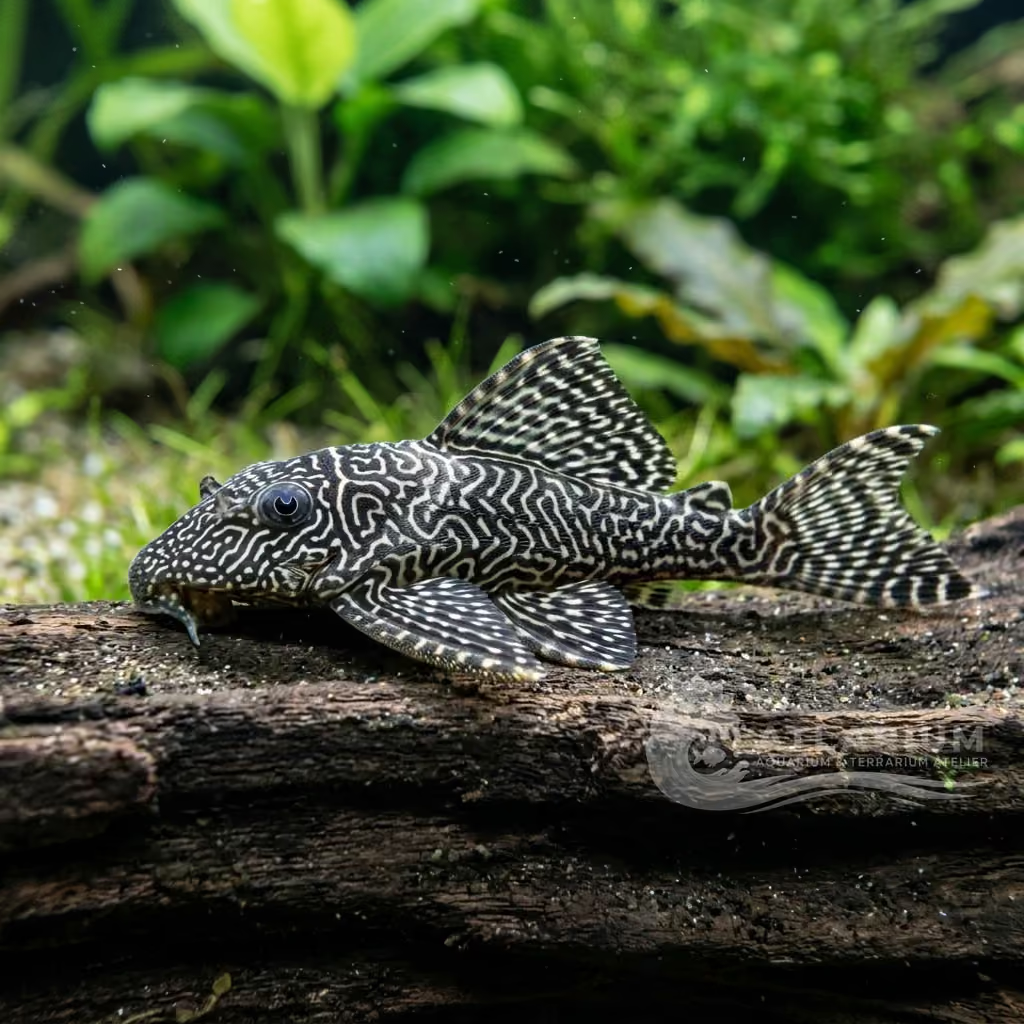
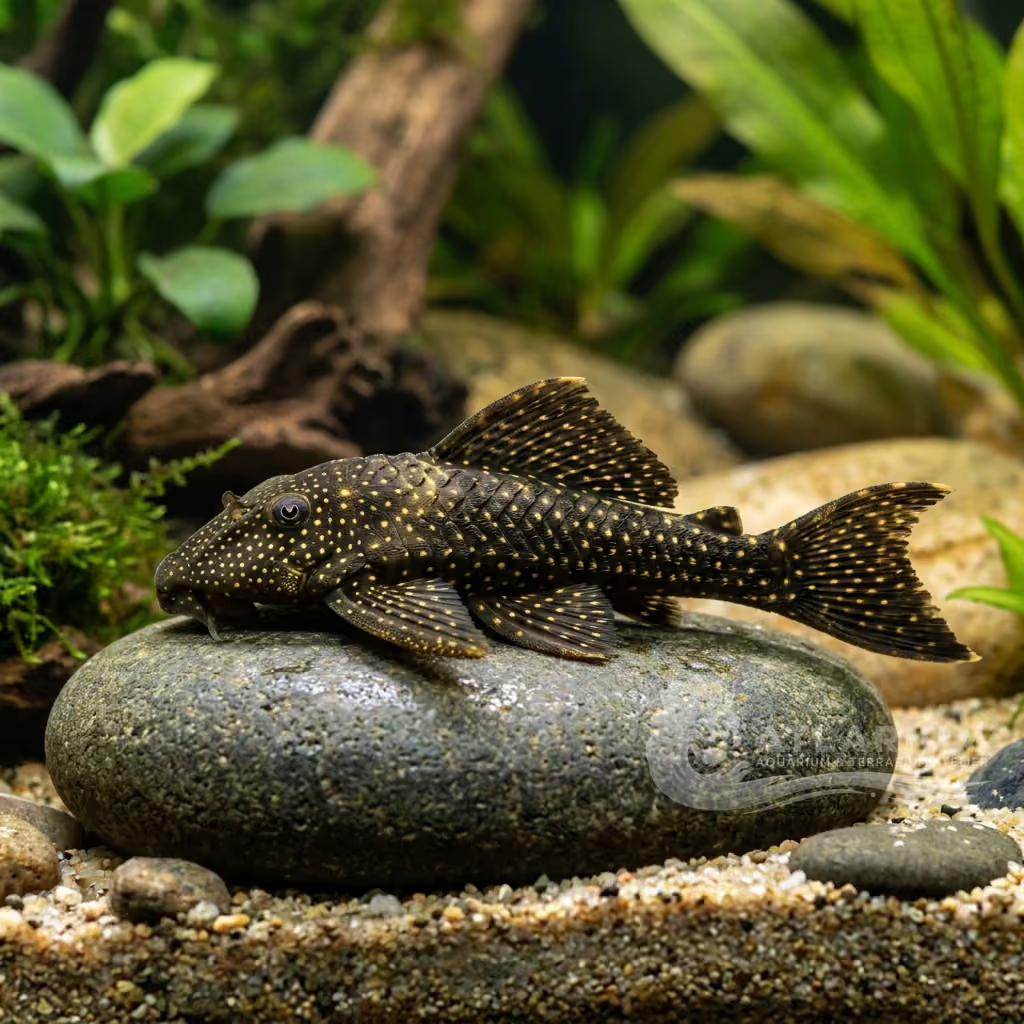
The 'Ocelot Dwarf of the Xingu' (6-8 cm). The spotted jewel of the Brazilian rapids. This rarity stands out for its bonsai size and breathtaking livery consisting of tiny black spots and vermiculations on a white background. Obligate carnivore (does not eat algae), requires almost boiling and hyper-oxygenated waters, flanked by custom-made dens in which to spend the day. Wonderful and precious, it is a centerpiece for dedicated aquarists.
Water Temperature
28 - 32 °C
pH Value
5.5 - 7.5
Water type
Freshwater
Tank level
Bottom
Adult size
8 cm
Minimum tank volume
>= 100 L
Minimum group
>= 1
GH
1 - 10 dGH
KH
1 - 5 dKH
TDS
25 - 200 ppm
Conductivity
39 - 313 uS/cm

Species description
Geographical Origin and Habitat: The Xingu Dwarf. A species severely threatened by the construction of the Belo Monte dam, it comes from the middle/lower course of the Rio Xingu. Lives hidden in the very narrow crevices of granitic and spongy rocks on the river bottom, where the water flows at impressive speeds at torrid temperatures (up to 32°C / 90°F in the dry season).
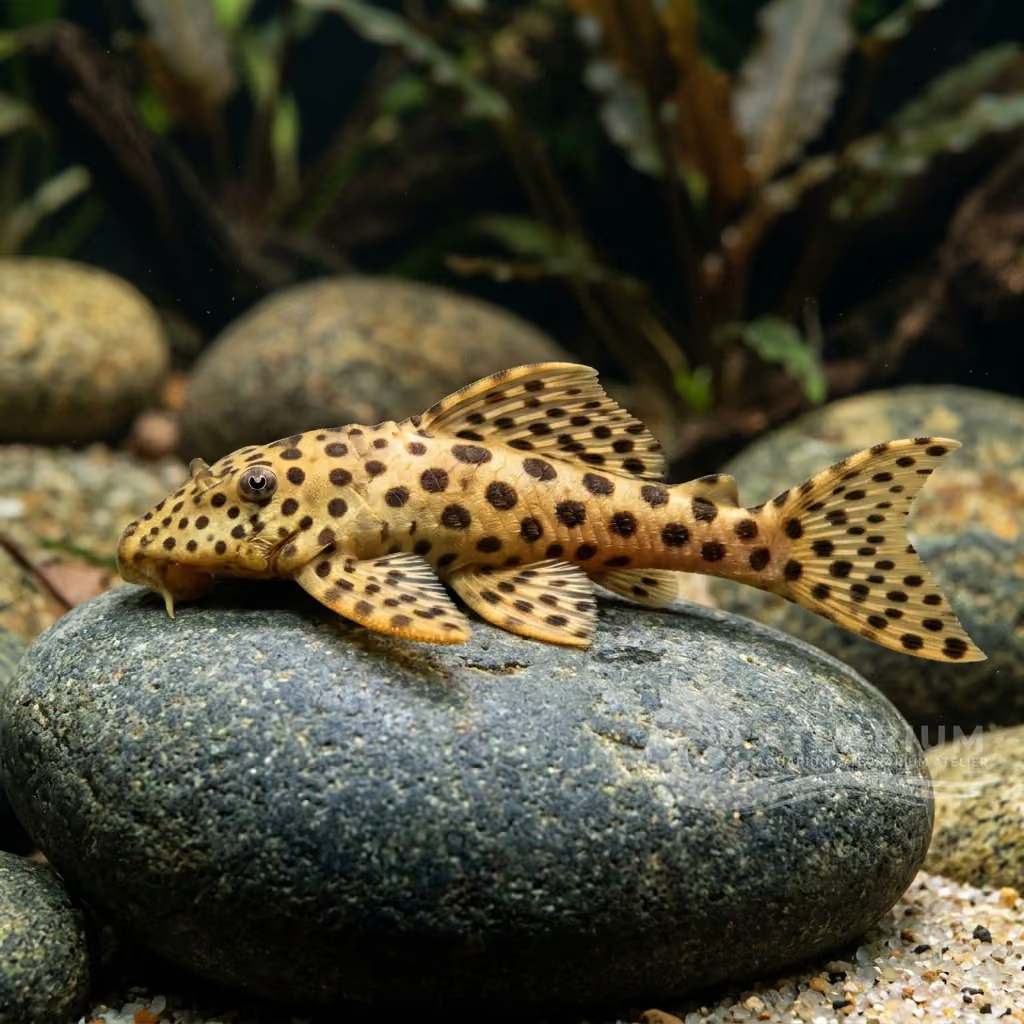
Taxonomy and Morphology: The Bonsai Feline Pattern. Visually unmistakable: compact and minute body that stops at only 6-8 cm (2.5-3 inches), large eyes and flat head. The livery, unlike the L400 or L333 which feature broad vermiculated bands, in the L174 is a dense and disorderly succession of small dark punctiform maculae reminiscent of an ocelot's coat.
Social Behavior: The Small Peaceful Hermit. Very shy. Abandons the rocky hiding places only with lights out to patrol the bottom in search of small invertebrates. Totally harmless to any other fish. Males show a faint territorial aggression solely for the control of the breeding tube.
Coloration and Sexual Dimorphism: Cream White and Ink. The background varies from light grey to pure cream white, covered by an intense bloom of irregular black specks. Adult males, although tiny, develop "beards" of spiny odontodes on the gill covers and thick spines on the first rays of the pectoral fins; females remain smooth and rounder.

Care, breeding and tankmates
Aquarium Setup: Demands "Dwarf Caves and Hydrodynamics" (Tank min. 60 cm / 24 in). Fundamental to fill the bottom with dens (terracotta tubes, stacked slate or special perforated ceramic rocks) of the minuscule diameter suitable for the fish (just enough to let it enter). Powerful water flow and massive surface oxygenation (airstones and wavemakers). Thin substrate.
Diet and Feeding: Nocturnal Carnivorous Hunter. COMPLETELY IGNORES ALGAE. Strictly supply with lights out bloodworms, mysis, fish eggs, and small-grain protein sinking pellets. Always check that it feeds and is not overwhelmed by competition.
Water Quality: Roasting Oxygen Necessity. Ideal temperatures are extreme: 28-32°C (82-90°F). Warm water retains less oxygen, so filtration must be excellent with strong surface turbulence. Very sensitive to nitrites and nitrates.
Compatibility and Cohabitation: Specialized Warm Community. Suitable for Xingu biotope tanks with other small peaceful Hypancistrus, Tetras that tolerate the heat and calm dwarf cichlids. DO NOT COMBINE with voracious giant loricariids (Panaque, Leporacanthicus) or aggressive bottom fish (Botia) which would leave them to die of starvation stealing the tablets.
Aquarium Breeding: Micro-Cave Spawner. If cared for, will lay in its own tube. Gigantic eggs for such a small fish (often just 10-15 eggs per brood). The male guards the nest blocking the entrance with his own body and fanning incessantly. The young are perfect miniaturized replicas of the parents from the first weeks.
Risks and Diseases: Lethality from Competition and Malnutrition. The greatest risk is dying of invisible starvation: being so small and nocturnal, if the aquarist only provides food for omnivores/algae-eaters by day, the L174 will waste away closed in its tube. Intolerant to water-polluting medications.

Geographic origin and distribution
The Xingu Dwarf. A species severely threatened by the construction of the Belo Monte dam, it comes from the middle/lower course of the Rio Xingu. Lives hidden in the very narrow crevices of granitic and spongy rocks on the river bottom, where the water flows at impressive speeds at torrid temperatures (up to 32°C / 90°F in the dry season).
Origin
Tropical oceans and reefsExtra-Amazon South America

Fish profile
- Temperament
- Semi-aggressive
- They are exceptionally shy, peaceful, and reclusive, often remaining completely out of sight for days at a time. Males may show minor territoriality towards each other over the most desirable small caves, but injuries are exceedingly rare. Providing a dimly lit environment with dark substrate encourages them to venture out more often.
- Diet
- Omnivore
- Their diet is predominantly carnivorous, and they require highly nutritious, appropriately sized meaty foods. Crushed carnivore pellets, micro-worms, baby brine shrimp, and finely chopped bloodworms are excellent choices. They will completely ignore algae, so providing a dedicated, protein-rich diet is critical for their survival.
- Life expectancy
- 10-12 years
- Adult size
- 8 cm
- Sex ratio
- Pair
- Sexing is difficult until they are fully mature, at which point males develop longer, more prominent odontodes on their cheeks and fins. Males also possess a broader, blockier head shape when viewed directly from above. Keeping a small colony with a ratio of more females to males offers the best chance for natural pairing.
- Feeding frequency
- Twice daily
- They should be fed once a day, with food introduced just as the tank lights are turned off. Because they are tiny and easily intimidated, target feeding near their chosen caves is often highly beneficial. Ensure that the food particles are small enough for their diminutive mouths to process.
- Bioload
- Low to Medium
- Being one of the smallest known plecos, their bioload impact is minimal, making them suitable for smaller aquariums. However, their carnivorous diet means their waste can degrade water quality slightly faster than similarly sized herbivorous fish. A mature filter and routine weekly partial water changes are more than adequate for this diminutive species.
- Flow
- Stagnant
- Like many Xingu river species, they thrive in highly oxygenated water with moderate to strong flow. Utilizing a powerhead to create a current across the bottom of the tank closely mimics their natural habitat. High temperatures combined with vigorous surface agitation are essential for their well-being.
- Jump risk
- Yes
- There is virtually zero jump risk associated with this incredibly small, bottom-dwelling species. Their entire anatomy and instinctual behavior dictate that they remain clinging to hard surfaces near the substrate. A standard aquarium lid is perfectly fine and is mostly required to keep dust out and humidity in.
- Reproduction
- Oviparous
- They are secretive cave spawners that can be challenging to breed due to their very specific requirements and tiny clutch sizes. The male will select a very narrow cave, trap the female, and subsequently guard the small clutch of eggs. Raising the fry requires pristine water and microscopic live foods like infusoria.
- Compatibility & tankmates
- Vulnerable
- They are extremely peaceful and somewhat fragile due to their tiny adult size. They must be kept with equally peaceful, small, and non-boisterous tank mates like dwarf rasboras or small tetras. Aggressive bottom feeders or large, fast-swimming fish will easily outcompete them for food and cause severe stress.
- Tank level
- Bottom
- They are obligate bottom dwellers that will almost never be seen swimming in the open water column. They require a densely decorated tank floor featuring many tiny crevices, small ceramic caves, and complex driftwood pieces. Without tight spaces to wedge themselves into, they will fail to thrive.

Related species
Recommendations grouped by close relatives, companion choices, and similar care.