Golden Nugget Pleco (L018)
Baryancistrus xanthellus
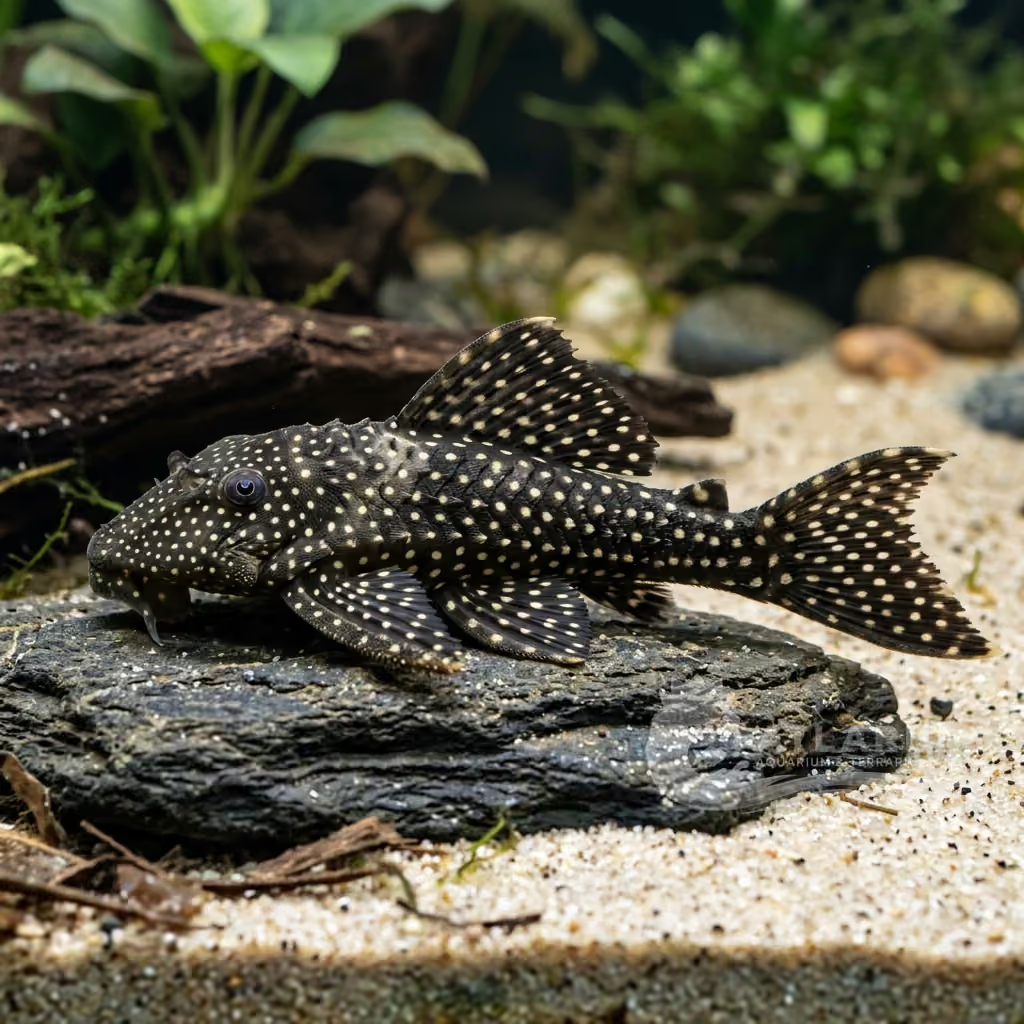
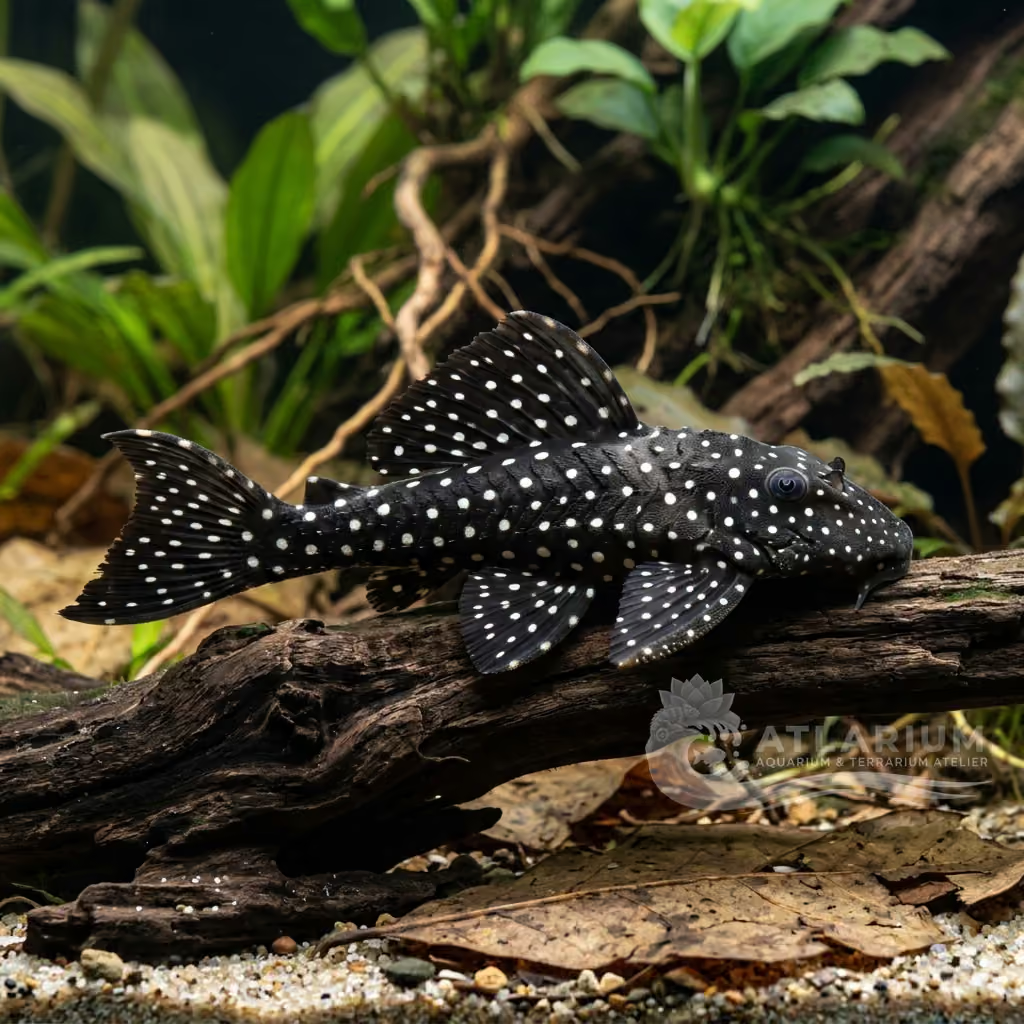
The Golden Nugget Pleco (Baryancistrus xanthellus), better known by the "L-number" codes L018, L081 or L177, is the most sought-after and visually dazzling gem of the loricariid family. Its appearance is unforgettable: the massive body is of an intense and deep velvety black, entirely studded with hundreds of bright sun-yellow polka dots, while both the dorsal and caudal fins are edged with a thick and unmistakable solid gold-yellow band (Golden Nugget). Native to the rocky rapids of the Rio Xingu (the famous river of dams in Brazil), it is a fish as beautiful as it is tragically infamous for its very high mortality rate linked to post-importation stress and malnutrition.
27 - 32 °C
6 - 7.4
Freshwater
Bottom
25 cm
>= 250 L
>= 1
2 - 12 dGH
1 - 6 dKH
40 - 240 ppm
63 - 375 uS/cm

Species description

Care, breeding and tankmates

Geographic origin and distribution
Origin

Fish profile
- Temperament
- Semi-aggressive
- The Golden Nugget Pleco is generally peaceful towards other species but becomes highly territorial and aggressive towards conspecifics as it matures. They are cave-dwellers that will actively defend their preferred resting spots from any bottom-dwelling competitors. Adults are particularly intolerant of other loricariids and similar-looking catfish. It is important to provide plenty of physical barriers and caves to reduce aggression and allow the fish to establish secure territories.
- Diet
- Omnivore
- In nature, the Golden Nugget Pleco is a grazer that feeds on aufwuchs, diatoms, filamentous algae, and small invertebrates. In the aquarium, they should be provided with plenty of rocks covered in natural algae biofilm to graze on. Their diet must be supplemented with high-quality sinking herbivore wafers, frozen bloodworms, artemia, and fresh vegetables like zucchini or cucumber. Providing homemade gelatin-bound food mixtures is also highly beneficial to meet their complex nutritional requirements.
- Life expectancy
- 10-15 years
- Adult size
- 25 cm
- Sex ratio
- Solitary
- Due to their highly territorial and aggressive nature towards conspecifics, Golden Nugget Plecos are best kept as single specimens in standard-sized aquariums. Keeping multiple individuals is only recommended in very large tanks where they can establish distinct territories separated by rocks and wood. In such massive setups, a group can be kept as long as there are ample caves for each fish. If breeding is attempted, a single male should be paired with one or more females in a spacious environment.
- Feeding frequency
- Continuous
- Golden Nugget Plecos have a relatively high metabolic rate for catfish and require regular feeding. Newly imported or acclimating specimens may need to be fed several times a day to prevent undernourishment. Once established, they should be fed at least once or twice daily, preferably in the evening when they are most active. Providing continuous access to algae-covered rocks or wood in the tank will allow them to graze naturally throughout the day.
- Bioload
- High
- The Golden Nugget Pleco is a large, high-metabolism fish that produces a substantial amount of biological waste. To maintain optimal water quality, a powerful filtration system, such as a large canister filter or sump, is absolutely essential. Weekly water changes of 40% to 70% are mandatory to prevent the accumulation of organic compounds. Spotless, well-oxygenated water is required to keep this species healthy and prevent disease.
- Flow
- Strong
- Coming from the whitewater rapids of the Rio Xingu, this species requires strong water flow and high levels of dissolved oxygen. The aquarium setup should utilize powerful filters, powerheads, or wavemakers to simulate their natural riverine environment. Good water movement not only mimics their wild habitat but is also crucial for maintaining the high oxygenation they need to survive. A flow rate that turns over the tank volume multiple times per hour is highly recommended.
- Jump risk
- Yes
- Although they are bottom-dwellers, Golden Nugget Plecos can and do jump out of aquariums if they are startled or stressed. Sudden changes in lighting, loud noises, or poor water quality can trigger a sudden flight response, causing them to leap. To prevent unfortunate accidents, a secure and tight-fitting lid is highly recommended for their enclosure. All openings around filters, heaters, and cables should be carefully sealed to block any potential escape routes.
- Reproduction
- Oviparous
- Breeding the Golden Nugget Pleco in captivity is extremely difficult and rarely achieved by hobbyists. Success is highly dependent on providing a very large tank, pristine water conditions, high oxygen levels, and an excellent, conditioning diet. They are cave spawners, where the male coaxes the female into a tight cave, fertilizes the eggs, and guards the nest until they hatch. Simulating seasonal changes with cool water changes and increased flow can sometimes trigger spawning behavior in mature pairs.
- Compatibility & tankmates
- Community
- Golden Nugget Plecos are suitable for community tanks with active, medium-to-large species that inhabit the middle and upper levels of the water column. Suitable tankmates include active characins, larger tetras, and peaceful cichlids. They should not be kept with other territorial bottom-dwellers, especially other loricariids, unless the tank is exceptionally large with distinct territories. Slow-moving or long-finned tankmates should be chosen carefully to avoid any territorial conflicts.
- Tank level
- Bottom
- The Golden Nugget Pleco is a strict bottom-dweller that spends almost all of its time on the aquarium substrate. They are specialized for life in fast-flowing riverbeds, clinging to rocks, boulders, and driftwood with their suckermouth. They rarely venture into the middle or upper water columns unless they are searching for food or oxygen. Providing a layout with flat stones and caves on the bottom is crucial to support their natural benthic behaviors.

Scientific Parameters & Models
Window to the official scientific data of the species
- Resilience
- Medium (1.4 - 4.4 years)
- Phylogenetic uniqueness (PD50)
- 0.5039
- Bayesian Length-Weight
- a = 0.01585, b = 3
- VulnerabilityLow vulnerability (20 / 100)

Image gallery
Licensed images linked to the species or, when marked, to the closest representative taxon.

Related species
Recommendations grouped by close relatives, companion choices, and similar care.