

Encyclopaedia
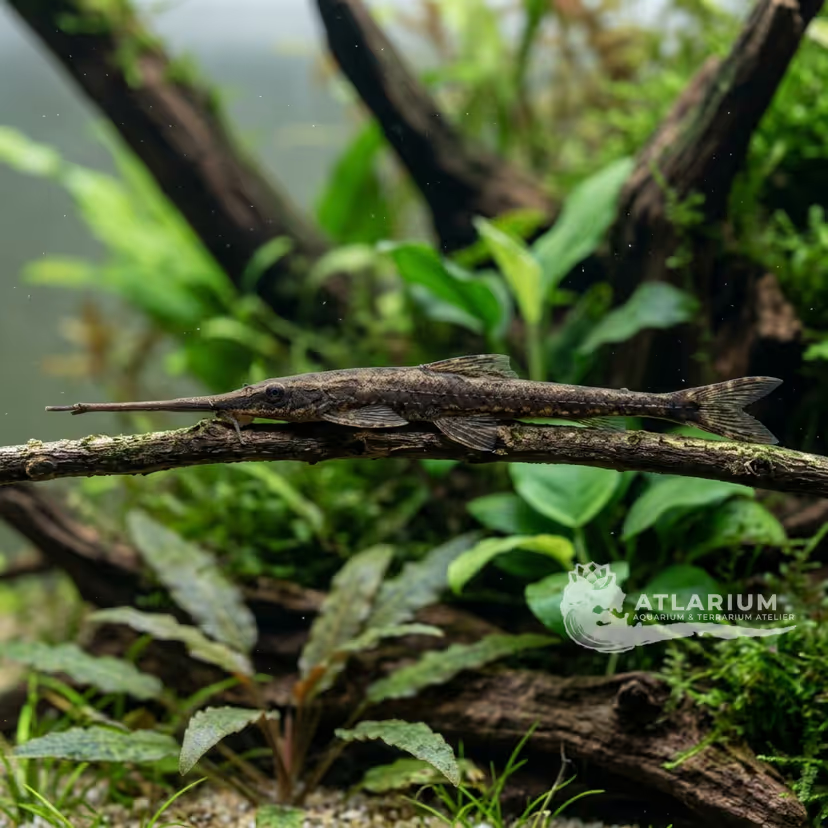
Golden Vampire Pleco
Leporacanthicus heterodon
The Golden Vampire Pleco inhabits turbulent rapids in Brazil's Xingu River. It demands a formidable current and multiple ceramic caves or smooth rocky crevices in a large, highly oxygenated tank.
Share
Check out Golden Vampire Pleco on Atlarium
25 - 30 °C
6 - 7.4
Freshwater
Bottom
16 cm
>= 250 L
>= 1
2 - 12 dGH
2 - 10 dKH
50 - 280 ppm
78 - 438 uS/cm
Species description
Care, breeding and tankmates
Geographic Origin and Distribution
Origin
Fish profile
- Temperament
- Semi-aggressive
- Diet
- Carnivore
- Sex ratio
- Flexible
- Feeding frequency
- Twice daily
- Bioload
- Leporacanthicus heterodon generates a high bioload. This is due to its size and diet. Strong filtration is required.
- Flow
- Stagnant
- Reproduction
- Oviparous
- Compatibility & tankmates
- It is peaceful with top-dwelling fish. It can be aggressive to other bottom dwellers. Keep it as the only pleco.
- Tank level
- Bottom
Window to the official scientific data of the species
Scientific Parameters & Models
- Resilience
- Medium (1.4 - 4.4 years)
- Phylogenetic uniqueness (PD50)
- 0.5625
- Bayesian Length-Weight
- a = 0.01514, b = 2.99
Image gallery
Licensed images linked to the species or, when marked, to the closest representative taxon.
Related species
Recommendations grouped by close relatives, companion choices, and similar care.
Variants and close relatives
Same atlas type, nearby scientific identity, genus, or family.

Three Beacon Pleco (L091)
Leporacanthicus triactis

Sultan Pleco (L264)
Leporacanthicus joselimai

Vampire Pleco (L029)
Leporacanthicus galaxias

Ghost Pleco (L141/L215)
Hemiancistrus snethlageae

Orange-fin Xingu Pleco (L012/L013)
Peckoltia feldbergae

Para Pleco (L075)
Ancistomus
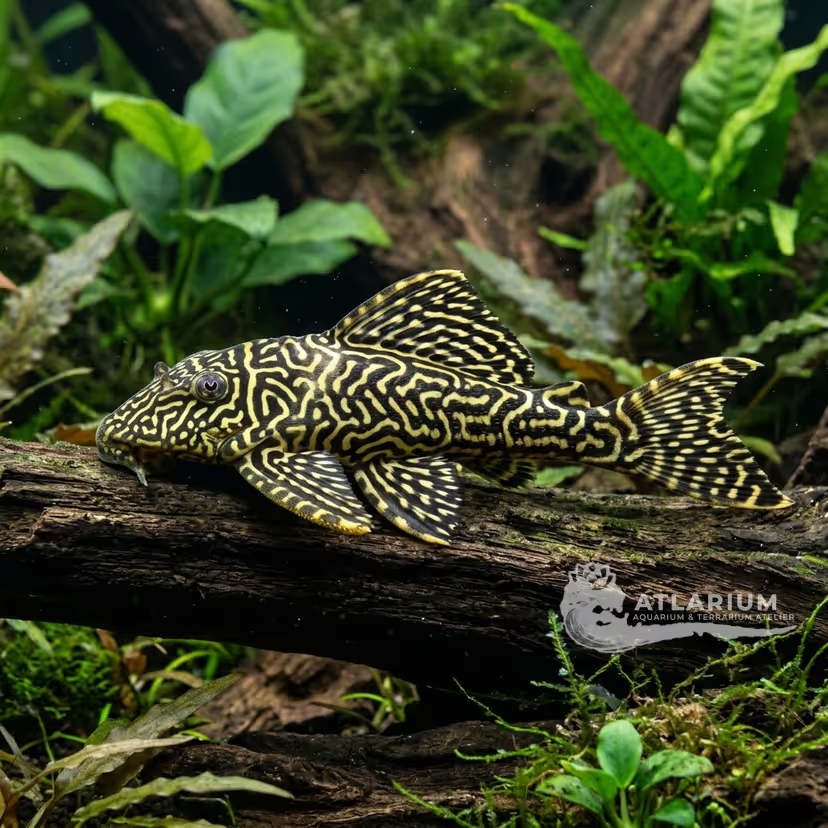
Meandrinus Pleco
Hemiancistrus

Snowball Pleco (L026)
Baryancistrus niveatus

Snowball Pleco (L142/LDA033)
Baryancistrus sp. L142

Medusa Pleco (L034)
Ancistrus ranunculus

Green Phantom Pleco
Hemiancistrus subviridis

Guahibo Pleco
Hemiancistrus guahiborum

Hi-Fin Green Phantom Pleco (L200)
Baryancistrus demantoides

Leopard Frog Pleco (L134)
Peckoltia compta

Tapajós Royal Pleco (L027)
Panaque armbrusteri

Big Spot Pleco (L075)
Hemiancistrus sabaji
Recommended companions
Compatible cards from coherent ecosystems with matching parameters.

Ammannia sp. 'Bonsai'
Ammannia sp. 'Bonsai'

Bacopa sp. "Japan"
Bacopa sp. "Japan"

Bolbitis heteroclita
Bolbitis heteroclita

Alternanthera reineckii "rosaefolia minor"
Alternanthera reineckii "rosaefolia minor"

Ammannia mauritiana
Ammannia mauritiana

Arrowhead Anubias
Anubias hastifolia

Bucephalandra motleyana "Braun-rot" ("Serimbu")
Bucephalandra motleyana "Braun-rot" ("Serimbu")

Bucephalandra motleyana "Kapit"
Bucephalandra motleyana "Kapit"

Bucephalandra motleyana "Pancuraji"
Bucephalandra motleyana "Pancuraji"

Bucephalandra sp. "Bukit Kelam / Sintang"
Bucephalandra sp. "Bukit Kelam / Sintang"

Bucephalandra sp. "Melawi"
Bucephalandra sp. "Melawi"

Bucephalandra motleyana "Braun-rot narrow"
Bucephalandra motleyana "Braun-rot narrow"

Bucephalandra motleyana "Riam Macam"
Bucephalandra motleyana "Riam Macam"

Bucephalandra sp. "Black Leaf"
Bucephalandra sp. "Black Leaf"
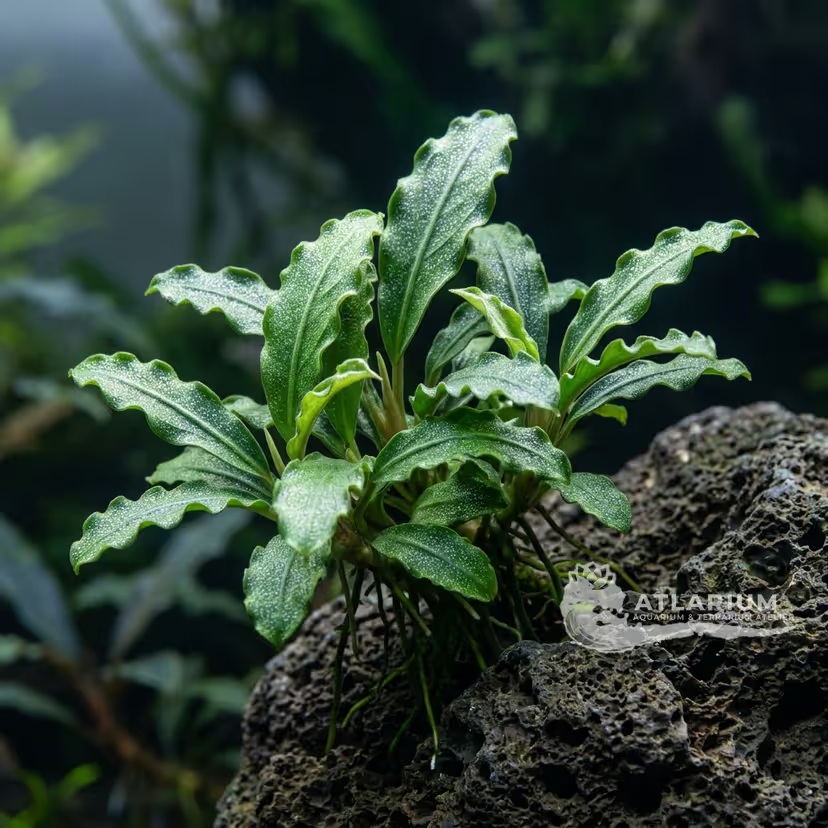
Bucephalandra pygmaea "Bukit Kelam / Sintang"
Bucephalandra pygmaea "Bukit Kelam / Sintang"
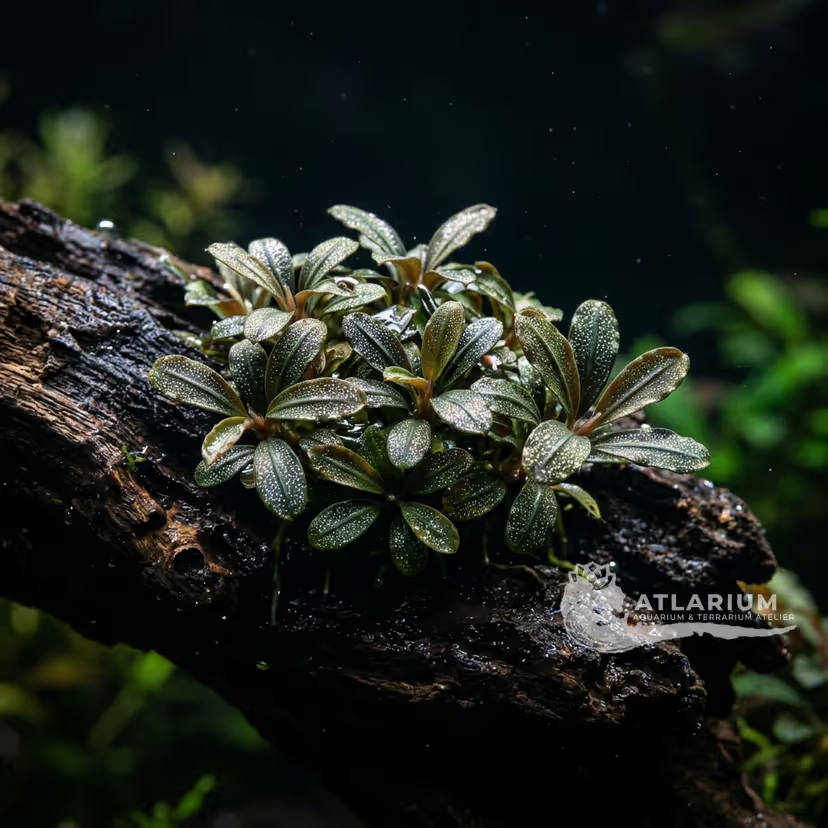
Bucephalandra pygmaea "Kapit"
Bucephalandra pygmaea "Kapit"
Similar care
Cards with similar requirements, difficulty, habitat, and husbandry profile.
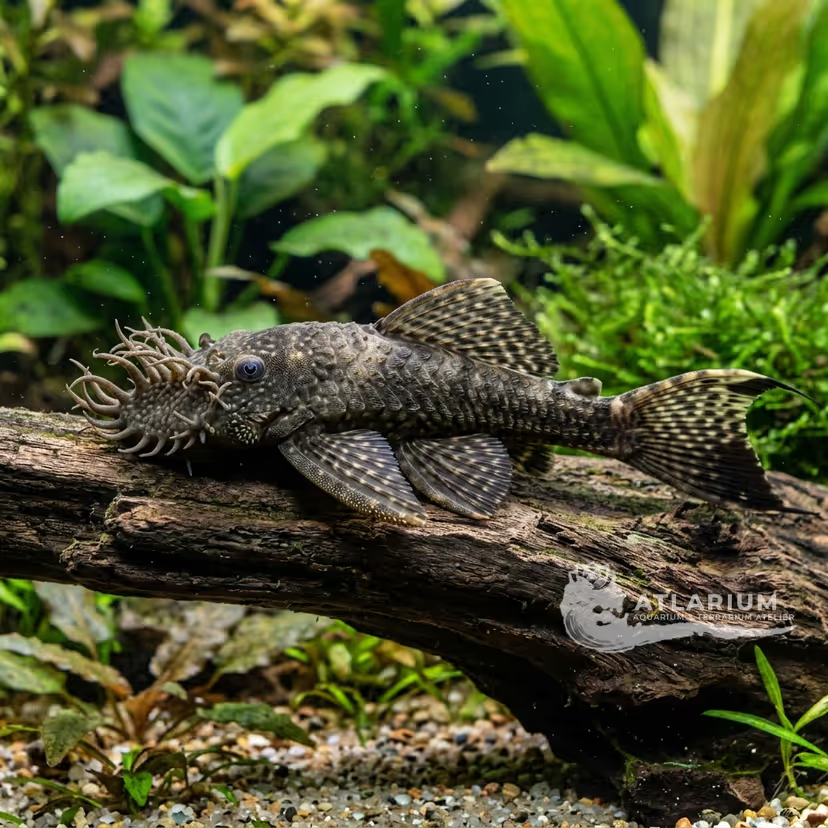
Tentacle Lasiancistrus
Lasiancistrus tentaculatus

Bristlemouth Pleco
Peckoltia multispinis

King Tiger Pleco (L066)
Hypancistrus sp. L066

Magdalena Sand Whiptail
Crossoloricaria cephalaspis

Contradens Pleco
Hypancistrus contradens

White Seam Bristlenose (L059)
Ancistrus hoplogenys

Snowball Pleco
Hypancistrus inspector

Candy Stripe Pleco (L015)
Peckoltia vittata
Orinoco Twig Catfish
Farlowella mariaelenae

Gold Marble Bristlenose (LDA08)
Ancistrus claro

Red Lizard Catfish (L010a)
Leliella sp.

Giant-eye Otocinclus
Hypoptopoma gulare

Yellow King Tiger Pleco (L333)
Hypancistrus sp. L333

Lamontichthys
Lamontichthys filamentosus

Marble Whiptail
Loricaria simillima

Queen Arabesque Pleco (L260)
Hypancistrus sp. L260