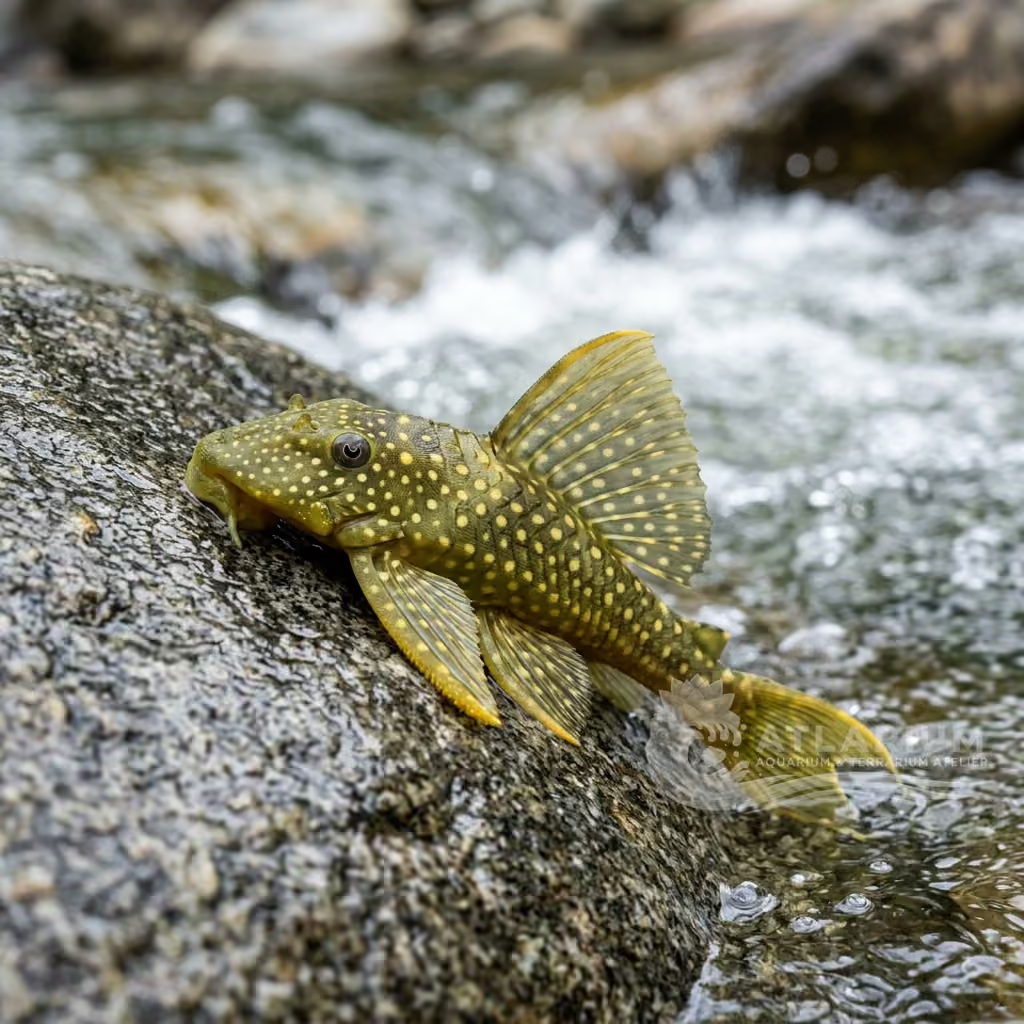
Chameleon Sand Pleco
Pseudohemiodon apithanos
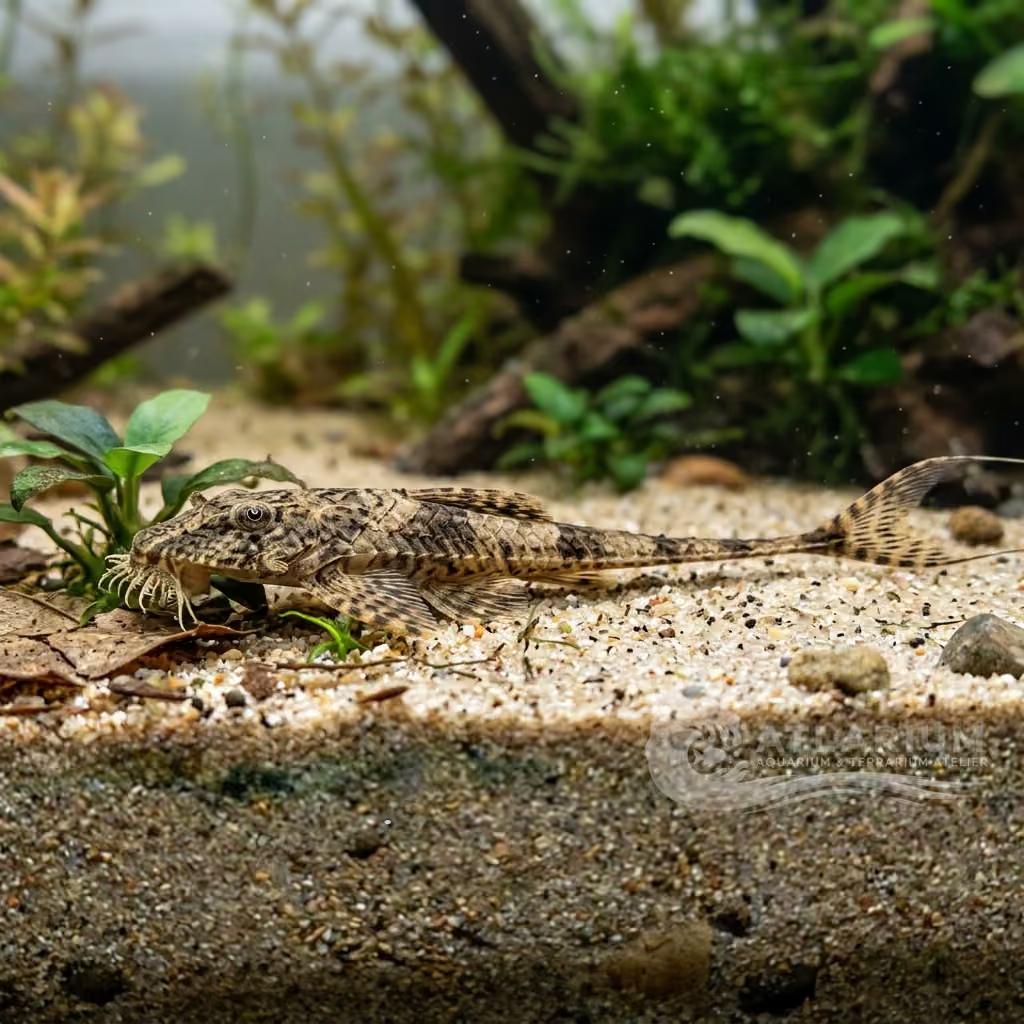
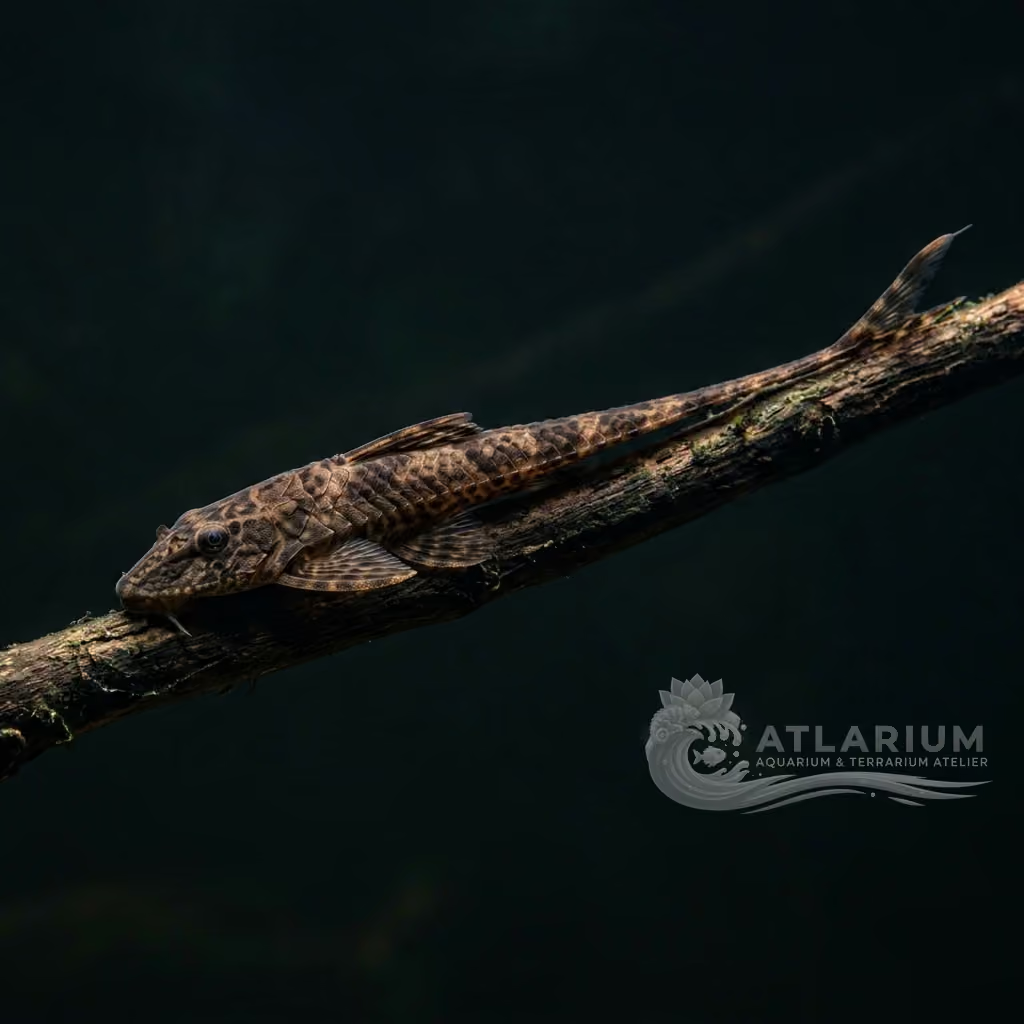
Histrionic 'Sand Pleco', flat as a sole, capable of drastically changing color (from almost black to light sand) to camouflage itself. It has long sensory barbels on the snout.
Water Temperature
24 - 28 °C
pH Value
6 - 7.5
Water type
Freshwater
Tank level
Bottom
Adult size
20 cm
Minimum tank volume
>= 200 L
Minimum group
>= 1
GH
2 - 15 dGH
KH
2 - 10 dKH
TDS
50 - 325 ppm
Conductivity
78 - 508 uS/cm

Species description
Geographical Origin and Habitat: Endemic to the Rio San Miguel and Rio Conejo in the upper Amazon basin, in Ecuador (Sucumbíos Province). Strictly rheophilic species: buries itself in the endless sandy bottoms (bancos de arena) of white or clear rivers with moderate/strong current.
Taxonomy and Morphology: Chameleon Whiptail Catfish (Pseudohemiodon apithanos). Astounding morphology. The Greek term "apithanos" means "incredible". Ultra-flat body with wide fan-like pectoral fins. Mouth formed by impressive fimbriated lips designed to dredge sand.
Social Behavior: Peaceful gregarious fish, inactive during the day (partially or entirely buried under the sand to camouflage). Extremely clumsy if forced into free swimming. It is appropriate to house them in small groups.
Coloration and Sexual Dimorphism: Masters of mimicry ("Chameleon"). They change color instantly to camouflage with the substrate: from a sandy beige, light brown to a very dark slate gray depending on the riverbed or if irritated. Females are stockier.

Care, breeding and tankmates
Aquarium Setup: Tank for benthic fish (minimum 120-150 cm / 48-60 inches footprint). The main (and only) decor is a 4-5 cm (2 inches) thick layer of very fine rounded sand, without stones. Lighting does not bother them as long as they can bury themselves, but a strong horizontal current is welcome.
Diet and Feeding: Sand carnivore (predator of benthic microfauna). Stubbornly refuses vegetable wafers and algae. They must be fed after lights out with live tubifex, fine bloodworms and soft granules for carnivores dropped close to the fish.
Water Quality: Although the water does not need extreme temperatures (24-28°C / 75-82°F), ammonia and nitrite/nitrate levels must border on zero. Fundamentally siphon the sand superficially on a regular basis.
Compatibility and Cohabitation: It is the "submissive" fish par excellence. Forbidden to insert it with impetuous bottom eaters (Loaches, quarrelsome Plecos, large "digging" Cichlids). Perfect tankmates are peaceful mid-water characins, Hatchetfish, or tame Corydoras.
Aquarium Breeding: Lip-brooders like P. cryptodon. Incredible spectacle of parental care: the male fertilizes the female's ovarian disk and then glues it to his enormous modified lower lips, carrying it continuously until hatching (about 12-14 days).
Risks and Diseases: The fatal enemy is malnutrition: it lets more active fish steal its food. Sharp gravel will destroy its very delicate oral barbels and epidermis, condemning it to death by bacterial and fungal infections.

Geographic origin and distribution
Endemic to the Rio San Miguel and Rio Conejo in the upper Amazon basin, in Ecuador (Sucumbíos Province). Strictly rheophilic species: buries itself in the endless sandy bottoms (bancos de arena) of white or clear rivers with moderate/strong current.
Origin
Tropical oceans and reefsAmazon, Orinoco, and Guianas

Fish profile
- Temperament
- Semi-aggressive
- This fish is a remarkably docile and peaceful species. It prefers to hide in the substrate. It poses absolutely no threat to other community fish.
- Diet
- Carnivore
- It is primarily a carnivore that feeds on benthic invertebrates. In the aquarium, it readily accepts sinking pellets. A varied diet ensures optimal health and coloration.
- Life expectancy
- 5-10 years
- Adult size
- 20 cm
- Sex ratio
- Solitary
- Maintaining a specific sex ratio is not strictly necessary. They do not exhibit significant intraspecific aggression. Keeping them singly or in mixed-sex groups is fine.
- Feeding frequency
- Twice daily
- They should be fed once or twice daily. Providing smaller portions prevents overeating and water fouling. Evening feedings are best since they are active at dusk.
- Bioload
- Medium
- This species has a moderate bioload due to its size. It produces a fair amount of waste. Regular tank maintenance is necessary to keep nitrate levels low.
- Flow
- Stagnant
- These catfish prefer a moderate water flow. The current simulates their natural riverine habitats. Avoid stagnant conditions but do not create excessively strong currents.
- Jump risk
- No
- Reproduction
- Oviparous
- Breeding in captivity is rare but possible under ideal conditions. They are lip brooders, carrying eggs on the lower lip. Raising fry requires excellent water quality.
- Compatibility & tankmates
- Peaceful
- This species is peaceful and works well in community tanks. It should be kept with other peaceful fish. Avoid aggressive or fin-nipping tank mates.
- Tank level
- Bottom
- They are strictly bottom-dwelling fish. You will find them resting on sandy substrates. They almost never swim in the middle or upper water columns.

Scientific Parameters & Models
FishBase
Window to the official scientific data of the species
FishBase v25.04Data synced on: 06/15/2026
- Trophic level
- 2.5 ± 0.2 se
- Resilience
- Medium (1.4 - 4.4 years)
- Phylogenetic uniqueness (PD50)
- 0.5039
- Bayesian Length-Weight
- a = 0.00398, b = 3.11
- VulnerabilityLow vulnerability (10 / 100)

Related species
Recommendations grouped by close relatives, companion choices, and similar care.