Spoon-faced Sand Pleco
Planiloricaria cryptodon
Bizarre and very rare creature, characterized by a concave, spoon-like head profile. Totally adapted to life under the sandy bed of the Amazon rivers.
Water Temperature
25 - 30 °C
pH Value
6 - 7.5
Water type
Freshwater
Tank level
Bottom
Adult size
22 cm
Minimum tank volume
>= 250 L
Minimum group
>= 1
GH
2 - 15 dGH
KH
2 - 10 dKH
TDS
50 - 325 ppm
Conductivity
78 - 508 uS/cm

Species description
Geographical Origin and Habitat: Upper Amazon basin (Peru, Brazil, Bolivia), particularly in the Ucayali, Purus, and Mamoré rivers. Inhabits wide, flat, and sandy bottoms, called "bancos de arena", devoid of vegetation but characterized by moderate current.
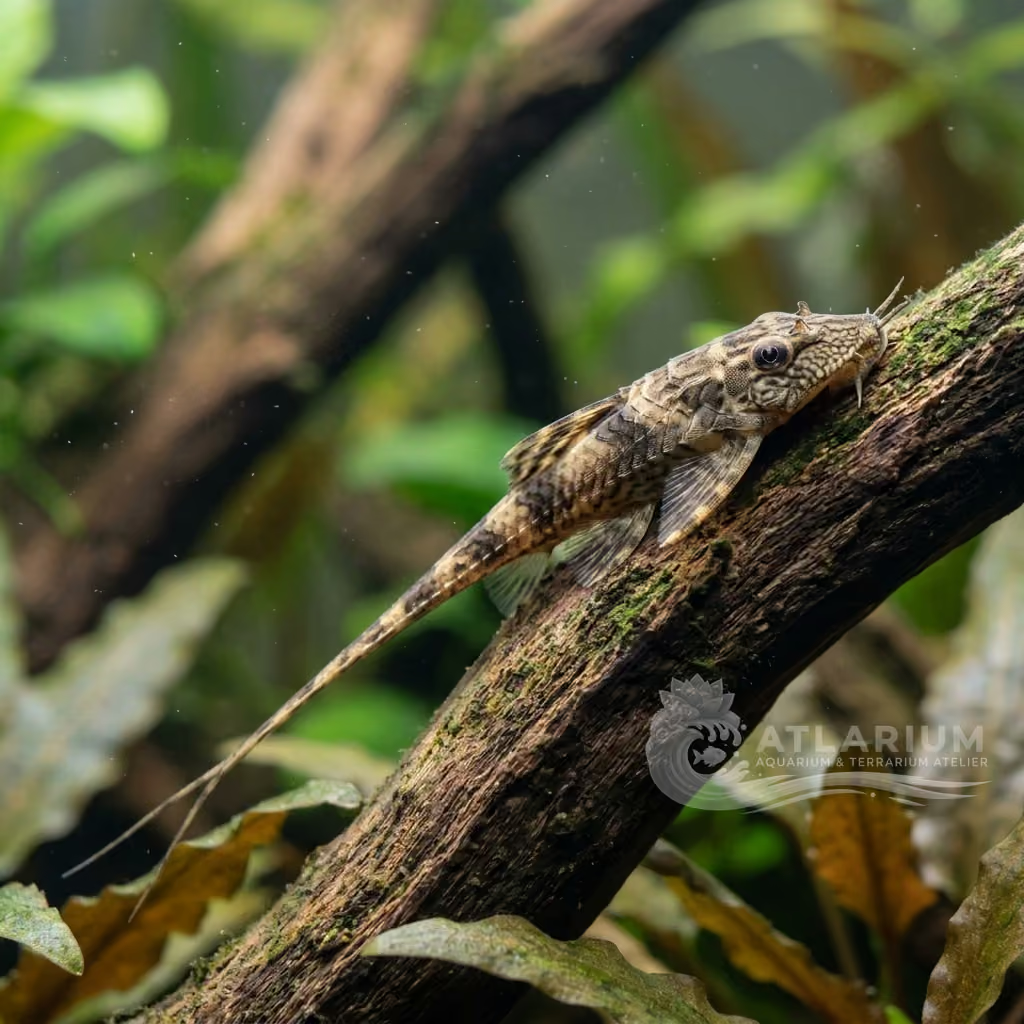
Taxonomy and Morphology: Planiloricaria cryptodon. Monotypic (only species in its genus). A Loricariid with an extreme appearance: incredibly flattened head, thread-like whip caudal peduncle. The eyes are microscopic, a sign of its dependence on barbels for sensory hunting.
Social Behavior: Completely benthic, and peaceful. Spends almost all of its time partially or totally buried in the substrate. Lets only its eyes surface, coming out to feed by sweeping the bottom.
Coloration and Sexual Dimorphism: Camouflage sand/light gray base color, finely speckled to blend perfectly with the riverbed. Sexual dimorphism is almost non-existent: mature males appear slightly more slender and with a slightly enlarged lower lip.

Care, breeding and tankmates
Aquarium Setup: Aquarium of at least 120-150 cm (48-60 inches) with a huge bottom surface (tank "footprint" is vital). Use only sand as fine as sugar. No sharp rocks or coarse gravel that would injure its delicate skin lacking lower scales.
Diet and Feeding: Strict Carnivore/Insectivore. Relies on touch (barbels). Needs frequent rations of food that sink to the sand: live tubifex, frozen bloodworms, and soft protein pellets. Does not scrape wood or eat algae.
Water Quality: Crystal clear, extremely oxygenated water is essential, with a moderate horizontal flow and high temperatures (25-30°C / 77-86°F). Very sensitive to ammonia and nitrites.
Compatibility and Cohabitation: Cannot compete for food. Pair only with placid fish occupying middle and upper layers, such as schooling Tetras, Hatchetfish (Carnegiella) or peaceful cichlids (Geophagus). Avoid quarrelsome Loricariids or ravenous bottom fish.
Aquarium Breeding: Extremely rare. They are partial "lip-brooders": the male carries the cluster of adhesive eggs hooked to his lower lip (extended barbels), transporting it everywhere until hatching, protecting it from being buried in the sand.
Risks and Diseases: Frequently dies of starvation due to food competition. Extremely high risk of fatal bacterial wounds if kept on rough gravel, which abrades the belly causing lethal ulcers.

Geographic origin and distribution
Upper Amazon basin (Peru, Brazil, Bolivia), particularly in the Ucayali, Purus, and Mamoré rivers. Inhabits wide, flat, and sandy bottoms, called "bancos de arena", devoid of vegetation but characterized by moderate current.
Origin
Tropical oceans and reefsAmazon, Orinoco, and Guianas

Fish profile
- Temperament
- Semi-aggressive
- This fish has an incredibly peaceful and somewhat shy temperament. They are easily stressed by boisterous tankmates and require a calm environment to thrive. Much of their time is spent resting motionless on the sand, relying on their camouflage. They never show aggression towards other species and are very gentle.
- Diet
- Carnivore
- They are predominantly carnivorous bottom feeders, sifting through fine sand for small invertebrates and crustaceans. In captivity, they require sinking meaty foods such as frozen bloodworms, blackworms, and specialized carnivore pellets. They will generally ignore algae wafers or plant-based matter. A fine sandy substrate is critical to prevent damage to their delicate mouthparts while foraging.
- Life expectancy
- 10-15 years
- Adult size
- 22 cm
- Sex ratio
- Solitary
- There are no strict sex ratio requirements for keeping them in captivity. A mixed group can be kept together without serious issues provided there is ample floor space. Males and females can be difficult to distinguish outside of the breeding season. Solitary specimens also fare well if tankmates are peaceful.
- Feeding frequency
- Twice daily
- Because of their slow feeding habits, they should be fed at least once or twice a day. Feeding after the tank lights go out ensures they can forage without competition from faster diurnal fish. Target feeding might be necessary if they are kept in a community tank. Ensure that uneaten food is removed to prevent water quality degradation.
- Bioload
- Medium to High
- This species produces a relatively moderate bioload due to its highly specialized diet and sluggish nature. They do not constantly excrete waste like some other bottom dwellers, provided the diet is balanced. The water must be kept pristine to maintain their health. Regular water changes are essential to prevent the accumulation of nitrates.
- Flow
- Stagnant
- They originate from river environments and prefer a moderate to relatively strong water flow. Good water movement helps keep the bottom clear of debris and ensures high oxygenation. The flow should simulate the natural currents of their native South American rivers. However, avoid creating turbulent whirlpools that could exhaust them.
- Jump risk
- Yes
- The jump risk for this species is exceedingly low due to their strictly benthic lifestyle. They spend almost their entire lives resting on or sifting through the bottom sand. They lack the physical inclination or swimming style to breach the water surface. Nevertheless, a standard aquarium lid is recommended to maintain stability and prevent evaporation.
- Reproduction
- Oviparous
- Reproduction in captivity is extremely rare and poorly documented for this specific species. They are believed to be lip-brooders, where the male carries the eggs attached to his specialized lower lip. Breeding requires perfectly replicated natural conditions, including pristine water and a seasonal temperature drop. Successfully breeding them remains a significant achievement for advanced aquarists.
- Compatibility & tankmates
- With caution
- Planiloricaria cryptodon is exceptionally peaceful and should only be housed with similarly docile tankmates. Aggressive or fast-swimming species can easily outcompete them for food, leading to starvation. Ideal companions include small tetras, rasboras, and gentle dwarf cichlids. Avoid mixing them with aggressive bottom feeders or larger plecos.
- Tank level
- Bottom
- They are strictly bottom-dwelling fish that almost never leave the substrate. Their entire morphology, including their flattened bodies and downward-facing mouths, is adapted for a benthic existence. They require large open areas of fine sand to rest and forage naturally. You will typically find them partially buried or resting quietly on the bottom.

Scientific Parameters & Models
FishBase
Window to the official scientific data of the species
FishBase v25.04Data synced on: 06/15/2026
- Trophic level
- 2.4 ± 0.2 se
- Resilience
- Medium (1.4 - 4.4 years)
- Phylogenetic uniqueness (PD50)
- 1
- Bayesian Length-Weight
- a = 0.00398, b = 3.11
- VulnerabilityLow vulnerability (16 / 100)

Related species
Recommendations grouped by close relatives, companion choices, and similar care.