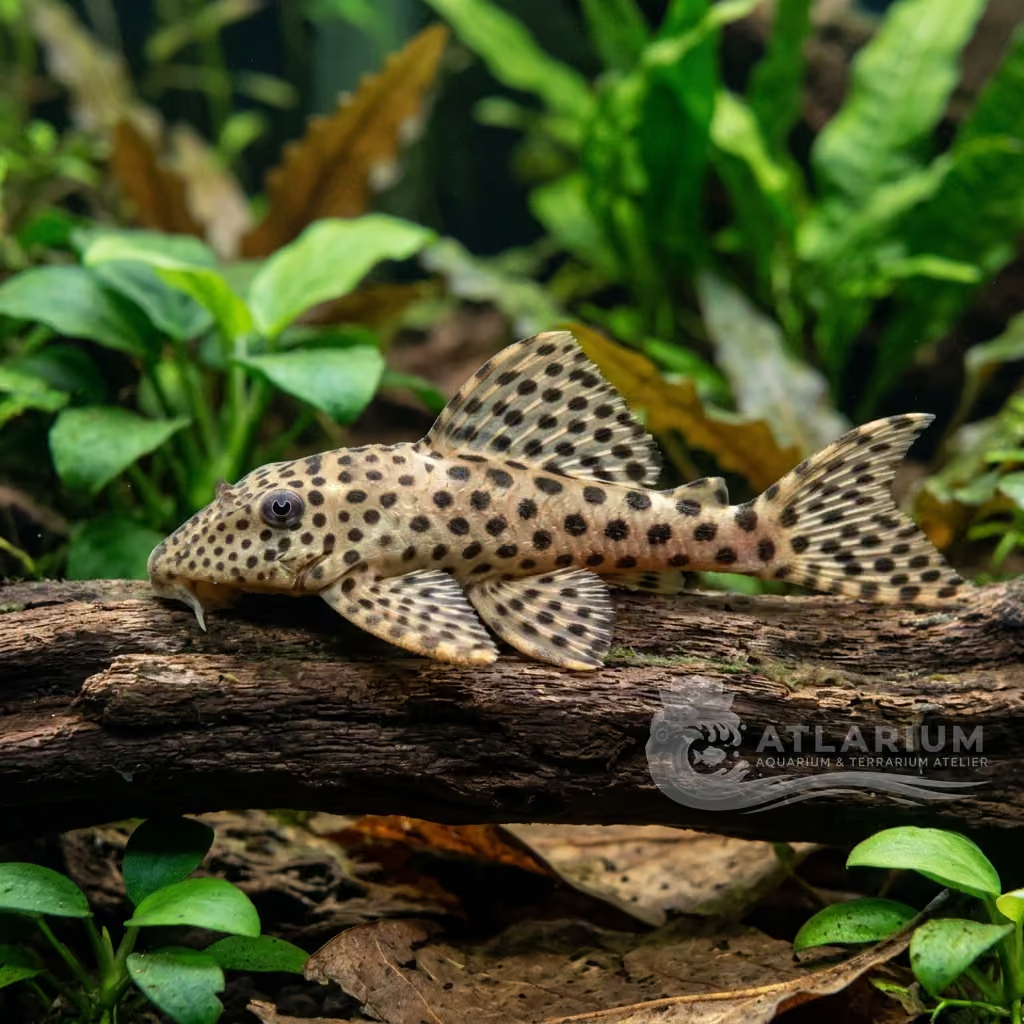
Caqueta Whiptail
Spatuloricaria caquetae
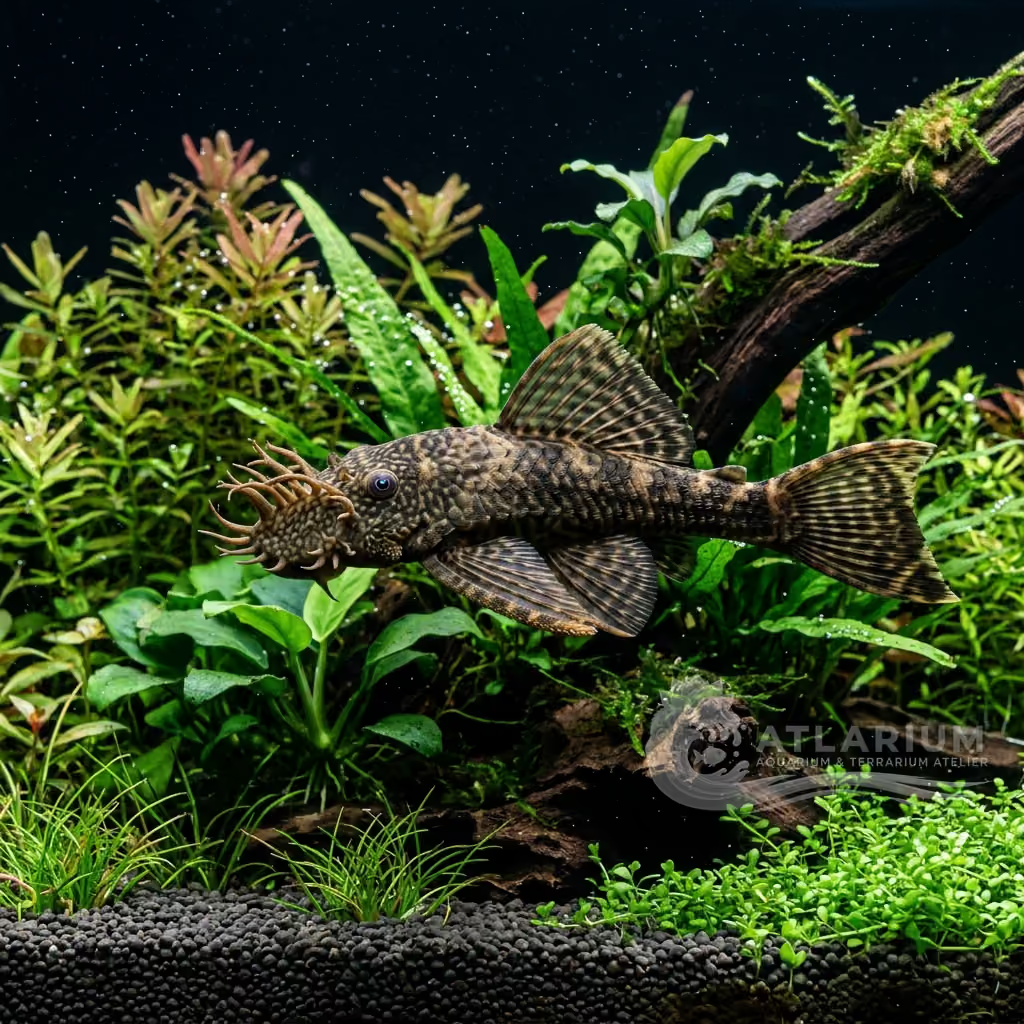
One of the largest known 'Loricaria'. Adult males develop formidable 'beards' of odontodes on the sides of their heads, giving them a fearsome and archaic appearance.
Water Temperature
22 - 26 °C
pH Value
6 - 7.5
Water type
Freshwater
Tank level
Bottom
Adult size
35 cm
Minimum tank volume
>= 250 L
Minimum group
>= 1
GH
2 - 15 dGH
KH
2 - 10 dKH
TDS
50 - 325 ppm
Conductivity
78 - 508 uS/cm

Species description
Geographical Origin and Habitat: Endemic to the Caquetá River basin in Colombia (Northwestern Amazon). Inhabits the outflow zones of main rivers and Andean foothill streams, characterized by mixed gravel, pebbles, and sand bottoms, with moderate to strong current.
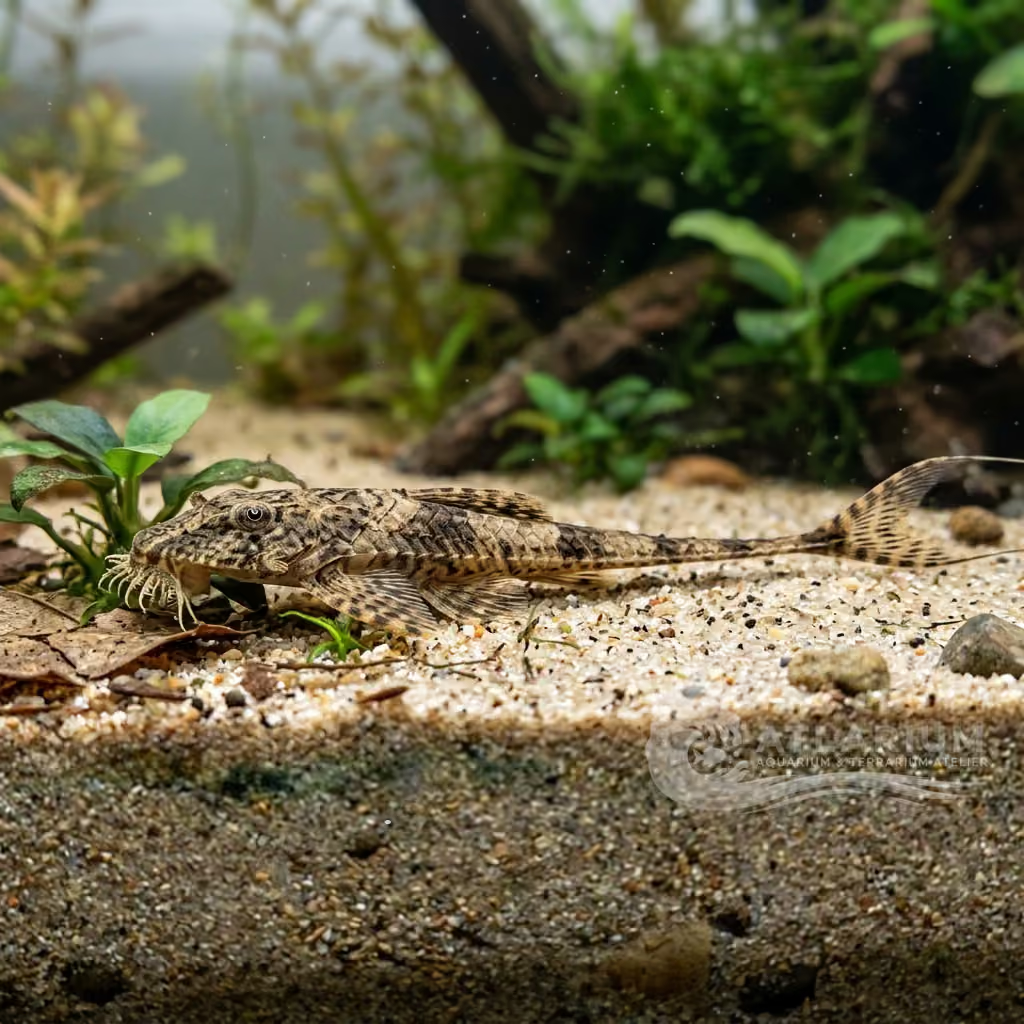
Taxonomy and Morphology: Spatuloricaria caquetae. Imposing loricariid (up to 35 cm / 14 inches) but extremely longilinear and compressed. The name derives from the Latin "spatula" (spoon), referring to the extensive lower mouth. Boasts a very long caudal peduncle and dorsally positioned eyes.
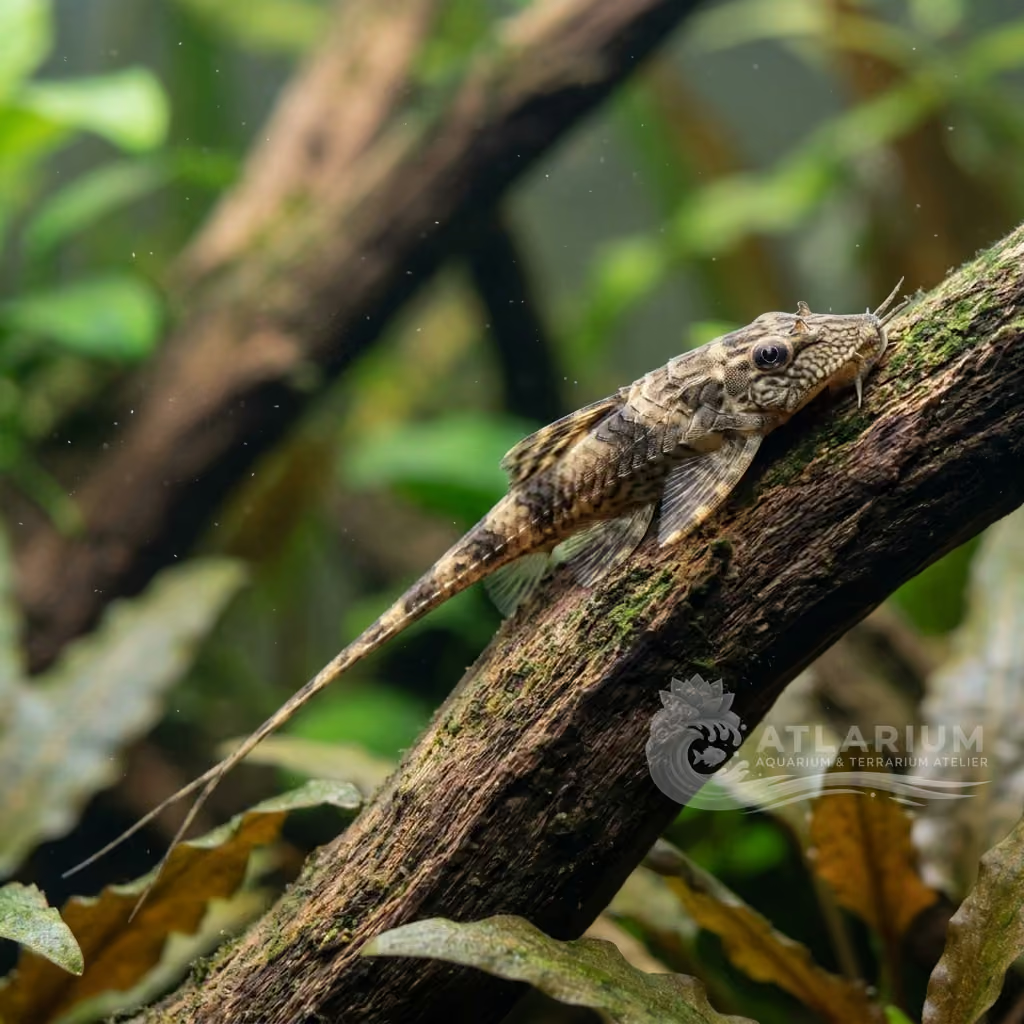
Social Behavior: Despite its size, it is a fearful and benthic fish that spends most of the day resting on the bottom or anchored to a large root, defying the current. Ignores fish swimming above it, but defends its vital space on the bottom.
Coloration and Sexual Dimorphism: Camouflage: background from golden brown to sand gray, interrupted by wide dark saddles (spots) along the back. Adult males develop formidable "brushes" of bristly odontodes (spines) along the sides of the head (cheeks) and on the pectoral fins.

Care, breeding and tankmates
Aquarium Setup: Considerable dimensions (tank of at least 150 cm / 60 inches). "River manifold" layout (turbulent river): strong horizontal current, river sand bottom with many smooth round pebbles, large branches (Mopani or Mangrove). No delicate plant would resist the current or its size.
Diet and Feeding: Omnivore with a strong carnivorous preference. The mouth is structured to take invertebrates from the substrate. Provide protein-enriched bottom tablets, krill, bloodworms, and pieces of shelled shrimp. Needs few vegetable inputs (zucchini).
Water Quality: Clear waters, exceptionally well oxygenated and with not excessively torrid temperatures (22-26°C / 72-79°F, typical of foothill rivers). Filters must process a large biological load while keeping ammonia at zero.
Compatibility and Cohabitation: Avoid biting Loricariids (e.g. Panaque or Pseudacanthicus) that would bully it, and violently digging cichlids. Excellent companion for large South American Characins (Anostomus, Leporinus) or docile mid-water cichlids (Geophagus).
Aquarium Breeding: Males are brooders (guards). The female lays a disk of large eggs on a flat surface (a large stone or bare bottom). The male positions himself over them, covering them with his belly and tenaciously protecting them for 10-14 days.
Risks and Diseases: High risk of starvation if food does not reach the bottom or is stolen by more agile fish. Extreme delicacy of the long fins, easy to get infected if torn or in not perfectly clean water.

Geographic origin and distribution
Endemic to the Caquetá River basin in Colombia (Northwestern Amazon). Inhabits the outflow zones of main rivers and Andean foothill streams, characterized by mixed gravel, pebbles, and sand bottoms, with moderate to strong current.
Origin
Amazon, Orinoco, and Guianas

Fish profile
- Temperament
- Semi-aggressive
- They are very peaceful, somewhat shy, and highly interesting bottom dwellers. They will spend daylight hours resting quietly under wood or broad leaves. Once established, they may become bolder and come out during feeding time.
- Diet
- Carnivore
- They are omnivores with a preference for meaty foods, unlike many algae-eating plecos. They should be fed sinking carnivore pellets, frozen bloodworms, and tubifex worms. Some vegetable matter, such as blanched zucchini or algae wafers, should also be offered occasionally.
- Life expectancy
- 10-15 years
- Adult size
- 35 cm
- Sex ratio
- Solitary
- They can be kept singly or in small groups. When keeping a group, having more females than males can reduce potential territorial disputes between mature males. Males will develop extensive odontodes (hair-like "beard" growths) on the sides of their heads when mature.
- Feeding frequency
- Twice daily
- They should be fed once or twice a day, preferably during the evening or just before lights out. They are nocturnal foragers and will actively seek out food in the dark. Ensure that mid-water fish do not steal all the food before it hits the bottom.
- Bioload
- Medium to High
- This species has a moderate bioload that is easily managed in a well-maintained aquarium. As a bottom-dwelling catfish, they produce a typical amount of waste for their size. Regular water changes and a good canister filter are sufficient to maintain healthy conditions.
- Flow
- Stagnant
- They originate from river environments and appreciate moderate to strong water flow. A powerhead positioned to sweep across the bottom of the tank will simulate their natural habitat. High oxygenation is crucial, particularly at higher temperatures.
- Jump risk
- No
- Reproduction
- Oviparous
- Breeding has been achieved by hobbyists but requires pristine water conditions. They are lip-brooders; the male carries the cluster of eggs attached to his lower lip and chest area. He will protect and fan the eggs constantly until they hatch, after which the fry must be fed micro-foods.
- Compatibility & tankmates
- Peaceful
- They are highly peaceful and do perfectly well in a community aquarium. They can be safely kept with tetras, rasboras, Corydoras, and peaceful dwarf cichlids. Care should be taken to avoid aggressive bottom-dwellers that might outcompete them for food or territory.
- Tank level
- Bottom
- They are entirely benthic, spending their time on the substrate, driftwood, and lower aquarium glass. They are excellent camouflagers and often rest partially buried in the sand. A fine, soft sand substrate is absolutely necessary for their comfort and natural behaviors.

Scientific Parameters & Models
FishBase
Window to the official scientific data of the species
Data synced on: 06/15/2026
- Trophic level
- 2.2 ± 0.2 se
- Resilience
- Very low (more than 14 years)
- Phylogenetic uniqueness (PD50)
- 0.5001
- Bayesian Length-Weight
- a = 0.00398, b = 3.11
- VulnerabilityModerate to high vulnerability (51 / 100)

Related species
Recommendations grouped by close relatives, companion choices, and similar care.