Hydrilla verticillata
Hydrilla verticillata
Highly invasive and incredibly adaptable aquatic macrophyte. Survives extreme conditions with minimal light, but grows explosively under high lighting and CO2.
Water Temperature
10 - 28 °C
pH Value
6 - 8.5
Water type
Freshwater
Light
Low
CO2
Low
Expected height
80 cm
Expected width
15 cm
GH
4 - 20 dGH
KH
2 - 21 dKH

Species description
Geographical Origin and Habitat: Initially endemic to vast portions of Africa, Central Asia, and the Indian peninsula, *Hydrilla verticillata* (colloquially known as Waterthyme) is today globally feared as one of the most destructive and ecologically lethal aquatic macrophyte species. It populates static lakes, slow ponds, drainage ditches, and sluggishly flowing waters. In nature, it roots in silty sediments, creating biological walls that entirely suffocate the water column to the surface, destroying local competition.
Taxonomy & Genetics: The sole representative of the genus *Hydrilla* (Hydrocharitaceae family), it shows a formidable and often deceptive resemblance to *Egeria densa* and *Elodea canadensis*. Unlike them, Hydrilla's genetics allow it to form both turions (axillary overwintering buds to survive frosts) and robust subterranean tubers (storage organs), guaranteeing virtually unstoppable clonal reproduction.
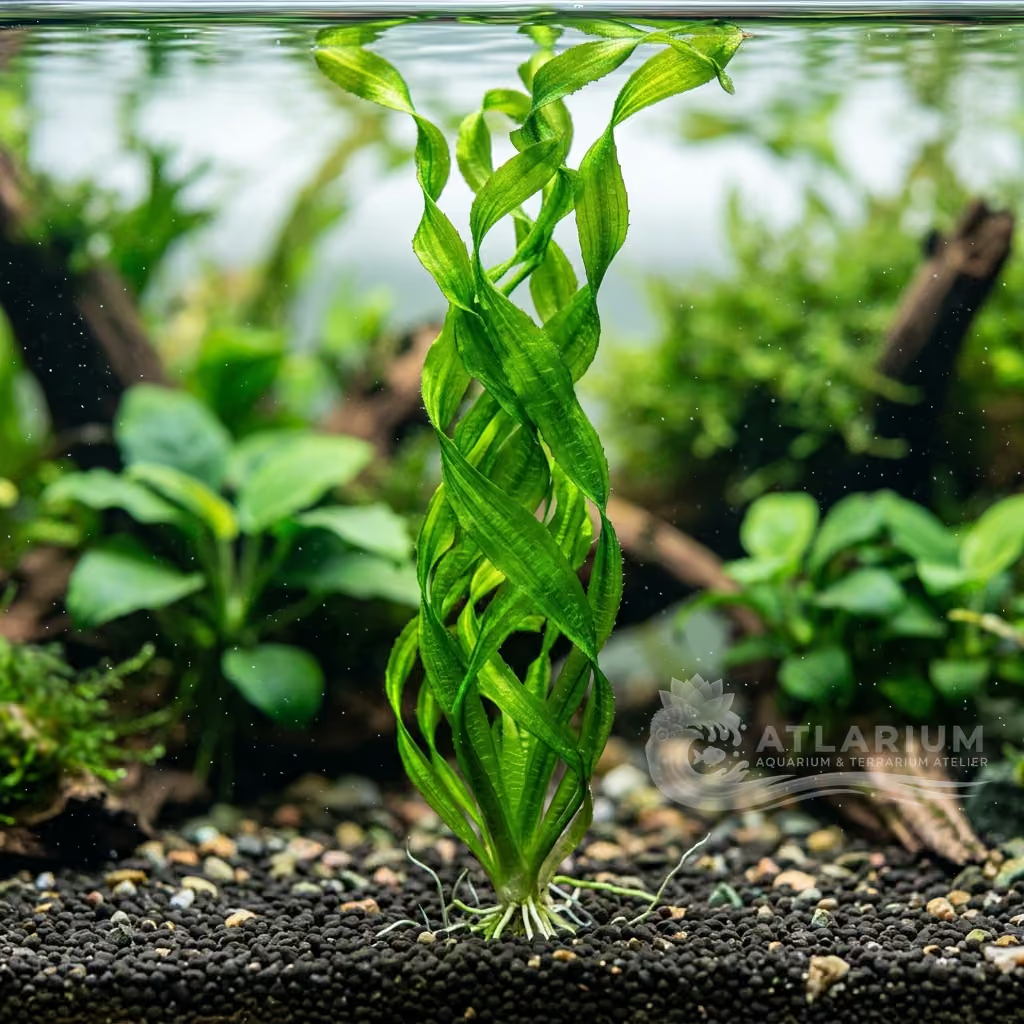
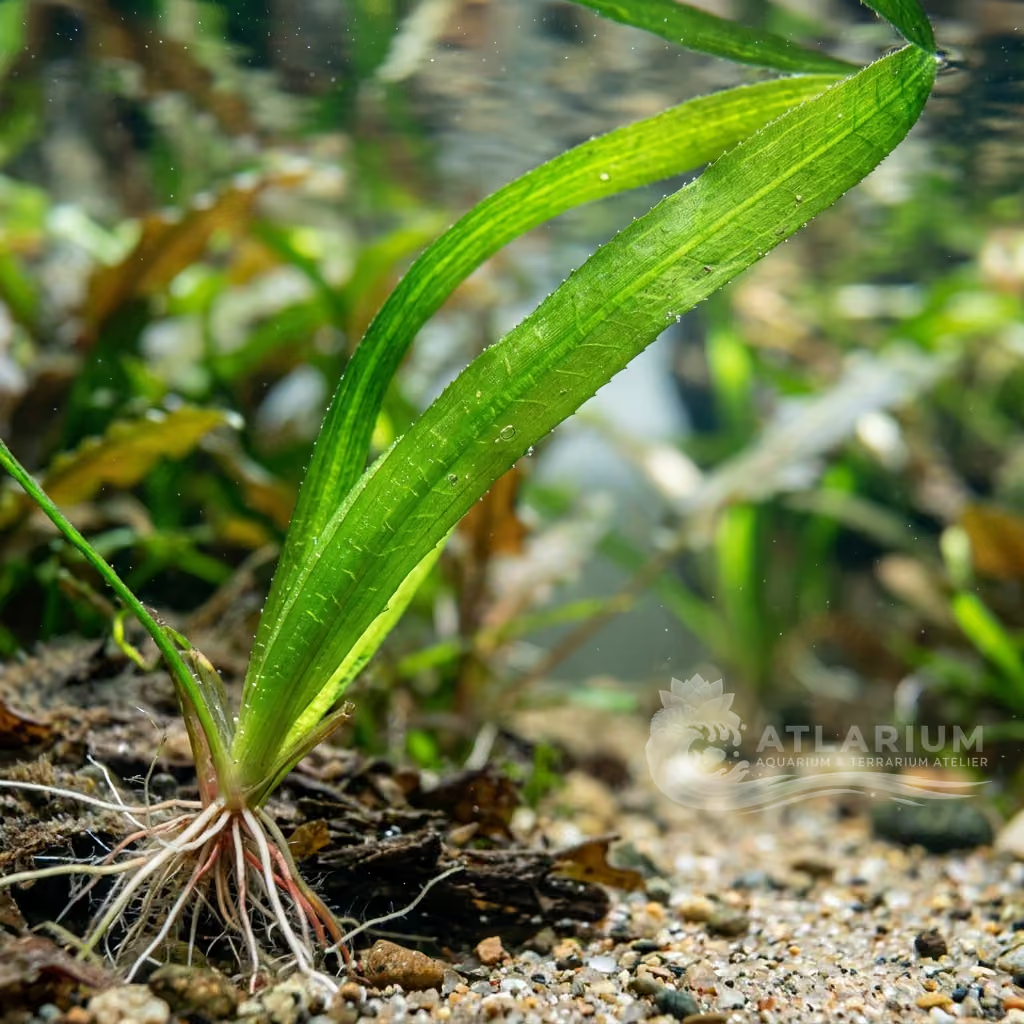
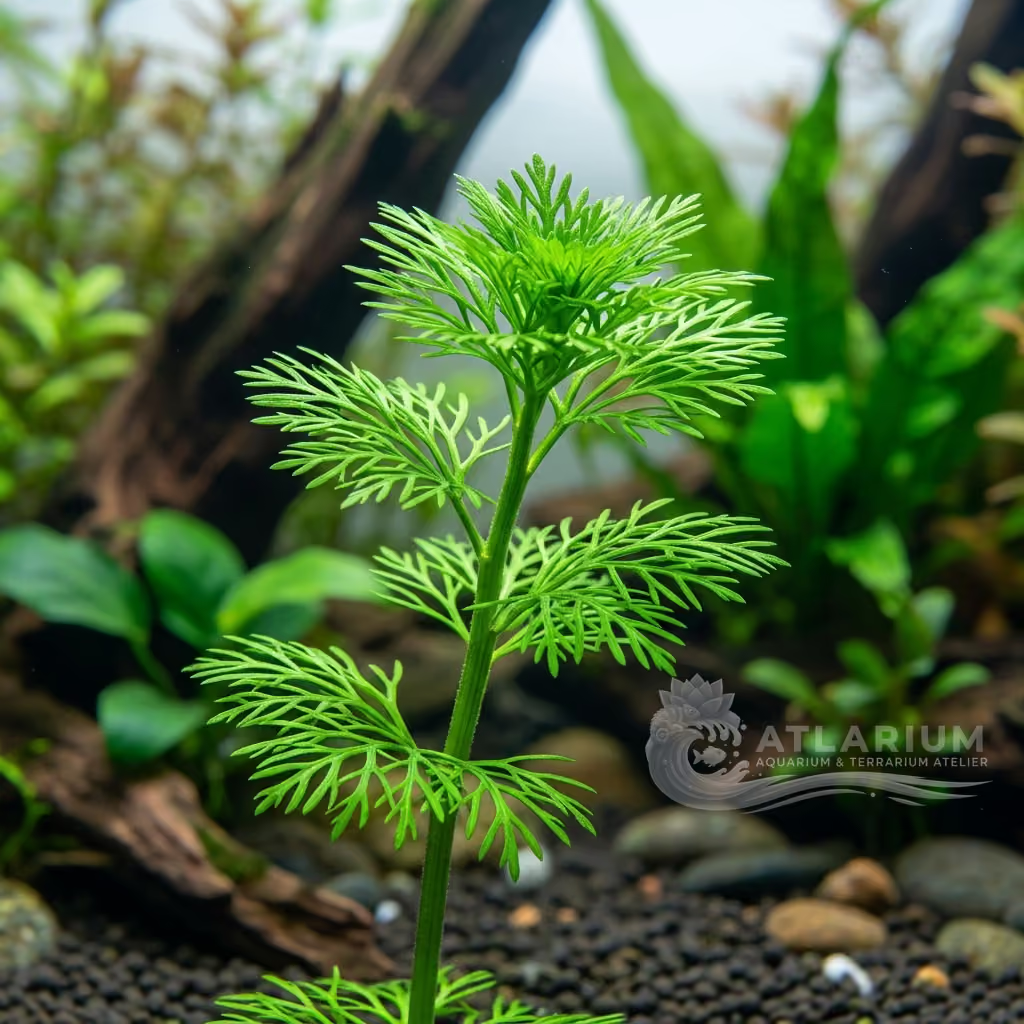
Physical Structure: It possesses long, flaccid, thread-like caulescent stems that can extend for tens of meters in nature. The leaves (narrow, lanceolate, sharp, and visibly serrated on the margins) grow in whorls of 4-8 elements (whereas Elodea typically has 3, and Egeria 4 or more). It produces a massive network of very fine adventitious roots to secure itself to submerged logs or the bottom.
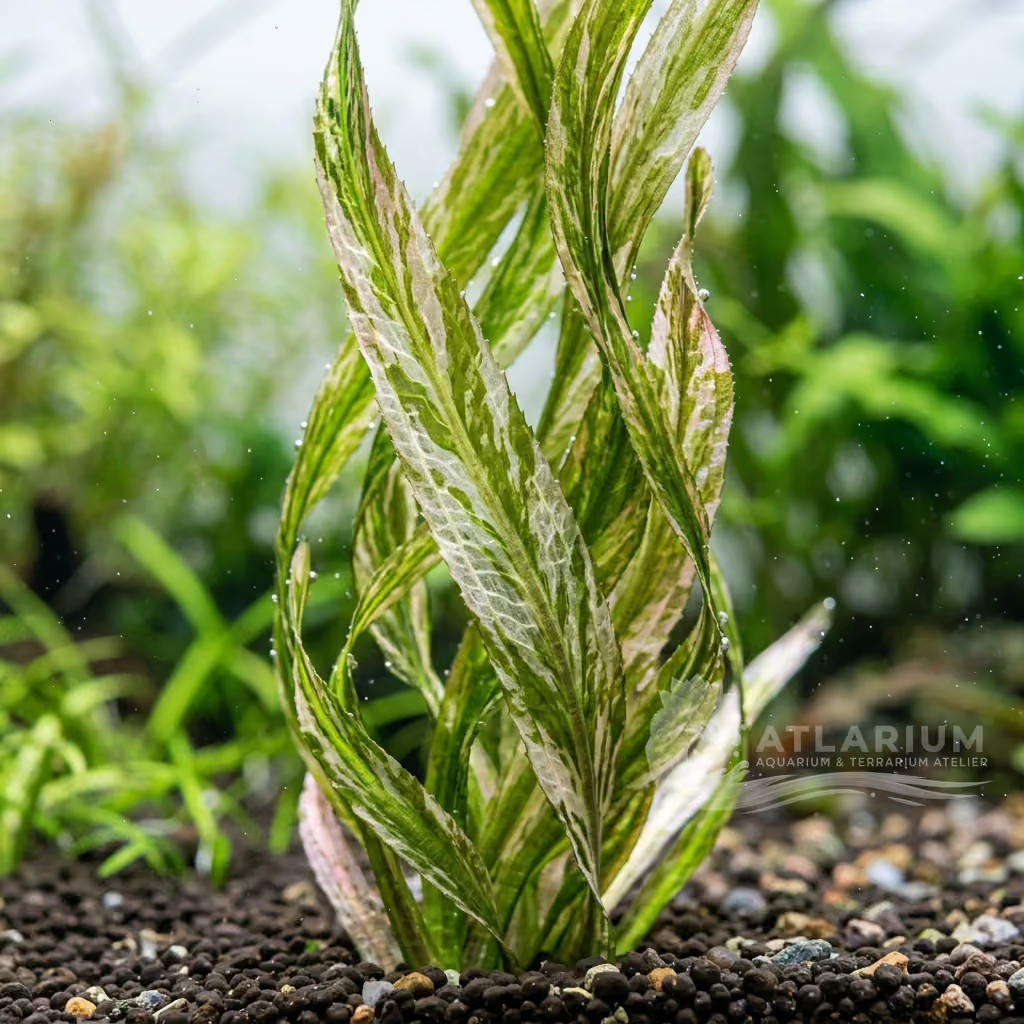
Color & Texture: The entire plant structure sports a vibrant bottle green or apple green. Under hyper-intense lighting in the aquarium, the leaf apex and newly formed stem may take on minimal reddish mottling. To the naked eye, its texture appears rough or prickly, due to the tiny serrations on the edges and tiny spines on the underside of the leaf midrib.

Care, breeding and tankmates
Lighting & CO2: Absolute champion of survival in desperate conditions. Even with less than 1% of total sunlight, it is capable of performing photosynthesis and continuing its asymptotic extension upwards. Obviously, pumped by powerful lights and CO2 injections, it will turn your aquarium into a solid green block in a matter of days. It can operate both with dissolved CO2 and by massively extracting bicarbonate ions, destroying the tank's KH.
Nutrition & Substrate: It is a true aquatic plant, lacking an emersed form, and gathers its sustenance in a brutal way: it absorbs organic nitrogen in solution at such rates that it is used in wastewater phytopurification plants. It strongly prefers to root in dusty inert bottoms or humus-enriched soil, from which it draws phosphorus, transforming it into its fearsome subterranean survival tubers.
Water Chemistry: Invincible. The monoecious ecotype tolerates a range of 20-30°C. The dioecious ecotype passes uncaringly from winters under a layer of ice to 35°C summers. Tolerant of light brackish water (up to 10 ppt), a pH varying between 5.5 and 9.0, and deadly accumulations of heavy metals, which the plant heroically sequesters in its tissues.
Space Management & Placement: Its unprecedented speed and propensity for tangling categorically preclude it from any curated aquarium (aquascaping). It is suitable almost exclusively for bare breeding tanks for cyprinids and livebearers or as disposable flora for fry. It should be confined to the back corners by planting bunches secured with ceramic weights.
Pruning: Be prepared to prune it constantly. "Topping" the stems is necessary not in months or weeks, but literally every few days in well-fed tanks. Snap it with your hands in dense masses, remove the excess, and export the biomass. NEVER, under any circumstances, release the fragments into domestic toilets: they must be dried or frozen to avoid epochal environmental disasters in sewers and rivers.
Risks & Diseases: Incorruptible and devoid of known diseases. In the aquarium, the only true, titanic, and catastrophic risk is *the plant itself*. Removing Hydrilla is not enough to eradicate its presence from the tank: from the substrate, hundreds of microscopic fragments of stolons or tubers hidden in the gravel months ago will germinate, haunting the ecosystem unless you boil the soil or blackout everything for months.

Geographic origin and distribution
Initially endemic to vast portions of Africa, Central Asia, and the Indian peninsula, *Hydrilla verticillata* (colloquially known as Waterthyme) is today globally feared as one of the most destructive and ecologically lethal aquatic macrophyte species. It populates static lakes, slow ponds, drainage ditches, and sluggishly flowing waters. In nature, it roots in silty sediments, creating biological walls that entirely suffocate the water column to the surface, destroying local competition.
Origin
Africa and MadagascarEurope, Mediterranean, and West AsiaSouth and Southeast Asia

Plant profile
- Placement
- Background
- This plant is best suited for the background of the aquarium due to its rapid vertical growth. It can also be left floating at the surface where it provides excellent cover for fry. Planting it in dense bunches creates a thick, forest-like appearance.
- Botanical form
- Stem
- Hydrilla features long, slender stems with whorls of 3 to 8 small, serrated leaves at each node. The leaves are typically a bright to medium green. It forms a dense, tangled mass if left to grow unchecked.
- Growth
- Fast
- It possesses an incredibly fast growth rate, often considered invasive in many natural waterways. In the aquarium, it requires constant pruning to prevent it from shading out other plants. Its rapid growth makes it an excellent nutrient sponge for newly set up tanks.
- Substrate
- Medium
- Hydrilla verticillata is a highly adaptable plant that readily anchors into almost any substrate, from basic sand and gravel to nutrient-rich soils. Its roots primarily serve an anchoring function, keeping the fast-growing stems secured to the bottom. While the plant extracts the majority of its nutrients straight from the water column, a substrate depth of 3-5 cm ensures the stems do not float away. Adding root tabs to an inert substrate can slightly boost its already vigorous growth rate.
- Column fertilization
- Recommended
- It absorbs nutrients very efficiently through its leaves directly from the water column. Liquid fertilization is the most effective way to feed it. Even minimal dosing is often sufficient to keep it healthy.
- Root fertilization
- None
- Root fertilization is generally unnecessary for this species. While it does produce roots to anchor itself, it relies primarily on water-borne nutrients. A nutrient-rich substrate is not required for its cultivation.
- Trimming
- Occasional
- Aggressive and frequent trimming is required to manage its size. Stems can be cut anywhere along their length. The removed portions can be replanted to form new stands or discarded to export nutrients.
- Propagation
- Cuttings, Runners, Fragmentation
- Propagation is effortless via stem fragmentation. Any small piece of stem with a single node can sprout into a new plant. Simply cut and replant the tops or let them float.
- Sensitivity
- Moderate
- It is highly resilient and tolerates a wide range of water parameters, temperatures, and light levels. It is practically bulletproof in the aquarium setting. However, it can melt if exposed to sudden, extreme shifts in water chemistry.
- Layout role
- Background
- Its main role is to provide a fast-growing, dense green background. It is highly functional for nutrient export and algae control in the early stages of an aquascape. Due to its wild appearance, it is mostly used in natural or biotope setups.

Image gallery
Licensed images linked to the species or, when marked, to the closest representative taxon.

Related species
Recommendations grouped by close relatives, companion choices, and similar care.