Limnobium laevigatum
Hydrocharis laevigata
Amazon Frogbit is a highly popular floating plant with smooth, round leaves and long trailing roots. It aggressively absorbs excess nutrients from the water but needs space and calm surfaces.
Water Temperature
4 - 35 °C
pH Value
5 - 8
Water type
Freshwater
Light
Medium - High
CO2
Low - High
GH
0 - 30 dGH
KH
0 - 14 dKH

Species description
Geographical Origin and Habitat: Limnobium laevigatum, known as Amazon Frogbit, is widespread in Central and South America. It colonizes lakes, ponds, ditches, and slow-flowing rivers rich in organic nutrients. It is a highly buoyant plant, accustomed to warm climates and direct solar exposure on the water surface.
Taxonomy & Genetics: It belongs to the family Hydrocharitaceae, genus Limnobium. It features a genome programmed for extremely rapid vegetative multiplication via runners. The underside of the leaves contains highly efficient spongy aerenchyma that ensures stable buoyancy of the rosettes.
Physical Structure: It presents as a floating rosette of rounded leaves. It develops long runners that give rise to new daughter rosettes. A long, feathery root system of white or grayish-blue
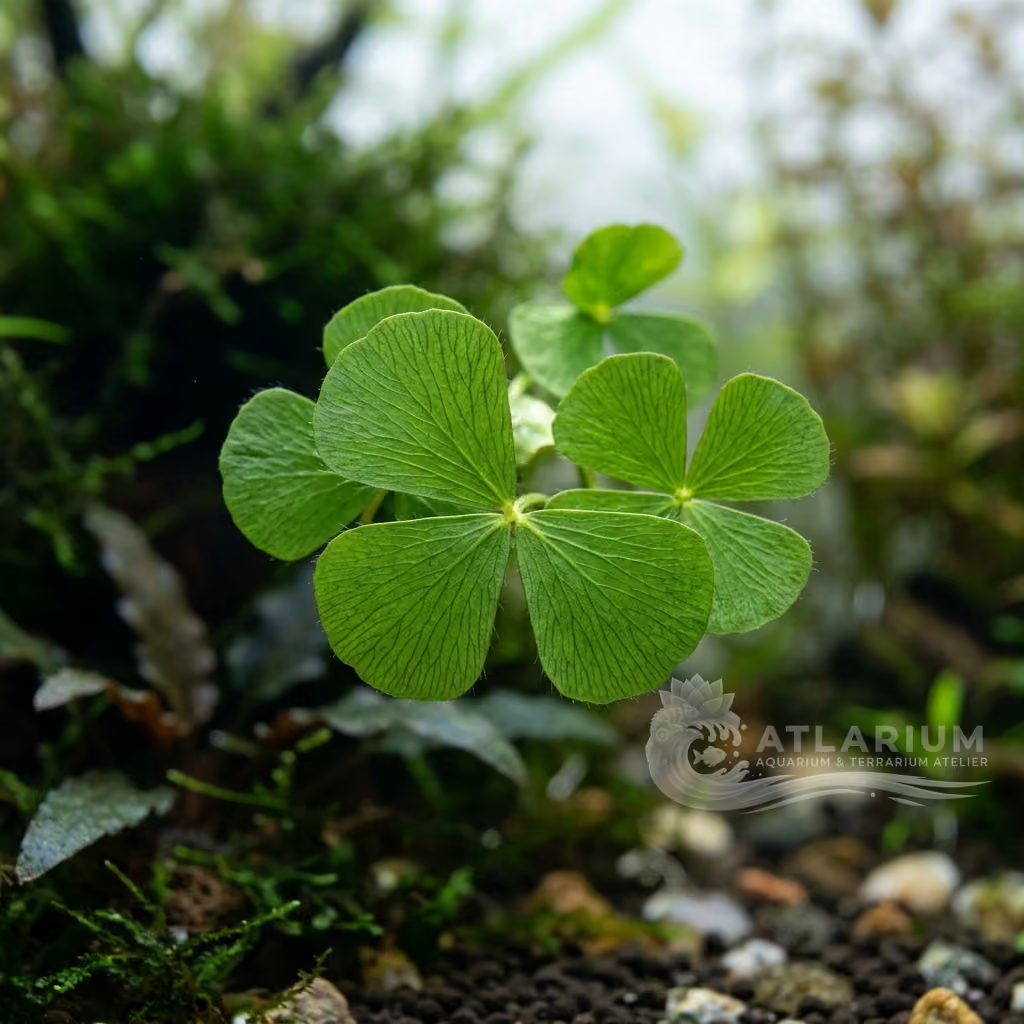
Color & Texture: The leaves show a shiny bright green on the upper page, with a smooth and waxy texture that repels moisture. New leaves sometimes present a slight marbled pattern. The roots are hairy and feathery, creating an attractive suspended forest much liked by fish.

Care, breeding and tankmates
Lighting & CO2: Requires medium-high lighting. Found on the
Water Chemistry: surface, it does not require carbon dioxide dissolved in the tank as it takes CO2 directly from the surrounding air through the stomatal openings.
Nutrition & Substrate: Does not require substrate. It absorbs large amounts of nitrogenous substances (ammonium, nitrates) and phosphates directly from the water column through its roots. Periodical liquid fertilization supports the healthy development of the leaves.
Water Chemistry: Tolerates a wide thermal spectrum between 4°C and 35°C, pH from 5.0 to 8.0, and carbon hardness (KH) between 0 and 14 dKH. Avoid strong surface water movement which could submerge the leaves causing them to rot.
Space Management & Placement: Placed on the surface of the aquarium water (although the JSON profile indicates 'midground'). It must be thinned out regularly to prevent it from covering the entire surface of the tank, shading the plants at the bottom.
Pruning: Pruning consists of manual removal of excess runners and rosettes. The roots can be trimmed periodically with sharp scissors if they become too long, without compromising the health of the plant.
Risks & Diseases: The main risk is water condensation falling from closed lids, which can rot the leaves. Nutrient deficiencies manifest as small, pale leaves or with clear yellowing.

Geographic origin and distribution
Limnobium laevigatum, known as Amazon Frogbit, is widespread in Central and South America. It colonizes lakes, ponds, ditches, and slow-flowing rivers rich in organic nutrients. It is a highly buoyant plant, accustomed to warm climates and direct solar exposure on the water surface.
Origin
Central America and CaribbeanAmazon, Orinoco, and GuianasExtra-Amazon South America

Plant profile
- Placement
- Floating
- As a floating plant, Limnobium laevigatum is placed directly on the water's surface, where its long roots drift elegantly downward. It is perfect for open-top aquariums or setups with adequate airspace between the water and the lid to prevent leaf rot. Care should be taken to ensure it doesn't shade out light-demanding plants below, making it best suited for providing cover in specific areas or over low-light species. Using airline tubing corrals can help keep the plant restricted to designated zones on the surface.
- Botanical form
- Rosette
- Limnobium laevigatum features smooth, round to slightly oval-shaped leaves that form small rosettes on the water surface. The tops of the leaves are a bright, glossy green, while the undersides are a spongy, silvery-white tissue filled with air to provide buoyancy. From the center of the rosette, it extends long, feathery roots that can reach deep into the water column, sometimes even touching the substrate. These trailing root systems offer an intricate underwater landscape and shelter for small fish and fry.
- Growth
- VERY_FAST
- Under favorable conditions of high light and rich nutrients, the growth rate of Limnobium laevigatum is extremely fast. It can double in mass within a matter of days, quickly covering the entire water surface if left unchecked. This rapid expansion makes it ideal for newly established tanks to absorb excess nutrients and provide immediate shade. However, its explosive growth necessitates frequent maintenance to ensure underlying plants receive enough light.
- Substrate
- None
- As a floating aquatic plant, Limnobium laevigatum does not require any substrate for anchoring, as it freely drifts on the water's surface. It develops long, trailing roots covered in fine root hairs that efficiently absorb macronutrients directly from the water column. However, keeping the water surface relatively still is important to prevent damage to its delicate root system and ensure unimpeded nutrient assimilation.
- Column fertilization
- Recommended
- Liquid column fertilization is the primary method of nourishing Limnobium laevigatum, as it has no access to substrate nutrients. A complete liquid fertilizer rich in macro and micronutrients will support its rapid proliferation and maintain strong leaf coloration. Because it grows so quickly, it can rapidly deplete the water column of essential elements, necessitating consistent dosing schedules. Insufficient column fertilization will immediately result in stunted rosettes and diminished root growth.
- Root fertilization
- None
- Since Limnobium laevigatum is an obligate floating plant, traditional root fertilization using substrate tabs is entirely inapplicable. All of its nutritional requirements are met through the absorption of dissolved compounds by its trailing aquatic roots. In extremely deep tanks where its roots touch a nutrient-rich substrate, it might absorb trace amounts, but this is negligible. Aquarists must rely solely on managing the water column chemistry to feed this species.
- Trimming
- Occasional
- Maintenance of Limnobium laevigatum primarily involves the physical removal of excess rosettes to manage surface coverage. Simply scooping out handfuls of the plant during regular water changes prevents it from blocking essential light to submerged flora. If the trailing roots become too long and tangle with other plants or hardscape, they can be carefully trimmed with scissors without harming the main plant. Regular culling ensures that the remaining rosettes have ample space and nutrients to grow robustly.
- Propagation
- Runners
- Propagation is incredibly simple and occurs automatically as the plant sends out lateral stolons along the water surface. Small daughter plantlets develop at the ends of these runners and quickly grow their own leaves and roots. Once a daughter rosette is established, the connecting stolon naturally breaks or can be pinched off to separate the plants. This continuous cycle of vegetative reproduction allows a single specimen to populate an aquarium's surface rapidly.
- Sensitivity
- Moderate
- Limnobium laevigatum is highly sensitive to intense surface agitation and splashing water, which can easily submerge and rot its leaves. It requires a calm surface environment, often necessitating the adjustment of filter outputs or the use of floating baffles. Condensation dripping from tight-fitting aquarium lids can also cause the spongy tops of the leaves to decay rapidly. Additionally, it does not tolerate salt well, making it unsuitable for brackish water setups.
- Layout role
- Floating
- In an aquascape, Limnobium laevigatum serves primarily as a functional and aesthetic canopy that diffuses strong lighting. Its long, feathery roots add a wild, naturalistic element to the upper to middle zones of the tank, creating a jungle-like atmosphere. It is highly valued in breeding setups or biotope aquariums for providing safe havens for fry and shy labyrinth fish. By casting dappled shadows, it helps create striking visual depth and contrast within the underwater layout.

Related species
Recommendations grouped by close relatives, companion choices, and similar care.