Encyclopaedia

PlantFreshwaterIntermediate
©AI Generated·Proprietary

Elodea canadensis

Tracheophyta

A famously robust and cold-tolerant stem plant native to North America. Extremely adaptable, it grows vigorously even in low-light setups and diverse conditions.

Taxonomy
Class:Liliopsida
Order:Alismatales
Family:Hydrocharitaceae
Genus:Elodea
Species:Tracheophyta
Formerly known as:Elodea canadensis

Share

Check out Elodea canadensis on Atlarium

PracticeRecognition quizzesPhotos, names, origins, and puzzles to review Atlas species.Open quizzes
Water Temperature

4 - 20 °C

pH Value

6 - 8.5

Water type

Freshwater

Light

Low

CO2

Low

Expected height

60 cm

Expected width

10 cm

GH

8 - 25 dGH

KH

2 - 21 dKH

Species description

Geographical Origin and Habitat: Universally known as "Canadian waterweed" or "water pest", *Elodea canadensis* is native to the cold and temperate waters of North America. However, since the nineteenth century, it has been introduced (accidentally or via aquarium dumping) to all continents, becoming a fearsome invasive alien species. It populates deep static lakes, slow-moving rivers, canals, and ponds even subjected to winter frost. As the common name suggests, it is a weed of brutal ecological adaptability.
Taxonomy & Genetics: It belongs to the Hydrocharitaceae family (cousin to the more famous *Egeria densa* and the lethal *Hydrilla verticillata*). Its genetic makeup is strictly aquatic: unlike many aquarium plants, it is incapable of forming emersed foliage. Structurally, it defends itself from freezing temperatures by producing turions (specialized overwintering buds) that winter in the deep mud until the return of spring warmth.
Physical Structure: Pure caulescent architecture. It presents very slender, fragile, and thread-like stems that are highly branched. The leaves (short, oblong-lanceolate, slightly curved downwards) arise from the nodes, strictly arranged in whorls of 3 leaf blades (which distinguishes it at a glance from Egeria, which has 4 or 5, and Hydrilla, 4-8). It develops long white adventitious roots from the nodes to gather nourishment or faintly anchor to the substrate.
Color & Texture: Chromatically, it settles on a dark, somber, and very deep green, which can occasionally lighten to translucent green in the actively growing summer tips. Red color pigmentations are never present. The texture of the submerged leaf is decidedly rough, semi-rigid, crumbly (it snaps when bent), and prickly on the edges, a characteristic that saves it from the bites of less stubborn vegetarian fish.

Care, breeding and tankmates

Lighting & CO2: Extremely humble and undemanding in terms of light. It thrives well under medium PAR (40-60) but survives vigorously even in the shade of water lily pads in nature. Glaring light and tropical temperatures often send it into metabolic shutdown or burn it. It does not require pressurized CO2 administration; like all Hydrocharitaceae, it is capable of performing biogenic decalcification, extracting carbon from carbonates if desperate (consuming the tank's KH).
Nutrition & Substrate: An excellent bioreactor for absorbing phosphates and nitrogen. Its lack of a true soil root system indicates that almost all mineral absorption occurs through the pores of the foliated epidermis. It is satisfied with sterile gravel, river sand, or can even be grown simply free-floating in ornamental ponds where it naturally filters the organic waste of goldfish or koi.
Water Chemistry: Here is its limit in modern aquarium keeping: Elodea hates tropical water. Its ideal temperature range is from 10°C to 20°C (temperate-cold). If kept at 25-28°C (typical of South American tanks), the stems will perish in a few weeks, thinning and fraying miserably in a fatal manner. In terms of pH (6.5-8.5) and Hardness, it prefers medium-hard or hard, calcareous waters.
Space Management & Placement: Thermal death in classic tropical aquariums is guaranteed. It is recommended solely for non-specific cold water aquariums (Goldfish, Orandas, Japanese Medakas) or in outdoor Ponds where it will provide precious shelter for wintering fauna and will pass the winter dormant. In a tank, it is positioned in the background, weighting the bunches of stems with rocks or ceramic noodles.
Pruning: If bred in the correct cold thermal range, pruning is massive and voluminous. Tolerating any kind of amputation, simply cut the tops by snapping them with your fingernails (topping) at any height, thinning out the forest that has formed. You are categorically requested to incinerate, boil, or throw the pruning residues in the dry waste; flushing half a living *Elodea canadensis* down the toilet will devastate the balance of the local waterway.
Risks & Diseases: In addition to the already mentioned cellular collapse (Melt-down) induced by high temperatures, it is immune to most pathogens. It can be covered in cyanobacterial algae or BBA (black beard algae) if the water flow stagnates in its dense dark bushes. Chemically, it detests liquid antibacterial drugs based on Copper (Cu) or Malachite Green, which will dissolve the leaf blades instantly.

Geographic Origin and Distribution

Universally known as "Canadian waterweed" or "water pest", *Elodea canadensis* is native to the cold and temperate waters of North America. However, since the nineteenth century, it has been introduced (accidentally or via aquarium dumping) to all continents, becoming a fearsome invasive alien species. It populates deep static lakes, slow-moving rivers, canals, and ponds even subjected to winter frost. As the common name suggests, it is a weed of brutal ecological adaptability.

Origin

North AmericaCosmopolitan or introduced

Plant profile

Placement
Background
It is best suited for the background due to its tendency to grow tall very quickly. It can also be left to float freely at the surface, where it will provide excellent cover. If planted, group several stems together to form a dense, bushy appearance. It is highly versatile and fits well in almost any standard aquarium setup.
Botanical form
Stem, Floating
Tracheophyta grows as a long, continuous stem adorned with small, densely packed leaves. When it reaches the surface, it often trails horizontally, creating a canopy. It can produce small white flowers if allowed to grow emergently. The stems are somewhat brittle, so care should be taken when handling them.
Growth
Fast
This plant is notorious for its extremely fast growth rate, especially under moderate to high lighting. It can grow several inches in a single week, making it a perfect pioneer plant for newly established tanks. Its rapid expansion helps to stabilize water parameters and cycle the tank. Frequent pruning will definitely be necessary.
Substrate
None
Elodea canadensis is a highly adaptable stem plant with essentially no specific substrate requirements, capable of growing entirely unrooted in the water column. When anchored, its roots primarily serve as holdfasts rather than main organs for nutrient absorption, allowing it to easily grow in plain gravel or sand. It rapidly extracts all necessary nutrients directly from the water via its leaves. If planted, simply burying the lower stem in 3-4 centimeters of any standard substrate is sufficient to keep it stable.
Column fertilization
Recommended
Liquid dosing is highly recommended, as the plant absorbs a significant amount of its nutrients directly through its leaves and stems. A general all-in-one fertilizer is usually sufficient to meet its needs. If the water column becomes completely stripped of nutrients, the lower leaves may melt away. Regular water changes and dosing keep it looking pristine.
Root fertilization
None
While it can develop roots in the substrate, root fertilization is not strictly necessary for its survival. It can grow perfectly fine floating or planted in plain gravel. However, a nutrient-rich substrate can encourage a stronger root system and thicker stem bases. Overall, it is very undemanding regarding substrate type.
Trimming
Occasional
Trimming is a frequent requirement and is as simple as cutting the stem at any point. The cut portion can be replanted to instantly propagate the plant. The rooted portion will quickly develop new side shoots, leading to a bushier appearance over time. Discard any older, lower portions that have lost their leaves.
Propagation
Cuttings, Fragmentation
Propagation is incredibly easy; simply cut a healthy stem and replant the top section. Every single node has the potential to grow new roots and leaves. Even a small fragment left floating in the tank can develop into a full plant. It is one of the easiest aquatic plants to multiply in the hobby.
Sensitivity
Moderate
It is highly sensitive to liquid carbon supplements (such as glutaraldehyde), which can cause it to melt almost immediately. High temperatures (above 28°C/82°F) can also stunt its growth or cause it to deteriorate. Otherwise, it is an extremely hardy plant that tolerates a wide range of pH and hardness levels. It is an excellent choice for beginners.
Layout role
Midground, Background
Its primary role is as a fast-growing background plant that provides immediate volume and biological filtration. It is particularly useful in breeding setups to provide hiding places for fry. While perhaps not the most refined choice for high-end aquascaping, its utility is unmatched. It brings a bright, classic green color to any freshwater aquarium.

Image gallery

Licensed images linked to the species or, when marked, to the closest representative taxon.

Related species

Recommendations grouped by close relatives, companion choices, and similar care.

Variants and close relatives

Same atlas type, nearby scientific identity, genus, or family.

Elodea nuttallii

Elodea nuttallii

Elodea nuttallii

View details->
Egeria densa

Egeria densa

Elodea densa

View details->
Egeria najas

Egeria najas

Elodea najas

View details->
Hydrilla verticillata

Hydrilla verticillata

Hydrilla verticillata

View details->
Vallisneria asiatica var. biwaensis

Vallisneria asiatica var. biwaensis

Vallisneria asiatica var. biwaensis

View details->
Vallisneria sp. 'Mini Twister'

Vallisneria sp. 'Mini Twister'

Vallisneria sp. 'Mini Twister'

View details->
Vallisneria spiralis "Tortifolia"

Vallisneria spiralis "Tortifolia"
Vallisneria spiralis "Tortifolia"

View details->
Vallisneria australis

Vallisneria australis

Vallisneria australis

View details->
Vallisneria australis 'Curly'

Vallisneria australis 'Curly'

Vallisneria australis 'Curly'

View details->
Vallisneria australis 'Marmor'

Vallisneria australis 'Marmor'

Vallisneria australis 'Marmor'

View details->
Jungle Val

Jungle Val

Vallisneria spiralis

View details->
Limnobium spongia

Limnobium spongia

Limnobium spongia

View details->
Dwarf vallisneria

Dwarf vallisneria

Vallisneria nana

View details->
Limnobium laevigatum

Limnobium laevigatum

Limnobium laevigatum

View details->
Najas marina

Najas marina

Najas marina

View details->
Najas guadalupensis

Najas guadalupensis

Najas guadalupensis

View details->

Recommended companions

Compatible cards from coherent ecosystems with matching parameters.

Ramshorn Snail
Invertebrate

Ramshorn Snail

Planorbella duryi

View details->
Montezuma dwarf crayfish
Invertebrate

Montezuma dwarf crayfish

Cambarellus montezumae

View details->
Orange dwarf crayfish (CPO)
Invertebrate

Orange dwarf crayfish (CPO)

Cambarellus patzcuarensis "Orange"

View details->
Malaysian Trumpet Snail
Invertebrate

Malaysian Trumpet Snail

Melanoides tuberculata

View details->
Olive nerite snail
Invertebrate

Olive nerite snail

Vitta usnea

View details->
Spotted nerite snail
Invertebrate

Spotted nerite snail

Neritona juttingae

View details->
Thick-lipped nerite snail
Invertebrate

Thick-lipped nerite snail

Neritona labiosa

View details->
Tiger nerite snail
Invertebrate

Tiger nerite snail

Vittina turrita

View details->
Swamp dwarf crayfish
Invertebrate

Swamp dwarf crayfish

Cambarellus puer

View details->
Electric Blue Crayfish
Invertebrate

Electric Blue Crayfish

Procambarus alleni

View details->
Zebra Nerite Snail
Invertebrate

Zebra Nerite Snail

Vittina coromandeliana

View details->
Daggerblade Grass Shrimp
Invertebrate

Daggerblade Grass Shrimp

Palaemon pugio
View details->
Asian apple snail
Invertebrate

Asian apple snail

Pila ampullacea

View details->
Bladder snail
Invertebrate

Bladder snail

Physella acuta

View details->
Channelled apple snail
Invertebrate

Channelled apple snail

Pomacea canaliculata

View details->
Chinese mystery snail
Invertebrate

Chinese mystery snail

Cipangopaludina chinensis

View details->

Similar care

Cards with similar requirements, difficulty, habitat, and husbandry profile.

Vallisneria sp. 'Natans'

Vallisneria sp. 'Natans'

Vallisneria sp. 'Natans'

View details->
Vallisneria gracilis

Vallisneria gracilis

Vallisneria gracilis

View details->
Aegagropila linnaei

Aegagropila linnaei
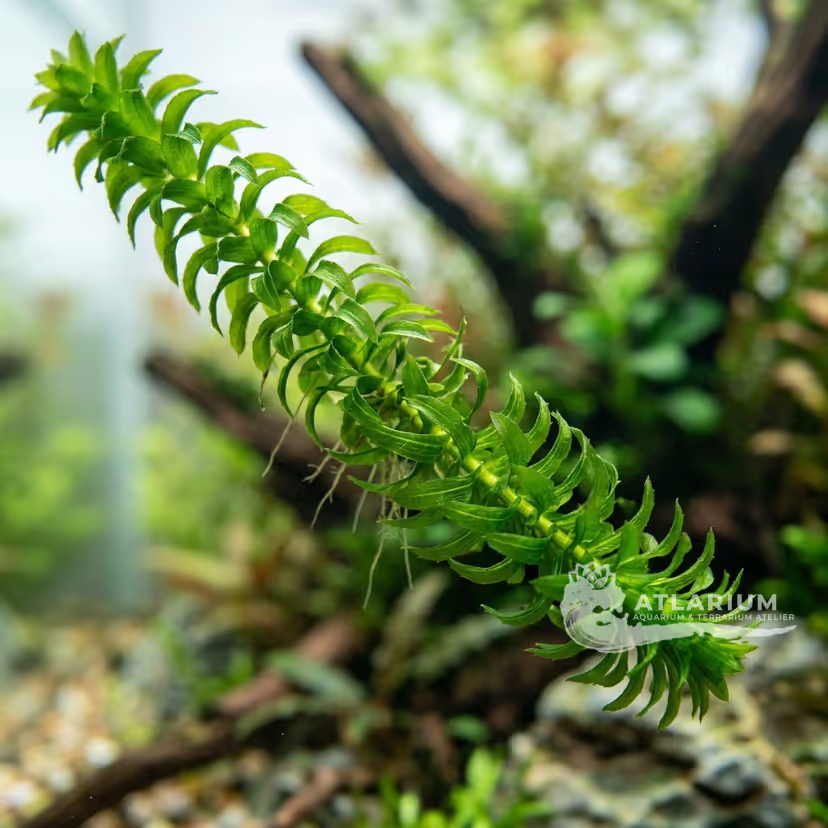
Aegagropila linnaei

View details->
Curly Waterweed (Lagarosiphon major)

Curly Waterweed (Lagarosiphon major)

Lagarosiphon major
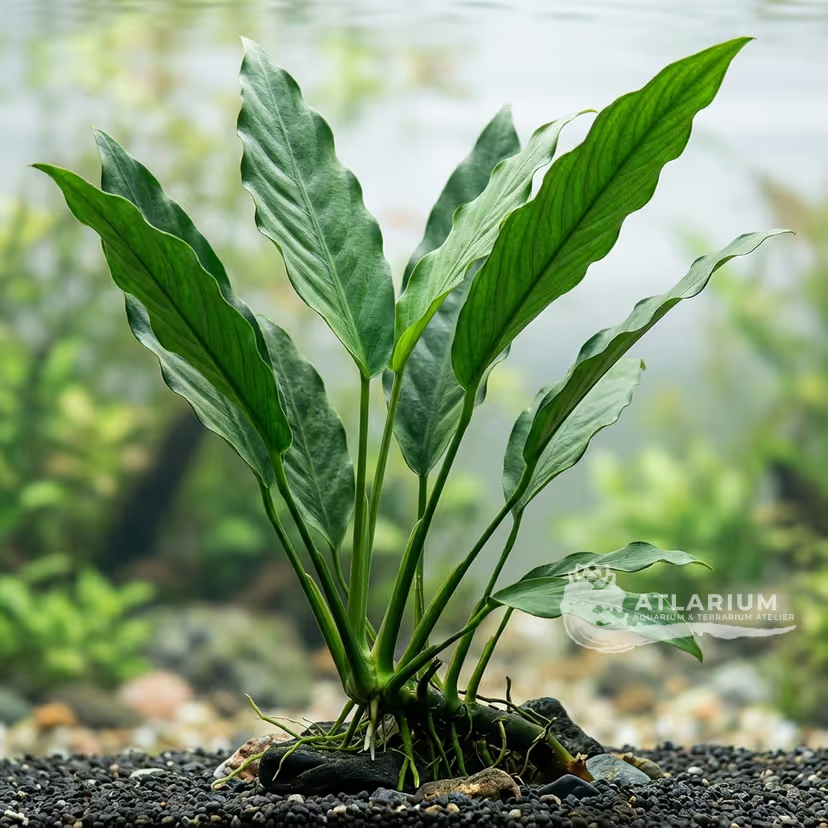
View details->
Anubias heterophylla

Anubias heterophylla

Anubias heterophylla

View details->
Vallisneria nana "Tiger"

Vallisneria nana "Tiger"

Vallisneria nana "Tiger"

View details->
Apalanthe granatensis

Apalanthe granatensis

Apalanthe granatensis

View details->
Azolla mexicana

Azolla mexicana

Azolla mexicana

View details->
Anubias afzelii

Anubias afzelii

Anubias afzelii

View details->
Anubias gracilis

Anubias gracilis

Anubias gracilis

View details->
Anubias gigantea

Anubias gigantea

Anubias gigantea

View details->
Najas conferta

Najas conferta

Najas conferta

View details->
Blyxa aubertii

Blyxa aubertii

Blyxa aubertii

View details->
Azolla caroliniana

Azolla caroliniana

Azolla caroliniana

View details->
Ottelia alismoides

Ottelia alismoides

Ottelia alismoides

View details->
Amblystegium riparium

Amblystegium riparium

Amblystegium riparium

View details->
Last updated: 06/30/2026
Elodea canadensis (Tracheophyta) Care Guide & Tank Setup | Atlarium