Schreyen's Cichlid
Neolamprologus schreyeni
A mysterious, pocket-sized Tanganyikan cichlid featuring large eyes and a spotted beige body. Exclusively confined to deep caves, it demands intense territorial space in the tank.
Water Temperature
23 - 26 °C
pH Value
7.5 - 9
Water type
Freshwater
Tank level
Bottom
Adult size
6 cm
Minimum tank volume
>= 100 L
Minimum group
>= 1
GH
12 - 25 dGH
KH
10 - 20 dKH
TDS
280 - 575 ppm
Conductivity
438 - 898 uS/cm

Species description
Geographical Origin and Habitat: Strictly endemic to the majestic Lake Tanganyika (Africa). This captivating cichlid is exclusively confined to shallow, moderately wave-washed coastal zones, biologically tethered to "rubble and cobble" habitats, heavily fragmented rock walls, and shattered boulder screes. It completely rejects vast, open sandy deserts and the crushing darkness of deep offshore waters, preferring highly oxygenated zones where bright sunlight fuels thick algal biocovers (Aufwuchs) on the rocks.
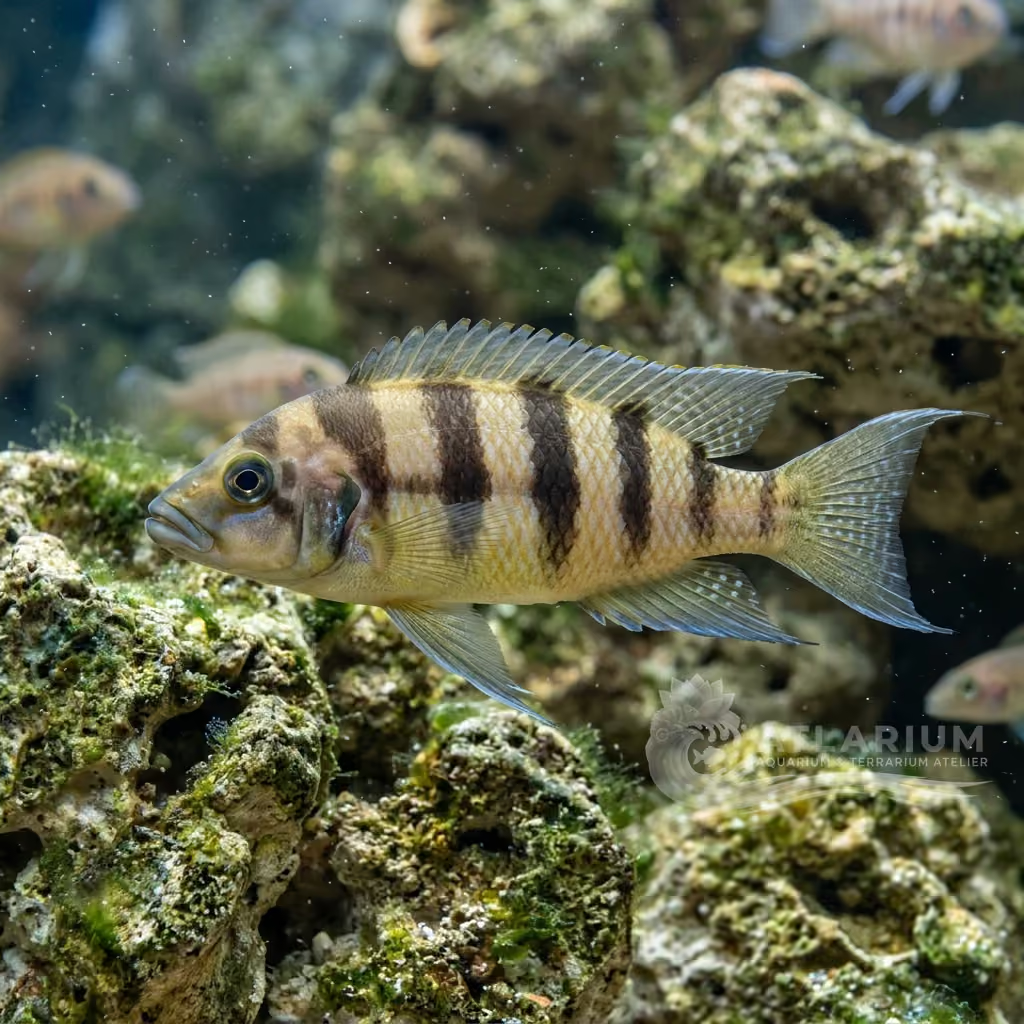
Taxonomy and Morphology: A sleek, cryptic, and incredibly agile member of the diverse Neolamprologus genus. Morphologically, the schreyeni is a miniature masterpiece of hydrodynamic engineering built for life in the crevices. It possesses a highly cylindrical, elongated, torpedo-like body architecture allowing lightning-fast retreats into millimeter-tight rock fissures. The cephalic (head) profile is slightly pointed. It is unequivocally classified as a True Dwarf Cichlid, with fully mature adult males struggling to surpass 6-7 cm (roughly 2.5 inches) in total length.
Social Behavior: Intensely hyperactive, frenetic, and irreversibly bound to the rocky benthic (bottom) layer. It is a fiercely territorial and highly combative cichlid toward conspecifics (high intra-specific aggression), violently defending its personal pile of rubble or chosen cave with courage totally disproportionate to its tiny size. Unlike the massive, "swarming" cooperative colonies of the brichardi family, it lives a solitary or strictly pair-bonded existence, frequently engaging in furious, fin-flaring, but largely harmless "challenge dances" at the extreme borders of its territory.
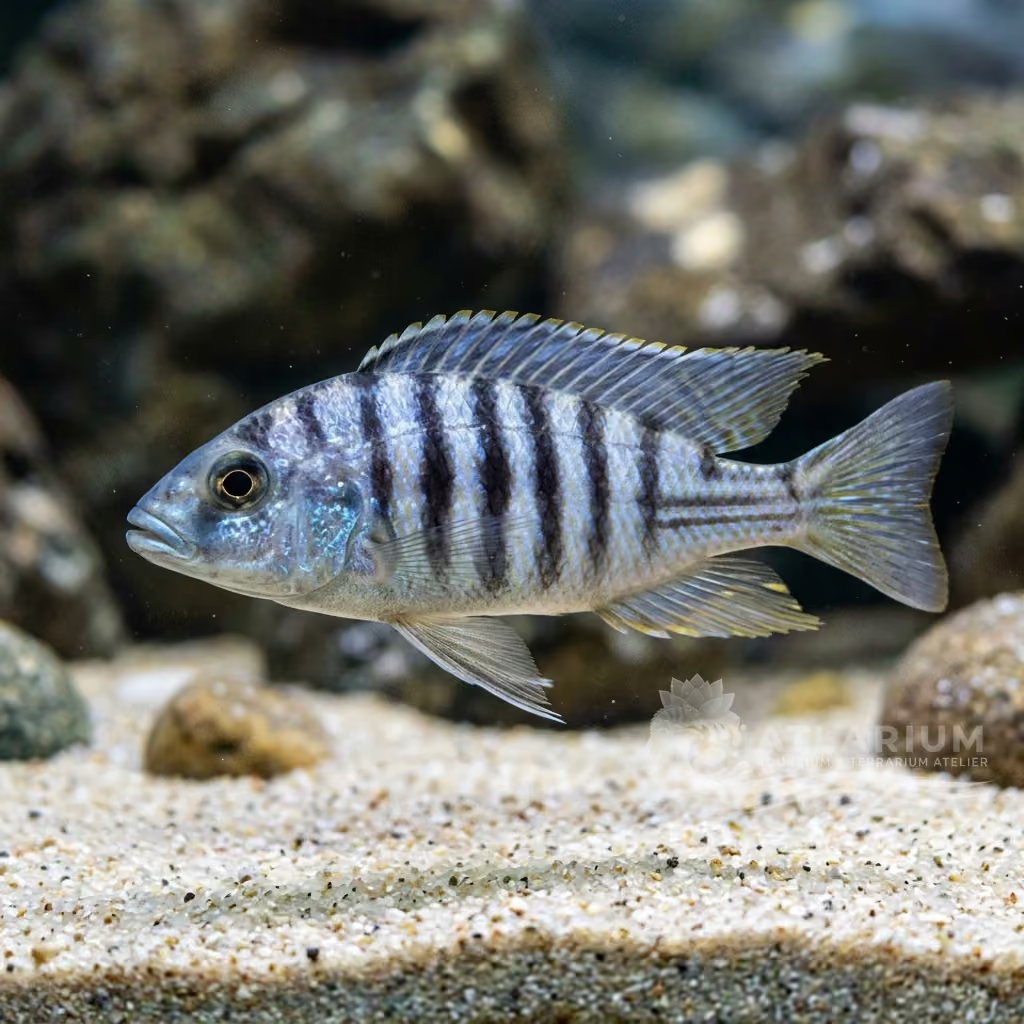
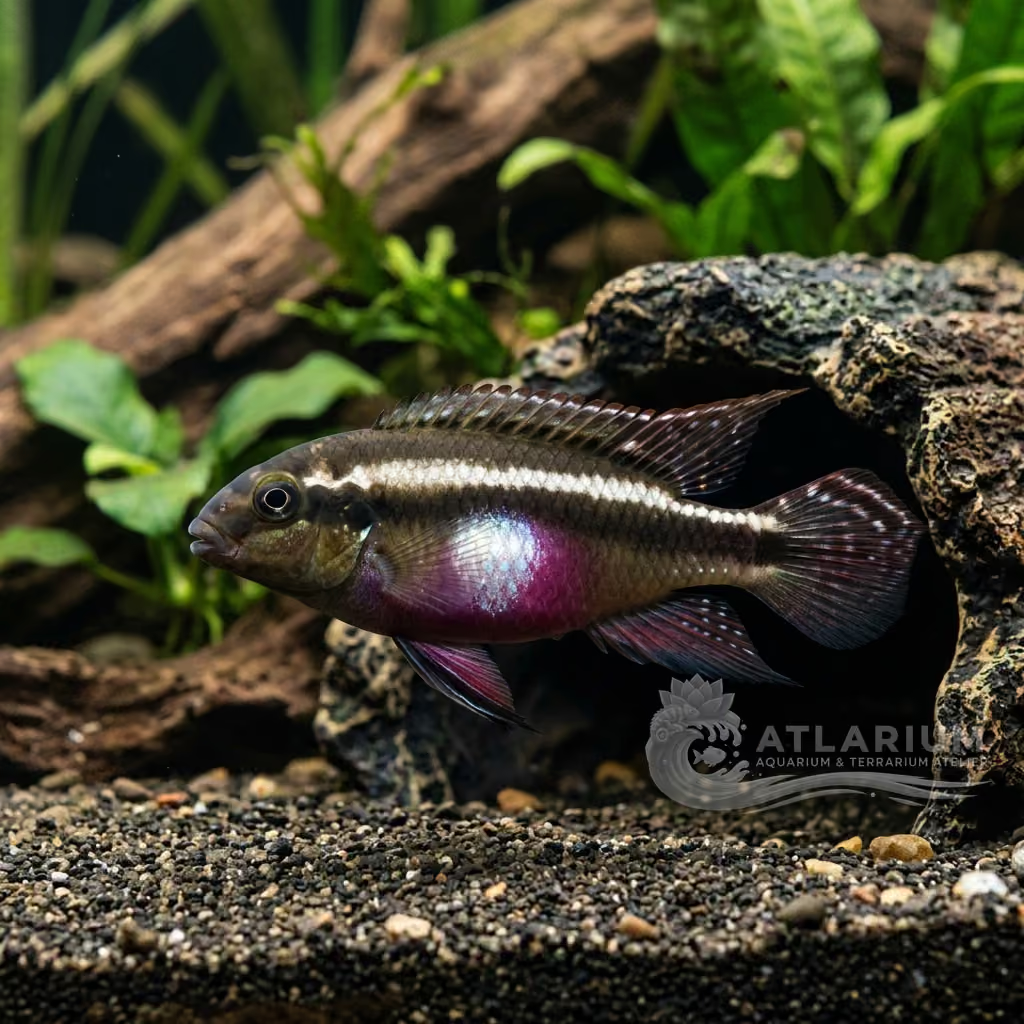
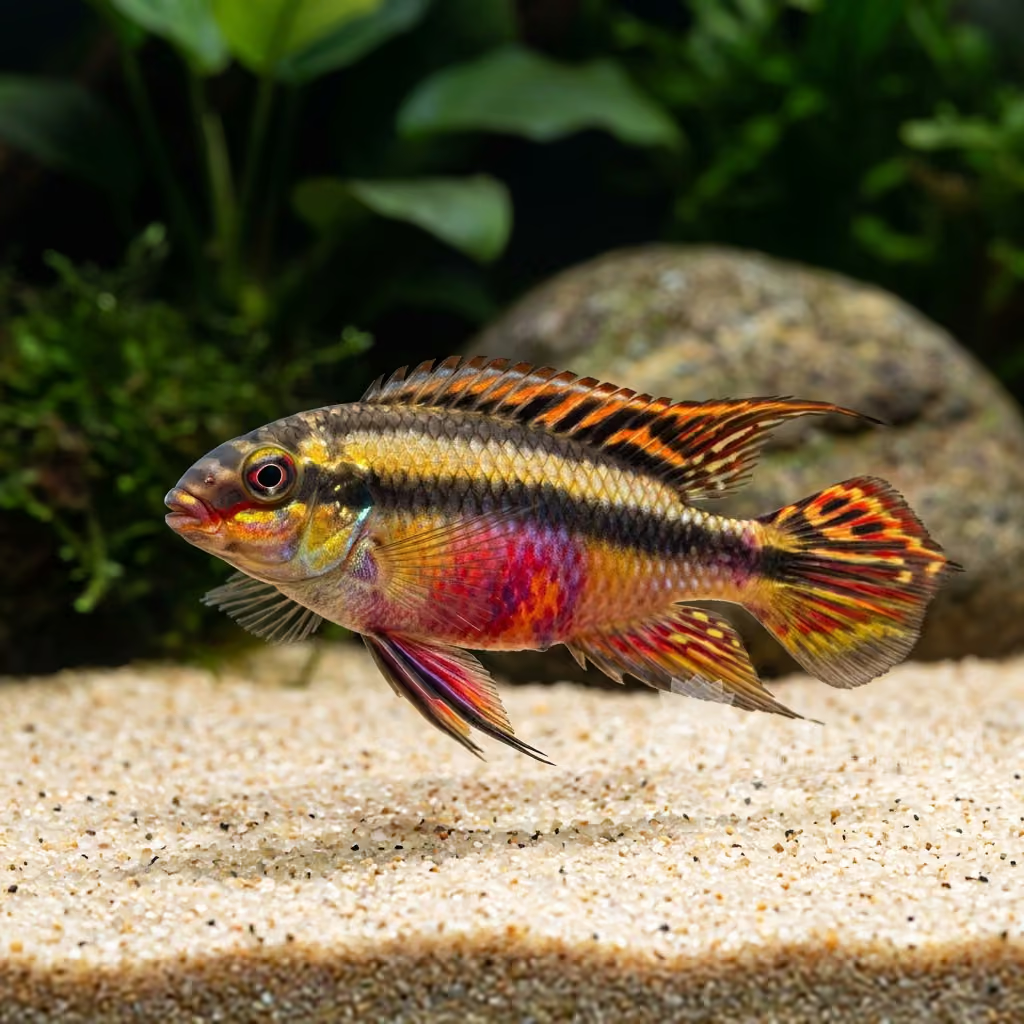
Coloration and Sexual Dimorphism: Rocky camouflage and subtle, understated elegance. The base canvas eschews "neon" flashiness in favor of an elegant, muted light brown, pale ochre, or clay-beige wash, designed perfectly to blend invisibly against limestone rubble. The livery is broken by characteristic, yet faint, irregular brownish vertical bars or a subtle checkerboard mottling along the flanks. However, catching the aquarium light, it flashes a stunning, icy-blue or pearlescent reticulation that intensely trims the entire outer perimeter of its unpaired fins, often accompanied by a faint golden glow over the gill covers. **Complete Lack of Dimorphism:** Males and females are absolute visual photocopies of one another. Only in full adulthood does the Alpha male present a slightly bulkier, marginally longer frame. 100% accurate identification requires examining the vented genital papilla or witnessing the actual spawning act.

Care, breeding and tankmates
Aquarium Setup: Despite its "pocket-sized" dimensions, its intense territorial aggression absolutely mandates an aquarium footprint of at least 80 cm in length (approximately 100-120 liters / 30 Gallons) for *a single breeding pair*, or significantly larger for a community setup. The aquascape is a life-or-death requirement: you MUST submerge the tank in an enormous, towering volume of stacked limestone rocks, layered slate, and rounded cobbles. You must construct a labyrinthine fortress dense with blind tunnels, deep caves, and tight fissures reaching the mid-water column. A generous bed of extremely fine (aragonite or silica) sand is mandatory; while not a "shell dweller", it instinctively and vigorously excavates deep pits and trenches at the base of the rocks to custom-model its cave entrance.
Diet and Feeding: A rigorous, obligate benthic micro-predator (carnivore). In the wild, it meticulously explores every millimeter of the rock faces, tirelessly "picking off" tiny crustaceans, annelid worms, copepods, and hidden eggs from the crevices (zoobenthos). Its digestive tract is short and heavily specialized for meat proteins; NEVER feed it generic algae wafers or heavy plant matter, which guarantees lethal intestinal blockages. In captivity, it furiously demands live baby brine shrimp (Artemia nauplii), premium frozen Mysis shrimp, cyclops, and (sparingly) chopped bloodworms. It must be immediately trained onto high-protein, fast-sinking marine micro-pellets.
Water Quality: Cast-iron, uncompromising Tanganyikan parameters dictate survival. Water must be exceptionally hard and fiercely alkaline. High mineral hardness is vital (GH 15-20), with the pH permanently cemented between 8.2 and 9.0 (the generous use of chemical buffers or crushed coral sand is critical). Maintain rock-steady, moderate tropical temperatures (24°C - 26°C / 75-79°F). Tank hygiene must border on immaculate: utilize massively overpowered biological filtration to instantly crush the ammonia from their high-protein diet. Couple this with violent surface water agitation to ensure maximum oxygen saturation (replicating the wave-washed lake) and perform massive, rigorous weekly partial water changes.
Compatibility and Cohabitation: Exceptionally tricky in small volumes due to its "trench-warfare dwarf" temper. It is completely, ruthlessly intolerant of other members of its own species (two adult males housed in 30 gallons will brutally fight until one dies of exhaustion) and highly hostile toward morphologically similar rock-dwellers that invade its immediate bunker. It makes a spectacular resident in high-volume (120-150 cm / 4-5 feet) Tanganyikan community tanks, pairing flawlessly with open-water, top-swimming planktivore schools like Cyprichromis, or strategically paired (with massive distance between rock layouts) with open-sand shell-dwellers (e.g. N. multifasciatus), where both parties will mutually ignore each other. Avoid mixing with massive, aggressive Julidochromis.
Aquarium Breeding: A highly secretive, paranoid "Cave Spawner". Establishing a solid pair by growing out a group of 6 juveniles is the standard protocol; you must immediately net out and sell the "rejected siblings", as the newly formed pair will ruthlessly persecute and assassinate them. The pair will frantically scrub the hidden ceiling of a pitch-black, deeply buried rock fissure. The female deposits a highly modest number (20-40) of tiny eggs completely upside down. The parents enact a maniacal, militarized defense of the crevice. The microscopic fry remain anchored in the deepest darkness of the den for days, only beginning to explore the immediate threshold under the lethal gaze of their parents. It is vital to target-feed liquid fry food or live baby brine shrimp directly via a pipette into the cave opening.
Risks and Diseases: 1. Lethal Rockslides (Death by Crushing): The number one cause of death is the owner stacking mountains of heavy stones DIRECTLY ON TOP OF the sand bed. The schreyeni will relentlessly excavate tunnels beneath the foundation stones, completely destabilizing the wall, causing a catastrophic collapse that will horribly crush the fish to death. Rocks must always rest firmly on the bare bottom glass. 2. Gender War (Death of the Female): In small tanks, or tanks sparse on rockwork, an over-eager male attempting to breed with an unready female will inflict continuous, savage attacks; without adequate blind caves to permanently hide in, the female will be battered to death via acute stress. 3. Nitrate Asphyxiation / Acidosis: Neglecting water changes leading to a crash in alkaline hardness will chemically burn their gill membranes, causing death by slow suffocation.

Geographic origin and distribution
Strictly endemic to the majestic Lake Tanganyika (Africa). This captivating cichlid is exclusively confined to shallow, moderately wave-washed coastal zones, biologically tethered to "rubble and cobble" habitats, heavily fragmented rock walls, and shattered boulder screes. It completely rejects vast, open sandy deserts and the crushing darkness of deep offshore waters, preferring highly oxygenated zones where bright sunlight fuels thick algal biocovers (Aufwuchs) on the rocks.
Origin
Africa and MadagascarEast Asia

Fish profile
- Temperament
- Semi-aggressive
- They are active, curious, and relatively mild-mannered compared to many other Neolamprologus species. While they will defend their immediate territory, they do not generally seek out conflict with other fish. Their lively behavior and peaceful nature make them a joy to observe in a well-planned community.
- Diet
- Carnivore
- They are micro-predators that naturally feed on tiny invertebrates and zooplankton found among rocks and shells. In captivity, they readily accept crushed, high-quality flake foods and small sinking pellets. Their diet should be frequently supplemented with live or frozen foods like baby brine shrimp and cyclops.
- Life expectancy
- 6-8 years
- Adult size
- 6 cm
- Sex ratio
- Pair
- They naturally pair off to breed, and a single pair can be kept comfortably in a smaller aquarium. It is best to purchase a group of juveniles and let a compatible pair form naturally. Once a pair is established, they often form a strong bond and work together to defend their territory.
- Feeding frequency
- Twice daily
- They should be fed small amounts two or three times a day to match their active foraging behavior. Ensure the food is small enough for their delicate mouths to process easily. Overfeeding should be avoided to maintain the pristine water conditions they require to thrive.
- Bioload
- Low
- This small, slender cichlid produces a light bioload that is easily managed in an appropriately sized aquarium. They do not put significant strain on the filtration system, making them suitable for smaller Tanganyikan setups. However, as with all Rift Lake cichlids, excellent water quality and regular maintenance are strictly required.
- Flow
- Stagnant
- They prefer a gentle to moderate water flow that provides good oxygenation without blowing them around. A moderate current mimics the natural water movement found in the rocky and sandy transition zones they inhabit. Ensure there are plenty of quiet resting areas among the rocks.
- Jump risk
- No
- Reproduction
- Oviparous
- They are opportunistic breeders that will spawn in small rocky crevices or even empty snail shells if available. A bonded pair will fiercely defend their chosen spawning site from any intruders. They are excellent parents, guarding the eggs and fry until they are large enough to fend for themselves.
- Compatibility & tankmates
- Community
- They are relatively peaceful for a Tanganyikan cichlid, though they will defend their specific rocky crevice or shell. They make excellent additions to a community tank featuring other small, peaceful Tanganyikan species. Avoid keeping them with large, aggressive predators that might view them as a snack.
- Tank level
- Bottom
- They are bottom-dwellers that spend their time hovering just above the substrate or darting between rocks and shells. They are highly active foragers, constantly inspecting the lower levels of the tank for food. They rarely venture into the middle or upper levels of the water column.

Scientific Parameters & Models
FishBase
Window to the official scientific data of the species
FishBase v25.04Data synced on: 06/15/2026
- Trophic level
- 3.3 ± 0.5 se
- Resilience
- High (less than 15 months)
- Phylogenetic uniqueness (PD50)
- 0.5
- Bayesian Length-Weight
- a = 0.00389, b = 3.12
- VulnerabilityLow vulnerability (10 / 100)

Related species
Recommendations grouped by close relatives, companion choices, and similar care.