Ranunculus limosella
Ranunculus limosella
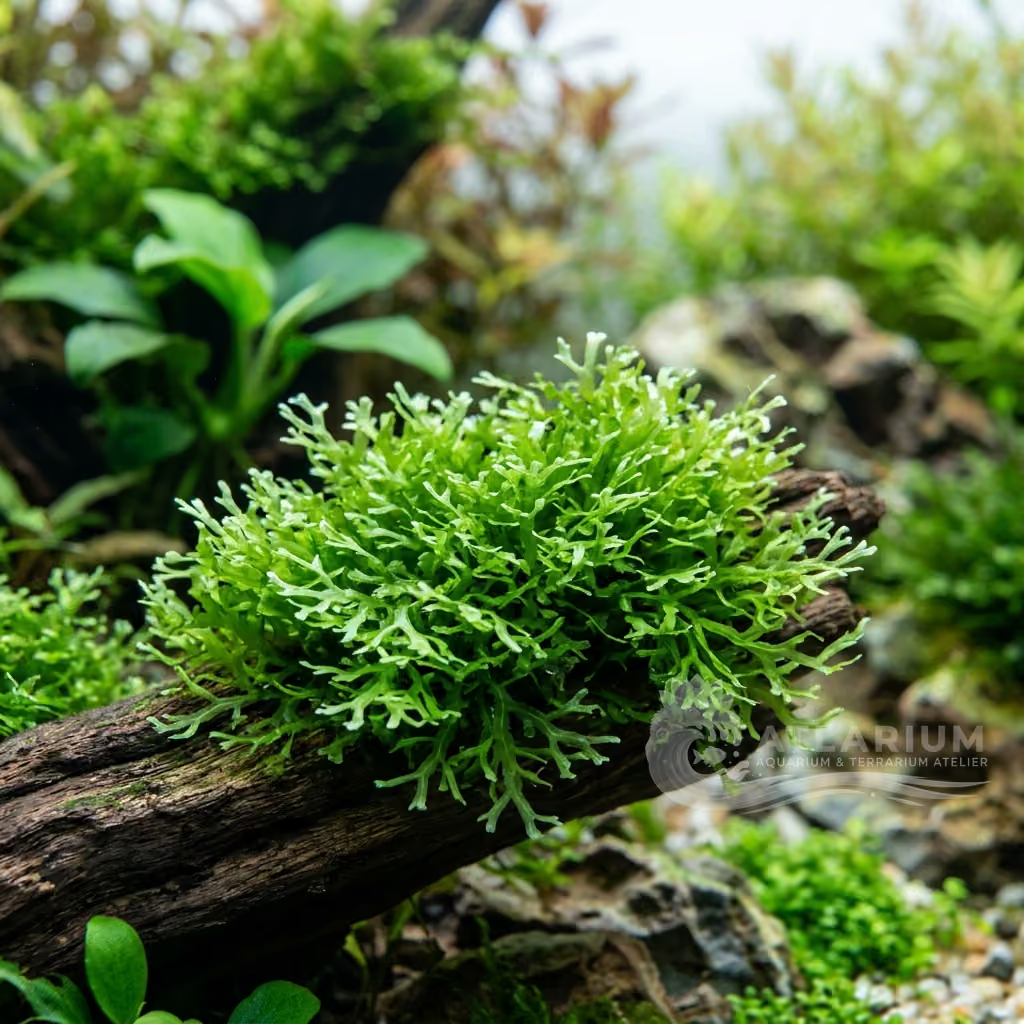
Ranunculus limosella is a delicate foreground plant, prized for its ability to form compact and dense carpets. Characterized by slow growth and a high light requirement, it is perfectly suited for layouts aiming to recreate a natural and detailed aquatic landscape.
Water Temperature
15 - 30 °C
pH Value
5 - 7
Water type
Freshwater
Light
High
CO2
Low - High
Expected height
5 cm
Expected width
10 cm
KH
0 - 14 dKH

Species description
Geographical Origin and Habitat: Native to temperate and subtropical regions across various continents, including Europe, North America, and Oceania, Ranunculus limosella thrives in shallow, muddy aquatic environments. It is frequently found at the edges of ponds, ditches, slow-moving streams, and temporary pools, where it can grow both submerged and emergent. Its adaptability to these conditions makes it a resilient species in its natural habitat, but it demands stable parameters in an aquarium setting.
Taxonomy & Genetics: Belonging to the Ranunculaceae family, Ranunculus limosella shares the genus Ranunculus with the more commonly known "buttercups," although its aquatic characteristics are unique. This classification indicates a kinship with herbaceous plants often featuring distinctive flowers, though in a submerged aquatic context, the limosella's flowers are rare and inconspicuous. Its genetics allow it to develop varied forms depending on the environment, a common trait among true aquatic plants.
Physical Structure: Ranunculus limosella develops as a small, stoloniferous plant, with thin runners that spread across the substrate and produce new plantlets. Its leaves are typically linear or spatulate, small in size, and grow on short, delicate stems, contributing to a carpeting effect. It develops a fine but extensive root system, allowing it to anchor firmly to the substrate and absorb necessary nutrients for optimal growth.
Color & Texture: The leaf color of Ranunculus limosella generally ranges from bright green to yellowish-green, depending on light intensity and nutrient availability. Under intense light and with good fertilization, it can display lighter, more vibrant shades. Its texture is extremely delicate and smooth to the touch, giving the aquarium a soft and natural appearance, but it requires careful handling to avoid damage.

Care, breeding and tankmates
Lighting & CO2: Ranunculus limosella requires high-intensity lighting to thrive and develop its characteristic carpeting growth habit; insufficient light can lead to stunted development and elongated internodes. CO2 injection is considered essential to stimulate robust growth and vibrant coloration, significantly enhancing photosynthesis. A CO2 concentration of 20-30 ppm is generally recommended for best results, avoiding fluctuations that could stress the plant.
Nutrition & Substrate: For optimal growth, Ranunculus limosella benefits from a nutrient-rich substrate abundant in micronutrients and macronutrients, although it can also absorb nutrients from the
Water Chemistry: Maintaining stable water parameters is crucial for Ranunculus limosella. The ideal temperature ranges between 15.0 and 30.0 °C, with a slightly acidic to neutral pH, between 6.0 and 7.5. Carbonate hardness (KH) should be kept within the 2-12 range, as extreme values can hinder nutrient assimilation and system stability. Sudden fluctuations in these parameters can cause stress to the plant and potentially lead to melting or decline.
Space Management & Placement: As a foreground plant, Ranunculus limosella should be positioned at the front of the aquarium where it can receive maximum illumination and develop a dense carpet. It is important to leave sufficient space around the initial clusters to allow the stolons to spread freely and cover the designated area. Its slow growth makes it ideal for small to medium-sized aquariums or for clearly defining foreground zones without requiring excessively frequent
Pruning: Pruning Ranunculus limosella is relatively straightforward and primarily aims to maintain the carpet's density and prevent excessive overlapping that could shade underlying plants. It is advisable to remove old or damaged leaves at the base and trim stolons that extend too far from the desired area. Regular pruning also stimulates the production of new stolons and leaves, helping to maintain a fresh and lush appearance.
Risks & Diseases: Ranunculus limosella, while robust under ideal conditions, can be susceptible to certain risks. Lack of CO2 or nutrient deficiencies can lead to yellowing, stunted growth, or holes in the leaves. Competition with algae, especially in the presence of nutrient imbalances or excessive light, can suffocate the plant. It is important to carefully monitor its condition and act promptly to correct any problems, such as excessive algae blocking light or iron deficiencies causing chlorosis.

Geographic origin and distribution
Native to temperate and subtropical regions across various continents, including Europe, North America, and Oceania, Ranunculus limosella thrives in shallow, muddy aquatic environments. It is frequently found at the edges of ponds, ditches, slow-moving streams, and temporary pools, where it can grow both submerged and emergent. Its adaptability to these conditions makes it a resilient species in its natural habitat, but it demands stable parameters in an aquarium setting.
Origin
Europe, Mediterranean, and West AsiaNorth AmericaAustralia, New Guinea, and Oceania

Plant profile
- Placement
- Foreground
- This species is ideally utilized as a striking foreground or midground carpeting plant. Plant small portions in a grid-like pattern to encourage it to fill in the empty spaces rapidly. Ensure it is completely unshaded by taller plants, as it requires direct, intense light. Once established, it creates a lush, highly textured mat across the aquarium floor.
- Botanical form
- runner
- Botanically, Ranunculus limosella is recognized by its slender, strap-like leaves. It grows as a creeping rhizome that sends up individual leaves or small rosettes at regular intervals. Its striking light green color provides a refreshing carpet effect that contrasts beautifully with darker hardscape. The overall texture is incredibly unique and highly sought after by aquascapers.
- Growth
- Slow
- Under high lighting and abundant CO2, the growth rate is impressively fast. It will aggressively send out runners in all directions, quickly forming a dense carpet. In low-tech conditions, the growth is considerably slower, and the plant may grow taller rather than spreading outward. Regular thinning is required to prevent the mat from becoming too thick and uprooting itself.
- Substrate
- High
- A fine-grained, nutrient-rich substrate is absolutely essential for the success of Ranunculus limosella. Aqua soils provide the perfect texture for its delicate roots and runners to penetrate and spread. Inert gravel or large pebbles will severely hinder its ability to carpet effectively. A mature substrate heavily enriched with organics yields the best results.
- Column fertilization
- Recommended
- While heavily dependent on the substrate, column fertilization is still necessary to provide comprehensive nutrition. Dosing a high-quality liquid fertilizer ensures the leaves remain pristine and free of algae. Potassium and trace elements are particularly important to dose into the water. A well-fertilized column supports the rapid development of new leaves.
- Root fertilization
- None
- Root fertilization is the absolute key to achieving a thick, healthy carpet of Ranunculus limosella. The plant absorbs the vast majority of its macronutrients through its extensive root system. If not using a commercial aqua soil, heavy application of root tabs is mandatory. Replenishing substrate nutrients periodically ensures the carpet remains vibrant long-term.
- Trimming
- Occasional
- Minimal trimming is needed. Maintenance consists mainly of removing old, decaying, or yellowing leaves to keep the patch looking clean and healthy.
- Propagation
- Cuttings
- Propagation happens naturally and aggressively through the production of lateral runners. The main plant will continuously shoot out stems that root into the substrate and form new plantlets. To propagate manually, simply cut the runner between two established nodes and replant the new section. This makes it extremely easy to cover large areas of the aquarium.
- Sensitivity
- Moderate
- Dislikes being uprooted or moved frequently. It can melt back slightly during the initial acclimation phase but usually recovers if its roots remain undisturbed.
- Layout role
- Foreground, group
- Creates a delicate, wild-looking foreground carpet. It is ideal for smaller tanks, creating subtle transitions between hardscape, or mixing with other small foreground plants.

Related species
Recommendations grouped by close relatives, companion choices, and similar care.