Utricularia stellaris
Utricularia stellaris
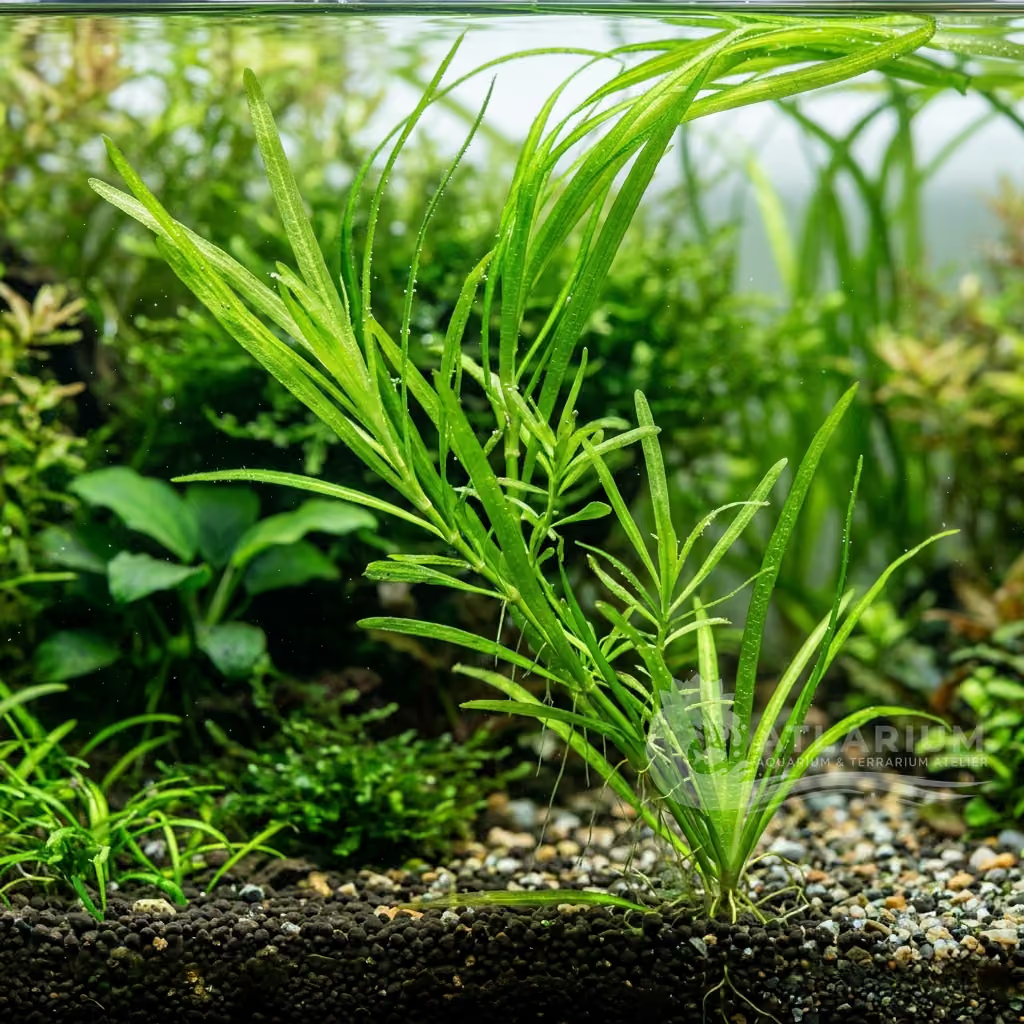
Utricularia stellaris is a free-floating carnivorous aquatic plant, perfect for midground placement with its fast growth rate. This fascinating species adds a unique and natural touch to any aquascape, forming dense mats of vibrant green foliage.
Water Temperature
18 - 32 °C
pH Value
5 - 8
Water type
Freshwater
Light
Medium to High
CO2
Low - High
KH
0 - 14 dKH

Species description
Geographical Origin and Habitat: Utricularia stellaris is a cosmopolitan species, widely distributed across the tropical and subtropical regions of Africa, Asia, and Australia, where it inhabits slow-moving or stagnant aquatic environments. It is commonly found in ponds, swamps, ditches, and shallow lakes, often growing freely on or just beneath the water's surface, only occasionally anchored to debris or submerged vegetation. Its adaptability to diverse aquatic conditions makes it one of the most widespread and resilient bladderworts in its genus.
Taxonomy & Genetics: Belonging to the Lentibulariaceae family, Utricularia stellaris is part of the Utricularia genus, renowned for its extraordinary carnivorous strategies. This family consists exclusively of carnivorous plants, and U. stellaris shares the distinctive traits of the genus, such as the presence of bladder traps. Its classification highlights a complex evolution aimed at capturing aquatic microorganisms through a rapid suction mechanism, an exceptional specialization in the plant world.
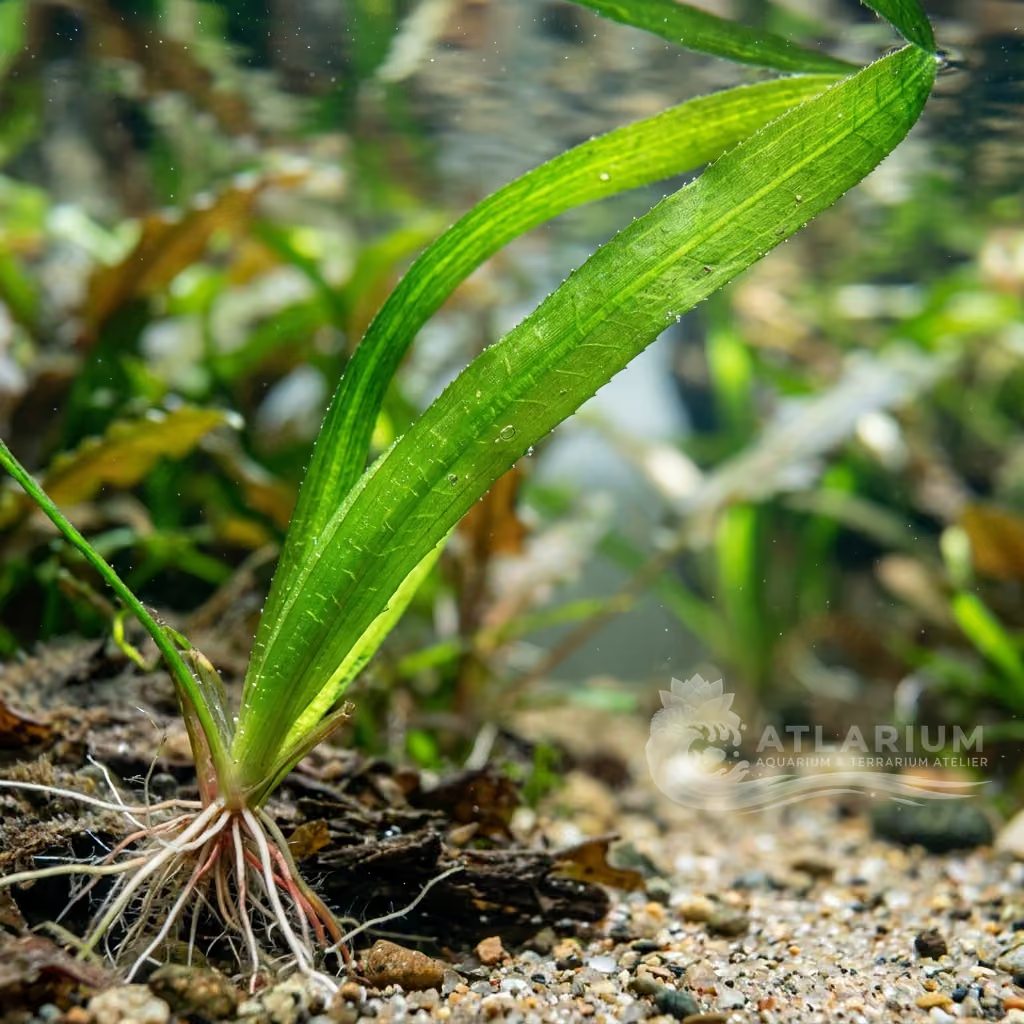
Physical Structure: Utricularia stellaris exhibits a fascinating physical structure, characterized by slender, branching stems that develop either free-floating or submerged. Its leaves are finely dissected, almost thread-like, and often cluster together to form intricate masses that extend into the water column. The most distinctive feature is the small carnivorous bladders, or utricles, distributed along the stems and leaves, which serve as traps for tiny aquatic invertebrates. These utricles, a marvel of evolutionary adaptation, allow it to supplement its nutrition in nutrient-poor environments.
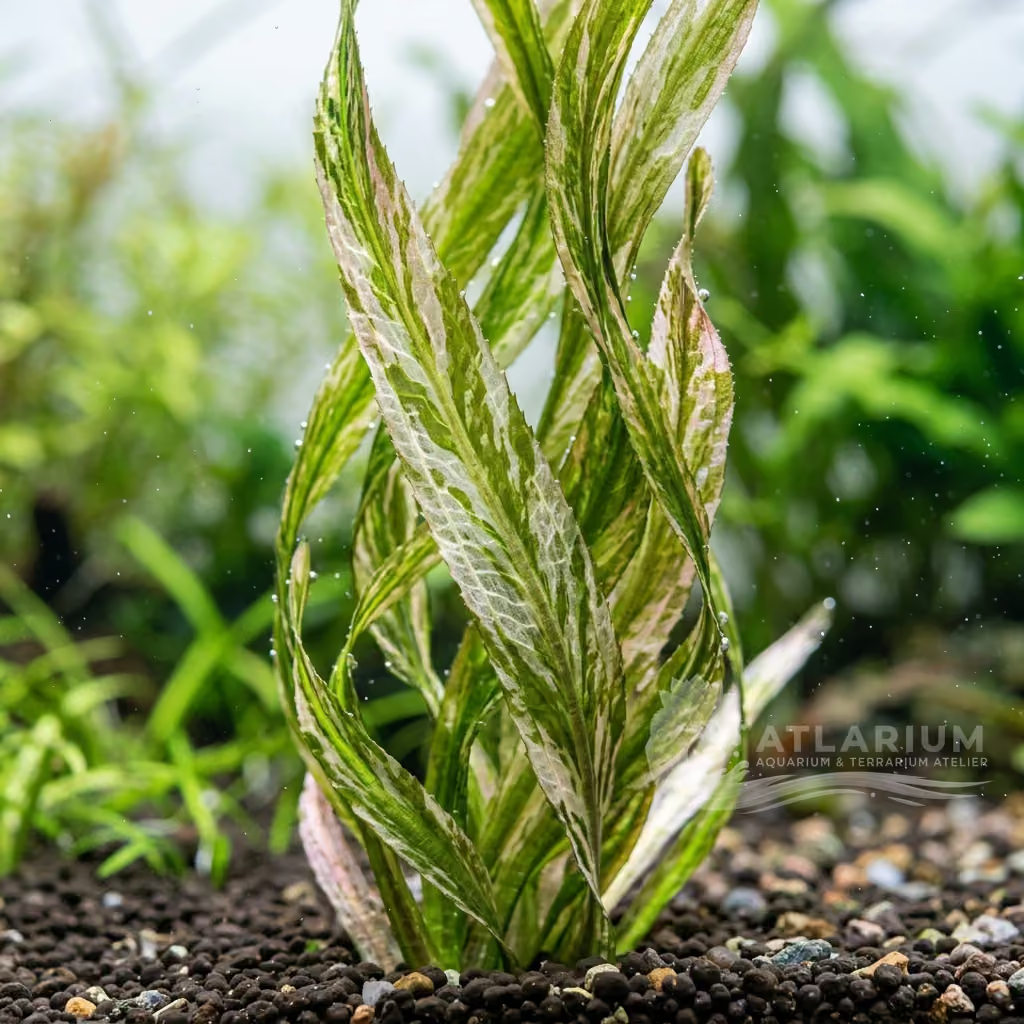
Color & Texture: The predominant color of Utricularia stellaris is a bright, vibrant green, which can vary in intensity depending on light conditions and available nutrients. Under higher illumination, some parts of the plant may develop subtle reddish or amber hues, adding visual depth to the aquascape. Its texture is delicate and almost feathery to the touch, with stems and leaves creating an airy and natural appearance. When it blooms, it produces small, star-shaped yellow flowers that emerge above the water surface, offering a delightful contrast to the green foliage below.

Care, breeding and tankmates
Lighting & CO2: Utricularia stellaris thrives under medium to high lighting, which encourages dense and vigorous growth, also promoting potential flowering. Adequate light intensity is crucial to prevent leggy growth and weakness of the stems, while maintaining the plant's vibrant coloration. Although not strictly necessary, CO2 supplementation can significantly accelerate its growth rate and improve overall health, especially in setups with brighter light and higher nutrient demands.
Nutrition & Substrate: As a carnivorous, free-floating plant, Utricularia stellaris does not require a fertile substrate, absorbing most of its nutrients directly from the
Water Chemistry: Utricularia stellaris is remarkably adaptable to a wide range of water parameters, tolerating temperatures between 18.0 and 32.0 C, pH values from 5.0 to 8.0, and carbonate hardness (KH) from 0.0 to 14.0. However, for optimal growth and more vibrant coloration, it generally prefers slightly softer and more acidic water conditions, mimicking its natural habitats. Maintaining stable parameters within these ranges is crucial to prevent stress and promote its long-term health.
Space Management & Placement: This Utricularia is ideal for midground placement, where it can form captivating floating or semi-submerged mats that add depth and visual interest. Given its rapid growth, it's essential to manage its space to prevent it from outcompeting other plants or obstructing water circulation. It can be allowed to float freely or gently anchored to rocks or driftwood, creating a more structured and natural effect within the aquascape, integrating perfectly with other mid-height plants.
Pruning: Pruning Utricularia stellaris is a relatively simple yet necessary task given its rapid growth and tendency to form dense mats. It primarily involves thinning out overly dense portions or those expanding beyond the desired space. This process not only maintains the aesthetics of the aquascape but also ensures that light and nutrients reach other plants and prevents harmful stagnant water pockets. Regular pruning encourages more compact and healthier growth of the plant itself.
Risks & Diseases: Utricularia stellaris is generally a robust plant, but it can be susceptible to issues if water conditions are unstable or nutrition is lacking. Stunted growth or pale coloration may indicate a deficiency in essential nutrients or insufficient light. In rare cases, severe imbalances can promote algal growth that competes with the plant for resources. Maintaining stable water parameters, adequate lighting, and balanced fertilization are the best preventive strategies against most risks and diseases.

Geographic origin and distribution
Utricularia stellaris is a cosmopolitan species, widely distributed across the tropical and subtropical regions of Africa, Asia, and Australia, where it inhabits slow-moving or stagnant aquatic environments. It is commonly found in ponds, swamps, ditches, and shallow lakes, often growing freely on or just beneath the water's surface, only occasionally anchored to debris or submerged vegetation. Its adaptability to diverse aquatic conditions makes it one of the most widespread and resilient bladderworts in its genus.
Origin
Africa and MadagascarSouth and Southeast AsiaEast AsiaAustralia, New Guinea, and OceaniaCosmopolitan or introduced

Plant profile
- Placement
- Midground
- This plant is entirely rootless and floats freely just below the water surface. It is typically left to drift in the aquarium, creating a natural, suspended canopy. Because it can shade plants below, strategic placement or tethering might be needed in high-light tanks.
- Botanical form
- Stem
- Utricularia stellaris features a distinct star-shaped float structure supporting its inflorescence. The submersed parts consist of finely divided leaves equipped with carnivorous bladders. This structural adaptation allows it to easily stay afloat and capture microscopic prey.
- Growth
- Fast
- Under optimal conditions, the growth rate of this floating carnivorous plant is exceptionally fast. It can double its biomass in a matter of weeks when provided with adequate light and nutrients. Regular harvesting is necessary to prevent it from overtaking the water surface.
- Substrate
- None
- Because *Utricularia stellaris* grows as a suspended floating plant, it thrives without any connection to an aquarium substrate. Its rootless structure means that all nutrient uptake happens directly across its leaf and stem surfaces from the surrounding water. For ideal cultivation, simply let the plant drift near the surface where it can form distinctive float-supported inflorescences. Forcing it into sand or aqua soil is completely unnecessary and can severely damage the plant's structural integrity.
- Column fertilization
- Recommended
- As a purely rootless floater, liquid fertilization in the water column is strictly required. Comprehensive dosing of NPK and trace elements ensures healthy leaf development and bladder formation. Neglecting liquid fertilizers will quickly result in stunted growth and pale coloration.
- Root fertilization
- None
- Root fertilization is completely irrelevant for this species as it lacks a root system. It derives zero benefit from nutrient-rich substrates or root tabs. All nutrient acquisition occurs directly through its vegetative structure from the surrounding water.
- Trimming
- Occasional
- Trimming is as simple as removing excess clumps manually from the aquarium. Overgrowth should be managed frequently to prevent light deprivation for benthic plants. Discarded portions must be disposed of responsibly to prevent introduction to local waterways.
- Propagation
- Cuttings
- Propagation occurs effortlessly through simple fragmentation of the stem structure. Any broken piece with a few healthy nodes will develop into a new, independent plant mass. This highly efficient reproduction strategy contributes to its rapid colonization of the surface.
- Sensitivity
- Moderate
- It is highly sensitive to algicides and medications containing copper. Such chemicals can cause immediate melting and total loss of the specimen. It also resents excessive surface agitation, which can damage its delicate structure.
- Layout role
- Midground, Floating
- In aquascaping, it is utilized exclusively as a floating canopy layer. It provides essential dimming effects for shade-loving plants and shy fish species. The dense rootless mass creates a captivating, wild aesthetic in natural-style setups.

Related species
Recommendations grouped by close relatives, companion choices, and similar care.