Ricciocarpos natans
Ricciocarpos natans
Ricciocarpos natans is a fascinating floating liverwort, valued for its rapid growth and ability to provide shelter and contribute to the overall health of the aquarium. Its adaptability makes it an excellent choice for aquarists of all levels, provided its expansion is managed.
Water Temperature
15 - 30 °C
pH Value
5 - 8
Water type
Freshwater
Light
Medium - High
CO2
Low - High
KH
0 - 14 dKH

Species description
Geographical Origin and Habitat: Ricciocarpos natans is a cosmopolitan species, widespread across a vast range of climates and aquatic habitats worldwide, from temperate to tropical regions. It thrives in still or slow-moving waters such as ponds, ditches, marshes, and wetlands with abundant direct or filtered sunlight. Its ability to prosper in diverse environmental contexts testifies to its robustness and versatility, making it an excellent indicator of healthy aquatic ecosystems, often found alongside other floating plants.
Taxonomy & Genetics: Belonging to the Ricciaceae family, Ricciocarpos natans is a species of floating liverwort, more specifically a bryophyte, distinguished by its unique morphology within the aquatic plant kingdom. This genus is closely related to other liverworts but stands out due to its propensity to float freely on the water's surface, although it can occasionally anchor itself to the substrate in extremely shallow water conditions. Its genetic structure supports a complex life cycle that includes a dominant gametophytic phase, typical of bryophytes, which manifests in the thallus form visible in aquariums and primarily reproduces by fragmentation.
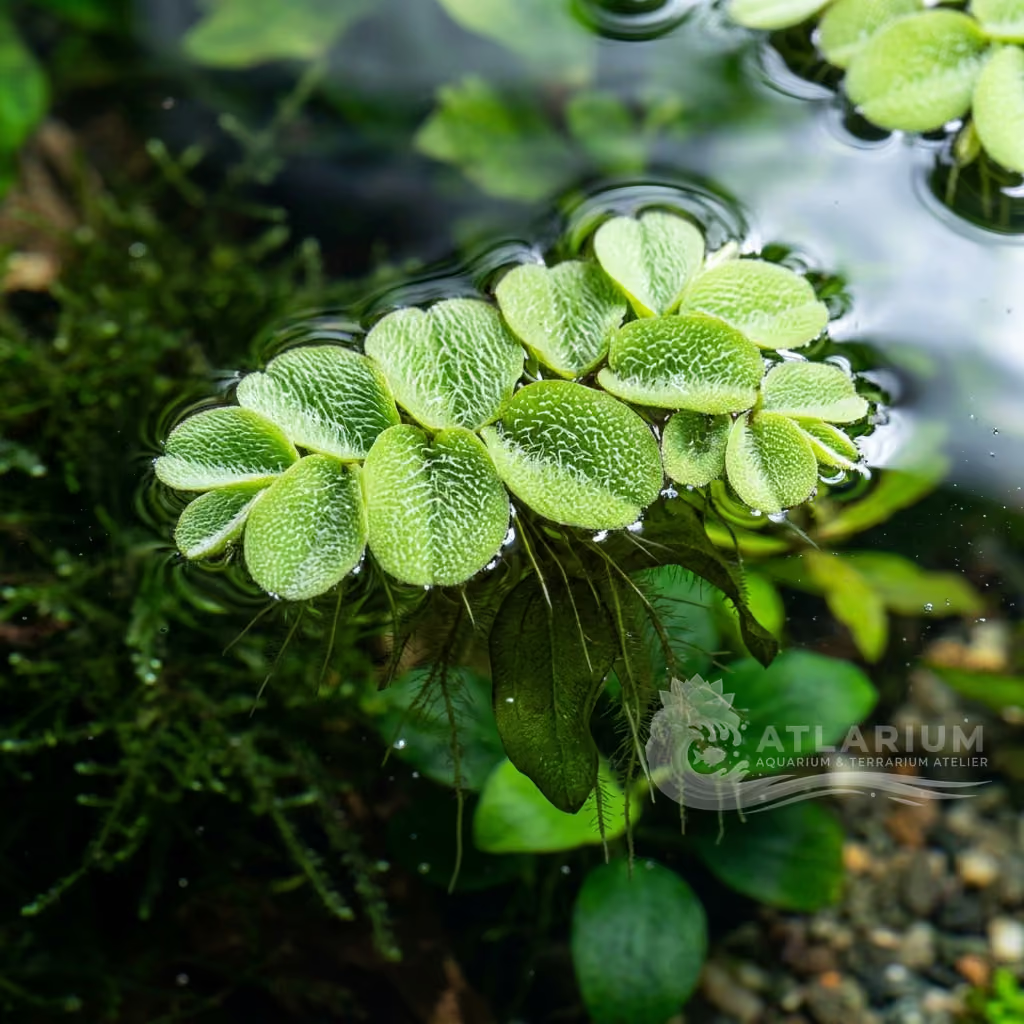
Physical Structure: The physical structure of Ricciocarpos natans is characterized by a floating, spongy, heart-shaped or kidney-shaped thallus, with a lower section that often develops purplish rhizoids dangling into the water. The upper part of the thallus is flat and usually bright green, equipped with air-filled cavities that provide the buoyancy needed to stay on the surface. While primarily floating, in shallow conditions or strong currents, it can occasionally develop a submerged form or lightly anchor itself to rocks or driftwood, demonstrating remarkable morphological plasticity in response to the environment.
Color & Texture: The predominant color of Ricciocarpos natans is a vibrant green, which can vary in intensity from a bright apple green to darker shades depending on light intensity and nutrient availability, especially iron. Its upper surface is smooth and slightly glossy, reflecting light, while the underside, from which the rhizoids hang, can take on purplish or brownish hues, adding an interesting chromatic contrast. This distinctive coloration and spongy texture make it a visually appealing element in any aquatic setup, while also offering natural shelter and spawning substrate for small fish.

Care, breeding and tankmates
Lighting & CO2: For Ricciocarpos natans, lighting is a crucial factor for lush growth and optimal coloration, requiring medium to high intensity to thrive. With insufficient light, growth will slow dramatically, and the plant may lose its vibrancy, becoming pale or showing signs of deterioration, indicating potential chlorosis. CO2 addition is not strictly necessary for its survival, but it significantly accelerates the growth rate and promotes greater thallus density and health, making the plant more robust and resilient to algal accumulation.
Nutrition & Substrate: As a floating plant, Ricciocarpos natans absorbs most of its nutrients directly from the
Water Chemistry: Ricciocarpos natans prefers stable and well-balanced water conditions, with an ideal temperature between 20 and 28 C, a pH ranging from 6.0 to 7.5, and carbonate hardness (KH) between 2 and 12. Maintaining these parameters within the specified ranges is crucial to prevent stress and promote healthy growth, avoiding osmotic shock. Rapid and significant fluctuations in these values can shock the plant, leading to deterioration, disintegration of the thallus, or susceptibility to diseases and algae.
Space Management & Placement: In aquascaping, Ricciocarpos natans is ideal for midground placement or as a free-floating element, where it can form a dense carpet that provides shade and shelter for fish and invertebrates, especially fry. Given its rapid growth, it is essential to manage its space to prevent it from smothering other underlying plants by blocking light, or impeding gas exchange at the surface. It can also be used to delineate areas or soften transitions between layout zones, creating a natural and integrated effect that enhances the visual depth of the aquarium.
Pruning: Regular pruning is indispensable for Ricciocarpos natans, given its extremely fast growth and tendency to proliferate; without it, it can quickly cover the entire water surface, blocking light from underlying plants and significantly reducing gas exchange with the atmosphere. To prune, simply manually remove the excess thalli that have multiplied, thinning out the mass to maintain control and prevent excessive shading. This operation not only benefits other plants and water quality but also promotes more robust and compact growth of the remaining Ricciocarpos thalli.
Risks & Diseases: While Ricciocarpos natans is generally robust, it can be susceptible to common issues such as excessive algal growth on the thallus surface if nutrients are unbalanced or light is too intense without adequate CO2. Excessive surface agitation can fragment the delicate thalli, while nutrient deficiencies, particularly of nitrogen or iron, can lead to yellowing or decomposition. It is important to carefully monitor the plant for signs of stress, such as pale or transparent thalli, or disease, and act promptly to correct their causes and maintain a balanced aquatic environment.

Geographic origin and distribution
Ricciocarpos natans is a cosmopolitan species, widespread across a vast range of climates and aquatic habitats worldwide, from temperate to tropical regions. It thrives in still or slow-moving waters such as ponds, ditches, marshes, and wetlands with abundant direct or filtered sunlight. Its ability to prosper in diverse environmental contexts testifies to its robustness and versatility, making it an excellent indicator of healthy aquatic ecosystems, often found alongside other floating plants.
Origin
Cosmopolitan or introduced

Plant profile
- Placement
- Midground
- It is strictly a floating plant and must be placed on the water surface. It prefers calm areas of the aquarium where it won't be pushed under the water by strong filter outflows. It provides excellent shading and root cover for shy fish and fry.
- Botanical form
- Floating
- It has a distinct, heart-shaped or fan-shaped thallus with a deep central groove. Unlike Riccia, it features long, dark purple to blackish scales on its underside that act like roots, dangling beautifully into the water. Its top surface is a velvety, vibrant green.
- Growth
- Fast
- The growth rate is moderate to fast under good lighting and nutrient-rich conditions. It slowly multiplies, forming a structured floating canopy rather than a tangled mass. In optimal conditions, it can quickly cover the surface, requiring periodic removal.
- Substrate
- None
- Ricciocarpos natans is a specialized floating liverwort that spends its entire lifecycle without coming into contact with a planted substrate. It develops long, ribbon-like purplish scales on its underside that hang freely in the water, serving a function similar to roots by drawing in dissolved nutrients. Due to its strictly pelagic nature, it completely lacks the biological mechanisms needed to root into soil or gravel. It should simply be allowed to float on the water's surface, where it will naturally proliferate and absorb minerals from the water column.
- Column fertilization
- Recommended
- As a pure floater, it is 100% reliant on column fertilization. Dosing a complete liquid fertilizer ensures it has the necessary macro and micro elements to thrive. Its dangling underside scales are highly efficient at nutrient absorption.
- Root fertilization
- None
- Root fertilization is completely irrelevant as the plant never contacts the substrate. Its 'roots' are actually modified scales designed to absorb nutrients directly from the water column. Rely solely on liquid dosing.
- Trimming
- Regular
- Trimming is not required; instead, population control is achieved simply by scooping out excess plants with a net or by hand. It is important to remove some regularly so they do not block all the light from reaching the submerged plants below. It is much easier to manage than the messy floating Riccia fluitans.
- Propagation
- Division
- Propagation happens naturally and continuously as the thallus splits down the middle, separating into two new individual plants. This dichotomous division allows it to multiply steadily without any human intervention. You can easily share extra plants by simply scooping them out.
- Sensitivity
- Moderate
- It is sensitive to being constantly submerged or splashed; the top of the thallus must remain dry to facilitate gas exchange. It does not tolerate high surface agitation or strong surface skimmers. Condensation dripping from a tight lid can also damage the leaves over time.
- Layout role
- Floating, Midground, group, accent
- It serves as a beautiful, highly structured floating plant, perfect for open-top aquariums or paludariums. The dangling, dark purple scales provide a stunning aesthetic contrast when viewed from below. It is highly functional, offering shade to low-light plants and refuge for surface-dwelling fish.

Related species
Recommendations grouped by close relatives, companion choices, and similar care.