Riccia sp. "Dwarf"
Riccia sp. "Dwarf"
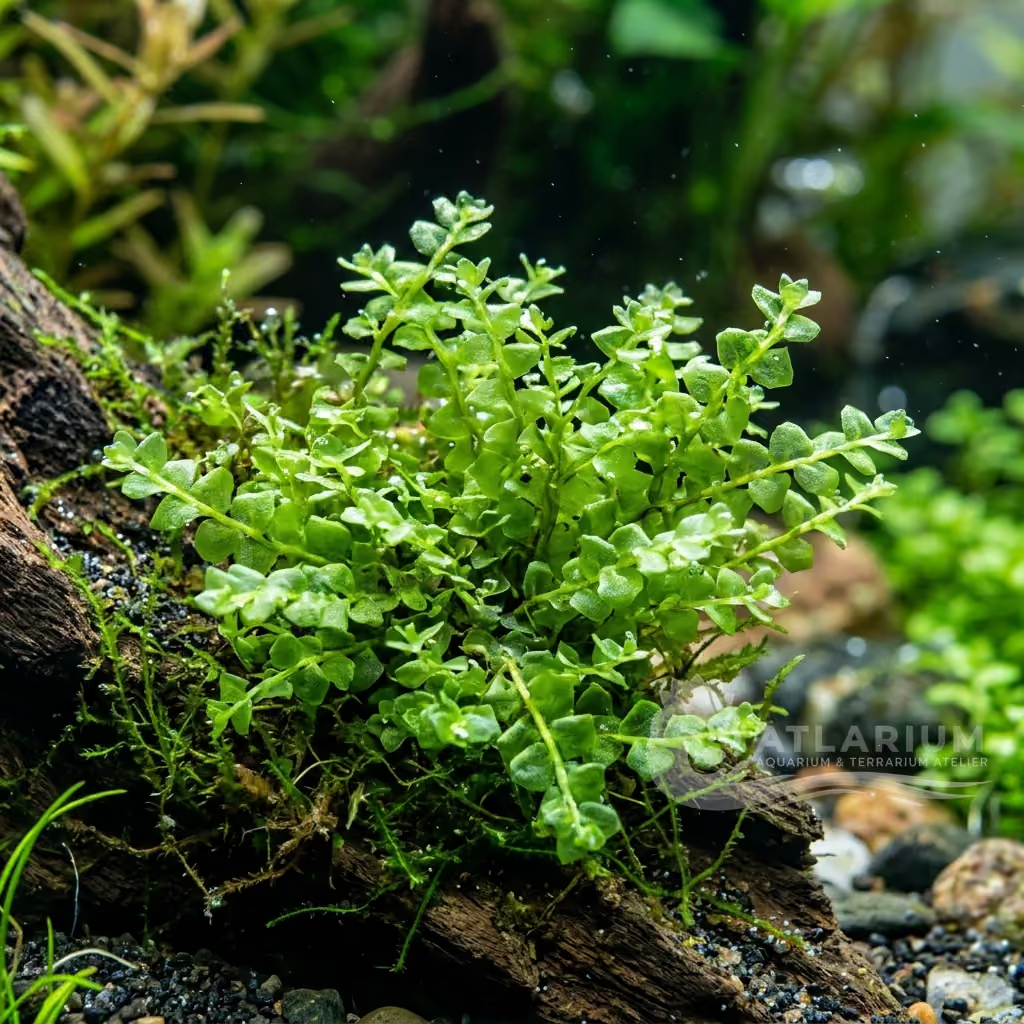
Riccia sp. "Dwarf" is a versatile aquatic liverwort, ideal for creating dense carpets when tied to hardscape in the midground or foreground, or floating freely. Its fast growth rate provides a dynamic visual impact, making it a popular choice for aquascaping projects.
Water Temperature
15 - 30 °C
pH Value
5 - 7
Water type
Freshwater
Light
Medium - High
CO2
High
KH
0 - 14 dKH

Species description
Geographical Origin and Habitat: While "Riccia sp. 'Dwarf'" likely refers to a cultivated variant or an as-yet-unidentified species specifically adapted for aquascaping, the genus Riccia is broadly distributed across the globe in both aquatic and semi-aquatic environments. These liverworts naturally thrive in clear, slow-moving waters, often found clinging to submerged rocks or wood, or floating freely on the surface. The "Dwarf" designation indicates a selection for a more compact growth form, making it particularly suitable for creating intricate carpet effects in aquariums.
Taxonomy & Genetics: Riccia sp. "Dwarf" belongs to the family Ricciaceae, which comprises thalloid liverworts, representing some of the most primitive non-vascular plants. Lacking true stems, leaves, and roots, their body structure is a simple thallus. The "sp. 'Dwarf'" appellation typically denotes a specific, often cultivated, variety characterized by its smaller size and denser growth habit, distinguishing it from the more common Riccia fluitans and making it highly desirable for intricate aquascaping layouts.
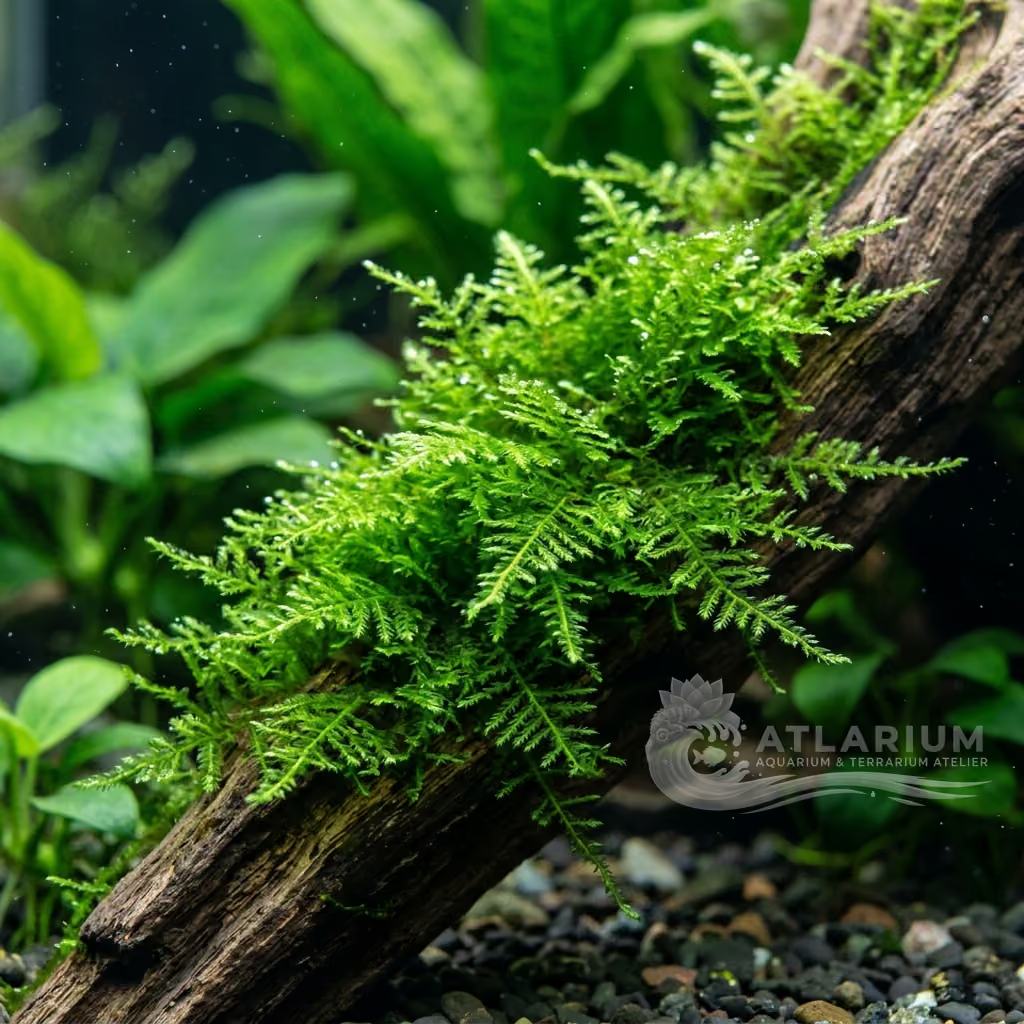
Physical Structure: The physical structure of Riccia sp. "Dwarf" is characterized by a dichotomously branching thallus, a flat, undifferentiated plant body devoid of true roots, stems, or leaves. When submerged and anchored, this thallus forms intricate, dense mats that cling to hardscape elements like rocks and driftwood. Its unique structure allows it to create lush, carpet-like formations or floating rafts, depending on its placement within the aquarium.
Color & Texture: Riccia sp. "Dwarf" typically exhibits a vibrant light to medium green coloration, which can sometimes lean towards a yellowish hue under conditions of very high light intensity. Its texture is fine and delicate, yet it forms a dense, visually appealing mass when grown compactly. During active photosynthesis, its surface often displays numerous tiny air bubbles, a phenomenon known as "pearling," which is a clear indicator of a healthy and thriving plant.

Care, breeding and tankmates
Lighting & CO2: Optimal growth and the characteristic compact form of Riccia sp. "Dwarf" necessitate medium to high lighting, which vigorously promotes photosynthesis and the desirable "pearling" effect. Carbon dioxide (CO2) injection is highly recommended, often considered essential for establishing a dense and vibrant carpet. A consistent supply of CO2 dramatically boosts the growth rate and overall vitality, while helping to prevent the decay of the plant's lower layers.
Nutrition & Substrate: As Riccia sp. "Dwarf" does not develop true roots, it absorbs all its necessary nutrients directly from the surrounding
Water Chemistry: Riccia sp. "Dwarf" displays remarkable adaptability to a broad spectrum of water parameters, comfortably thriving in temperatures between 15.0 and 30.0 °C, pH levels from 5.0 to 7.0, and KH ranging from 0.0 to 14.0. However, maintaining consistent stability within these ranges is far more important than achieving exact numerical values. Clean water with minimal fluctuations will significantly reduce stress and foster healthy, vigorous growth.
Space Management & Placement: Despite its suggested "midground" placement, Riccia sp. "Dwarf" is exceptionally versatile in aquascaping. It can be meticulously tied to rocks or driftwood using fine thread or netting to craft intricate foreground or midground carpets and striking accents. Alternatively, it can be allowed to float freely on the water surface, offering natural shade and shelter to inhabitants. Its rapid growth rate demands careful space management and forethought to prevent it from overwhelming other plants or designated areas.
Pruning: Regular and assertive pruning is absolutely essential for Riccia sp. "Dwarf" to maintain its desired shape and ensure its overall health. Without frequent trimming, the lower layers of dense mats can quickly suffocate due to insufficient light and water circulation, leading to decay and the detachment of large sections. This vital maintenance not only prevents deterioration but also stimulates denser, more compact growth, preserving the plant's aesthetic appeal within the aquascape.
Risks & Diseases: Riccia sp. "Dwarf" is susceptible to several issues if not provided with optimal conditions; a primary concern is aggressive algae growth, particularly under high light and nutrient imbalances. It can rapidly "melt" or deteriorate if light or CO2 levels are insufficient, or if essential nutrients are lacking in the water column. Detachment from hardscape is another common risk, especially if the mats become overly dense or if pruning is neglected, underscoring the need for vigilant monitoring and maintenance.

Geographic origin and distribution
While "Riccia sp. 'Dwarf'" likely refers to a cultivated variant or an as-yet-unidentified species specifically adapted for aquascaping, the genus Riccia is broadly distributed across the globe in both aquatic and semi-aquatic environments. These liverworts naturally thrive in clear, slow-moving waters, often found clinging to submerged rocks or wood, or floating freely on the surface. The "Dwarf" designation indicates a selection for a more compact growth form, making it particularly suitable for creating intricate carpet effects in aquariums.
Origin
Selective breeding and cultivars

Plant profile
- Placement
- Midground
- It is most effectively used when tightly bound to small stones or stainless steel mesh, creating fine-detailed foreground carpets. It can also be left floating, though its true beauty is shown when submerged. It must be placed in areas receiving unshaded, intense light.
- Botanical form
- free-floating submerged plant
- This variant features much shorter, finer, and more densely packed dichotomous branches than standard Riccia fluitans. It forms an incredibly tight, compact cushion that looks like a miniature, bright green sponge. It is entirely rootless, relying on mechanical attachment when submerged.
- Growth
- Fast
- Despite its dwarf form, its growth rate is very fast when provided with high light and CO2. It densely packs its branching fronds together, quickly expanding over its given surface. Frequent maintenance is required to manage its rapid expansion.
- Substrate
- None
- Riccia sp. "Dwarf" is a compact, rootless liverwort that does not interact with traditional substrate materials. Because it takes in water and nutrients completely through its thallus structure, it thrives perfectly floating at the top of an aquarium. To utilize it as a carpeting plant, aquarists must physically bind it to pieces of slate, wood, or stones using hairnets or fishing line. It possesses no capability to drive roots into soil or sand, and attempting to plant it directly into the substrate will cause it to rot.
- Column fertilization
- Recommended
- Because it is rootless, it relies entirely on column fertilization. A comprehensive liquid dosing schedule is necessary to maintain its bright green color and vigorous growth. Ensure iron and trace elements are readily available.
- Root fertilization
- None
- Root fertilizers and active soils do not provide direct nutritional benefits to this plant. It absorbs nothing from the substrate. All nutritional management must be executed via the water column.
- Trimming
- Regular
- Submerged cultivation requires relentless trimming; otherwise, the buoyant force of the plant and oxygen bubbles will tear it from its anchor. Use curved scissors to trim the canopy short, maintaining a tight, low profile. The fine trimmings can be very messy, so net them out diligently.
- Propagation
- Cuttings
- Propagation is as simple as tearing a piece off and retying it. A very small clump can quickly grow to cover a new rock or mesh pad. It is highly invasive if floating fragments are left unchecked in the aquarium.
- Sensitivity
- Moderate
- It is highly sensitive to shading; any portion deprived of light will quickly rot and release the mat. It is also prone to melting if treated with liquid carbon products. Good circulation is necessary, but extreme flow can physically tear the delicate plant apart.
- Layout role
- Epiphyte, Nano
- It is highly prized in nano aquascaping and Iwagumi layouts for its incredibly fine texture, making small tanks look much larger. It provides a stunning, bright green foreground carpet that pearls intensely. Its miniature size allows for very precise, detailed hardscape accents.

Related species
Recommendations grouped by close relatives, companion choices, and similar care.