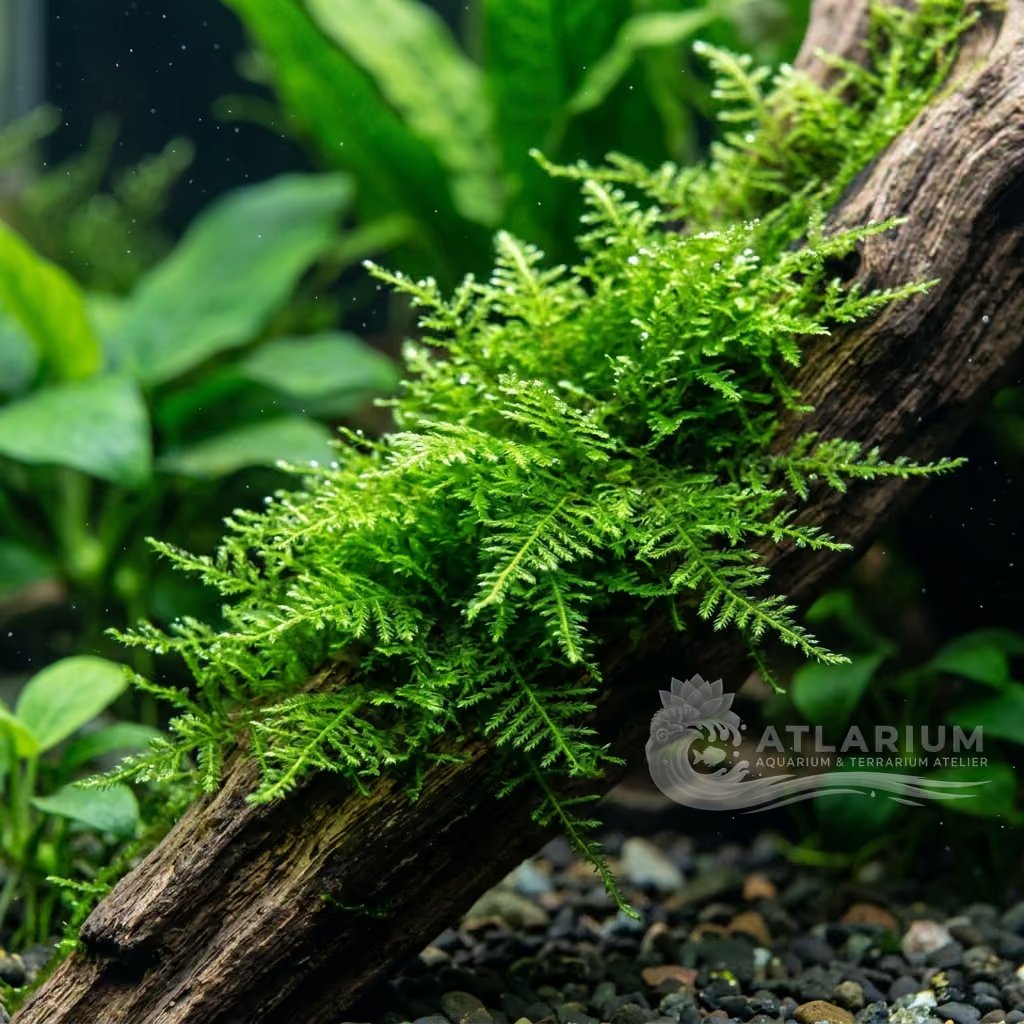
Riccia rhenana
Riccia rhenana
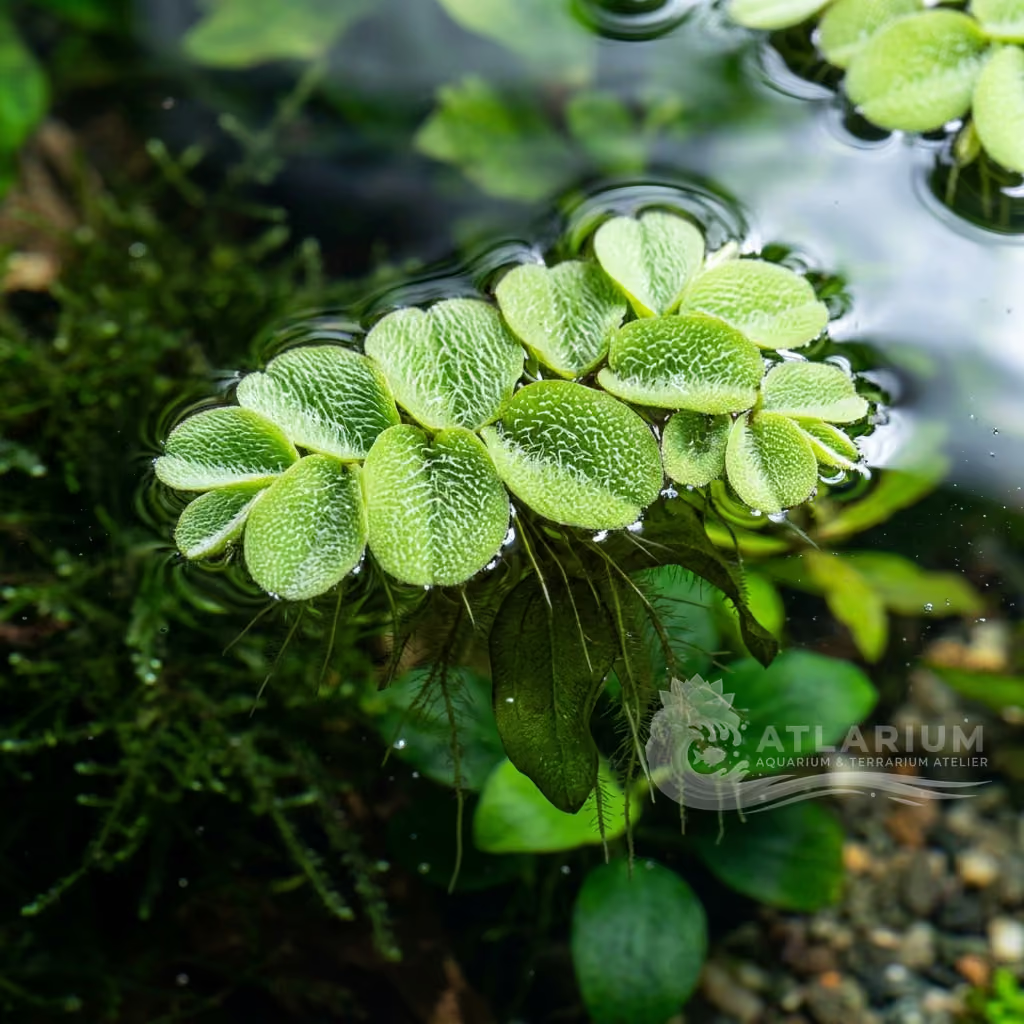
Riccia rhenana is a versatile aquatic liverwort popular in aquascaping, forming dense, vibrant carpets in the midground or foreground. It exhibits a medium growth rate but can spread quickly under optimal conditions, requiring regular maintenance to thrive.
Water Temperature
4 - 30 °C
pH Value
5 - 8
Water type
Freshwater
Light
Medium - High
CO2
Low - High
KH
0 - 14 dKH

Species description
Geographical Origin and Habitat: Riccia rhenana is an aquatic bryophyte species naturally found in various freshwater habitats across different regions, often colonizing submerged surfaces or floating freely. While specific details of its exact distribution may vary, it is an adaptable member of the Riccia genus, widely present in both temperate and tropical climates. It thrives in clear, well-oxygenated waters where it can efficiently absorb nutrients directly from the surrounding environment, making it a robust addition to an aquascape.
Taxonomy & Genetics: Classified within the Ricciaceae family, Riccia rhenana is a bryophyte, specifically a liverwort. This classification differentiates it from vascular plants due to the absence of true roots, stems, and leaves, relying instead on a simple thallus for photosynthesis and nutrient absorption. Its genome reflects an ancient evolutionary history, typical of early terrestrial plants that colonized aquatic environments, maintaining both sexual (spores) and asexual (thallus fragmentation) reproductive mechanisms in nature, contributing to its adaptability.
Physical Structure: The physical structure of Riccia rhenana is characterized by a branched, flattened thallus that develops into a dense, compact network under optimal conditions. Each thallus fragment is small, typically only a few millimeters, and divides dichotomously, creating an intricate and lush appearance. In the aquarium, if not anchored, it tends to float freely on the water surface, forming decorative green islands. However, it can be securely attached to rocks, driftwood, or directly to the substrate using fine cotton thread or netting to cultivate stunning submerged carpets.
Color & Texture: Riccia rhenana stands out for its bright, almost emerald green color, which adds a vibrant and natural touch to any aquatic setup. Its texture is delicate and finely granular, with the small thallus branches creating a slightly velvety and reflective surface under proper lighting. This lively hue is an excellent indicator of its health and active photosynthesis, contributing to an appealing aesthetic contrast with other plants or hardscape elements, and maintaining a captivating luster.

Care, breeding and tankmates
Lighting & CO2: Riccia rhenana demands medium to high lighting to achieve its full growth potential and maintain a compact form and vibrant color. Under insufficient light, the thalli may become elongated, pale, and lose density, making them more prone to detaching and floating. CO2 injection is highly recommended as it significantly accelerates growth, promotes greater carpet density, and supports robust photosynthesis, which is essential for its overall health and for outcompeting undesirable algae.
Nutrition & Substrate: As a liverwort without a true root system, Riccia rhenana absorbs all its nutrients directly from the
Water Chemistry: This plant thrives within a temperature range of 4.0 to 30.0 C, displaying remarkable tolerance to variations, although a more stable environment around 20-26 C is preferable for consistent and vigorous growth. Ideal pH values are between 6.0 and 7.5, while carbonate hardness (KH) should be maintained between 2 and 12. Keeping these parameters within the recommended limits is crucial to prevent osmotic and chemical stress that could compromise the plant's health and vitality, avoiding melting or yellowing.
Space Management & Placement: Typically placed in the midground or foreground, Riccia rhenana can be utilized to create lush carpets or to adorn rocks and driftwood, where it is secured with cotton thread or fine mesh until it self-anchors. If left unsecured, it will tend to float, forming decorative islands on the surface. Space management is important to prevent it from shading other low-lying plants or obstructing water circulation. Its tendency to grow densely requires regular
Pruning: Regular pruning is essential for Riccia rhenana, especially when it forms dense, layered carpets. This process not only helps maintain the desired shape and density but also prevents the lower layers from receiving insufficient light, leading to decay and the detachment of larger masses that can then float. Using sharp scissors, the upper sections of the thallus can be trimmed, promoting new, more compact growth and allowing light to reach the underlying parts, thereby ensuring uniform coloration and enhanced vitality throughout the carpet.
Risks & Diseases: Riccia rhenana is generally robust, but it can be susceptible to some common aquarium issues. Nutrient deficiencies manifest as yellowing or stunted growth, while insufficient lighting can cause the thallus to elongate and lose compactness, making it more fragile. Filamentous and brush algae can easily infest its dense mats, depriving the plant of light and nutrients; careful management of fertilization, CO2, and water flow is crucial to prevent their appearance and keep the plant healthy and vibrant.

Geographic origin and distribution
Riccia rhenana is an aquatic bryophyte species naturally found in various freshwater habitats across different regions, often colonizing submerged surfaces or floating freely. While specific details of its exact distribution may vary, it is an adaptable member of the Riccia genus, widely present in both temperate and tropical climates. It thrives in clear, well-oxygenated waters where it can efficiently absorb nutrients directly from the surrounding environment, making it a robust addition to an aquascape.
Origin
Cosmopolitan or introduced

Plant profile
- Placement
- Midground
- This plant can be cultivated floating at the surface or securely tied to hardscape materials like rocks or wood. Because of its broader thallus, it forms a slightly more textured mat than standard R. fluitans when tied down. It needs strong lighting when placed at the bottom of the aquarium.
- Botanical form
- free-floating submerged plant
- R. rhenana is characterized by a noticeably broader, flatter thallus compared to Riccia fluitans. It exhibits the same dichotomous branching pattern but has a thicker, more robust appearance. It lacks any true root system, existing as a free-floating or epilithic liverwort.
- Growth
- Medium
- It is a fast grower, particularly when supplemented with injected CO2 and strong illumination. It rapidly expands its mass, requiring frequent maintenance to keep it in check. Even in low-tech setups as a floater, it grows steadily.
- Substrate
- None
- Riccia rhenana grows primarily as a free-floating liverwort, eliminating any requirement for an underwater substrate. It does not produce roots for anchoring, instead gathering all its nutritional requirements directly from the water it floats in. If desired in a lower or mid-ground placement, it must be artificially anchored using fine thread or specialized mesh over rocks or driftwood. Burying this plant in gravel or aquasoil will lead to the decomposition of its delicate tissues.
- Column fertilization
- Recommended
- Consistent column fertilization is critical for its success, especially in densely planted tanks where competition is high. Iron and potassium are particularly important to keep the broad fronds looking vibrant. Without adequate column nutrients, growth will stall and discolor.
- Root fertilization
- None
- As a rootless liverwort, it gains absolutely no benefit from root tabs or nutrient-rich substrates. It is completely dependent on the surrounding water for sustenance. Focus entirely on a good liquid fertilizer regimen.
- Trimming
- Regular
- When submerged and attached to hardscape, it must be trimmed very frequently. If the mat gets too thick, the lower portions die, losing their grip, which causes the entire mass to detach and float to the surface. Trim it aggressively and use a fine net to remove the floating debris.
- Propagation
- Cuttings
- Propagation is effortless through mechanical division. Simply separate a portion of the mat or scoop a handful of floating pieces and relocate them. They can be re-tied to new rocks using fine nylon thread or hairnets.
- Sensitivity
- Moderate
- It demands high light levels when submerged; otherwise, it will quickly deteriorate or break free from its moorings. It is sensitive to sudden changes in water chemistry and aggressive algaecide treatments. Ensure strong water flow to deliver nutrients and prevent detritus buildup.
- Layout role
- Foreground, Midground, Floating, Epiphyte, group
- It is primarily used to create luminous, textured carpets or bright accents on hardscape in the midground. Its slightly wider fronds offer a unique textural difference from typical Crystalwort. It is a fantastic plant for producing high levels of visible oxygen bubbles (pearling).

Related species
Recommendations grouped by close relatives, companion choices, and similar care.