Sagittaria subulata "Pusilla"
Sagittaria subulata
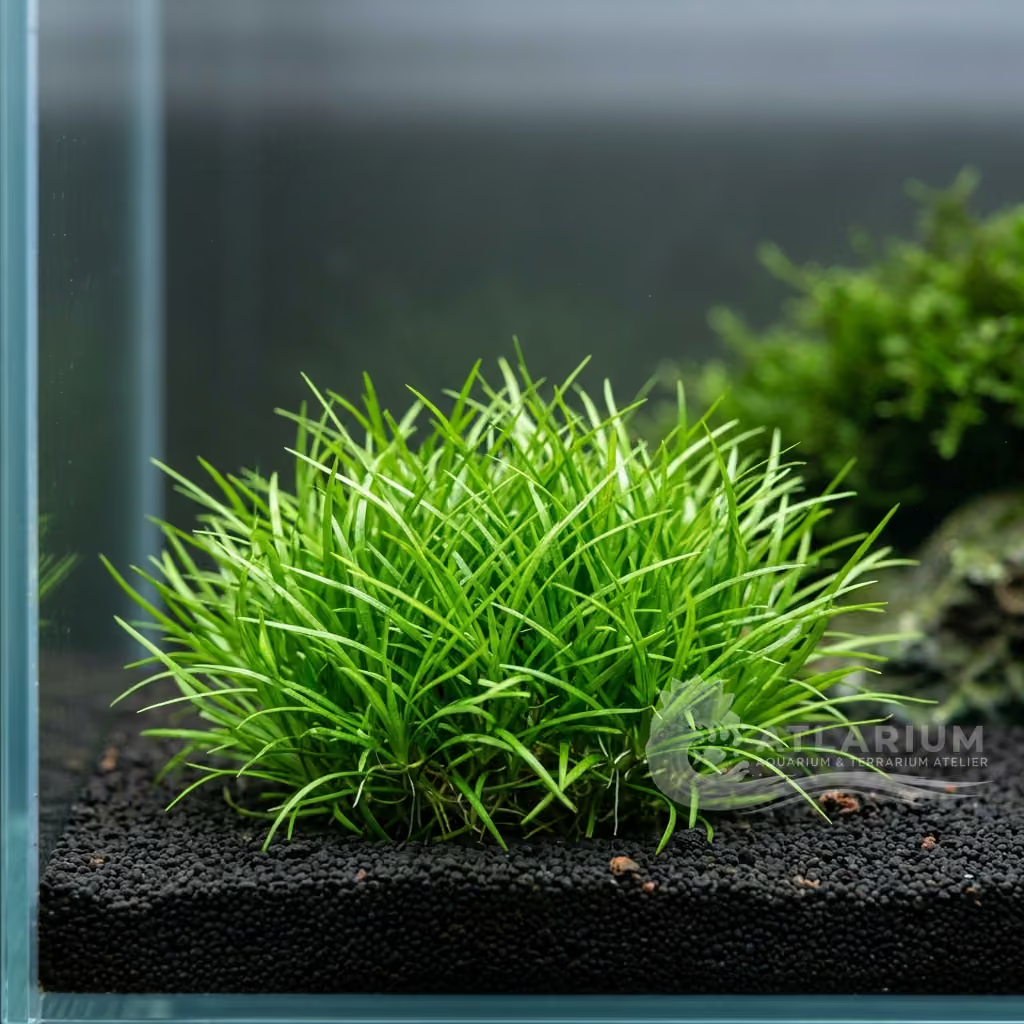
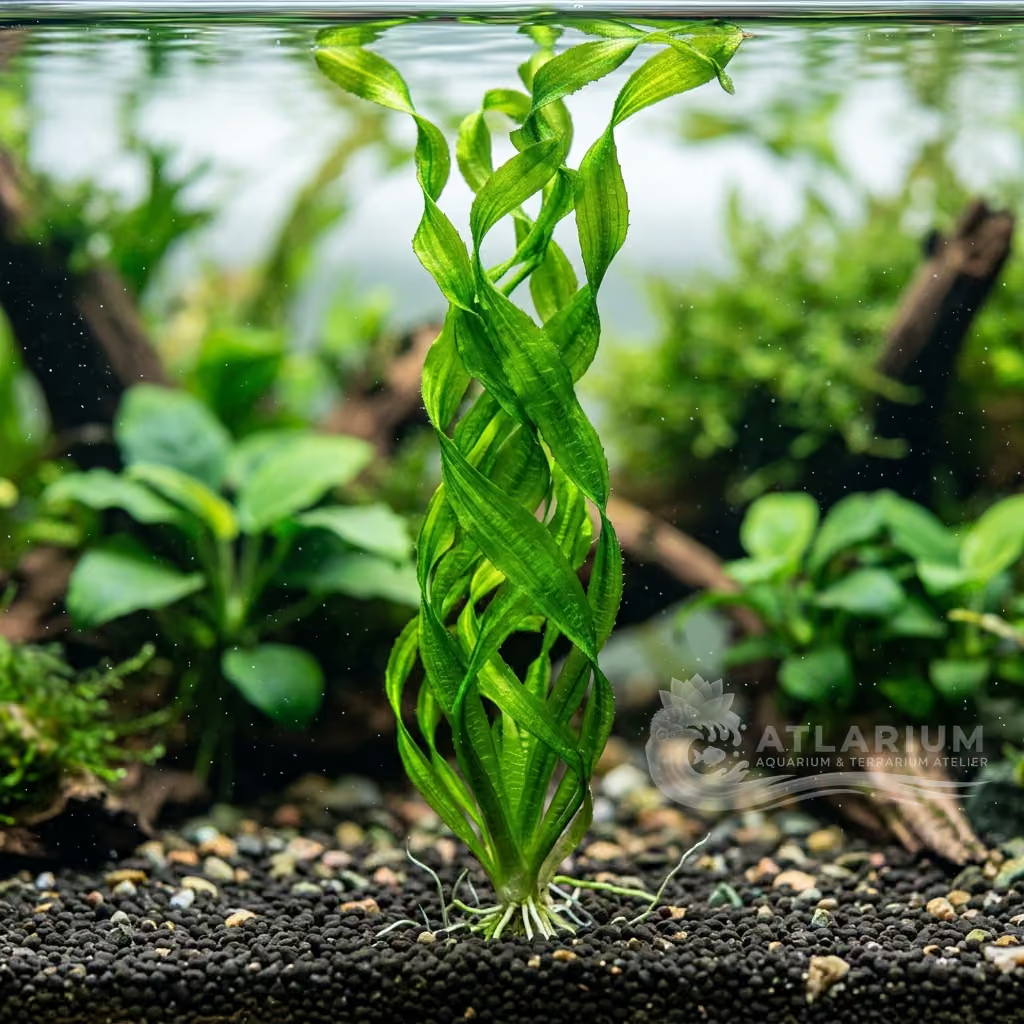
Sagittaria subulata "Pusilla" is a medium-growth foreground plant, perfect for forming dense, compact carpets in the aquarium. Its ability to spread via runners makes it excellent for layouts requiring uniform and lush bottom coverage.
Water Temperature
4 - 30 °C
pH Value
5 - 9
Water type
Freshwater
Light
Low to High
CO2
High
Expected height
10 cm
KH
2 - 30 dKH

Species description
Geographical Origin and Habitat: Sagittaria subulata "Pusilla" is derived from a selection of the species Sagittaria subulata, native to the Americas, where it is naturally found across a wide range of aquatic habitats. These environments include swamps, slow-moving rivers, lakes, and ponds, often rooting in muddy or sandy substrates in shallow or submerged waters. While "Pusilla" is a cultivated form specifically selected for its smaller size, it retains the adaptability and resilience of its parent species, thriving under diverse environmental conditions. Its presence in nature contributes to aquatic biodiversity, providing shelter and food for various faunal species.
Taxonomy & Genetics: Belonging to the Alismataceae family, Sagittaria subulata is closely related to other popular aquatic plants. The "Pusilla" designation indicates a cultivar or variety selected for its dwarf characteristics, distinguishing it from the standard Sagittaria subulata form, which can grow much taller. This genetic selection has resulted in a plant with a more contained size, making it ideal for foreground aquascaping. Its classification underscores its origin as an aquatic monocotyledon, with a reproductive cycle that can include emergent flowering if conditions allow, though this is rare in an aquarium setting.
Physical Structure: Sagittaria subulata "Pusilla" is characterized by linear, narrow, ribbon-like leaves that emerge directly from a basal rosette. Individual leaves rarely exceed 5-10 cm in height under optimal conditions, although they may stretch slightly taller in weaker light. This plant propagates vigorously through underground runners, forming new plantlets at a distance which, as they grow, create a dense and uniform carpet. Its root system is fibrous and well-developed, firmly anchoring the plant to the substrate and contributing to nutrient absorption.
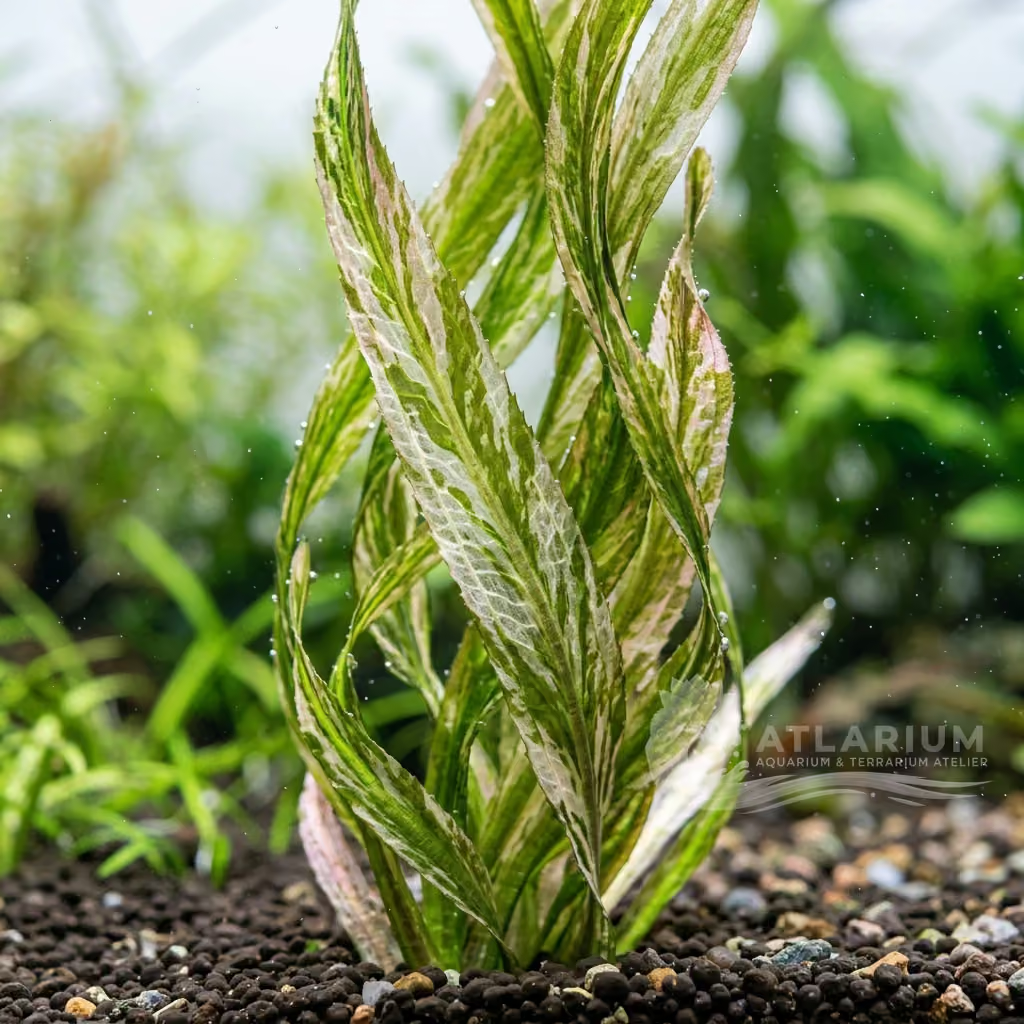
Color & Texture: The leaves of Sagittaria subulata "Pusilla" display a coloration ranging from medium to bright green, potentially acquiring reddish or bronze hues at the tips or along the margins under intense illumination. Their texture is smooth and slightly fleshy, imparting a delicate yet robust appearance. The leaf surface is devoid of visible hairs and reflects light attractively, contributing to the overall brightness of the aquarium. This combination of color and texture makes it an excellent choice for adding depth and visual contrast to the foreground areas.

Care, breeding and tankmates
Lighting & CO2: Sagittaria subulata "Pusilla" is remarkably versatile regarding lighting, tolerating conditions from low to high. Under low light, growth will be slower, and leaves may be slightly longer and less compact; with medium to high light, the plant will grow more densely, maintain a shorter stature, and develop more intense colorations. CO2 injection is highly recommended to promote rapid, robust growth, fostering a thick carpet and preventing algae buildup. Without CO2, growth will be slower and propagation less vigorous, but the plant will still survive.
Nutrition & Substrate: For optimal growth, Sagittaria subulata "Pusilla" greatly benefits from a nutrient-rich substrate, such as aquasoil or specialized fertilized aquarium substrates. Liquid fertilizers containing macro and micronutrients are advised, especially in aquariums with intense lighting and CO2 injection. Root tabs placed near the plant's base are an excellent method to ensure a consistent supply of nutrients directly to the root system. Iron deficiencies can manifest as yellowing of new leaves, while a lack of potassium might cause holes or yellowing in older leaves.
Water Chemistry: This plant demonstrates remarkable tolerance to a broad range of water chemistry parameters, thriving in temperatures between 4.0 and 30.0 °C, pH between 5.0 and 9.0, and KH between 2.0 and 30.0. Despite this versatility, stable conditions within moderate ranges (e.g., 22-26°C, pH 6.5-7.5, KH 4-8) are ideal to minimize stress and promote consistent growth. It is crucial to avoid sudden fluctuations in these parameters, as they could induce stress and a temporary halt in growth or decline. Soft to medium-hard water is generally preferred, but it adapts well to harder water conditions too.
Space Management & Placement: Sagittaria subulata "Pusilla" is an excellent choice for the aquarium foreground due to its compact growth and tendency to form a dense carpet. It should be planted in small bunches of a few leaves, spaced a couple of centimeters apart, to allow for rapid bottom coverage via runners. It is also ideal for filling mid-ground areas in larger aquariums, where its slender leaves can create a visual effect of depth. Its controlled propagation makes it less invasive than some other carpeting plants, facilitating the maintenance of a clean and defined layout.
Pruning: Pruning Sagittaria subulata "Pusilla" is essential to maintain the desired density and prevent it from growing too tall or becoming overly thick. When plants start to exceed the desired height, it is advisable to trim the longest leaves at the base with sharp, pointed scissors. This encourages the plant to produce new, shorter leaves and promotes branching and the emission of new runners, making the carpet even denser. Regularly removing old or yellowed leaves also improves overall aesthetics and plant health.
Risks & Diseases: The main risks for Sagittaria subulata "Pusilla" include nutrient deficiencies, which can lead to yellowing or decay of leaves, and competition with algae, especially in cases of light or nutrient imbalances. Insufficient lighting can cause excessive elongation of leaves and stunted growth. Drastic changes in water parameters can also cause stress. Maintaining a regular fertilization regimen, adequate lighting, and good water circulation helps prevent most problems. It is generally resistant to specific aquatic plant diseases.

Geographic origin and distribution
Sagittaria subulata "Pusilla" is derived from a selection of the species Sagittaria subulata, native to the Americas, where it is naturally found across a wide range of aquatic habitats. These environments include swamps, slow-moving rivers, lakes, and ponds, often rooting in muddy or sandy substrates in shallow or submerged waters. While "Pusilla" is a cultivated form specifically selected for its smaller size, it retains the adaptability and resilience of its parent species, thriving under diverse environmental conditions. Its presence in nature contributes to aquatic biodiversity, providing shelter and food for various faunal species.
Origin
North AmericaExtra-Amazon South AmericaSelective breeding and cultivars

Plant profile
- Placement
- Foreground
- Due to its very compact and dwarf nature, it is an ideal foreground plant. It creates a lush, low-growing carpet that stays much shorter than the standard S. subulata. It is perfect for both large aquascapes and nano tanks where maintaining a small scale is important.
- Botanical form
- Rosette
- This 'Pusilla' variant is noted for its extremely short, slightly curved leaves that grow in tight rosettes. The leaves are generally broader than the 'Needle' variant but significantly shorter than typical S. subulata. Its compact form gives the aquascape a very neat and manicured appearance.
- Growth
- Medium
- The growth rate is moderate to fast, depending strongly on substrate nutrition rather than lighting or CO2. Once established, it will continuously send out runners to form a dense mat. Regular pruning and thinning are necessary to keep the carpet from becoming too thick and lifting off the substrate.
- Substrate
- High
- A nutrient-rich substrate will yield the fastest growth and the densest carpet. However, it is very adaptable and will grow quite well in plain sand or gravel. In inert substrates, adding root tabs near the root zones will provide the necessary boost for healthy runner production.
- Column fertilization
- Recommended
- Column dosing is generally not required for this plant if it is rooted in a good substrate. A light, occasional dose of an all-in-one liquid fertilizer can provide a safety net for micronutrients. Heavy column dosing should be avoided as the plant primarily feeds through its roots.
- Root fertilization
- None
- Root fertilization is the most effective way to care for this species. Strategically placing root tabs in the areas where you want the carpet to spread will encourage rapid colonization. This targeted feeding ensures the plant remains short and compact rather than stretching upward for nutrients.
- Trimming
- Occasional
- Maintenance involves periodic thinning to prevent the carpet from becoming too thick and suffocating itself. Cut runners to stop the plant from invading other areas. Remove individual old or algae-covered leaves by plucking them from the base.
- Propagation
- Runners
- Propagation is incredibly simple and occurs automatically via underground runners. Small plantlets will emerge adjacent to the mother plant and quickly establish their own roots. To start a new patch elsewhere, simply cut the runner and replant the daughter rosette.
- Sensitivity
- Moderate
- Very robust and forgiving of minor fluctuations in water chemistry. It can adapt to both soft and hard water environments. Iron deficiency may cause the new leaves to appear pale or translucent.
- Layout role
- group, Foreground, Midground, Nano
- The perfect choice for a low-maintenance foreground carpet. It creates a lush, green lawn effect that enhances the sense of scale in the aquarium. Its small size makes it ideal for nano tanks and detailed aquascapes.

Related species
Recommendations grouped by close relatives, companion choices, and similar care.