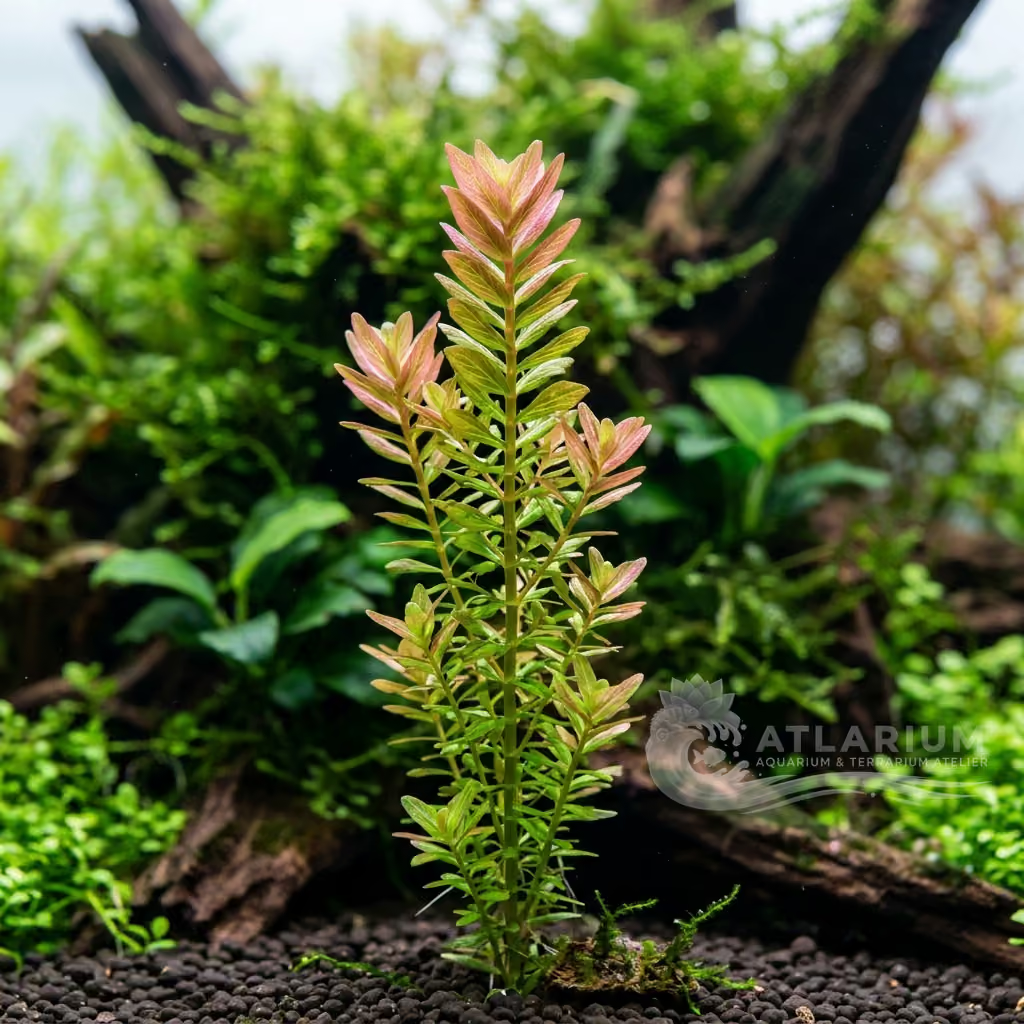
Riccardia chamedryfolia
Riccardia chamedryfolia
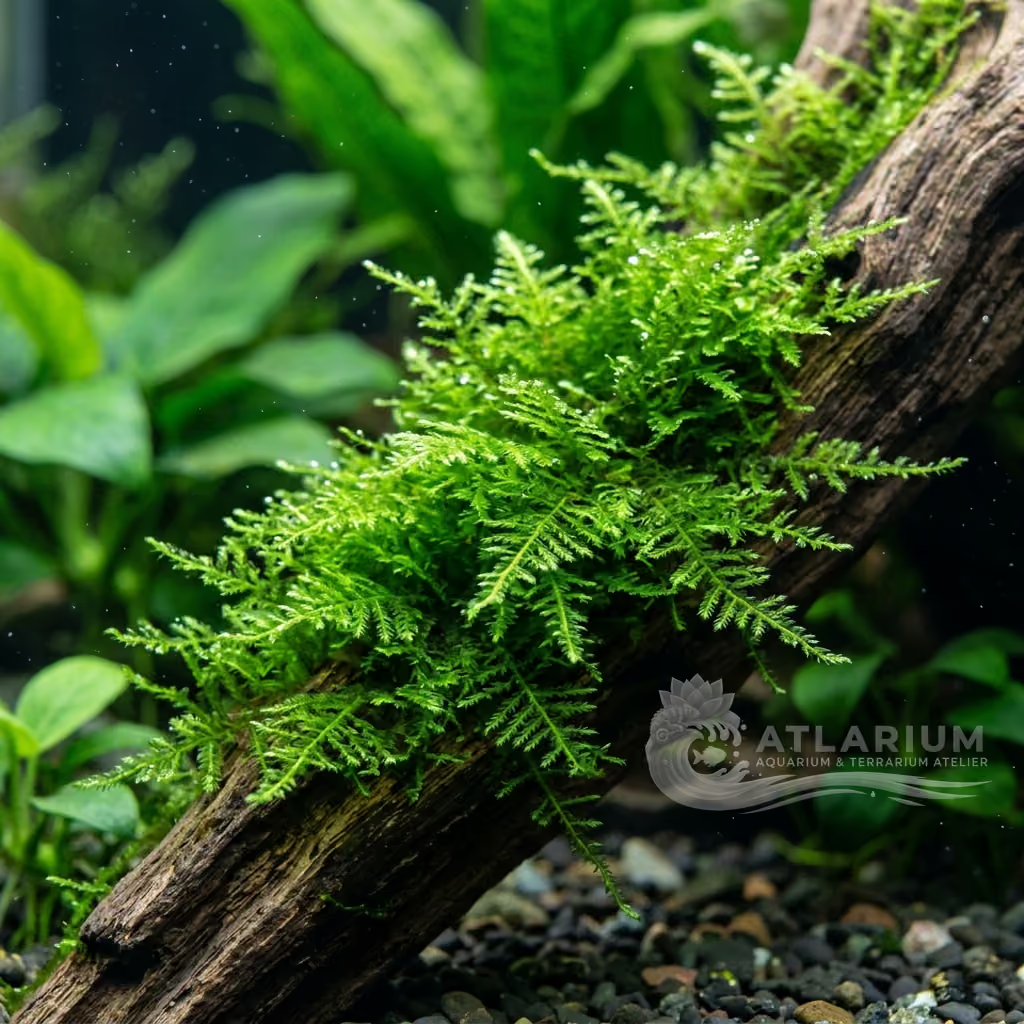
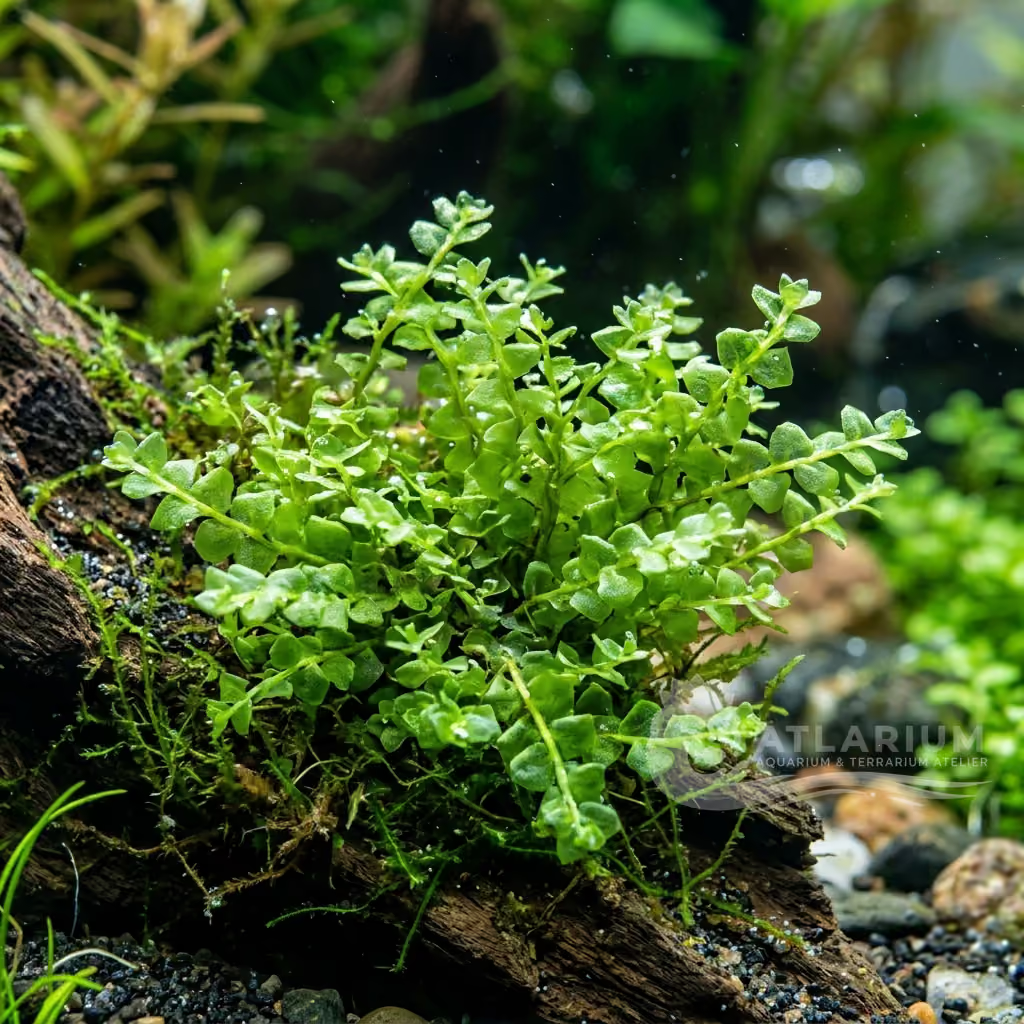
Riccardia chamedryfolia is a beautiful midground epiphytic liverwort, cherished for its compact growth and ability to form dense, vibrant green cushions, imparting a natural, intricate look to the aquarium. Its medium growth rate makes it manageable for most aquascapers.
Water Temperature
15 - 28 °C
pH Value
5 - 8
Water type
Freshwater
Light
Medium - High
CO2
Low - High
Expected height
3 cm
Expected width
5 cm
KH
0 - 14 dKH

Species description
Geographical Origin and Habitat: Riccardia chamedryfolia, while commonly associated with Asian aquascapes, boasts a surprisingly wide geographical distribution, found in various temperate and tropical regions worldwide, including Asia, Europe, and North America. It typically thrives in humid, shaded environments, often anchoring itself to submerged rocks, driftwood, or wet substrates along watercourses. In nature, this epiphyte prefers clear, oxygen-rich waters, developing in both submerged and emergent conditions, where it forms dense, lush carpets.
Taxonomy & Genetics: Belonging to the Aneuraceae family, Riccardia chamedryfolia is a species of liverwort, a group of bryophyte plants closely related to mosses. Taxonomically, it distinguishes itself from true mosses by its flat thallus structure, lacking differentiated leaves and stems. Its genetics reveal unique adaptations for life in aquatic and semi-aquatic environments, allowing it to thrive under conditions that other vascular plants would not tolerate. This classification makes it a fascinating specimen for the study of plant diversity in aquariology.
Physical Structure: Riccardia chamedryfolia exhibits a distinct physical structure, characterized by a flat, dichotomously branched thallus that develops into a dense, three-dimensional network. Unlike vascular plants, it lacks true roots, stems, and leaves, absorbing nutrients directly from the water through the surface of its thallus. Its growth is compact and often forms a cushion-like shape, firmly attaching itself to hard substrates such as rocks or driftwood via tiny, invisible rhizoids. This unique morphology allows it to create visually impactful effects and colonize vertical surfaces in the aquascape.
Color & Texture: The coloration of Riccardia chamedryfolia typically ranges from a medium to a deep, dark green, depending on lighting conditions and nutrient availability. Under more intense light and with adequate fertilization, it tends to display a more vibrant green and denser growth. Its texture is surprisingly delicate yet resilient, almost velvety to the touch and visually rich in detail, contributing to a sense of naturalism and depth in the aquarium. This combination of color and texture makes it a popular choice for aquascapers looking to add visual interest and contrast.

Care, breeding and tankmates
Lighting & CO2: Riccardia chamedryfolia thrives under medium light intensity, which allows for robust growth without promoting excessive algae on its delicate thallus. Insufficient lighting can slow growth and lead to a faded coloration, while overly strong light can stress it and encourage filamentous algae growth that may suffocate it. CO2 injection is highly recommended and almost essential to promote dense growth and vibrant color, accelerating the plant's metabolism and photosynthetic capacity. Stable CO2 levels, around 20-30 ppm, contribute significantly to its overall health and aesthetic appeal.
Nutrition & Substrate: As an epiphyte without a traditional root system, Riccardia chamedryfolia absorbs all nutrients directly from the
Water Chemistry: Maintaining stable water parameters is paramount for the health of Riccardia chamedryfolia; it tolerates temperatures between 20 and 28 °C, with an ideal range of around 22-26 °C for optimal growth. The pH should be maintained between 6.0 and 7.5, preferring slightly acidic to neutral waters, while the ideal carbonate hardness (KH) ranges from 2 to 12. Sudden fluctuations in these parameters can stress the plant, leading to deterioration or melting. Regular water changes and good filtration are imperative to ensure water quality and parameter stability.
Space Management & Placement: Riccardia chamedryfolia is an excellent choice for the midground of an aquascape, where it can be anchored to driftwood, volcanic rock, or other hard surfaces to create a natural, intricate effect. To place it, it is advisable to gently tie it with thin fishing line or aquarium-safe cyanoacrylate glue to the desired substrates; over time, it will attach itself. Its compact, three-dimensional growth makes it ideal for filling intermediate spaces, creating illusions of depth, or as part of a raised "lawn." Ensure it receives good water flow to prevent debris accumulation and promote nutrient distribution.
Pruning: Regular pruning of Riccardia chamedryfolia is essential not only to maintain its desired shape but also to promote denser and more vigorous growth. When the plant becomes too bushy, the lower parts may receive less light and water flow, leading to stunted growth or necrosis. Using sharp scissors, gently trim the outer or densest sections to remove excess, being sure to collect all detached fragments to prevent them from floating and attaching to undesirable locations. Pruning stimulates branching and bushiness, helping to maintain the plant's healthy and compact appearance.
Risks & Diseases: Riccardia chamedryfolia, while robust under optimal conditions, can be susceptible to several risks and problems. The most common is the growth of filamentous or brush algae on its thallus, especially in the presence of excessive light or nutrient imbalances, which can suffocate it. Another risk is melting or deterioration, often caused by drastic changes in water parameters, severe nutrient deficiencies, or introduction to an unstabilized environment. It is also important to monitor the accumulation of debris among its dense branching, which can hinder water flow and promote the growth of pathogens or algae. Keeping the aquarium clean and parameters stable is the best prevention.

Geographic origin and distribution
Riccardia chamedryfolia, while commonly associated with Asian aquascapes, boasts a surprisingly wide geographical distribution, found in various temperate and tropical regions worldwide, including Asia, Europe, and North America. It typically thrives in humid, shaded environments, often anchoring itself to submerged rocks, driftwood, or wet substrates along watercourses. In nature, this epiphyte prefers clear, oxygen-rich waters, developing in both submerged and emergent conditions, where it forms dense, lush carpets.
Origin
South and Southeast AsiaNorth AmericaEurope, Mediterranean, and West AsiaEast Asia

Plant profile
- Placement
- Midground
- It is predominantly used as an epiphyte, attached to driftwood, rocks, or stainless steel mesh. It looks spectacular in the foreground or midground, adding rich texture to hardscape. Avoid burying it in the substrate, as the covered portions will quickly rot and die.
- Botanical form
- Moss
- This liverwort has a unique, densely branched, coral-like thallus structure. The intricate, deep green fronds form compact, cushion-like mats over time. It completely lacks true roots, utilizing tiny rhizoids solely for anchoring to surfaces.
- Growth
- Medium
- The growth rate is notably slow, requiring patience to achieve dense, lush coverage. It gradually creeps over its support, adhering tightly to the surface. Providing CO2 injection and moderate lighting can marginally increase its growing speed.
- Substrate
- None
- Riccardia chamedryfolia is an epiphytic liverwort that completely lacks true roots and does not require any substrate to grow. Instead of planting it in soil, it uses microscopic rhizoids to firmly attach itself to porous hardscape surfaces like rocks, driftwood, or mesh pads. It absorbs all necessary nutrients directly from the water column through its fleshy, thalloid structure. For best results, it should be carefully tied or glued to a hard surface until it establishes a natural grip and forms compact, moss-like cushions.
- Column fertilization
- Recommended
- It relies entirely on column fertilization to meet its nutritional needs. A lean, consistent dosing regimen of micronutrients is ideal for keeping the plant healthy without fueling algae. Trace element dosing, especially iron, helps maintain its intense, dark green color.
- Root fertilization
- None
- Root fertilization is completely irrelevant for this plant since it lacks a true root system and is grown above the substrate. Substrate nutrients will not directly benefit its growth. Focus all nutritional efforts on the water column.
- Trimming
- Occasional
- Trimming should be done periodically to thin out thick mats, preventing the underlying layers from dying due to lack of light and flow. Use fine scissors to carefully thin out the overgrowth, or manually pluck away excess portions. The trimmed pieces can be saved and glued elsewhere to start new patches.
- Propagation
- Cuttings
- Propagation is incredibly simple and done by physical division. Simply tear or cut a piece of the mat and reattach it to a new piece of hardscape using cyanoacrylate gel or fine thread. Over time, the small fragment will grow into a new, independent cushion.
- Sensitivity
- Moderate
- It is highly sensitive to algae, such as hair algae or cyanobacteria, which can easily ruin its delicate appearance. It prefers cooler water temperatures and may deteriorate if the water becomes too warm. Good water flow is essential to keep the dense mats free of accumulated detritus.
- Layout role
- Midground, Epiphyte
- Mini Pellia is prized for adding a sense of age, maturity, and fine detail to hardscape materials. It softens the sharp edges of rocks and creates a natural, mossy look on driftwood branches. Its dark green, compact nature provides an excellent contrast to lighter foreground plants.

Related species
Recommendations grouped by close relatives, companion choices, and similar care.