Riccardia graeffei
Riccardia graeffei
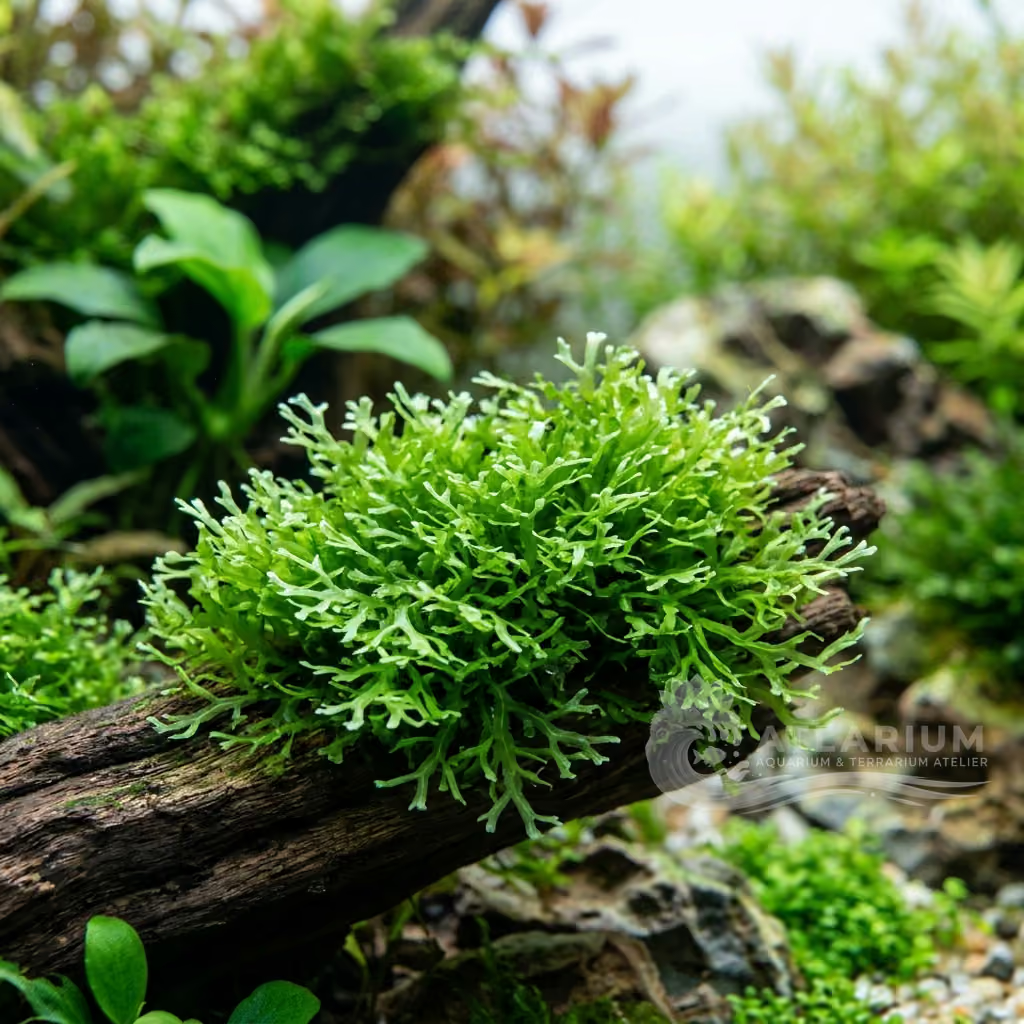
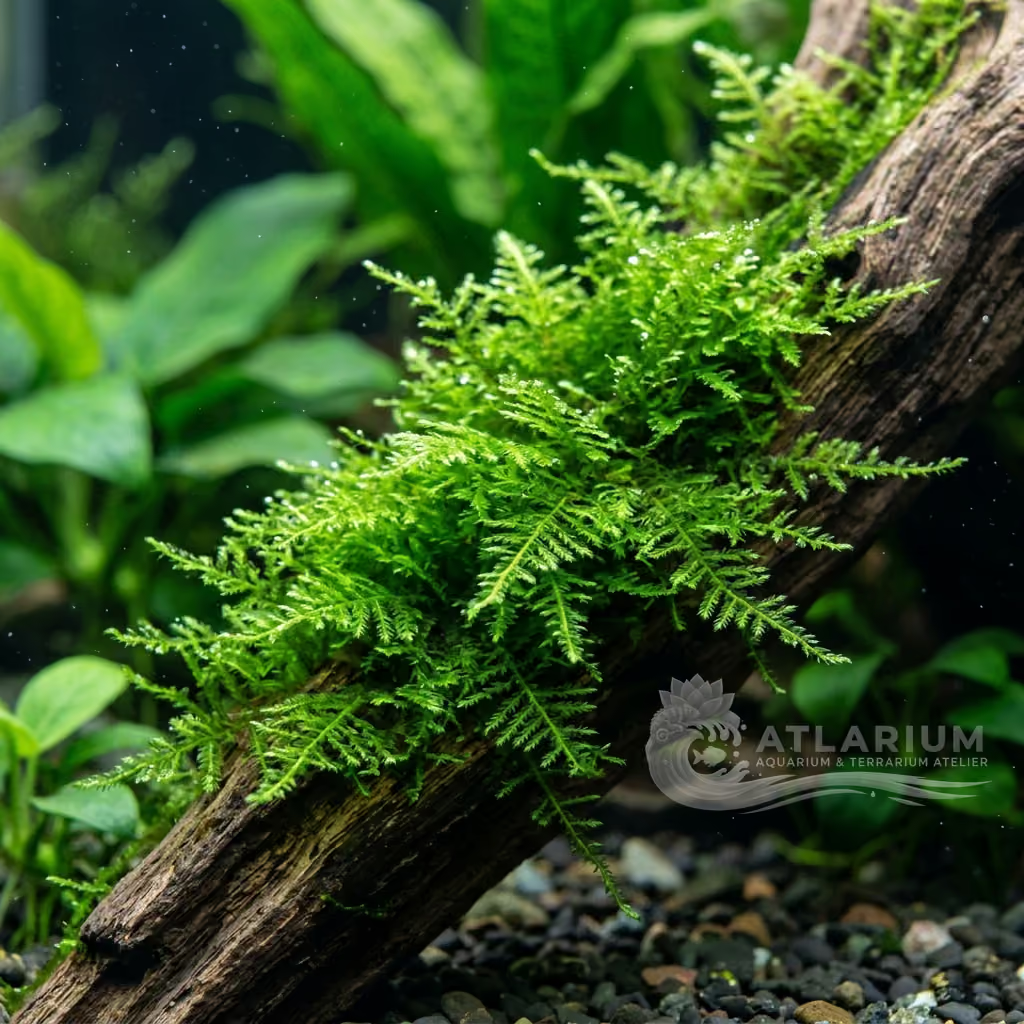
Riccardia graeffei, commonly known as "Mini Pellia" or "Coral Moss," is a versatile and attractive liverwort well-suited for midground placement in aquariums. Its slow growth rate and unique, delicate structure make it excellent for creating intricate carpet effects or attaching to hardscape, adding a lush, natural texture to any aquascape.
Water Temperature
15 - 28 °C
pH Value
5 - 7.5
Water type
Freshwater
Light
Medium - High
CO2
High
KH
0 - 14 dKH

Species description
Geographical Origin and Habitat:
Taxonomy & Genetics:
Physical Structure:
Color & Texture: The color of Riccardia graeffei typically ranges from a bright, vibrant light green to a deep, intense dark green, depending on light conditions and nutrient availability, particularly iron. Its texture is remarkably fine and velvety, bestowing a lush appearance and an organic touch to the aquascape. The thalli are slightly translucent, which adds depth and an almost ethereal effect under aquarium lighting, distinguishing it from more opaque mosses.

Care, breeding and tankmates
Lighting & CO2: Riccardia graeffei requires medium intensity lighting for optimal growth and to maintain its vibrant green coloration and compact form. Excessive lighting can promote algae growth on its delicate thalli, while insufficient light may further slow its growth and lead to sparse, faded development. Although not strictly necessary, CO2 supplementation is highly beneficial, encouraging more vigorous and denser growth, especially in aquariums with brighter lighting, and helping to prevent calcium carbonate deposition on the thalli in hard
Water Chemistry:
Nutrition & Substrate: Being a bryophyte and lacking a traditional root system, Riccardia graeffei absorbs all its nutrients directly from the water column, making comprehensive liquid fertilization essential for its health. It has no specific substrate requirements beyond anchorage, preferring hard surfaces like driftwood, lava rocks, or pebbles. Providing a balanced supply of macro and micronutrients is crucial to prevent deficiencies, which might manifest as yellowing or deterioration of the thallus.
Water Chemistry: Riccardia graeffei thrives within a temperature range of 20 to 28 °C, with a preference for cooler values that promote compactness and intense green coloration. It tolerates a KH (carbonate hardness) from 0 to 14 dKH and a slightly acidic to neutral pH, between 5.0 and 7.5. Maintaining stable parameters is crucial, as sudden shifts in temperature or pH can cause stress and deterioration of the moss; therefore, regular and controlled water changes are essential for its well-being.
Space Management & Placement: Riccardia graeffei is an excellent choice for foreground and midground placement, where it can be attached to driftwood or rocks to create natural, detailed effects. Its slow growth and tendency to form compact cushions make it ideal for adding texture and depth to the aquatic landscape. It can be used to "moss" delicate branches, create three-dimensional carpets, or fill crevices, offering shelter for small invertebrates and fry, and contributing to the ecosystem's balance.
Pruning: Pruning Riccardia graeffei is necessary to maintain its desired shape, prevent excessive growth that might smother underlying sections, and encourage greater density. Using fine-tipped scissors, longer or unruly sections can be precisely trimmed, removing any decaying parts. After pruning, it is advisable to remove floating fragments to prevent them from settling in undesirable areas or clogging the filter.
Risks & Diseases: Riccardia graeffei is generally robust but can be susceptible to certain issues, primarily algal infestation, particularly from filamentous or black beard algae, which can smother its delicate thalli due to its slow growth. Unstable water conditions, excessive lighting, or nutrient deficiencies can weaken the plant, making it more vulnerable. Avoid using harsh chemicals or algicides, which can irreparably damage the moss and cause it to "melt."

Geographic origin and distribution
This species originates from: Asia and Oceania.
Origin
South and Southeast AsiaAustralia, New Guinea, and Oceania

Plant profile
- Placement
- Midground
- It should be firmly attached to hardscape elements such as porous rocks or driftwood branches. It is ideal for the midground or foreground, where its intricate details can be closely observed. It must not be buried in the substrate, as this will lead to immediate rot.
- Botanical form
- epiphyte or epilith
- This species forms dense, prostrate mats with a slightly more robust and broader thallus compared to Mini Pellia. The structure is deeply lobed and somewhat rigid, giving it a miniature, fern-like or coral-like appearance. Its rich, dark green coloration is highly appealing in aquascapes.
- Growth
- Slow
- Its growth is characteristically slow and steady, taking several weeks to establish and spread. Under optimal conditions with CO2 supplementation, it forms thick, creeping mats. Patience is required, as it cannot be rushed with excessively high lighting or heavy fertilization.
- Substrate
- None
- Riccardia graeffei is a slow-growing epiphytic liverwort that does not rely on a traditional substrate for survival. Lacking a true root system, it anchors itself to hardscape elements such as wood and stones using tiny hair-like structures called rhizoids. It draws all its essential nutrients and minerals straight from the water column across its green thallus. It should never be buried in soil or sand, but rather attached to decorations where it can securely latch on and slowly creep over the surfaces.
- Column fertilization
- Recommended
- Column fertilization is the only effective way to feed this plant. A regular, light dosing of trace elements and potassium will keep it thriving. Be cautious with macronutrient dosing to avoid giving algae an advantage over this slow grower.
- Root fertilization
- None
- Root fertilization is not applicable, as it lacks a root system and is grown exclusively as an epiphyte. The plant derives no benefit from nutrient-rich substrates. Ensure the water column has what the plant needs.
- Trimming
- Occasional
- Careful trimming is necessary once the mat becomes too thick, which can cause the bottom layers to detach and float away. Thinning out the patches with fine aquascaping scissors promotes healthy, attached growth. Removed trimmings can easily be repurposed for new aquascaping projects.
- Propagation
- Cuttings
- Propagation is simply a matter of dividing the existing thallus mass. Small fragments can be glued or tied onto new hardscape surfaces. Even tiny pieces have the potential to grow into full, healthy mats over time.
- Sensitivity
- Moderate
- It is susceptible to suffocation by detritus or competitive algae if water flow is inadequate. It thrives best in slightly cooler water and may suffer if temperatures consistently exceed 26°C (79°F). Avoid using chemical algaecides, such as liquid carbon overdoses, which can melt the delicate tissues.
- Layout role
- Epiphyte, Nano
- It is an excellent choice for detailing hardscape, creating a very natural, weathered look on rocks and wood. Its slightly larger structure compared to R. chamedryfolia provides a distinct textural variation. It is frequently used in nano tanks and intricate nature aquarium layouts.

Related species
Recommendations grouped by close relatives, companion choices, and similar care.