River Buttercup
Ranunculus inundatus
Ranunculus inundatus is an Australian aquatic plant with unique umbrella-like leaves. It demands moderate-high light and CO2 to spread into a dense, low carpet.
Water Temperature
18 - 26 °C
pH Value
5.5 - 7.5
Water type
Freshwater
Light
High
CO2
High
Expected height
8 cm
Expected width
10 cm
GH
4 - 12 dGH
KH
3 - 8 dKH

Species description
Geographical Origin and Habitat: This distinctive aquatic plant is native to eastern Australia, primarily found in New South Wales, Queensland, and Victoria. It grows naturally along the muddy banks of slow-moving rivers, ponds, wetlands, and seasonally flooded areas, shifting easily between submerged and emersed growth forms.
Taxonomy & Genetics: A member of the family Ranunculaceae and the genus Ranunculus. Ranunculus inundatus is genetically adapted to environments with highly fluctuating water levels. Its genetic traits dictate a high degree of leaf polymorphism, producing highly dissected leaves when fully submerged.
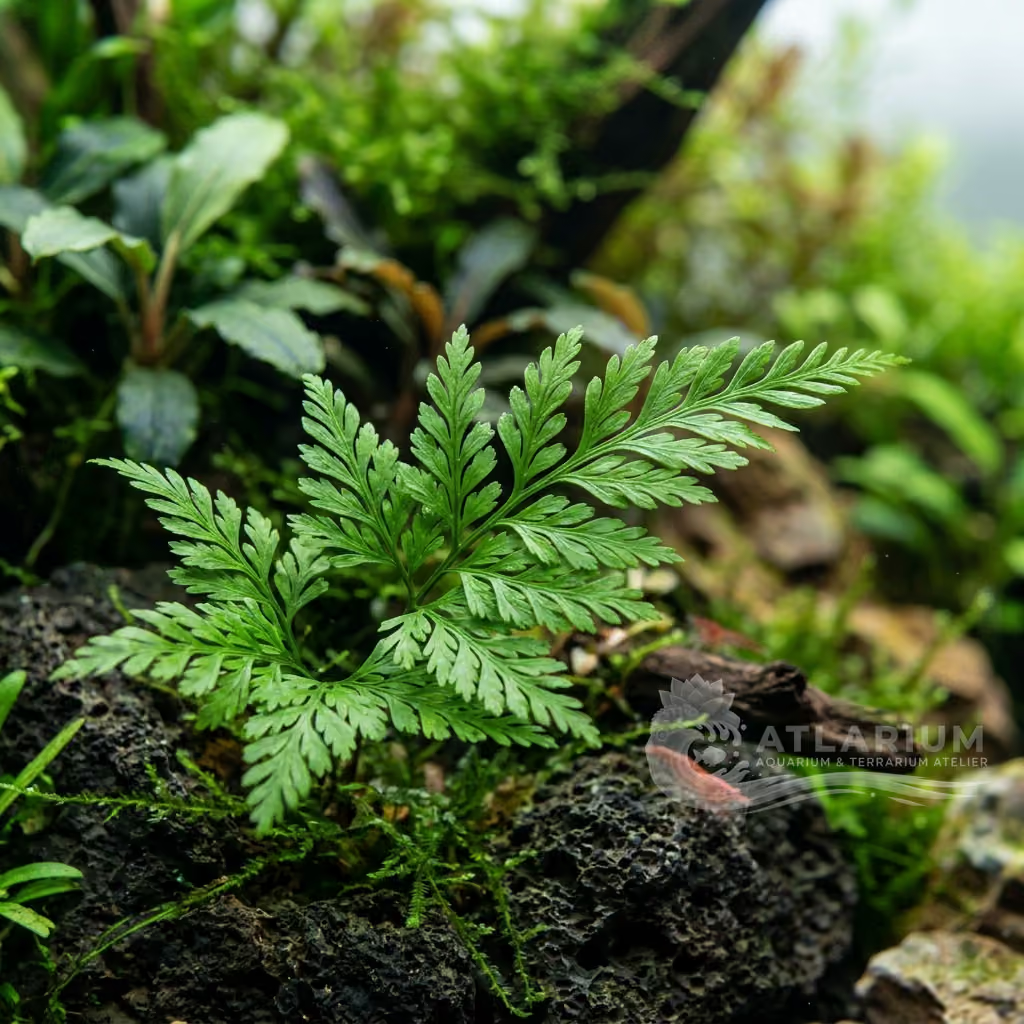
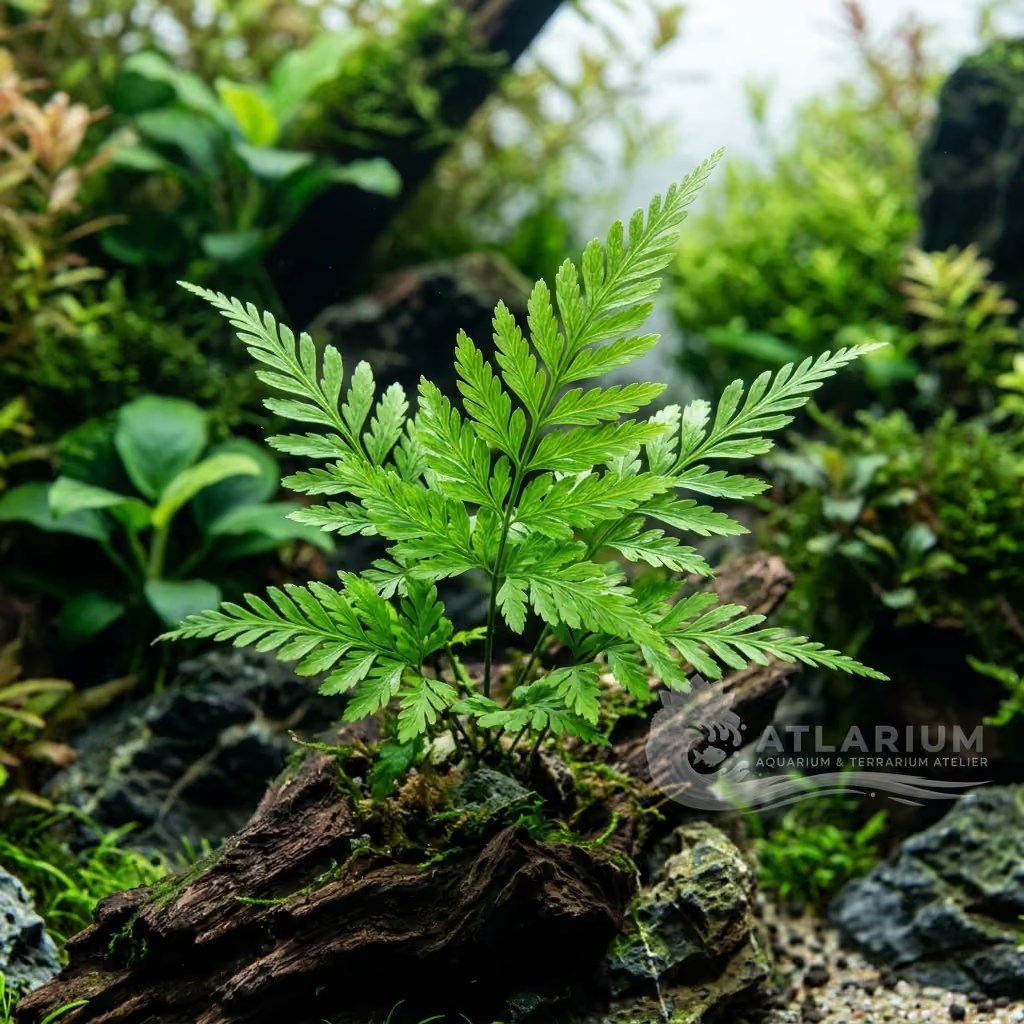
Physical Structure: The plant grows via a creeping horizontal rhizome (stolon) that anchors into the substrate, sending up vertical petioles topped with unique leaves. The submerged leaves are palmately divided into narrow, radiating lobes, creating a distinct umbrella or star-like appearance. It spreads laterally to form carpets.
Color & Texture: It displays a vibrant, light green coloration that remains highly consistent. The texture of the foliage is delicate and finely divided, giving it a soft, bushy appearance. Despite its delicate look, the petioles are flexible enough to withstand moderate water movement without breaking.

Care, breeding and tankmates
Lighting & CO2: Demands moderate to high lighting. Under low light conditions, the plant will stretch vertically, losing its compact carpet growth habit. Reliable carbon dioxide (CO2) injection is highly recommended to promote robust, healthy growth and to encourage the formation of dense, star-patterned foliage.
Nutrition & Substrate: Thrives in a nutrient-rich substrate. A fertile soil or regular supplementation with root fertilizer tabs is essential, as it draws a significant amount of nutrients through its root system. A comprehensive liquid fertilizer dosing program with adequate iron prevents leaf chlorosis.
Water Chemistry: Prefers temperatures between 18°C and 26°C (64-79°F), a pH range of 6.0 to 7.5, and soft to moderately hard water (GH 4-12, KH 3-8). Clean water with minimal suspended organic debris is vital, as particles can settle on the finely divided leaves and restrict light absorption.
Space Management & Placement: Best suited for the foreground or midground of the aquascape. When planting, individual runners should be placed slightly apart to allow light penetration to the roots, which prompts the stolons to creep horizontally along the substrate.
Pruning: Trim regularly to control its spread and prevent the carpet from becoming too thick, which can cause the lower sections to die off from lack of light. Cut the horizontal runners with sharp aquascaping scissors. Cut sections with roots can be replanted in other areas.
Risks & Diseases: Highly susceptible to hair algae infestations, which can choke the fine, divided leaves if water nutrients are imbalanced. Leaf melting or yellowing can occur due to iron deficiencies or sudden, drastic changes in water chemistry and lighting levels.

Geographic origin and distribution
This distinctive aquatic plant is native to eastern Australia, primarily found in New South Wales, Queensland, and Victoria. It grows naturally along the muddy banks of slow-moving rivers, ponds, wetlands, and seasonally flooded areas, shifting easily between submerged and emersed growth forms.
Origin
Australia, New Guinea, and Oceania

Plant profile
- Placement
- Foreground
- This species is ideally utilized as a striking foreground or midground carpeting plant. Plant small portions in a grid-like pattern to encourage it to fill in the empty spaces rapidly. Ensure it is completely unshaded by taller plants, as it requires direct, intense light. Once established, it creates a lush, highly textured mat across the aquarium floor.
- Botanical form
- runner
- Botanically, Ranunculus inundatus is recognized by its distinctive palmate, deeply lobed leaves like tiny umbrellas. It grows as a creeping rhizome that sends up individual leaves or small rosettes at regular intervals. Its striking fresh green color provides a refreshing carpet effect that contrasts beautifully with darker hardscape. The overall texture is incredibly unique and highly sought after by aquascapers.
- Growth
- Medium
- Under high lighting and abundant CO2, the growth rate is impressively fast. It will aggressively send out runners in all directions, quickly forming a dense carpet. In low-tech conditions, the growth is considerably slower, and the plant may grow taller rather than spreading outward. Regular thinning is required to prevent the mat from becoming too thick and uprooting itself.
- Substrate
- High
- A fine-grained, nutrient-rich substrate is absolutely essential for the success of Ranunculus inundatus. Aqua soils provide the perfect texture for its delicate roots and runners to penetrate and spread. Inert gravel or large pebbles will severely hinder its ability to carpet effectively. A mature substrate heavily enriched with organics yields the best results.
- Column fertilization
- Recommended
- While heavily dependent on the substrate, column fertilization is still necessary to provide comprehensive nutrition. Dosing a high-quality liquid fertilizer ensures the leaves remain pristine and free of algae. Potassium and trace elements are particularly important to dose into the water. A well-fertilized column supports the rapid development of new leaves.
- Root fertilization
- Recommended
- Root fertilization is the absolute key to achieving a thick, healthy carpet of Ranunculus inundatus. The plant absorbs the vast majority of its macronutrients through its extensive root system. If not using a commercial aqua soil, heavy application of root tabs is mandatory. Replenishing substrate nutrients periodically ensures the carpet remains vibrant long-term.
- Trimming
- Regular
- Prune by simply cutting the horizontal runners to control its spread. Overcrowded areas can be selectively thinned out to maintain the beautiful individual leaf shapes.
- Propagation
- Runners
- Propagation happens naturally and aggressively through the production of lateral runners. The main plant will continuously shoot out stems that root into the substrate and form new plantlets. To propagate manually, simply cut the runner between two established nodes and replant the new section. This makes it extremely easy to cover large areas of the aquarium.
- Sensitivity
- Moderate
- Prone to spot algae if water flow is poor or lighting is imbalanced. The delicate palmate leaves can accumulate detritus easily, requiring gentle brushing or good flow.
- Layout role
- Foreground, Midground
- Provides a highly unique, star-like leaf texture that contrasts brilliantly with traditional fine-leaved carpeting plants like Eleocharis or Hemianthus.

Related species
Recommendations grouped by close relatives, companion choices, and similar care.