Marlier's Julie
Julidochromis marlieri
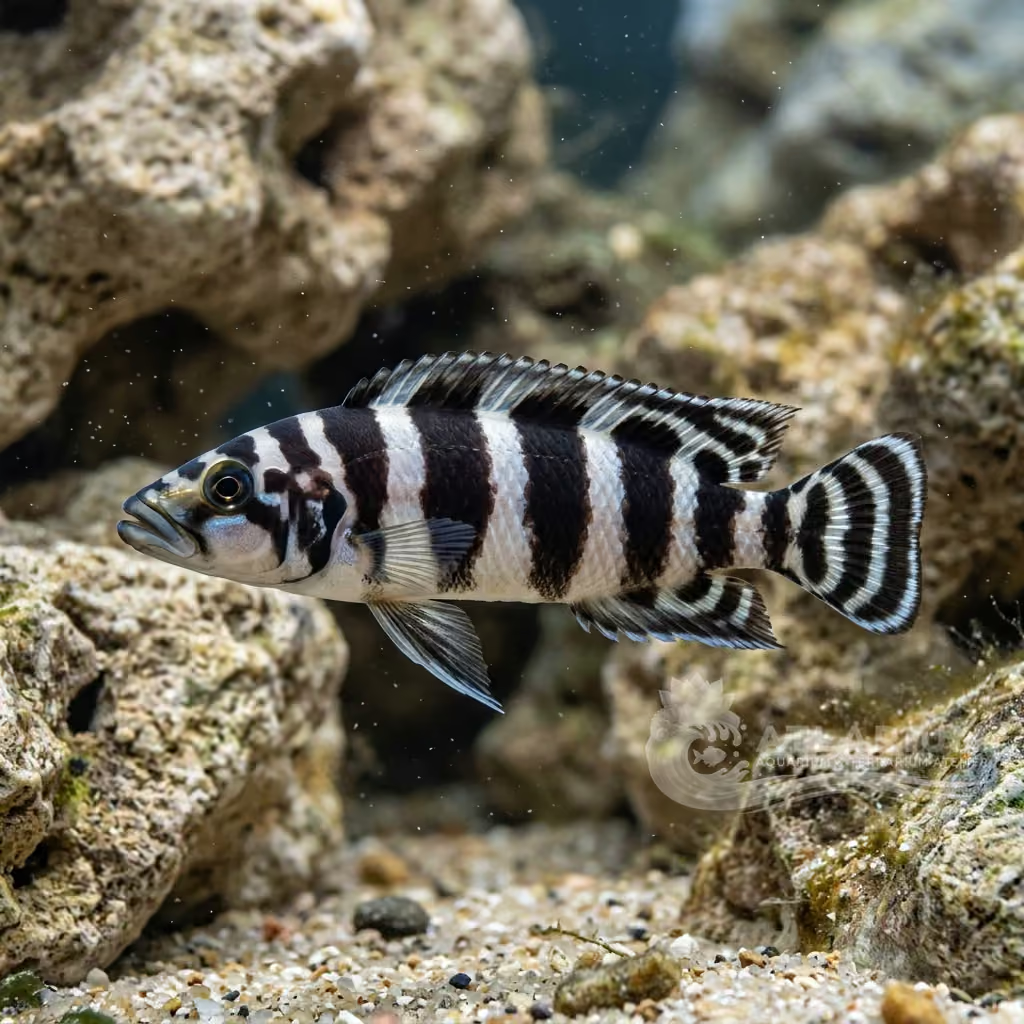
The 'Checkerboard Submarine' of the African Rift. A wildly unique, cigar-shaped cichlid (13 cm / 5 inches) that acts like a gecko, swimming belly-flat against rocks, and often hovering completely upside down beneath cave ceilings. They form fiercely loyal monogamous pairs that will aggressively slaughter any other of their kind in the tank.
Water Temperature
23 - 27 °C
pH Value
8 - 9
Water type
Freshwater
Tank level
Bottom
Adult size
13 cm
Minimum tank volume
>= 180 L
Minimum group
>= 1
GH
10 - 25 dGH
KH
5 - 12 dKH
TDS
200 - 495 ppm
Conductivity
313 - 773 uS/cm

Species description
Geographical Origin and Habitat: Broadly distributed among the rocky rubble zones and steep submerged cliffs of the northern, western, and southern shores of Lake Tanganyika. They never venture into the open, sandy abyss, spending their entire lives slithering through the darkest, tightest cracks between the boulders.
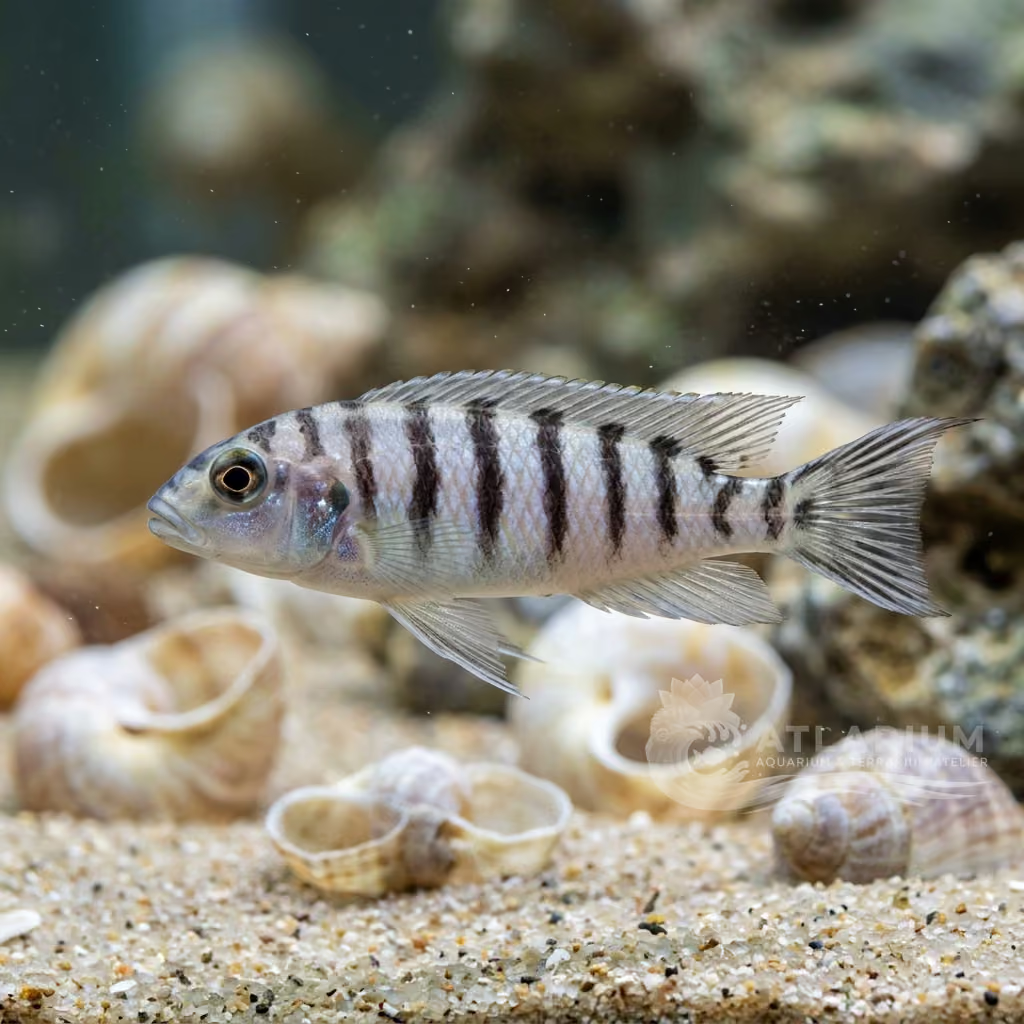
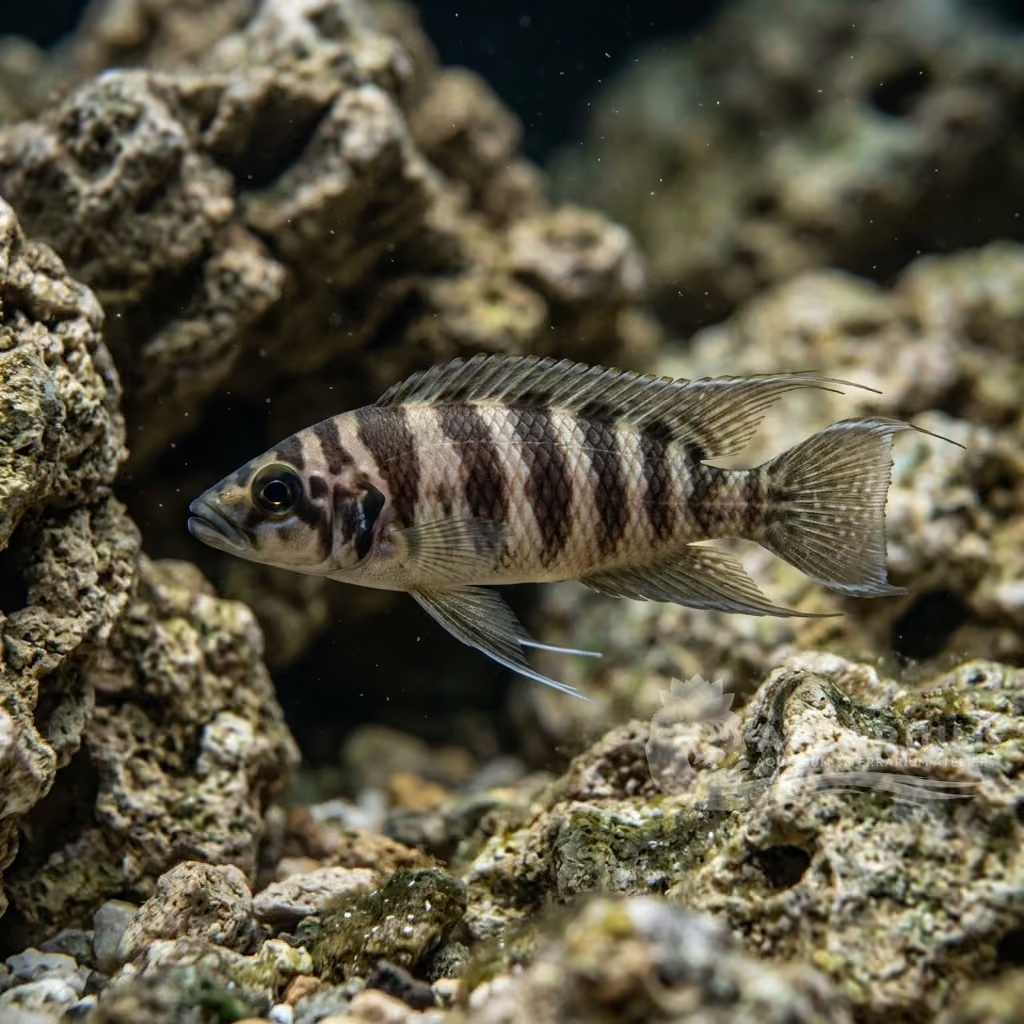
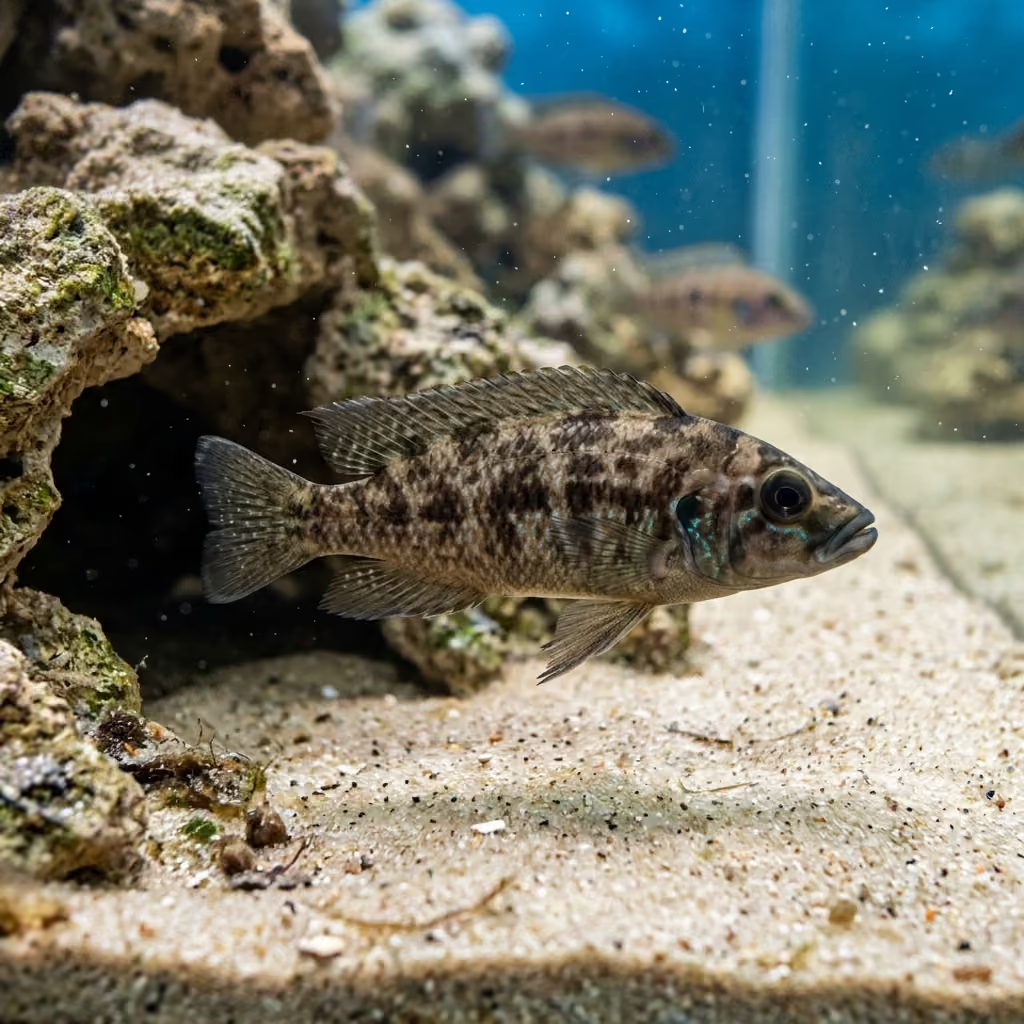
Taxonomy and Morphology: One of the thickest and largest members of the famous Julidochromis ('Julie') genus. Reaches about 13 cm (5+ inches). The body shape is spectacular: hyper-elongated, tubular, and cylindrical like a submarine or a fat cigar. The snout is sharply pointed. The dorsal fin runs the absolute entire length of the back like a low sail. This torpedo shape allows them to navigate insanely tight cracks and navigate backwards out of blind tunnels.
Social Behavior: Incredible, almost alien bio-mechanics. They have an instinctual behavior where their belly must always face the nearest solid object. If they swim near a vertical cliff, they swim perfectly sideways; if they enter a horizontal cave, they flip and swim perfectly upside down along the ceiling. They are incredibly secretive and stealthy. When a male and female pair bond, they become an unstoppable force, aggressively claiming a massive rock pile and viciously hunting down and executing any other Julies in the aquarium.
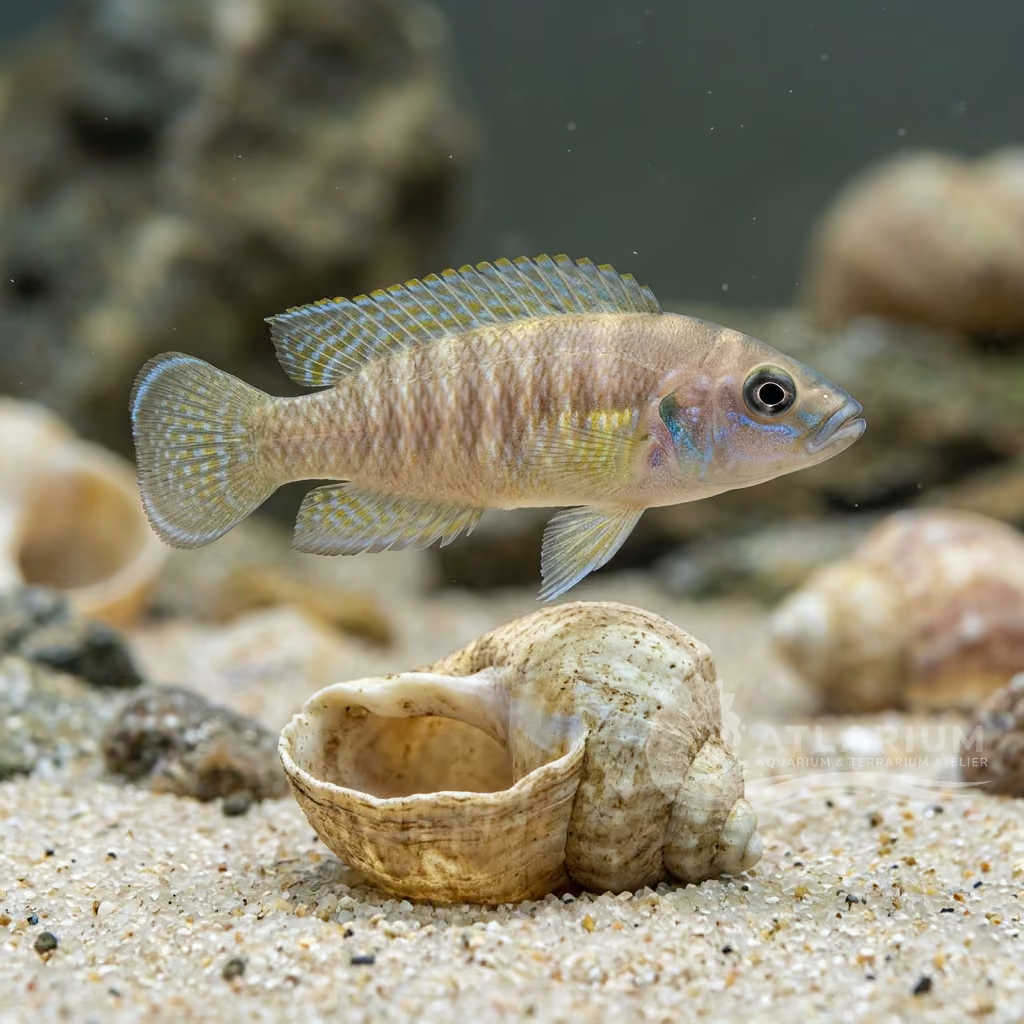
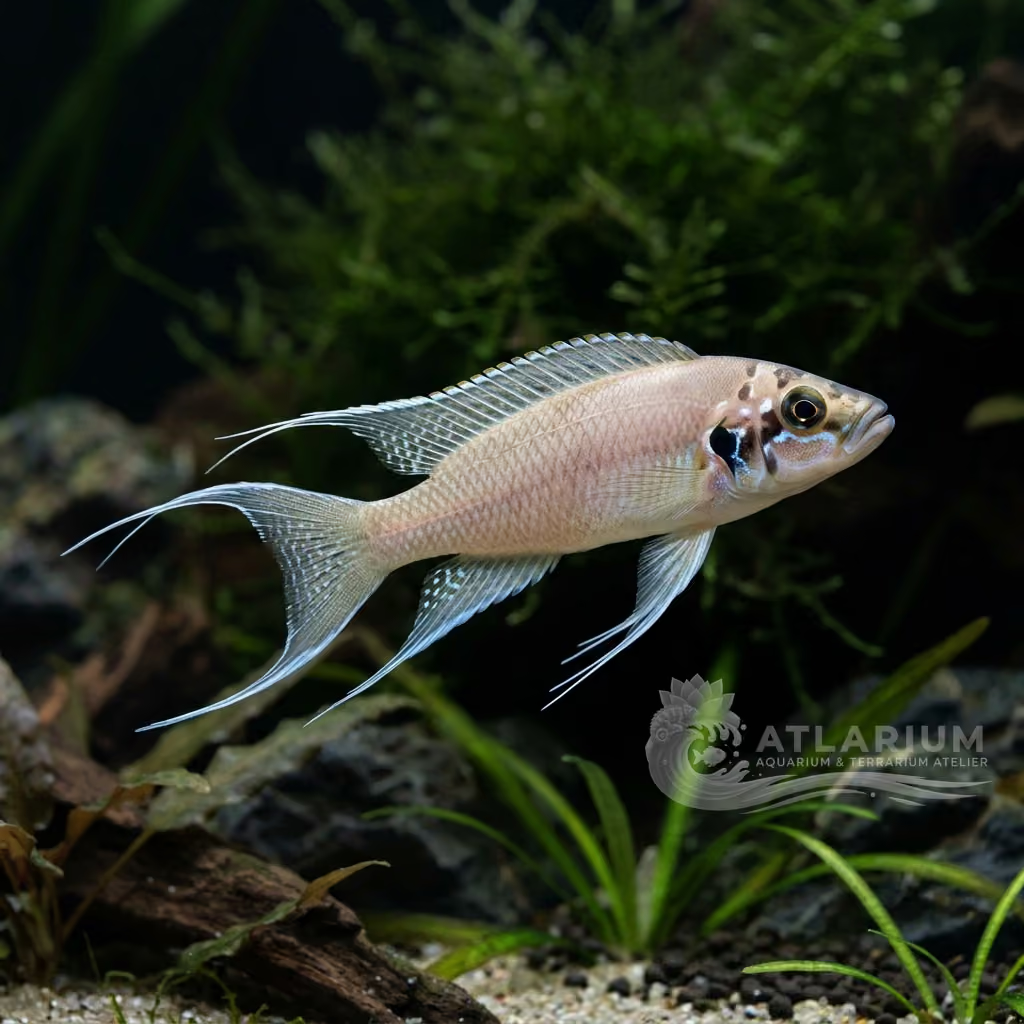
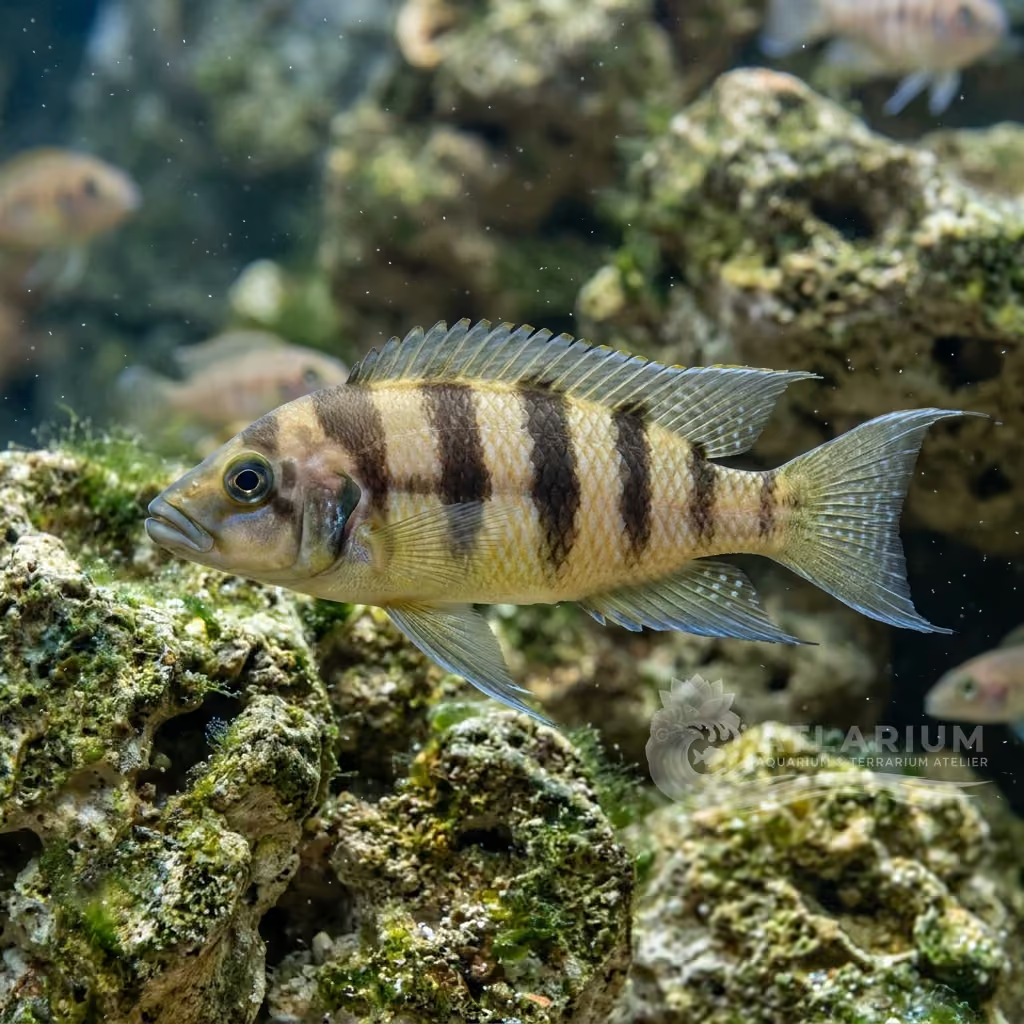
Coloration and Sexual Dimorphism: A stunning, high-contrast geometric masterpiece. The base body is pale cream or creamy-white, completely engulfed in an intricate, complex checkerboard grid of thick black horizontal stripes and crossing vertical bars. The edges of the dorsal, tail, and anal fins are stunningly trimmed in a glowing, iridescent neon blue line. Sexual dimorphism is virtually non-existent; males and females look exactly identical, though strangely for cichlids, the Alpha female is often slightly thicker and larger than the male.

Care, breeding and tankmates
Aquarium Setup: A 100 cm (40-inch / 40-55 gallon) tank is required for a single bonded pair. THE ROCKWORK IS EVERYTHING. You must construct an intricate, massive mountain of flat slate, limestone, or holy rock piled high, explicitly ensuring there are dozens of incredibly tight, dark, blind crevices and caves (1 inch wide gaps are their favorite). THE LETHAL WARNING: Once a pair bonds and claims a rock pile, NEVER REARRANGE THE ROCKS. If you move their rocks during cleaning, the 'bond' instantly shatters, they stop recognizing each other, and the stronger one will violently murder its partner overnight in a territorial panic.
Diet and Feeding: Micro-Predator / Omnivore. In the wild, they pick tiny crustaceans and sponges out of the rock cracks. Feed high-quality sinking cichlid pellets or finely crushed flakes. They greedily demand frozen and live foods: heavily supplement with frozen Mysis shrimp, brine shrimp, and bloodworms. They will cautiously dart out of the rocks, grab a mouthful of food, and instantly reverse backwards into their cave to eat it safely.
Water Quality: Tanganyika chemistry. Rock-hard, highly alkaline water. pH 8.0-9.0. High GH/KH buffer. Temp 24-27°C (75-80°F). They are highly sensitive to sudden fluctuations in temperature and massive chemical shifts. Perform small, frequent water changes rather than massive 80% drains to avoid shocking the pair into breaking their bond.
Compatibility and Cohabitation: THE 'PAIR AND CULL' RULE. Do not buy two random Julies. Buy a group of 6 juveniles. Let them grow up together until two pair off and claim a rock cave (you'll notice them attacking all the others). You MUST immediately net out and return the other 4 'singles' to the store, or the bonded pair will murder them one by one. A bonded pair can peacefully co-exist in large tanks with totally different fish, like upper-water Cyprichromis, Shell-dwellers (Multies), or large Altolamprologus, as long as the other fish don't enter their rocks.
Aquarium Breeding: Extremely secretive Cave Spawners. They DO NOT hold eggs in their mouth. The pair will retreat into the deepest, darkest, most inaccessible 1-inch crack in the tank (usually on the ceiling, upside down) and glue 40 to 100 green sticky eggs to the rock. You will never see the eggs. Weeks later, you will simply notice tiny, 3mm long, fully formed checkerboard replicas slithering flat against the rocks. The parents are amazing: they allow multiple successive generations of fry to live together in the same cave simultaneously.
Risks and Diseases: 1. THE DIVORCE MURDER: The most common tragedy is the owner moving the rocks in the tank to clean, shattering the pair bond, resulting in the male or female murdering their lifelong partner. 2. Massacre of un-bonded juveniles if left in the tank after the Alpha pair forms. 3. Fatal hybridization: NEVER mix two different species of Julidochromis (like J. transcriptus and J. marlieri) in the same tank, or they will interbreed creating ugly 'mutt' fish.

Geographic origin and distribution
Broadly distributed among the rocky rubble zones and steep submerged cliffs of the northern, western, and southern shores of Lake Tanganyika. They never venture into the open, sandy abyss, spending their entire lives slithering through the darkest, tightest cracks between the boulders.
Origin
Africa and MadagascarEast Asia

Fish profile
- Temperament
- Semi-aggressive
- They are highly territorial and can be very aggressive when defending their rocky domain. They will chase away intruders that venture too close to their caves. However, they are generally indifferent to upper-level schooling fish.
- Diet
- Omnivore
- In the wild, they graze on small crustaceans and insect larvae among the rocks. In captivity, they require a protein-rich diet of sinking pellets, flakes, and frozen foods. Live foods such as daphnia and brine shrimp make excellent occasional treats.
- Life expectancy
- 5-8 years
- Adult size
- 13 cm
- Sex ratio
- Pair
- Forming a bonded, monogamous pair is the most successful way to keep them. Starting with a group of juveniles and letting a pair naturally select each other is recommended. Extra conspecifics must be removed once pairing occurs to avoid extreme aggression.
- Feeding frequency
- Twice daily
- Offer them small meals one or two times each day. They should consume all food quickly to prevent waste from degrading water quality. Be careful not to overfeed, as they can become prone to digestive issues.
- Bioload
- Low to Medium
- This is a medium-sized Tanganyikan cichlid that produces a moderate bioload. A highly efficient filtration system is necessary to keep water pristine. Consistent weekly water changes will help manage nitrate accumulation.
- Flow
- Stagnant
- They originate from rocky shorelines and appreciate a moderate water current. Good surface movement ensures adequate oxygen levels in the water. Avoid creating a whirlpool effect that could exhaust the fish.
- Jump risk
- Yes
- There is a moderate risk of jumping, especially during territorial skirmishes or if startled. A secure lid is a must for any cichlid aquarium. Ample rockwork provides security and reduces their instinct to jump.
- Reproduction
- Oviparous
- They are cave spawners, laying eggs on the ceiling or walls of rocky crevices. Both parents engage in dedicated brood care and aggressively defend their fry. Multiple generations of offspring may coexist in the parents' territory.
- Compatibility & tankmates
- With caution
- They can be fiercely territorial, particularly toward other Julidochromis species. They do well with other Tanganyikan cichlids that inhabit different areas of the aquarium. Ensure the tank is large enough to allow multiple territories to form.
- Tank level
- Bottom
- They are bottom-dwelling fish that rarely stray far from their rocky homes. They navigate through crevices and caves with remarkable agility. Providing vertical rock structures encourages them to use more of the mid-level water column.

Scientific Parameters & Models
FishBase
Window to the official scientific data of the species
FishBase v25.04Data synced on: 06/15/2026
- Trophic level
- 2.5 ± 0 se
- Resilience
- Medium (1.4 - 4.4 years)
- Phylogenetic uniqueness (PD50)
- 0.5156
- Bayesian Length-Weight
- a = 0.00389, b = 3.12
- VulnerabilityLow vulnerability (10 / 100)

Related species
Recommendations grouped by close relatives, companion choices, and similar care.