Encyclopaedia

PlantFreshwaterAdvanced
©AI Generated·Proprietary

Golden Nesaea

Ammannia pedicellata

Nesaea pedicellata is an East African marsh plant with iconic golden-red stems. It demands high to very high lighting to develop its vibrant pigmentation and prevent shedding.

Taxonomy
Class:Magnoliopsida
Order:Myrtales
Family:Lythraceae
Genus:Ammannia
Species:Ammannia pedicellata
Formerly known as:Nesaea pedicellata

Share

Check out Golden Nesaea on Atlarium

PracticeRecognition quizzesPhotos, names, origins, and puzzles to review Atlas species.Open quizzes
Water Temperature

21 - 28 °C

pH Value

5.5 - 7.5

Water type

Freshwater

Light

High

CO2

High

Expected height

35 cm

Expected width

15 cm

GH

4 - 12 dGH

KH

3 - 8 dKH

Species description

Geographical Origin and Habitat: Nesaea pedicellata is a marsh plant native to tropical East Africa, particularly distributed in Tanzania and Mozambique. In its natural environment, it grows along the margins of slow-flowing rivers, seasonal ponds, swamps, and waterlogged soils. It adapts to seasonal changes, growing emersed during dry seasons and completely submersed during the rainy season when water levels rise.
Taxonomy & Genetics: Belonging to the family Lythraceae and the genus Nesaea, this plant is phylogenetically close to the genus Ammannia. Recent taxonomic revisions frequently place many Nesaea species within Ammannia. It is a dicotyledonous plant characterized by erect stems and opposite decussate leaf arrangements.
Physical Structure: Under submersed conditions, it produces thick, fleshy, herbaceous stems that can reach heights of 30 to 50 centimeters. The leaves are sessile, lanceolate or narrowly elliptic in shape, and feature slightly undulating margins. Its growth pattern is vertically oriented and moderately fast under optimal light and nutrient levels, producing side shoots from leaf axils.
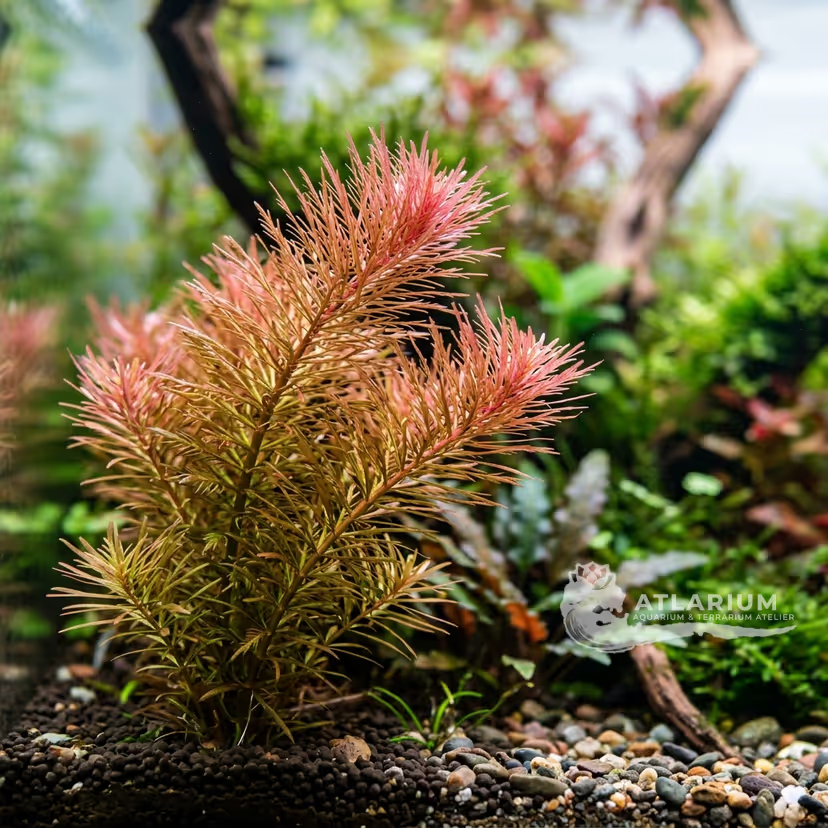
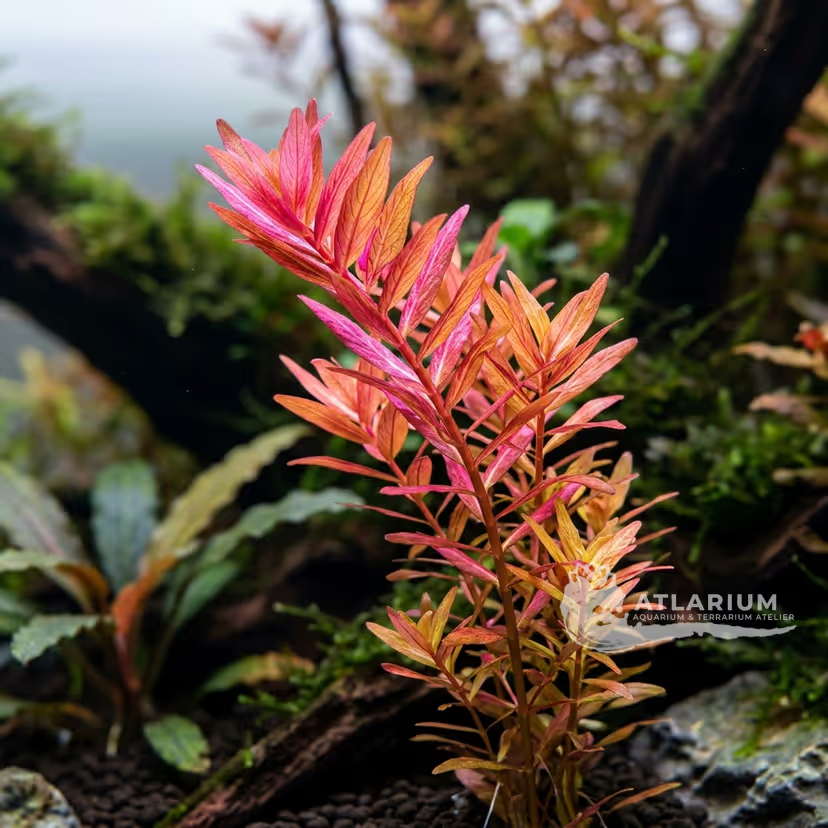
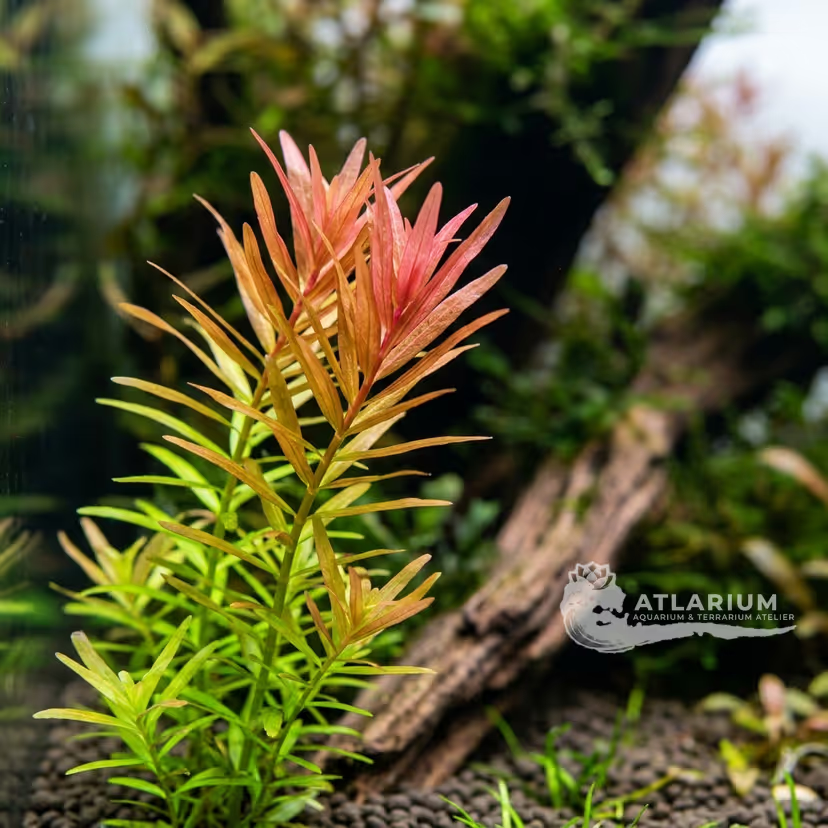
Color & Texture: The most prominent feature of this plant is its striking color contrast. The stem typically exhibits a bright red or orange coloration, while the leaves display shades ranging from golden yellow to yellowish-olive on the upper surface and pinkish-violet on the underside. The leaf texture is delicate, whereas the stem is relatively sturdy and rigid.

Care, breeding and tankmates

Lighting & CO2: It demands high to very high lighting intensities to develop and maintain its iconic golden and reddish pigmentation. Insufficient light will cause the lower leaves to turn green, decay, and drop off, leaving bare stems. Constant carbon dioxide (CO2) supplementation is mandatory (aiming for 20-30 mg/l) to support healthy growth rates and prevent stem melting.
Nutrition & Substrate: A nutrient-rich substrate, such as a commercial active soil or clay-based substrate with root tabs, is highly recommended. It is a heavy feeder of iron and micronutrients, which must be dosed regularly in the water column. Iron deficiency quickly shows as pale or bleached new leaves at the growing tips. Balanced macro-nutrients (NPK) are also essential.
Water Chemistry: It prefers soft to moderately hard water (GH 4-12 dGH, KH 3-8 dKH) with a slightly acidic to neutral pH between 6.0 and 7.2. Sudden shifts in water chemistry should be avoided. Maintain a stable temperature between 22°C and 28°C. Regular water changes are required to keep organic waste levels low.
Space Management & Placement: Due to its vertical growth and vibrant coloration, it is best placed in the midground or background of the aquascape. Individual stems must be planted at least 3-4 centimeters apart to ensure that light reaches the bottom leaves of each stem, preventing lower leaf drop due to shading.
Pruning: Pruning should be performed using sharp aquascaping scissors to cut the top portion of the stems. The severed tops can be replanted directly into the substrate to propagate the plant, while the remaining bottom portions will develop new lateral shoots within a few days, creating a bushier appearance.
Risks & Diseases: The main risk is stem rot or melting caused by inadequate lighting, low CO2, or nutrient starvation. The delicate leaves are highly susceptible to algae infestation (such as filamentous or black brush algae) if water parameters are unbalanced. It is also sensitive to being shaded out by faster-growing species.

Geographic Origin and Distribution

Nesaea pedicellata is a marsh plant native to tropical East Africa, particularly distributed in Tanzania and Mozambique. In its natural environment, it grows along the margins of slow-flowing rivers, seasonal ponds, swamps, and waterlogged soils. It adapts to seasonal changes, growing emersed during dry seasons and completely submersed during the rainy season when water levels rise.

Origin

Cosmopolitan or introducedNorth AmericaAfrica and Madagascar

Plant profile

Placement
Background
It is typically utilized as a striking focal point in the midground to background of an aquascape. Due to its thick stems and large leaves, it should be planted with enough space between individual stems to prevent shading the lower portions. Grouping a few stems together creates a visually powerful impact.
Botanical form
Stem
The plant features very thick, robust stems with long, lanceolate leaves arranged in opposite pairs. The most striking feature is the coloration; under intense light, the stems become a deep, glowing pink or magenta, while the leaves turn a vibrant golden-yellow to orange. The contrast between the bright leaves and the pink stem is spectacular.
Growth
Medium
Under optimal conditions with high light, rich nutrients, and CO2 injection, its growth rate is moderate to fast. It grows steadily upwards, eventually reaching the surface if left untrimmed. In low-tech setups, growth is significantly slower and the plant may struggle to survive long-term.
Substrate
Medium
Ammannia pedicellata performs best when planted in a moderately nutrient-rich substrate that provides a steady supply of essential minerals. Its root system actively seeks out nutrients beneath the surface, utilizing both the substrate and the water column for balanced nourishment. A planting depth of roughly 2 to 3 inches using a fine-grained aquasoil or supplemented gravel encourages stable anchoring and healthy stem formation. Providing root fertilizers can further enhance its growth rate and support the development of its distinctive, colorful leaves.
Column fertilization
Required
Heavy and consistent water column fertilization is mandatory. Liquid fertilizers that provide a comprehensive mix of NPK and trace elements must be dosed regularly to keep up with the plant's high metabolic rate. Ensuring an adequate concentration of iron is particularly crucial for maintaining its vibrant hues.
Root fertilization
Optional
This species develops a robust root system and benefits immensely from a nutrient-rich substrate. Using an aquasoil or heavily amending an inert substrate with high-quality root tabs will significantly boost its growth and overall health. Strong roots allow it to better withstand trimming and environmental fluctuations.
Trimming
None
Because the stems are thick and fleshy, trimming can be somewhat traumatic for the plant. It is often recommended to uproot the stem, cut off the older bottom section, and replant the healthy top. If you choose to top it, make a clean cut, but be aware that the remaining lower stem might take a while to produce new shoots or may simply rot.
Propagation
Cuttings
Propagation is achieved via stem cuttings. Take a healthy top shoot, at least 4-5 inches long, strip the bottom leaves, and plant it deep enough into the substrate to secure it. Cuttings need a stable environment to root properly, so avoid moving them once planted.
Sensitivity
Moderate
Ammannia pedicellata is notoriously temperamental and prone to melting if its needs are not met. It is extremely sensitive to poor water circulation, which can cause the lower leaves to rot. It also reacts very poorly to unstable CO2 levels and sudden changes in water chemistry or temperature.
Layout role
Background
It acts as a powerful, eye-catching color contrast piece, ideal for Dutch-style aquascapes. Its bold yellows, oranges, and pinks stand out brilliantly against dark green plants or dark hardscape materials. It is not a background filler, but rather a centerpiece designed to draw the viewer's attention.

Image gallery

Licensed images linked to the species or, when marked, to the closest representative taxon.

Related species

Recommendations grouped by close relatives, companion choices, and similar care.

Variants and close relatives

Same atlas type, nearby scientific identity, genus, or family.

Golden Nesaea

Golden Nesaea

Ammannia pedicellata

View details->
Ammannia sp. 'Bonsai'

Ammannia sp. 'Bonsai'

Ammannia sp. 'Bonsai'

View details->
Ammannia latifolia

Ammannia latifolia

Ammannia latifolia

View details->
Senegal Ammannia

Senegal Ammannia

Ammannia senegalensis

View details->
Ammannia mauritiana

Ammannia mauritiana

Ammannia mauritiana

View details->
Three-flower Nesaea

Three-flower Nesaea

Ammannia capitellata capitellata

View details->
Ammannia capitellata

Ammannia capitellata

Ammannia capitellata

View details->
Ammannia gracilis

Ammannia gracilis

Ammannia gracilis

View details->
Ammannia crassicaulis

Ammannia crassicaulis

Ammannia crassicaulis

View details->
Ammannia praetermissa

Ammannia praetermissa
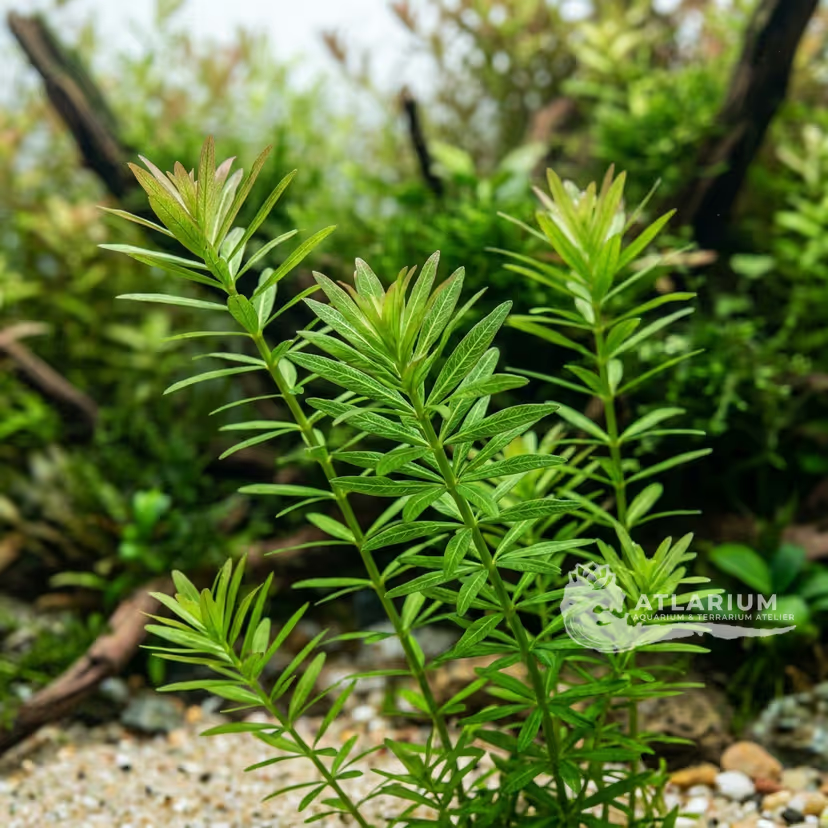
Ammannia praetermissa

View details->
Water Hedge

Water Hedge

Didiplis diandra

View details->
Indian Rotala

Indian Rotala

Rotala indica

View details->
Whorled Rotala

Whorled Rotala

Rotala wallichii

View details->
Nesaea crassicaulis

Nesaea crassicaulis

Nesaea crassicaulis

View details->
Nesaea sp. 'Red Leaved'

Nesaea sp. 'Red Leaved'

Nesaea sp. 'Red Leaved'

View details->
Nesaea praetermissa

Nesaea praetermissa

Nesaea praetermissa

View details->

Recommended companions

Compatible cards from coherent ecosystems with matching parameters.

Bamboo shrimp
Invertebrate

Bamboo shrimp

Atyopsis moluccensis

View details->
Blueberry Tetra
Fish

Blueberry Tetra

Hyphessobrycon wadai

View details->
Blackline Tetra
Fish

Blackline Tetra

Hyphessobrycon scholzei

View details->
Ninja Shrimp
Invertebrate

Ninja Shrimp

Caridina serratirostris

View details->
Cherry Barb
Fish

Cherry Barb

Puntius titteya

View details->
Striped babaulti shrimp
Invertebrate

Striped babaulti shrimp

Caridina babaulti "Stripes"

View details->
White Pearl / Snowball shrimp
Invertebrate

White Pearl / Snowball shrimp

Neocaridina cf. zhangjiajiensis "White Pearl"

View details->
White Pearl Shrimp
Invertebrate

White Pearl Shrimp

Neocaridina zhangjiajiensis var. White

View details->
Skunk cory
Fish

Skunk cory

Corydoras arcuatus

View details->
Longtail Tadpole Shrimp
Invertebrate

Longtail Tadpole Shrimp

Triops longicaudatus

View details->
Yoyo Loach
Fish

Yoyo Loach

Botia almorhae

View details->
Lanchester's Glass Shrimp
Invertebrate

Lanchester's Glass Shrimp

Macrobrachium lanchesteri

View details->
Green babaulti shrimp
Invertebrate

Green babaulti shrimp

Caridina cf. babaulti "Green"

View details->
Amano Shrimp
Invertebrate

Amano Shrimp

Caridina multidentata

View details->
Flag Acara (Smiling Cichlid)
Fish

Flag Acara (Smiling Cichlid)

Laetacara curviceps

View details->
Olive nerite snail
Invertebrate

Olive nerite snail

Vitta usnea

View details->

Similar care

Cards with similar requirements, difficulty, habitat, and husbandry profile.
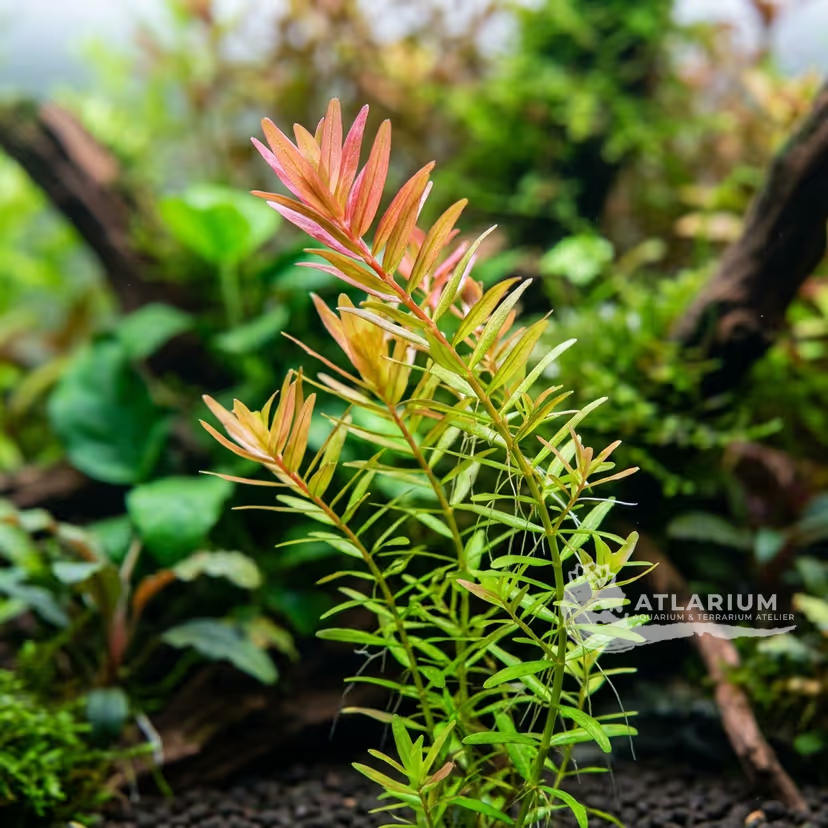
Rotala ramosior

Rotala ramosior

Rotala ramosior

View details->
Giant Red Rotala

Giant Red Rotala

Rotala macrandra

View details->
Dwarf Rotala

Dwarf Rotala

Rotala rotundifolia

View details->
Blyxa alternifolia

Blyxa alternifolia

Blyxa alternifolia

View details->
Bacopa sp. "Japan"

Bacopa sp. "Japan"

Bacopa sp. "Japan"

View details->
Rotala sp. 'Pearl'

Rotala sp. 'Pearl'
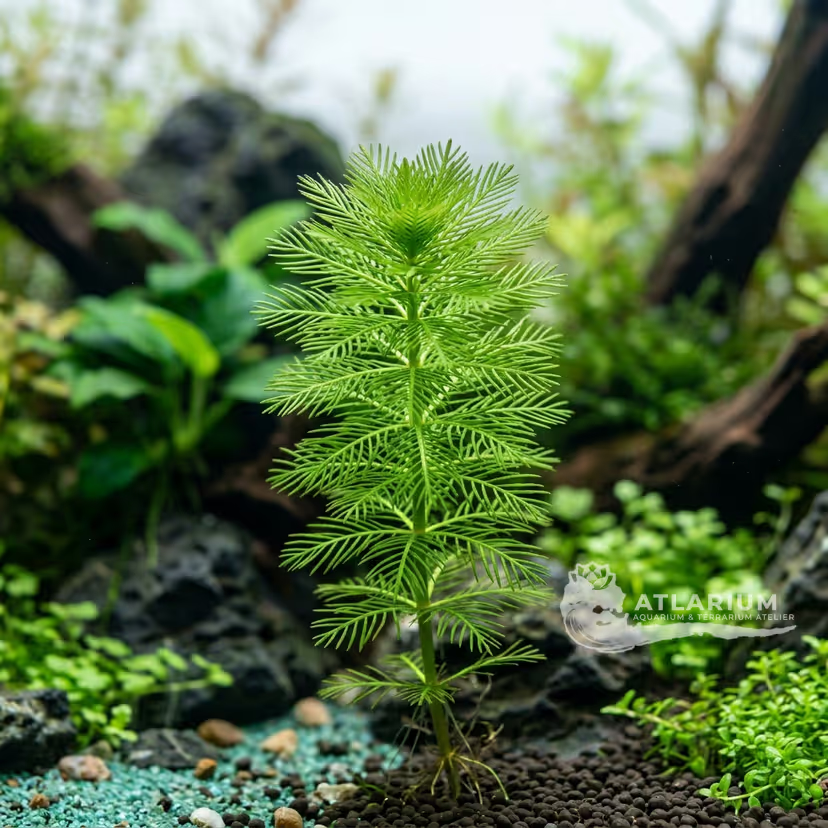
Rotala sp. 'Pearl'

View details->
Rotala verticillaris

Rotala verticillaris

Rotala verticillaris

View details->
Rotala pusilla

Rotala pusilla

Rotala pusilla

View details->
Rotala ramosior "Sunset"

Rotala ramosior "Sunset"

Rotala ramosior "Sunset"

View details->
Alternanthera reineckii "rosaefolia minor"

Alternanthera reineckii "rosaefolia minor"

Alternanthera reineckii "rosaefolia minor"

View details->
Cryptocoryne beckettii

Cryptocoryne beckettii

Cryptocoryne beckettii

View details->
Cryptocoryne beckettii "Petchii"

Cryptocoryne beckettii "Petchii"

Cryptocoryne beckettii "Petchii"

View details->
Forest Betta
Fish

Forest Betta

Betta pugnax

View details->
Rotala sp. "Araguaia"

Rotala sp. "Araguaia"
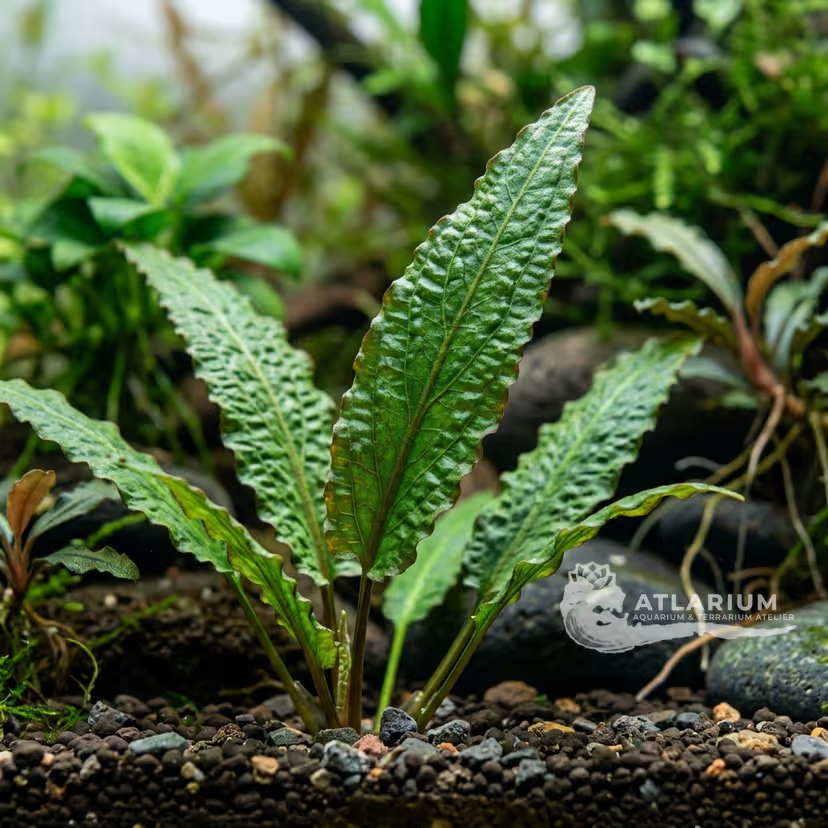
Rotala sp. "Araguaia"

View details->
Cryptocoryne balansae

Cryptocoryne balansae

Cryptocoryne balansae

View details->
Blyxa cf. vietii

Blyxa cf. vietii

Blyxa cf. vietii

View details->
Last updated: 06/30/2026
Golden Nesaea (Ammannia pedicellata) Care Guide & Tank Setup | Atlarium