Rockmover Wrasse (Dragon Wrasse)
Novaculichthys taeniourus
Known as the Underwater Bulldozer, this fascinating marine wrasse actively flips heavy rocks to hunt for prey. Requires a large, heavily secured rockwork aquarium layout.
Water Temperature
24 - 27 °C
pH Value
8.1 - 8.4
Water type
Marine
Tank level
Bottom and middle
Adult size
30 cm
Minimum tank volume
>= 300 L
Minimum group
>= 1
KH
7 - 15 dKH

Species description
Geographical Origin and Habitat: Indo-Pacific Ocean. Frequents coral rubble (rubble zone), detrital coastlines and shallow lagoons where constant currents mix rocks and coarse sand.
Taxonomy and Morphology: Dragon Wrasse / Rockmover Wrasse (Novaculichthys taeniourus). Formidable and robust wrasse. The name "Rockmover" fits it perfectly: it has a jaw conformation that allows it to literally move huge stones.
Social Behavior: The tireless excavator. Wanders the tank in constant search of hidden crustaceans: flips over stones (as heavy as he is), uproots corals and raises clouds of sand in search of food. At night it sinks under the sand (Diving).
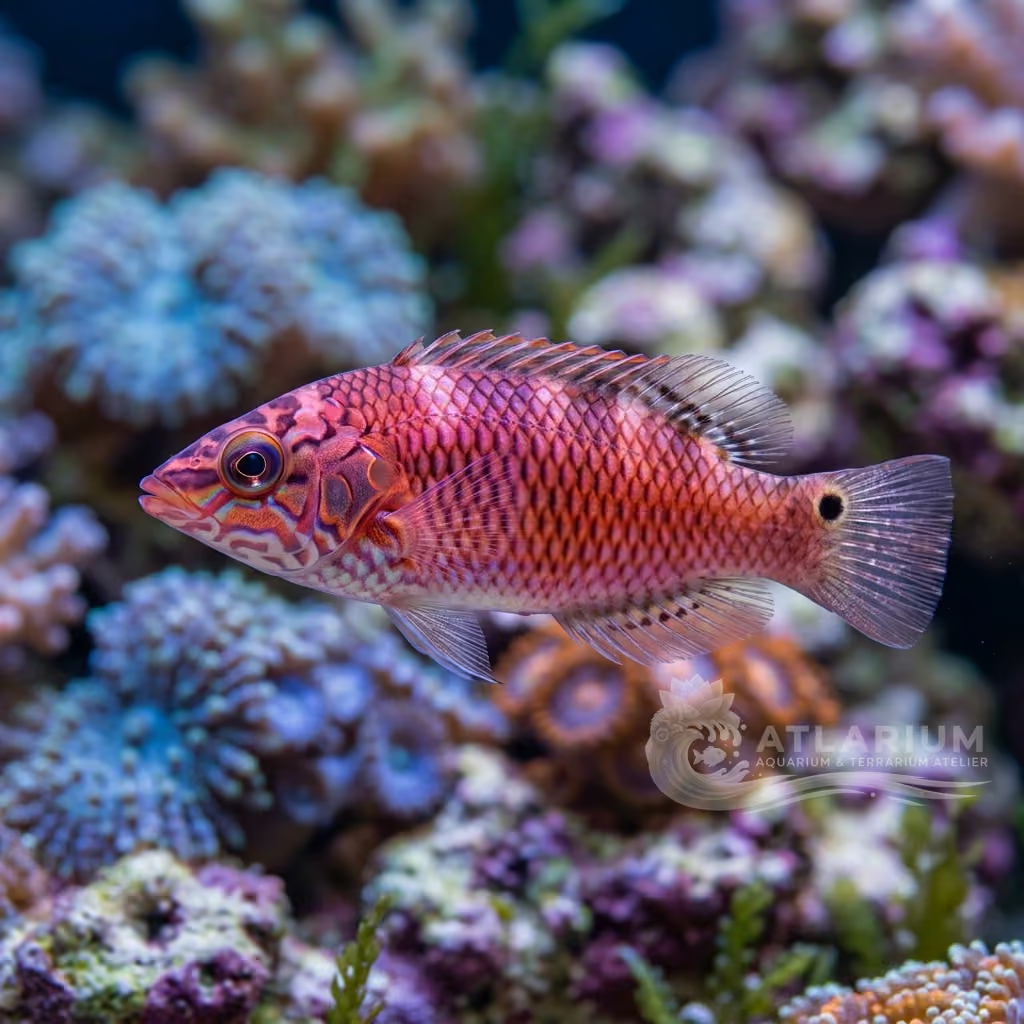
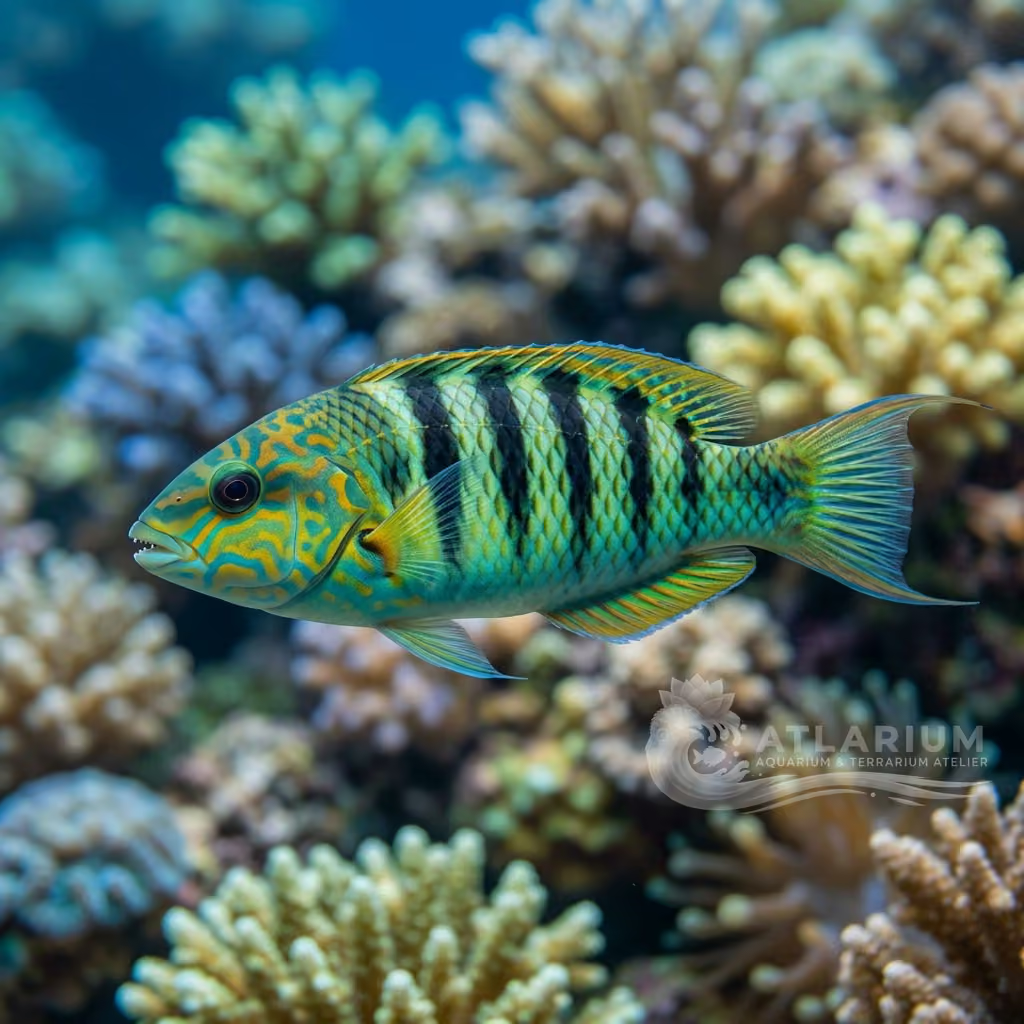
Coloration and Sexual Dimorphism: Radical change (from Dragon to Stone). Juveniles are stunning aliens (Dragon wrasse): brown with white spots and two immense flexuous horns on the head ("antennae"). As an adult (Rockmover), the horns disappear, the body becomes gray-green with each scale edged in light and the head flattens.

Care, breeding and tankmates
Aquarium Setup: Destructible aquarium (minimum 150 cm / 60 inches / 100G for adult). Mandatory: the rockwork MUST be glued and resting on the base glass. It will throw corals in the air. Mandatory 10 cm (4 inches) of thick sand mixed with rubble to let him unearth stones and sleep buried.
Diet and Feeding: Macro-benthic predator (Carnivore shredder). Destroys any shell. Eats crabs, shrimp, hermit crabs, mussels, bristle worms, snails and urchins. In the tank it must be fed with whole seafood in the shell (clams, shrimp) to file its powerful teeth.
Water Quality: Pollutes heavily due to its "dirty" diet based on pieces of fish and the continuous suspension of debris from the bottom it digs. Oversized Skimmer essential.
Compatibility and Cohabitation: NOT Reef Safe for Invertebrates. Will devour every single snail or cleaner crustacean bought at a high price. Rude but not murderous with large fish (Angels, Tangs); will avoid small fish (it is not a pure piscivore, prefers crustaceans).
Aquarium Breeding: Totally absent. Oceanic pelagic breeder. There are no reports in closed systems, also due to the impossibility of hosting multiple mature adults without them attacking each other for territory.
Risks and Diseases: Smashed Glass. The adult Rockmover has the bad habit of lifting pebbles and "slamming" them sideways. If it does this against the thin side glass, it can literally crack the tank. Insert only huge and heavy rocks (immovable) or clean sand, eliminating intermediate-sized stones.

Geographic origin and distribution
Indo-Pacific Ocean. Frequents coral rubble (rubble zone), detrital coastlines and shallow lagoons where constant currents mix rocks and coarse sand.
Origin
Tropical oceans and reefsEast Asia

Fish profile
- Temperament
- Semi-aggressive
- Semi-aggressive and highly destructive to the aquarium landscape. Known as the 'Rockmover Wrasse', they will constantly rearrange the substrate and small rocks. They are bold, active, and fascinating to watch, but require careful planning.
- Diet
- Omnivore
- A dedicated carnivore that actively hunts for benthic invertebrates. Feed a varied diet of meaty marine foods such as chopped clams, mussels, shrimp, and high-quality large marine pellets. They require hard-shelled foods to wear down their continuously growing teeth.
- Life expectancy
- 10-15 years
- Adult size
- 30 cm
- Sex ratio
- Solitary
- Generally best kept singly as they can be highly aggressive towards conspecifics. Housing multiple individuals requires an extremely large tank to avoid territorial battles to the death. Only mated pairs should ever be housed together.
- Feeding frequency
- Twice daily
- Should be fed two to three times a day to satisfy their active metabolism. They are voracious eaters that will quickly consume whatever meaty foods are offered. Ensure all tank mates get a chance to eat, as they can be very greedy.
- Bioload
- High
- Produces a moderate to high bioload due to their large adult size and messy eating habits. A high-capacity protein skimmer and robust mechanical filtration are absolute necessities. Regular water testing is crucial to maintain pristine marine conditions.
- Flow
- Moderate
- Novaculichthys taeniourus needs steady, moderate circulation distributed across the aquarium rather than a narrow, forceful jet. Destructible aquarium (minimum 150 cm / 60 inches / 100G for adult). Mandatory: the rockwork MUST be glued and resting on the base glass. This preserves useful water exchange while retaining calmer shelter for rest and feeding.
- Jump risk
- Yes
- An extreme jump risk; they are highly prone to leaping out of the water when startled. A tight-fitting lid or a custom mesh screen is absolutely mandatory. Never keep this species in an open-top aquarium.
- Reproduction
- Oviparous
- They are pelagic spawners that release their eggs and sperm into the water column. Breeding in the home aquarium is exceptionally rare and virtually undocumented. Raising the planktonic fry requires highly specialized commercial aquaculture setups.
- Compatibility & tankmates
- Not reef safe
- Must be kept in a FOWLR (Fish Only With Live Rock) system, as they will readily consume crabs, snails, and small shrimp. They are not reef-safe and will flip over corals in search of food. Best housed with similarly sized, aggressive or semi-aggressive marine fish.
- Tank level
- Middle/Bottom
- Spends most of its time near the bottom, actively overturning rocks and rubble to find hidden prey. They require a very deep sand bed (at least 3-4 inches) as they bury themselves completely to sleep or hide. Avoid using easily toppled rockwork.

Scientific Parameters & Models
FishBase
Window to the official scientific data of the species
FishBase v25.04Data synced on: 06/15/2026
- Trophic level
- 3.3 ± 0.4 se
- Resilience
- Medium (1.4 - 4.4 years)
- Phylogenetic uniqueness (PD50)
- 1
- Bayesian Length-Weight
- a = 0.01479, b = 3.04
- VulnerabilityLow vulnerability (20 / 100)

Related species
Recommendations grouped by close relatives, companion choices, and similar care.