Harlequin Tuskfish
Choerodon fasciatus
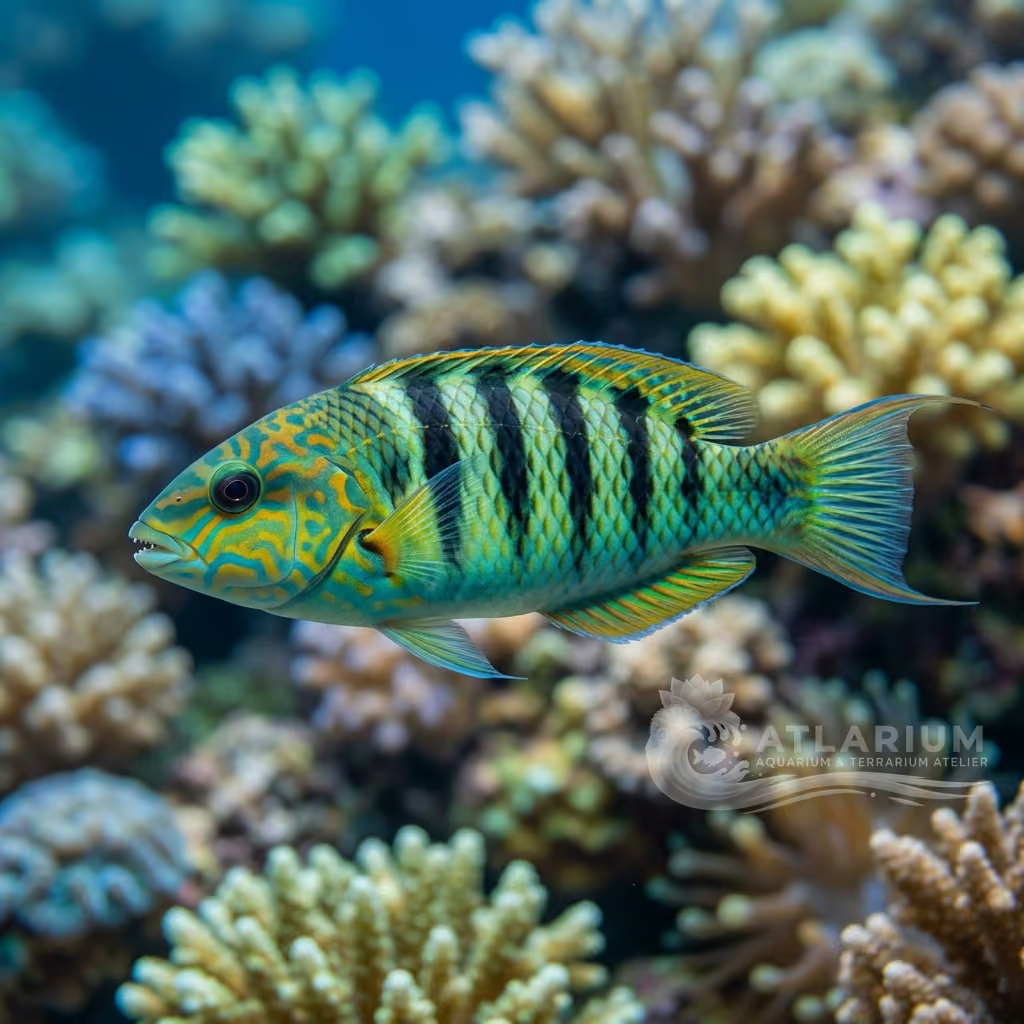
The Harlequin Tuskfish is a striking wrasse with bright orange stripes and blue teeth. Highly intelligent and semi-aggressive, it needs hard-shelled prey and a secure lid.
Water Temperature
24 - 27 °C
pH Value
8.1 - 8.4
Water type
Marine
Tank level
All levels
Adult size
30 cm
Minimum tank volume
>= 500 L
Minimum group
>= 1
KH
8 - 12 dKH

Species description
Geographical Origin and Habitat: Western Pacific Ocean. It has a disjunct distribution: found in the Great Barrier Reef of Australia, and from Taiwan to southern Japan. It inhabits seaward reef slopes and outer reef channels at depths ranging from 5 to 35 meters.
Taxonomy and Morphology: A member of the family Labridae, genus Choerodon. It reaches an adult length of up to 30 cm (12 inches). It is characterized by a robust, deep body and large, sharp, protruding blue-green teeth used to crush hard-shelled prey. The tail is truncate.
Social Behavior: Solitary and highly territorial towards conspecifics. Wrasse of high intelligence and curiosity, often observed rearranging small stones and shells in search of prey. Generally peaceful towards unrelated, non-similar sized tankmates.
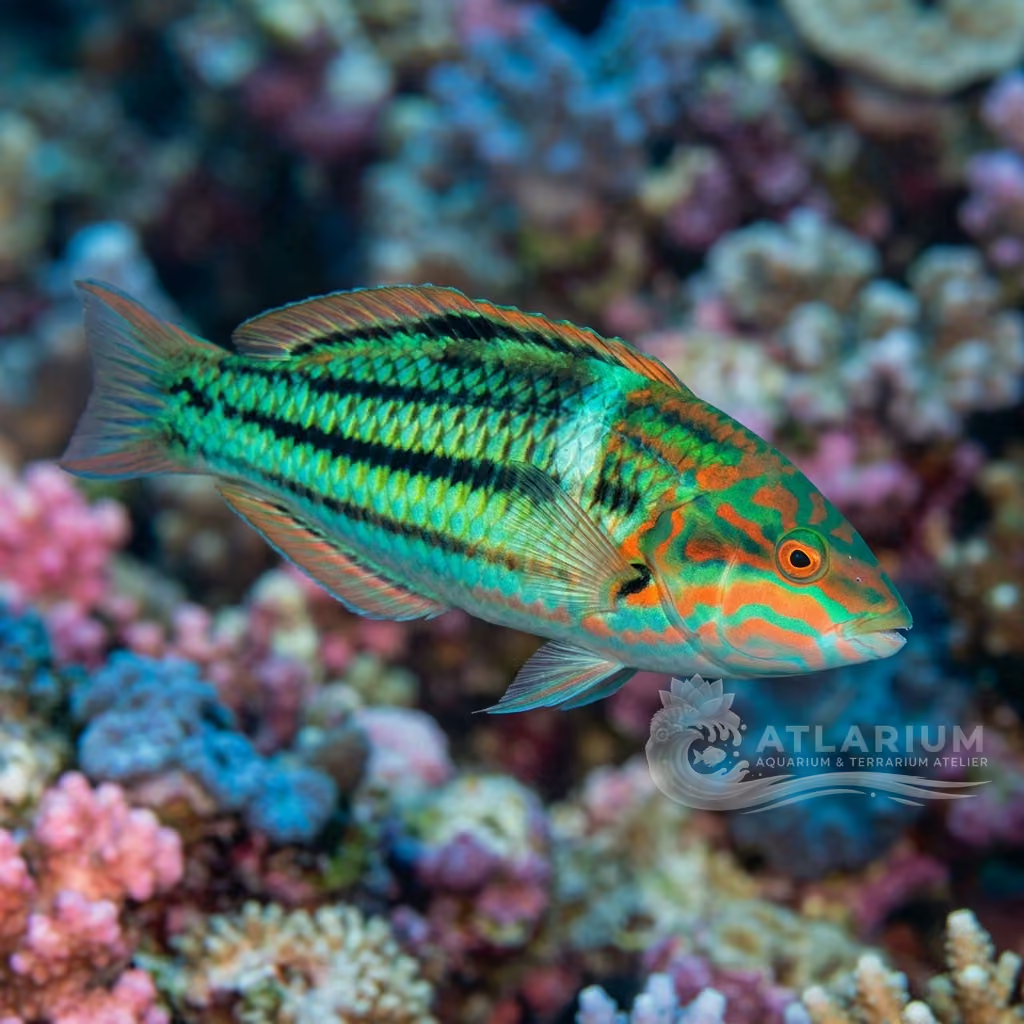
Coloration and Sexual Dimorphism: Displays striking alternating vertical bands of bright orange-red and blue-grey, outlined in electric neon blue. The teeth are vivid blue. Australian specimens are renowned for having more vibrant coloration. Genders look identical.

Care, breeding and tankmates
Aquarium Setup: Requires a large, established aquarium of at least 500 liters (approx. 130 gallons). Arrange a sturdy live rock formation with large caves. A heavy, tight-fitting lid is absolutely mandatory as this species is a powerful and frequent jumper when startled.
Diet and Feeding: Carnivorous. To prevent its blue teeth from overgrowing, it must be fed hard-shelled foods such as whole clams in shell, unshelled shrimp, krill, crabs, and mussels. High-quality large carnivore pellets are also accepted. Feed once or twice daily.
Water Quality: Maintain stable marine parameters: temperature 24-27°C (75-81°F), pH 8.1-8.4, and specific gravity 1.020-1.025. Strong biological filtration and a high-capacity protein skimmer are essential to handle the heavy organic bioload.
Compatibility and Cohabitation: Semi-aggressive. Not safe with ornamental shrimp, crabs, hermit crabs, or sea urchins, which will be quickly eaten. It is, however, completely safe with corals. Good tankmates include larger tangs, angels, and groupers.
Aquarium Breeding: Captive breeding is not documented in home aquariums due to their territorial nature and space requirements. In the wild, they are broadcast spawners, gathering in large aggregations to release pelagic eggs.
Risks and Diseases: Jump hazard is the most common cause of mortality. Lack of hard-shelled foods causes overgrowth of the blue tusks, which can restrict mouth movement. Generally hardy but susceptible to skin abrasions from unstable rockwork.

Geographic origin and distribution
Western Pacific Ocean. It has a disjunct distribution: found in the Great Barrier Reef of Australia, and from Taiwan to southern Japan. It inhabits seaward reef slopes and outer reef channels at depths ranging from 5 to 35 meters.
Origin
Tropical oceans and reefsEast AsiaAustralia, New Guinea, and Oceania

Fish profile
- Temperament
- Semi-aggressive
- They have a bold, inquisitive temperament and quickly become the centerpiece of the aquarium. While ruthless toward crustaceans, they are largely peaceful with appropriately sized fish. They are intelligent and will often interact with their caretakers through the glass.
- Diet
- Carnivore
- Harlequin Tuskfish require a varied, high-protein diet of meaty marine foods. Offer them chopped squid, krill, mussels, and high-quality frozen marine preparations. Hard-shelled foods should be provided regularly to help wear down their constantly growing prominent teeth.
- Life expectancy
- 10-20 years
- Adult size
- 30 cm
- Sex ratio
- Group
- They are best kept completely solitary in the home aquarium. Conspecific aggression is extremely high, and multiple individuals will fight relentlessly. There is no reliable visual method to determine the sex of this species.
- Feeding frequency
- Twice daily
- Feed them two to three times a day to maintain their weight and vivid coloration. They are eager eaters and will quickly learn to take food directly from the water surface. Ensure portions are fully consumed within a few minutes to prevent water fouling.
- Bioload
- Medium to High
- This vibrant marine fish produces a moderate to high bioload due to its carnivorous diet. An efficient protein skimmer and robust biological filtration are critical for long-term health. Regular partial water changes are essential to keep nutrient levels consistently low.
- Flow
- Strong
- They appreciate a strong, chaotic water flow typical of natural coral reef environments. Good circulation ensures a highly oxygenated environment which supports their active metabolism. Powerheads positioned to create turbulent currents will keep them physically and mentally stimulated.
- Jump risk
- Yes
- Like many wrasses, they are prone to leaping out of the water if startled. A tightly fitting lid or screen mesh cover is absolutely necessary. Ensuring stable water parameters can also minimize jump-inducing stress behaviors.
- Reproduction
- Rare / not documented
- Captive breeding of the Harlequin Tuskfish has not been successfully documented. In the wild, they are pelagic spawners that release their gametes into the water column. This complex larval stage makes commercial or hobbyist breeding virtually impossible currently.
- Compatibility & tankmates
- Territorial
- They are generally peaceful towards similarly sized or larger tank mates but are not reef-safe. They will aggressively hunt and consume small fish, shrimp, crabs, and snails. Excellent companions include large angelfish, tangs, and aggressive wrasses in a fish-only system.
- Tank level
- All levels
- They are active, open-water swimmers that patrol the middle to lower areas of the tank. They require ample horizontal swimming space to accommodate their energetic nature. Providing large rocky caves for them to retreat into at night is equally important.

Scientific Parameters & Models
FishBase
Window to the official scientific data of the species
FishBase v25.04Data synced on: 06/15/2026
- Trophic level
- 3.4 ± 0.4 se
- Resilience
- Medium (1.4 - 4.4 years)
- Phylogenetic uniqueness (PD50)
- 0.5
- Bayesian Length-Weight
- a = 0.00955, b = 3.1
- VulnerabilityLow vulnerability (20 / 100)

Related species
Recommendations grouped by close relatives, companion choices, and similar care.