Neolamprologus similis
Neolamprologus similis
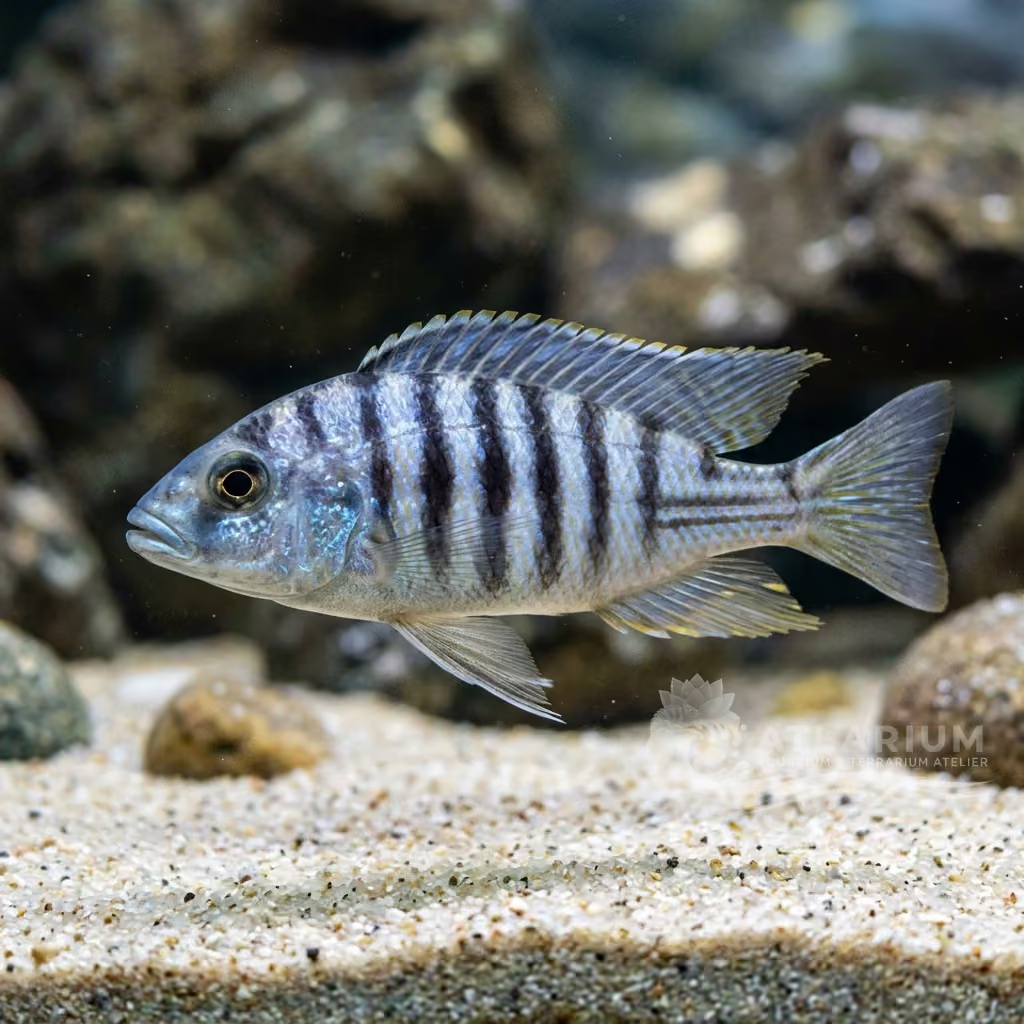
Delightful dwarf colonial shell-dweller (4.5 cm) from Tanganyika. Builds a chaotic and interactive society in the sand: constantly digs around huge beds of snail shells to hide. Beautifully decorated by continuous hazelnut stripes that go all the way up to the head.
Water Temperature
24 - 27 °C
pH Value
8 - 9
Water type
Freshwater
Tank level
Bottom
Adult size
4.5 cm
Minimum tank volume
>= 100 L
Minimum group
>= 1
GH
10 - 25 dGH
KH
5 - 12 dKH
TDS
200 - 495 ppm
Conductivity
313 - 773 uS/cm

Species description
Geographical Origin and Habitat: Lake Tanganyika (central and southern areas of the basin). Boundless inhabitant of the desert: its realm consists exclusively of sandy bottoms where endless millennial accumulations of large shells of Neothauma snails (the native Tanganyika shell) lie silent covering the muddy or sandy bottom for several meters of thickness in true "shell cemeteries".
Taxonomy and Morphology: Tiny colonial "Shell-dweller" par excellence. A true Lilliputian of the aquarium: the old males barely touch 4.5 cm (1.8 inches), while the females, very rounded at the belly, barely reach 3 cm (1.2 in). A small but very vigorous body, wide fins, pronounced dorsal spine, large wedge-shaped head to dive into the helical crevices of the shells and huge bulbous and expressive eyes, almost like a periscope, used to spy on dangers.
Social Behavior: Ethology among the most entertaining in aquarium keeping, a comic and chaotic spectacle. The *Similis* live in very tight and noisy stratified communities, in a real fish neighborhood. They spend the whole day swallowing and spitting sand (an aquatic bulldozer) raising dams and selectively burying their beloved shells to the brim, in order to make them safe and accessible only to their own size. At threats, hundreds of individuals disappear instantly and simultaneously inside the calcareous shells retreating to reappear after several minutes with only the iris protruding from the dark hole of the shell inspecting the perimeter.
Coloration and Sexual Dimorphism: Mimetic and fascinating appearance: chamois, ivory or pale warm copper chromatic base (never dark, because of the sand it rests on). It is finely zebrated by dense and regular dark hazelnut or reddish-brown vertical bands. The absolute diagnostic trait to differentiate it from the famous cousin N. multifasciatus is this: in the Similis the dark bands CONTINUE also on the whole head, on the cheek and forehead reaching up above the lip, to the detriment of the belly which remains lighter! They present an imperceptible light blue halo on the edge of the iris and yellowish reflections on the attachment of the pectorals. Often old males tend to darken into brown in established dominance and develop a stockier build. No dimorphism before adult size except for the massive male size in comparison.

Care, breeding and tankmates
Aquarium Setup: Total logistical essentiality: Perfect for Nano-cubes and contained tanks from minimum 60 cm (24 inches) base (50-60 Liters / 15 Gal for a modest colony start). THE MANDATORY LIFETIME LIES IN THE SHELLS and in the SAND: bottom in very sweet quartz sand, rounded and very fine to the touch of several centimeters deep, on which to stuff very generously an expanse and immense jumble of large rounded shells capable for swimming (ideal the large oceanic shells or empty Escargots, in the ratio of at least 3-4 large and robust shells per fish to mitigate intra-specific real estate disputes). Dim lighting and absolute prohibition on sharp edged gravels that would amputate mouths and scrape off their fragile tegument in the desperate excavation work due to the impossibility of lifting heavy pebbles.
Diet and Feeding: Benthic Micro-Predators lurking from the shell. Accept and consume protein minced food assiduously. Dry feeding (small fine and slow carnivore granules, or crumbled for cichlids pushed by the current on the bottom to their quarters) mixed with delicious brine shrimp nauplii, microdaphnia in flakes and ground cyclops to enrich the iridescent tone of the scales.
Water Quality: Rocky alkaline and very hard Tanganyika, the essential foundations. Total hardness skyrocketing (12-25 GH) which preserves intact for years the shell husks from acidifying decalcification in the tank as they are composed of calcium carbonate; the pH will inevitably have to be positioned above 8.0/8.2. Clean waters, very robust filtering that however does not disperse the small colonies and the sand with unpleasantly sweeping impact waves on the ground.
Compatibility and Cohabitation: Inclusion model for thematic micro-ecosystems ('Species Tank') or flanked only by Cyprichromis leptosoma, high altitude sardines of the pelagic zone of Tanganyika with which the exceptional and classic tank pairing is generated, sharing the diametrically opposite vertical space and providing them with predator alert for open sea flights of larvae. The rowdy rock fish (Mbuna and Julidochromis) would intoxicate their carefree breeding brutally bending their quiet into isolation forcing them recluse in the asphyxiation of the den to bites on the delicate caudal fins, or even worse becoming a delicious culinary occasion for a lethal Frontosa or mighty cousin.
Aquarium Breeding: Very prolific colonial species that stages a formidable Polygamous Harem, the paradise of the Tanganyika novice! The mighty Alpha fertilizes many tiny wives each hidden in the deep retreat of their very personal reassuring shell on which the new mother embeds tiny and adhesive pearl-colored eggs in depth to expel the threat awaiting the slow maturation of the yolk sac. Disappeared to the world for weeks, she will rise to the head with microscopic hungry and curious little children protected blindly by the whole multi-generational hive without fear of suffering any act of cannibalism from the mother colony and father who will strenuously shovel the sandy fence against anyone.
Risks and Diseases: Modest but dramatic mortality rate if deprived of the chemical component for decalcifying alkalinity of their osmotic habitats and carbonate refuges which rotting will mash the exhausted hosts' lobes (a filter added with broken coral or shells assists the start of carbonates). Irreversible suffocation of the gills designated for excavation where they are forced to remove sharp or irregular pebbles to build dams tearing tiny blood vessels and the mucous membranes that act as a bacterial screen, paling and getting sick covering themselves with fungal and whitish patinas among the heavy breaths in the tank.

Geographic origin and distribution
Lake Tanganyika (central and southern areas of the basin). Boundless inhabitant of the desert: its realm consists exclusively of sandy bottoms where endless millennial accumulations of large shells of Neothauma snails (the native Tanganyika shell) lie silent covering the muddy or sandy bottom for several meters of thickness in true "shell cemeteries".
Origin
North AmericaAfrica and MadagascarEurope, Mediterranean, and West Asia

Fish profile
- Temperament
- Semi-aggressive
- They are incredibly active and industrious, constantly modifying the sandbed around their shells. While they live peacefully in massive colonies, they are fearless and will nip at the fins of much larger fish that approach their territory. Watching their complex social interactions and constant landscaping is endlessly entertaining.
- Diet
- Omnivore
- They are micro-predators that feed on zooplankton and tiny benthic organisms in their natural habitat. In the aquarium, they thrive on high-quality crushed flakes, micro-pellets, and powdered foods. Supplementing their diet with small live or frozen foods like daphnia and baby brine shrimp encourages breeding and vibrant colors.
- Life expectancy
- 5-8 years
- Adult size
- 4.5 cm
- Sex ratio
- Harem
- They naturally form harems where a dominant male oversees a territory containing multiple breeding females. It is best to start with a group of juveniles and let the colony establish its own natural hierarchy. The colony will continue to grow and self-regulate as long as enough shells are provided.
- Feeding frequency
- Twice daily
- Due to their small size and high energy, they benefit from frequent feedings of small amounts two to three times daily. Ensure the food sinks fast enough to reach their shells before it is swept into the filter. All food should be completely consumed within a couple of minutes.
- Bioload
- Low
- Individually, these tiny shell-dwellers produce a nearly negligible bioload. However, because they form dense, rapidly expanding colonies, the collective waste can quickly challenge a small aquarium's filtration. Efficient biological filtration and strict adherence to regular water changes are required to maintain a healthy colony.
- Flow
- Stagnant
- They prefer a gentle water flow that provides adequate oxygen without disturbing their carefully arranged shells and sand. Strong currents will frustrate them by constantly blowing sand into their homes. A sponge filter or a gently baffled power filter is the most appropriate choice for their habitat.
- Jump risk
- No
- Reproduction
- Oviparous
- They are incredibly prolific shell-dwellers that form large, multi-generational colonies. The female lays her eggs securely inside an empty escargot shell, and both parents fiercely protect the fry. Older siblings in the colony will also assist in defending the territory and the newest generations of fry.
- Compatibility & tankmates
- Species only
- They are highly peaceful towards other species but will vigorously defend their shells against intruders. They are ideally kept in a dedicated species-only aquarium to allow their fascinating colonial behaviors to unfold. If kept in a community, tank mates should be small, peaceful upper-water species that will not compete for shells.
- Tank level
- Bottom
- They are intimately tied to the substrate and their empty snail shells. They spend their entire day meticulously digging in the sand to arrange and bury their shells perfectly. They very rarely venture into the middle or upper sections of the water column.

Scientific Parameters & Models
FishBase
Window to the official scientific data of the species
FishBase v25.04Data synced on: 06/15/2026
- Trophic level
- 3.3 ± 0.5 se
- Resilience
- High (less than 15 months)
- Phylogenetic uniqueness (PD50)
- 0.5
- Bayesian Length-Weight
- a = 0.00389, b = 3.12
- VulnerabilityLow vulnerability (10 / 100)

Related species
Recommendations grouped by close relatives, companion choices, and similar care.