Olive Fairy Cichlid
Neolamprologus olivaceous
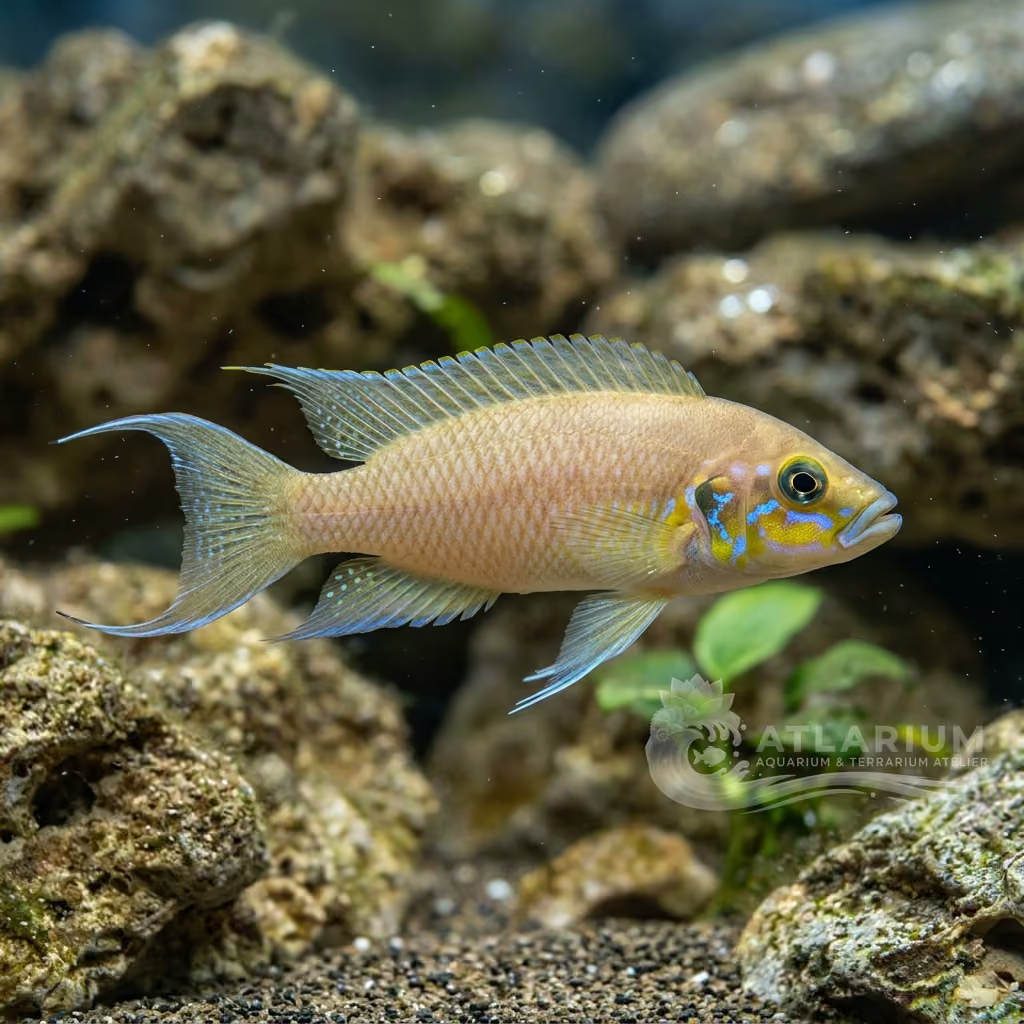
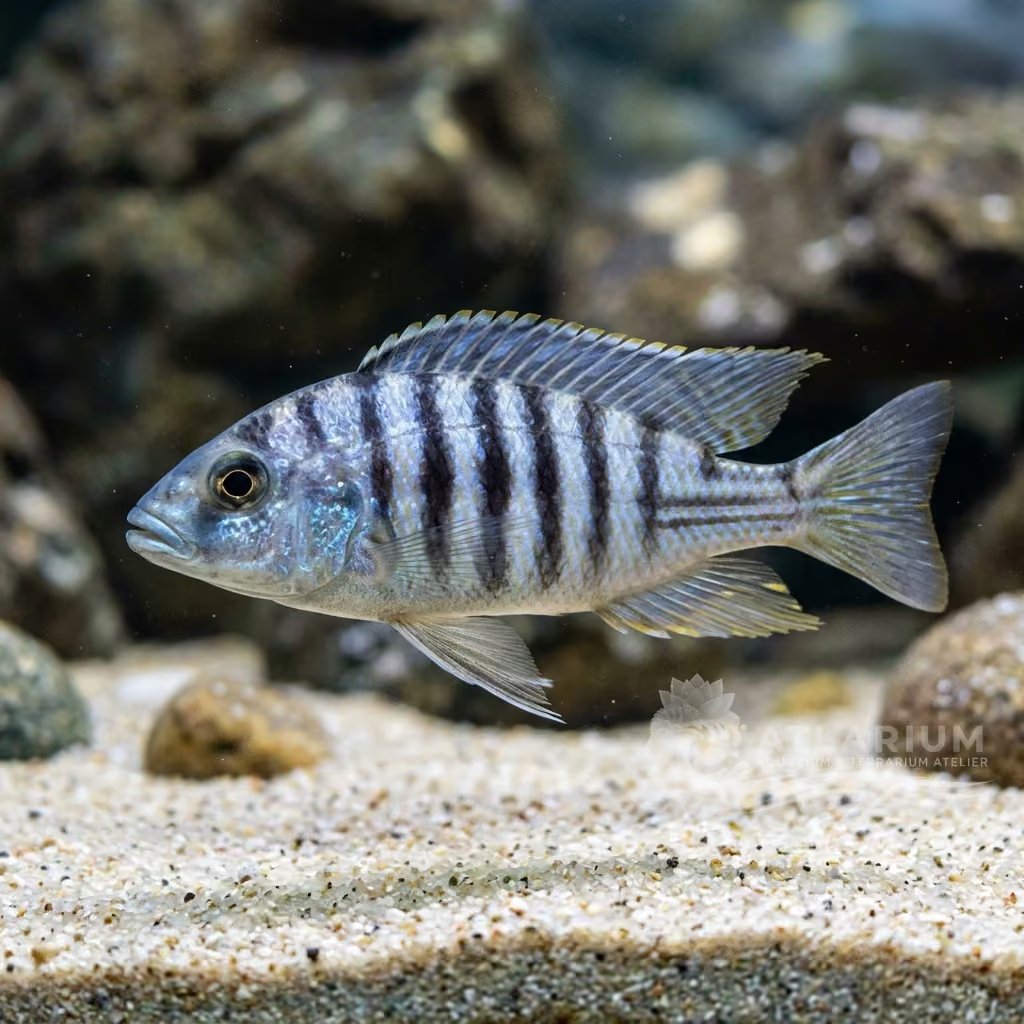
Elegant member of the 'Fairy Cichlids' complex (like N. brichardi), with olive-brown livery. It has the typical, very long filamentous extensions sloping over the lyre tails.
Water Temperature
23 - 26 °C
pH Value
7.5 - 9
Water type
Freshwater
Tank level
Bottom and middle
Adult size
9 cm
Minimum tank volume
>= 250 L
Minimum group
>= 1
GH
12 - 25 dGH
KH
10 - 20 dKH
TDS
280 - 575 ppm
Conductivity
438 - 898 uS/cm

Species description
Geographical Origin and Habitat: Endemic to Lake Tanganyika, Africa. It is specifically restricted to the extreme northern basin of the lake (Luhanga bay and surrounding coastal areas in the Democratic Republic of the Congo). It is an absolute, obligate rock-dweller (lithophilic), colonizing exclusively massive, plunging rock reefs, sheer cliffs, and boulder screes. It completely shuns open water and sandy plains.
Taxonomy and Morphology: A highly illustrious member of the famous "Brichardi Complex" (the Fairy Cichlids / Lyretail Neolamprologus), widely traded as the "Olivaceous Cichlid". Its body is exquisitely streamlined, sleek, and aerodynamic. Its ultimate morphological signature is the breathtaking, excessively long, flowing thread-like extensions (filaments) that trail from its ventral fins, the tip of its dorsal fin, and most spectacularly, from the top and bottom of its tail fin, forming an iconic, elongated "Lyretail". Adults reach 9-10 cm (3.5 - 4 inches).
Social Behavior: The ultimate masterpiece of cichlid social evolution: it forms multi-generational colonies based on highly organized "Cooperative Breeding". While a single dominant "Alpha" male and female pair rule the clan, the dozens of older brothers and sisters from previous spawns are not chased away. Instead, they remain in the family territory, acting as fiercely loyal "helpers" to aggressively defend the territory and guard the new microscopic babies. The colony functions like an invincible, lethal, and highly coordinated military phalanx against any intruder.
Coloration and Sexual Dimorphism: A remarkably delicate and intricate color palette. Unlike the paler, standard Brichardi, the olivaceous boasts a base canvas of warm beige and gold, heavily suffused with a striking, iridescent metallic olive-green wash. The defining diagnostic "fingerprint" (which separates it from its cousins) is its gill (opercular) markings: it features two dark, inverted "V" or chevron-shaped stripes behind the eye, accented by a glowing, neon blue/gold mask just below the eye socket. Every single trailing fin filament is intensely edged in blazing ice-white or neon blue. **Virtually Zero Dimorphism:** Only the trained eye can spot the massive Alpha males, who are slightly bulkier and possess outrageously exaggerated, trailing lyretail streamers compared to the females.

Care, breeding and tankmates
Verified data: FishBase records Neolamprologus olivaceous as a tropical freshwater, benthopelagic species endemic to Lake Tanganyika, with a maximum length of 6 cm TL. The source describes it as moderately gregarious, usually found in small groups.

Geographic origin and distribution
Endemic to Lake Tanganyika, Africa. It is specifically restricted to the extreme northern basin of the lake (Luhanga bay and surrounding coastal areas in the Democratic Republic of the Congo). It is an absolute, obligate rock-dweller (lithophilic), colonizing exclusively massive, plunging rock reefs, sheer cliffs, and boulder screes. It completely shuns open water and sandy plains.
Origin
Africa and Madagascar

Fish profile
- Temperament
- Semi-aggressive
- They display a fascinating duality in their temperament: highly cooperative and social within their own colony, yet fiercely aggressive towards any outsiders. They will fearlessly defend their territory against fish many times their size. Their complex social dynamics make them a rewarding, albeit challenging, species to keep.
- Diet
- Carnivore
- They are naturally omnivorous, feeding on small invertebrates, zooplankton, and occasional algae scraped from rocks. In the aquarium, they require a varied diet consisting of high-quality cichlid flakes, pellets, and frozen foods like mysis shrimp. Ensuring a mix of protein and vegetable matter is important for their digestive health and coloration.
- Life expectancy
- 5-8 years
- Adult size
- 9 cm
- Sex ratio
- Pair
- It is best to start with a group of juveniles and allow them to establish their own hierarchy and pair bonds. Once a dominant breeding pair is established, the exact sex ratio of the remaining colony members becomes less important. The dominant pair will suppress the breeding of other members while accepting their help in raising fry.
- Feeding frequency
- Twice daily
- They should be fed one or two times a day with portions that the entire colony can consume within a few minutes. Because of the colony structure, ensure food is dispersed widely so all members get adequate nutrition. Avoid overfeeding, as excess food will quickly degrade the pristine water quality they require.
- Bioload
- Low to Medium
- This cichlid produces a moderate bioload that will increase significantly as they breed and form large colonies. A powerful and efficient biological filtration system is absolutely essential to handle the waste produced by a growing family group. Strict adherence to regular water changes is necessary to maintain their required water parameters.
- Flow
- Stagnant
- They prefer a moderate water current that simulates the natural movement along the rocky shorelines of Lake Tanganyika. A good flow ensures high oxygenation and helps keep their rocky territories free of detritus. The current should be steady but allow them comfortable resting areas within the rocks.
- Jump risk
- Yes
- They are generally tightly bound to their rocky territories and exhibit a low risk of jumping. However, severe aggression within the colony or sudden fright can occasionally cause a weaker fish to bolt towards the surface. A standard, secure aquarium lid is highly recommended to prevent escapes.
- Reproduction
- Oviparous
- They are famous for their colonial breeding strategy, where older generations actively help the parents raise new fry. They are cave spawners that lay their eggs deep within rocky crevices. This cooperative breeding behavior makes them incredibly successful and fascinating to observe in a dedicated setup.
- Compatibility & tankmates
- Species only
- They are highly territorial and exceptionally aggressive, particularly when defending their colony. They are best kept in a species-only aquarium due to their complex social structure and intolerance of outsiders. If kept with other Tanganyikan species, the tank must be extremely large to prevent constant warfare.
- Tank level
- Middle/Bottom
- They heavily occupy the middle and lower levels of the aquarium, always staying in close proximity to their rock formations. They rely on the rocks for safety, territory, and breeding. They will aggressively patrol the perimeter of their rocks but rarely swim into open water.

Scientific Parameters & Models
FishBase
Window to the official scientific data of the species
FishBase v25.04Data synced on: 06/15/2026
- Trophic level
- 3.4 ± 0.5 se
- Resilience
- High (less than 15 months)
- Phylogenetic uniqueness (PD50)
- 0.5
- Bayesian Length-Weight
- a = 0.01445, b = 2.99
- VulnerabilityLow vulnerability (10 / 100)

Related species
Recommendations grouped by close relatives, companion choices, and similar care.