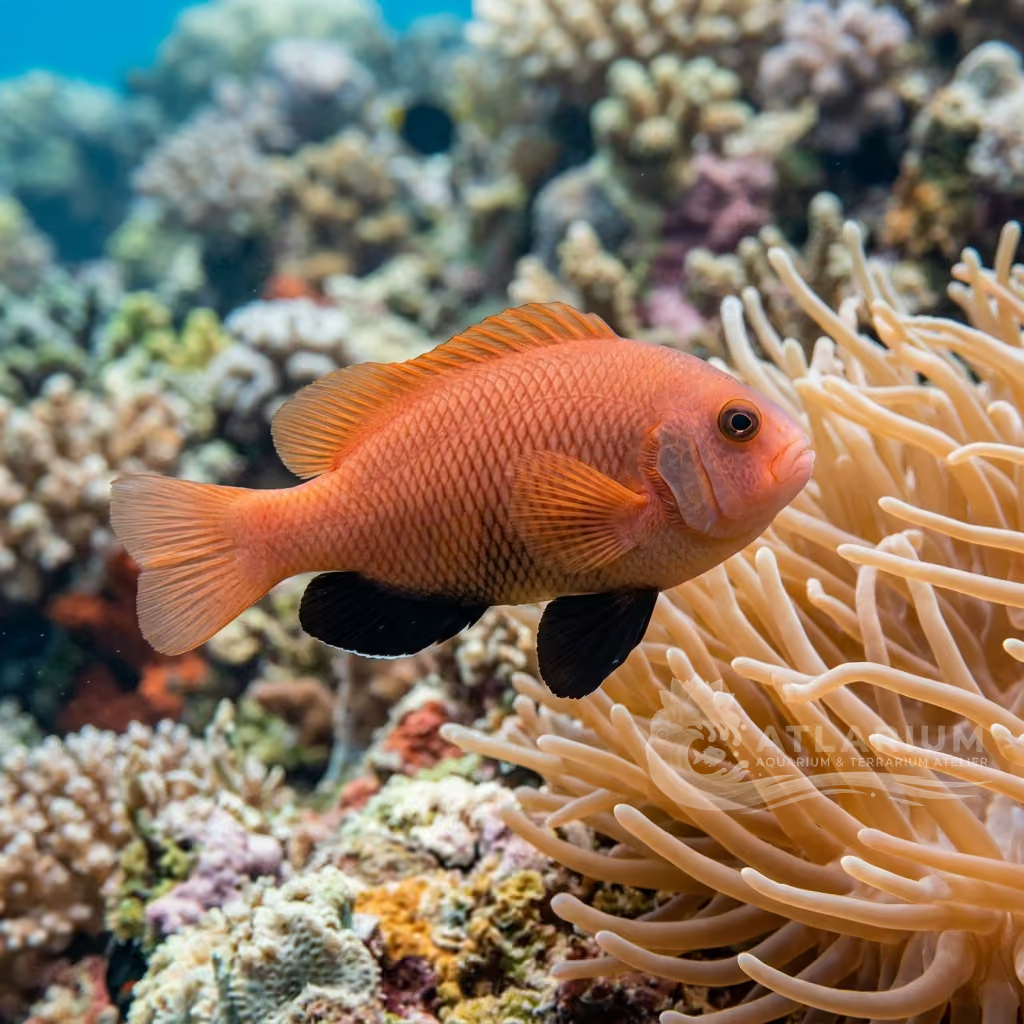
Moon Wrasse
Thalassoma lunare
The Hyperactive Torpedo (10 inches / 25 cm). A gorgeous green and pink wrasse that literally never stops moving at lightning speed until it buries itself in the sand at night.
Water Temperature
24 - 28 °C
pH Value
8.1 - 8.4
Water type
Marine
Tank level
All levels
Adult size
25 cm
Minimum tank volume
>= 300 L
Minimum group
>= 1
KH
7 - 15 dKH

Species description
Geographical Origin and Habitat: Indo-Pacific. Symbol fish of lagoon reefs and coastal reefs (from 1 to 20 m / 3 to 65 ft deep). Prefers slopes rich in live corals alternating with detrital sandy platforms.
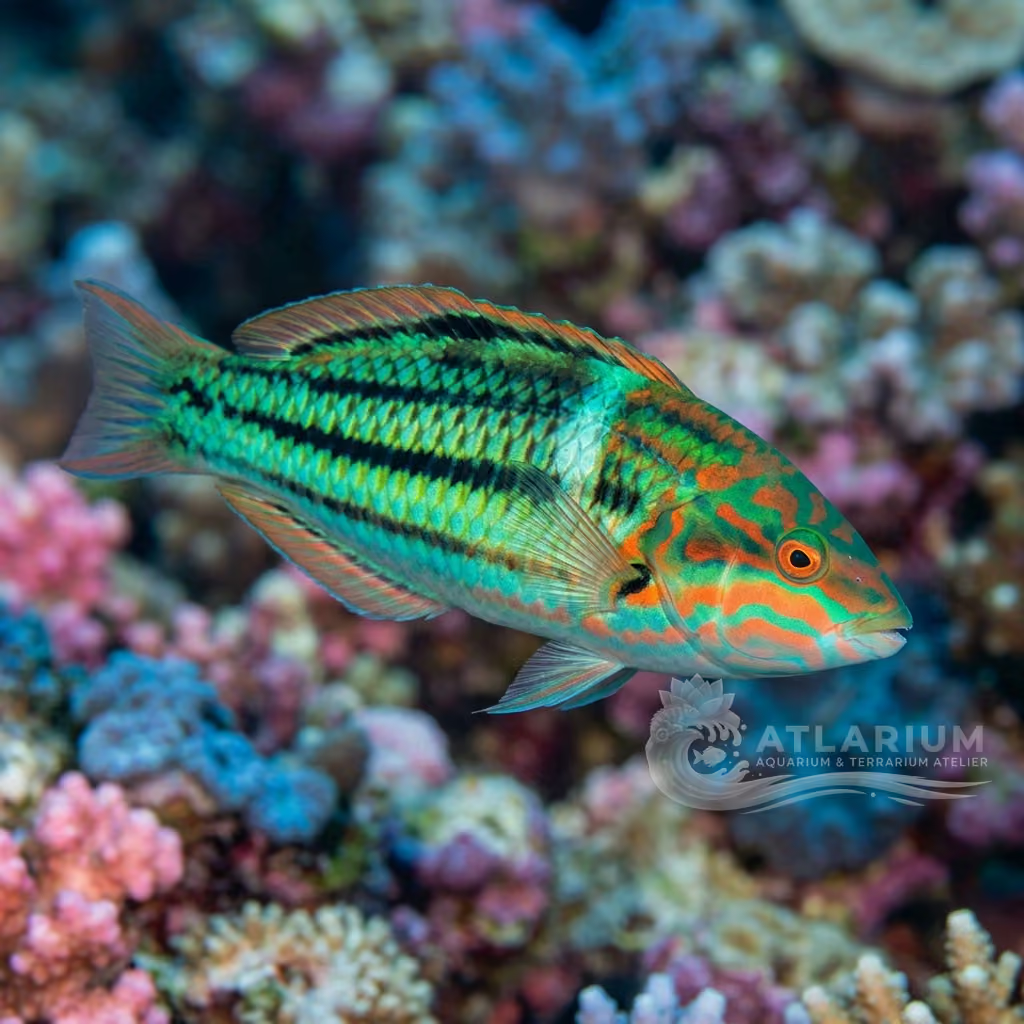
Taxonomy and Morphology: Moon Wrasse (Thalassoma lunare). Formidable wrasse with a torpedo body and thick lips adapted to crush the exoskeleton of crustaceans. The caudal fin has the shape of a majestic crescent moon (hence the name lunare).
Social Behavior: Exhausting hyperactivity. Swims at the speed of light, patrolling every corner of the tank 100 times an hour with the classic "pectoral dart" swimming of wrasses. At nightfall it disappears (buries itself suddenly under the sand).
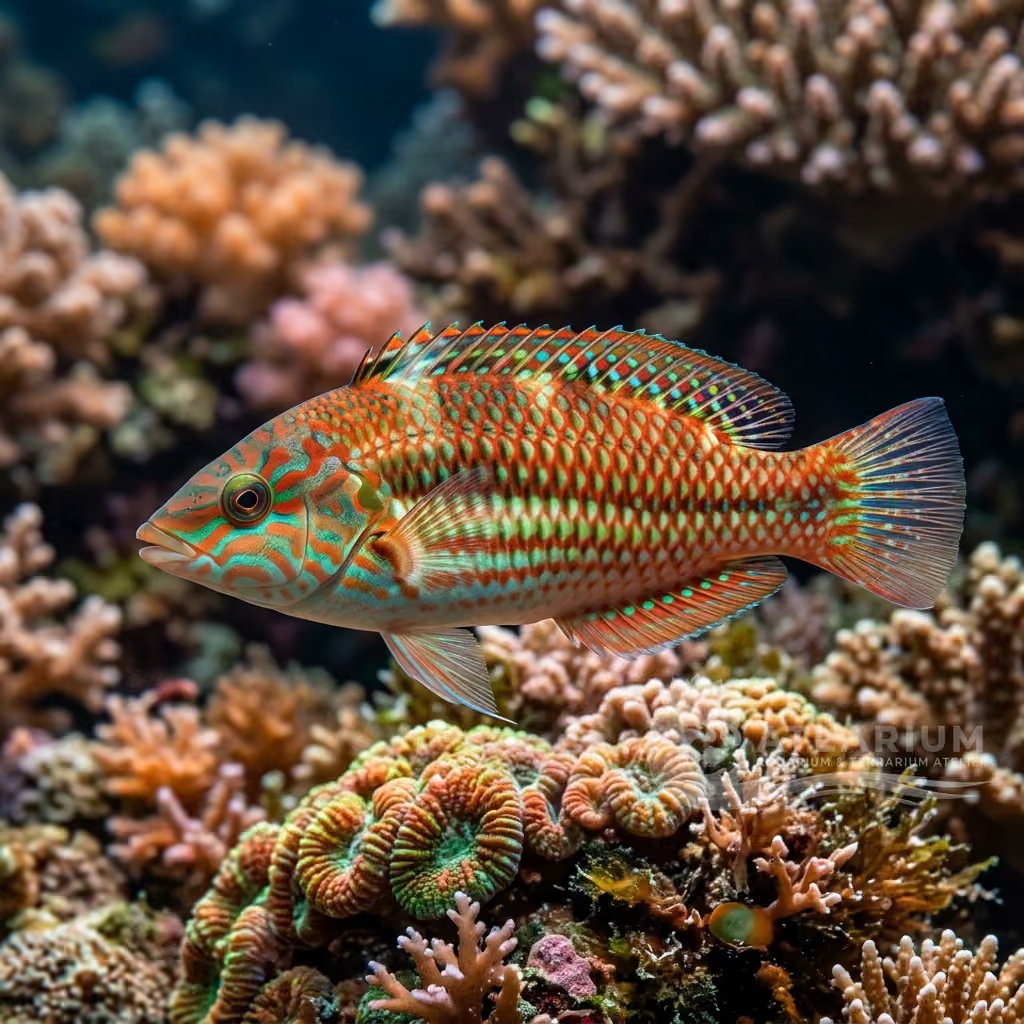
Coloration and Sexual Dimorphism: Psychedelic. Hermaphrodite (females that become males). The body is neon green-light blue crossed by fine magenta/fuchsia veins on the head (facial mask). The moon tail has large bright yellow margins on a cobalt blue background.

Care, breeding and tankmates
Aquarium Setup: Free swimming track (Minimum 150 cm / 60 inches / 100G). Needs a lot of free water. Steel mesh cover mandatory: it is a phenomenal jumper and will smash light fixtures. 6 cm (2.5 inches) of soft sand mandatory to let it sleep buried, without it it will fatally injure itself trying to dig on the glass.
Diet and Feeding: Extreme carnivore (Demolisher). In nature it lifts stones and uproots shells. Voraciously eats crustaceans, mollusks, tube worms, shrimp (Lysmata) and aquarium snails. To be fed with peeled shrimp and mussels, pulverizes dry pellets.
Water Quality: Very resistant to common fish diseases. However, being a metabolic "Ferrari" that eats like a pig and digs the sand all day raising debris, it will require an excellent Skimmer so as not to let the system collapse.
Compatibility and Cohabitation: Reef Safe for corals but NOT for Invertebrates and small fish. It will totally ignore corals, but your shrimp, turbo snails and small Gobies will literally be gutted in seconds. Very overbearing at mealtime, will disturb shy fish like butterflyfish.
Aquarium Breeding: Not documented in the tank. Terminal Phase males dominate small harems of females in nature, releasing pelagic eggs on the surface during high tide.
Risks and Diseases: Lip smasher and fatal flights (Lip damage). In addition to the high probability of finding it on the floor 6 feet away (they jump), if frightened and without sand to "dive" into to sleep, it will hurl itself against the rocks at 20 mph, irreversibly destroying its mouth (inability to feed and death by starvation).

Geographic origin and distribution
Indo-Pacific. Symbol fish of lagoon reefs and coastal reefs (from 1 to 20 m / 3 to 65 ft deep). Prefers slopes rich in live corals alternating with detrital sandy platforms.
Origin
Tropical oceans and reefs

Fish profile
- Temperament
- Semi-aggressive
- They are arguably one of the most hyperactive fish available in the marine hobby. Their constant, darting movement brings an incredible amount of dynamic energy to a large aquarium. While their vivid colors are spectacular, their extreme aggression requires very careful planning.
- Diet
- Omnivore
- They are voracious carnivores that require a varied diet of meaty marine foods. Offerings should include enriched mysis shrimp, krill, chopped fish, and squid. Their diet must be varied and nutrient-dense to maintain their vivid coloration and high energy.
- Life expectancy
- 10-15 years
- Adult size
- 25 cm
- Sex ratio
- Harem
- Due to their intense aggression, the Moon wrasse must be kept singly in the home aquarium. Introducing a second Moon wrasse, regardless of sex, will almost certainly result in a fatal conflict. Replicating their natural harem structure requires an aquarium of thousands of gallons.
- Feeding frequency
- Twice daily
- To sustain their hyperactive metabolism, they must be fed a minimum of two to three times a day. They are gluttonous eaters and will easily outcompete slower tank mates for food. Frequent feedings also help to slightly curb their aggressive tendencies towards other fish.
- Bioload
- High
- The Moon wrasse produces a high bioload due to its hyperactive nature and need for frequent, large meals. Robust biological filtration and an oversized protein skimmer are required to handle their waste. Regular, large water changes are necessary to keep the water pristine.
- Flow
- Moderate
- Thalassoma lunare needs steady, moderate circulation distributed across the aquarium rather than a narrow, forceful jet. Free swimming track (Minimum 150 cm / 60 inches / 100G). Needs a lot of free water. This preserves useful water exchange while retaining calmer shelter for rest and feeding.
- Jump risk
- Yes
- They are arguably one of the most prone species to jumping out of an aquarium. A perfectly fitted, completely secure lid or sturdy mesh top is absolutely mandatory. They often jump during feeding frenzy or if they are startled by sudden lights.
- Reproduction
- Oviparous
- Captive breeding is virtually impossible in a standard home aquarium setting. As pelagic spawners, they require massive water columns to perform their upward spawning rush. They are protogynous hermaphrodites, changing sex from female to male as they grow.
- Compatibility & tankmates
- Highly aggressive
- They are highly aggressive and should only be kept in a FOWLR aquarium alongside other tough species. Suitable tank mates include large angels, tangs, and aggressive triggers. Smaller or passive fish will be relentlessly bullied and likely killed.
- Tank level
- All levels
- They are constantly in motion, patrolling the mid and upper levels of the water column at high speeds. They require an exceptionally long aquarium to allow them to swim freely without feeling confined. They require a deep, fine sand bed to bury themselves in at night to sleep.

Scientific Parameters & Models
FishBase
Window to the official scientific data of the species
FishBase v25.04Data synced on: 06/15/2026
- Trophic level
- 4.2 ± 0.27 se
- Resilience
- Medium (1.4 - 4.4 years)
- Generation time
- 5.8 years
- Phylogenetic uniqueness (PD50)
- 0.5
- Bayesian Length-Weight
- a = 0.01259, b = 2.96
- VulnerabilityLow to moderate vulnerability (35 / 100)

Related species
Recommendations grouped by close relatives, companion choices, and similar care.