Tono's Fairy Wrasse
Cirrhilabrus tonozukai
Tonozuka's Fairy Wrasse features stunning neon blue edges and long filamentous fins in males. A peaceful, reef-safe Indonesian species that easily jumps if the tank is uncovered.
Water Temperature
23 - 28 °C
pH Value
8.1 - 8.4
Water type
Marine
Tank level
Middle
Adult size
7.5 cm
Minimum tank volume
>= 250 L
Minimum group
>= 1
KH
8 - 12 dKH

Species description
Geographical Origin and Habitat: Cirrhilabrus tonozukai is native to the tropical Western Central Pacific, with populations primarily concentrated in Indonesia (especially Sulawesi and Halmahera), Palau, and the Philippines. It inhabits outer reef slopes, deep channels, and sandy rubble fields at depths ranging from 20 to 40 meters. It is typically found in small groups hovering above hard coral structures where currents supply abundant food.
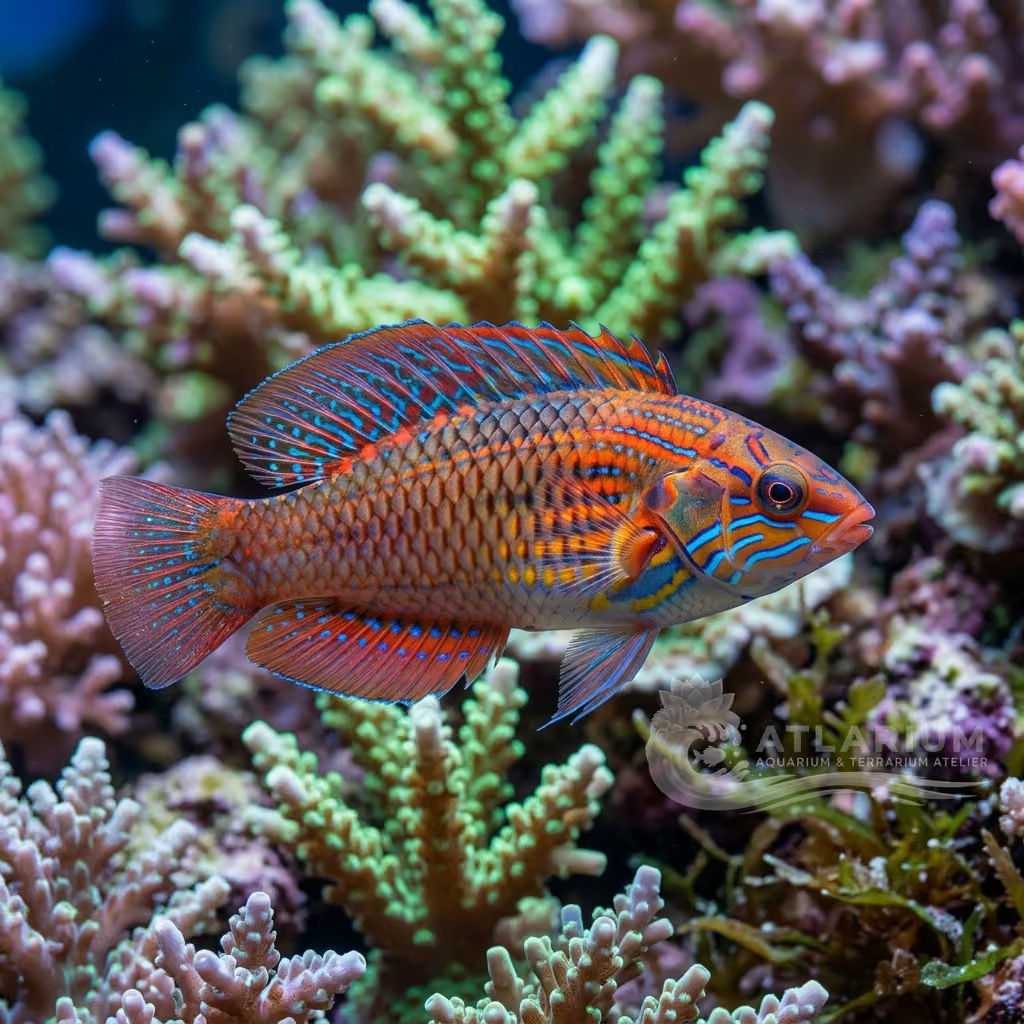
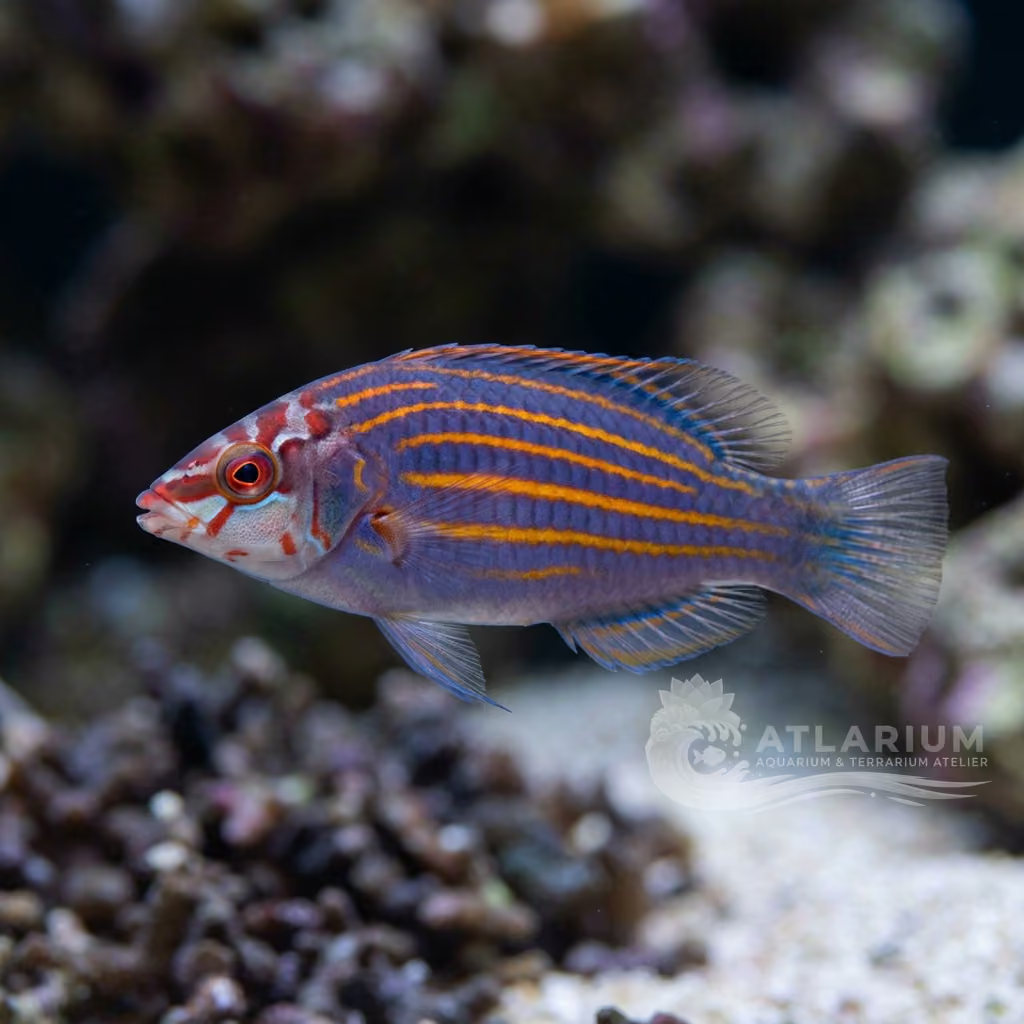
Taxonomy and Morphology: Belonging to the family Labridae and the genus Cirrhilabrus (fairy wrasses), this species was named in honor of the renowned Japanese underwater photographer Takamasa Tonozuka. It features an elongated, laterally compressed body. Mature males develop long filamentous extensions on the dorsal fin and elongated pelvic fins. The maximum adult size is approximately 7.5 cm.
Social Behavior: It is a peaceful, active, and social species. In the wild, they live in small haremic groups dominated by a single male, surrounded by several females and juveniles. They are active open-water swimmers occupying the water column above the reef. Males exhibit strong territoriality towards other males of the same or similar species; do not house males together.
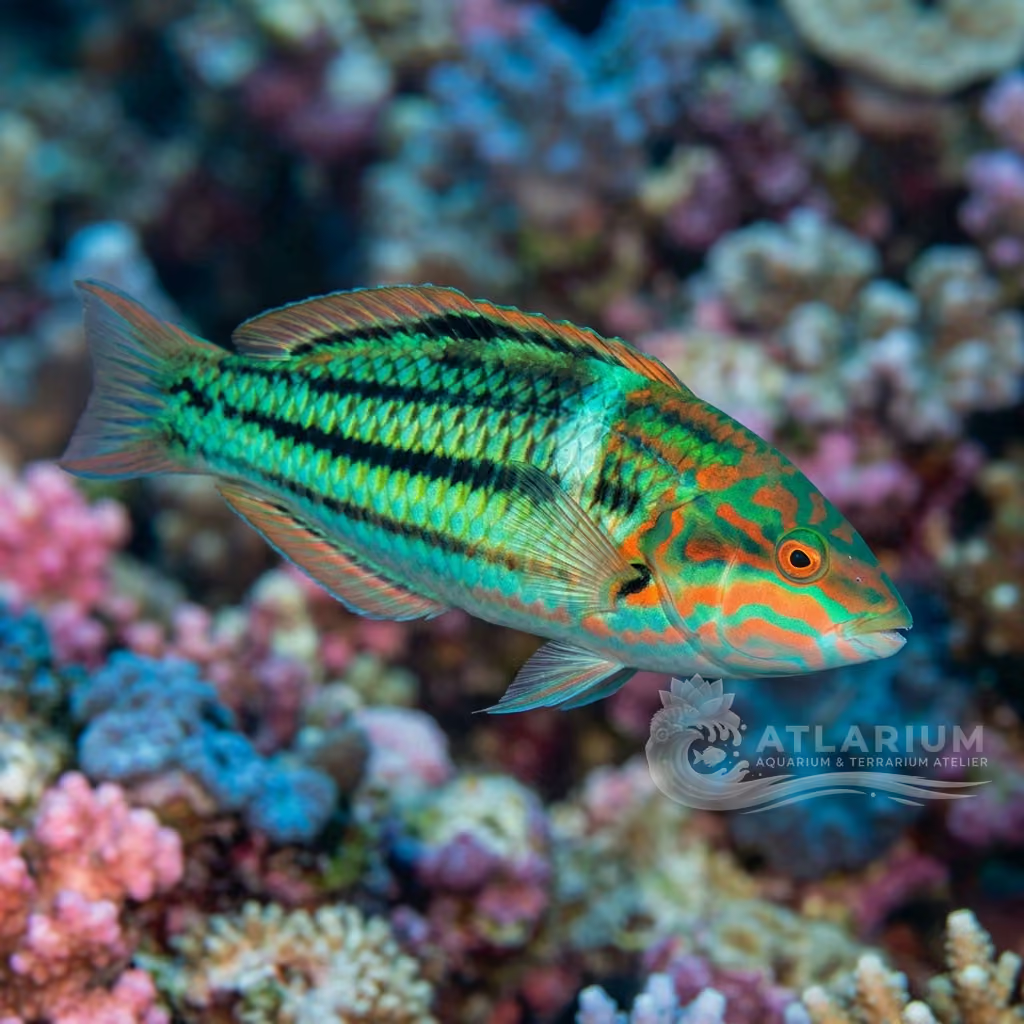
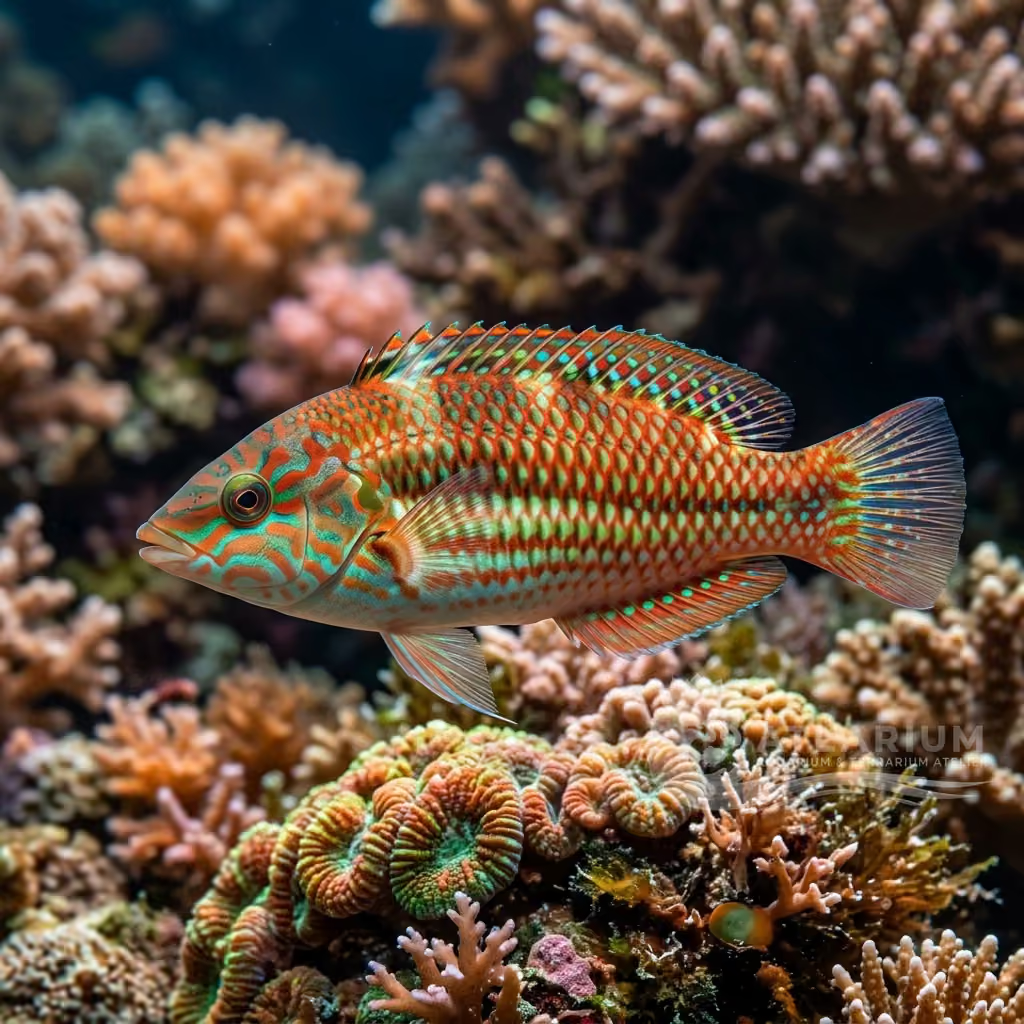
Coloration and Sexual Dimorphism: Sexual and chromatic dimorphism is spectacular: males have a reddish-orange upper body, a silvery-white underbody, a yellow lateral stripe, and highly colorful dorsal and anal fins with neon blue edges. Females and juveniles are much simpler, exhibiting a uniform pinkish-orange body with a small black spot on the upper tail base.

Care, breeding and tankmates
Aquarium Setup: Requires a mature marine aquarium of at least 250 liters. The aquascape must provide a large, open water area for active swimming in the middle and upper zones, combined with a stable live rock structure containing multiple crevices and caves for shelter at night or when startled. A tight-fitting lid or screen cover is mandatory.
Diet and Feeding: Carnivorous planktivore. In their natural habitat, they feed on suspended zooplankton. In captivity, feed a varied diet consisting of high-quality frozen foods like mysis, brine shrimp, copepods, krill, and lobster eggs. They will also readily accept commercial dry pellets and flakes. Feed at least twice daily.
Water Quality: Maintain stable reef parameters: water temperature between 23 and 28 °C, pH 8.1-8.4, and salinity at SG 1.020-1.025. Moderate to strong water flow is required to simulate their natural current-swept habitat and ensure high dissolved oxygen levels, alongside efficient biological filtration.
Compatibility and Cohabitation: 100% reef-safe, posing no threat to corals, clams, or ornamental invertebrates like shrimp. It coexists peacefully with a wide variety of calm reef fish. Avoid housing them with overly aggressive or highly territorial tankmates (like larger dottybacks or aggressive tangs) that might harass them.
Aquarium Breeding: Breeding in home aquariums is extremely difficult and rarely reported. They are protogynous hermaphrodites, meaning all individuals are born female and the dominant female will transition into a male if the resident male dies. Courtship involves dramatic fluorescent color changes before spawning.
Risks and Diseases: The primary risk is jumping out of uncovered tanks when startled. They are susceptible to external marine parasites such as ich (Cryptocaryon) and velvet (Oodinium) during the acclimation phase if subjected to poor water quality or temperature shock. A quarantine period is highly recommended.

Geographic origin and distribution
Cirrhilabrus tonozukai is native to the tropical Western Central Pacific, with populations primarily concentrated in Indonesia (especially Sulawesi and Halmahera), Palau, and the Philippines. It inhabits outer reef slopes, deep channels, and sandy rubble fields at depths ranging from 20 to 40 meters. It is typically found in small groups hovering above hard coral structures where currents supply abundant food.
Origin
Tropical oceans and reefsSouth and Southeast Asia

Fish profile
- Temperament
- Peaceful
- Tono's Fairy Wrasse is a peaceful, active, and highly social species that occupies the middle and upper levels of the water column. They thrive when kept in harem groups consisting of one male and multiple females. They are energetic swimmers but can be timid when first introduced, seeking shelter in rockwork.
- Diet
- Carnivore
- This species is a carnivorous planktivore that feeds on zooplankton in the wild. In an aquarium, it requires a diverse diet of high-quality frozen foods like mysis shrimp, brine shrimp, copepods, and lobster eggs. It will also readily accept enriched flake and pellet foods designed for marine carnivores.
- Life expectancy
- 5-8 years
- Adult size
- 7.5 cm
- Sex ratio
- Harem
- One male with a group of females (harem)
- Feeding frequency
- Twice daily
- Due to their high activity levels and fast metabolism, they should be fed two to three times daily. Providing small portions that can be consumed within a few minutes ensures they remain healthy and vibrant. Regular feedings also help prevent food competition and reduce aggression in community tanks.
- Bioload
- Low to Medium
- Tonozuka's Fairy Wrasse relies on a planktivorous diet requiring multiple small feedings spaced throughout the day. This influx of frequent meals leads to a moderate overall bioload that the aquarium's filtration must be able to process. Proper mechanical filtration and skimming are highly advised to prevent nitrate and phosphate spikes.
- Flow
- Strong
- They prefer moderate to strong water flow, which mimics the currents of their native outer reef slopes. Good water movement keeps the water well-oxygenated and stimulates their natural swimming behavior. Ensure there are also calmer areas in the tank where they can rest.
- Jump risk
- Yes
- Extremely sensitive to sudden light transitions or aggressive tankmates, Tonozuka's Fairy Wrasse possesses a devastatingly high jump risk. Their instant reaction to stress is fleeing towards the surface, frequently resulting in death if the tank lacks a cover. Utilizing a tight-fitting, clear mesh lid is the only reliable way to keep these rare fish safe inside the tank.
- Reproduction
- Oviparous
- They are protogynous hermaphrodites and pelagic spawners that perform courtship displays at dusk. In these rituals, the male flashes intense colors to attract females before releasing gametes into the water column. Breeding in home aquariums is exceptionally difficult and rarely documented due to the complex larval stage.
- Compatibility & tankmates
- Peaceful
- They are peaceful, reef-safe fish that coexist well with other docile reef species of similar size. However, males can be territorial toward other fairy or flasher wrasses, so keeping only one male per tank is advised. Avoid housing them with overly aggressive or predatory tankmates.
- Tank level
- Middle
- You will typically find Tonozuka's Fairy Wrasse occupying the middle to top regions of the tank, eagerly swimming in the open water. They do not cling to the rockwork during the day, instead preferring to inspect the water column for food. For their nightly rest, they drop down to the lowest levels to secrete a mucus sleeping bag among the live rock.

Scientific Parameters & Models
FishBase
Window to the official scientific data of the species
FishBase v25.04Data synced on: 06/15/2026
- Trophic level
- 3.3 ± 0.4 se
- Resilience
- High (less than 15 months)
- Phylogenetic uniqueness (PD50)
- 0.5
- Bayesian Length-Weight
- a = 0.01072, b = 3.03
- VulnerabilityLow vulnerability (10 / 100)

Related species
Recommendations grouped by close relatives, companion choices, and similar care.