McCosker's Flasher Wrasse
Paracheilinus mccoskeri
McCosker's Flasher Wrasse is a brilliantly colored, active marine species. Its extraordinary courtship flashes make it a highly desirable addition to secure, well-structured reef tanks.
Water Temperature
22 - 26 °C
pH Value
8.1 - 8.4
Water type
Marine
Tank level
All levels
Adult size
8 cm
Minimum tank volume
>= 200 L
Minimum group
>= 3
KH
8 - 12 dKH

Species description
Geographical Origin and Habitat: Widespread in the Indo-Pacific, from Kenya and Madagascar to the Fiji Islands, north to the Ryukyu Islands of Japan. Inhabits seaward reefs and sheltered current-swept lagoons at depths of 15 to 40 meters, often near sandy slopes or rubble zones.
Taxonomy and Morphology: Belongs to the family Labridae, genus Paracheilinus. Features a fusiform, slightly compressed body, with males exhibiting elongated dorsal fin filaments. Eyes are large and move independently. Reaches a maximum size of 8 cm.
Social Behavior: Diurnal and highly active. Lives in harem groups led by a dominant male, who performs spectacular courtship displays (flashing) by expanding its fins to attract females or ward off competitors.
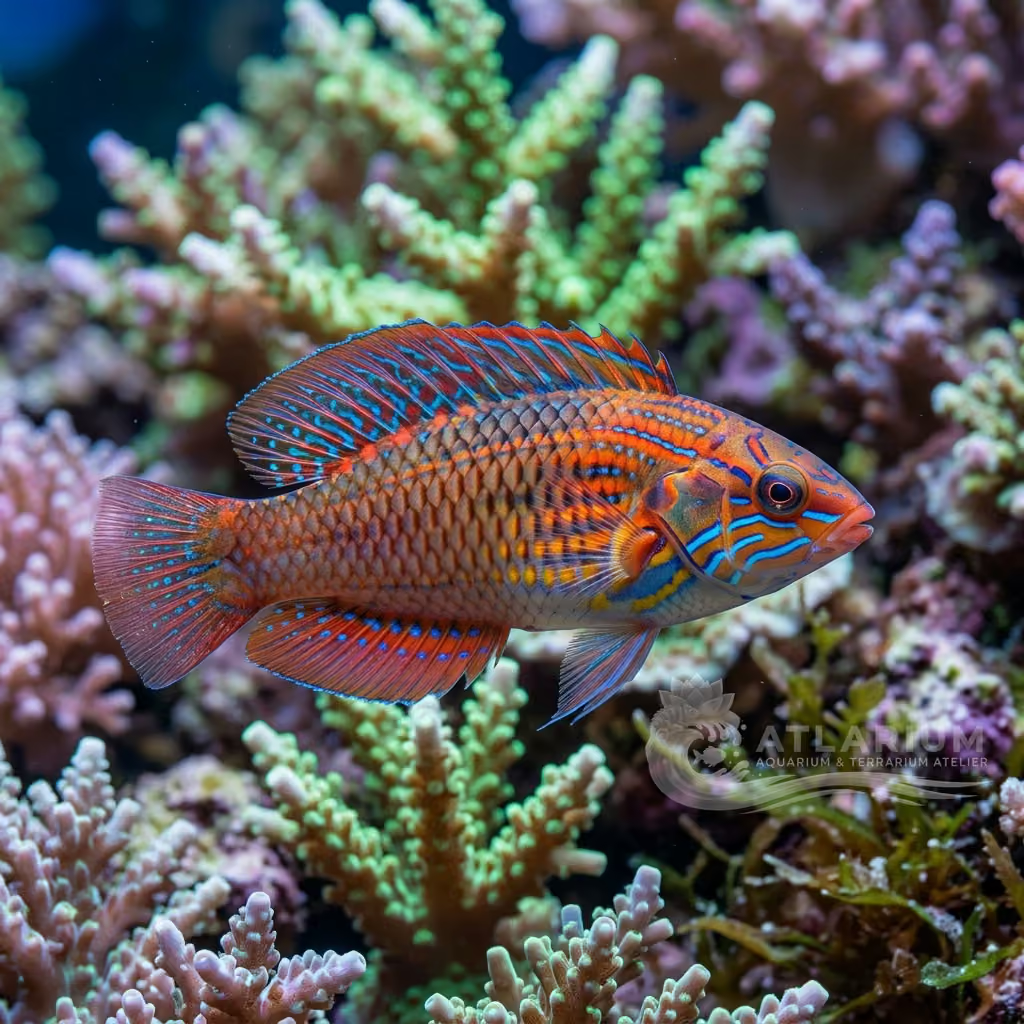
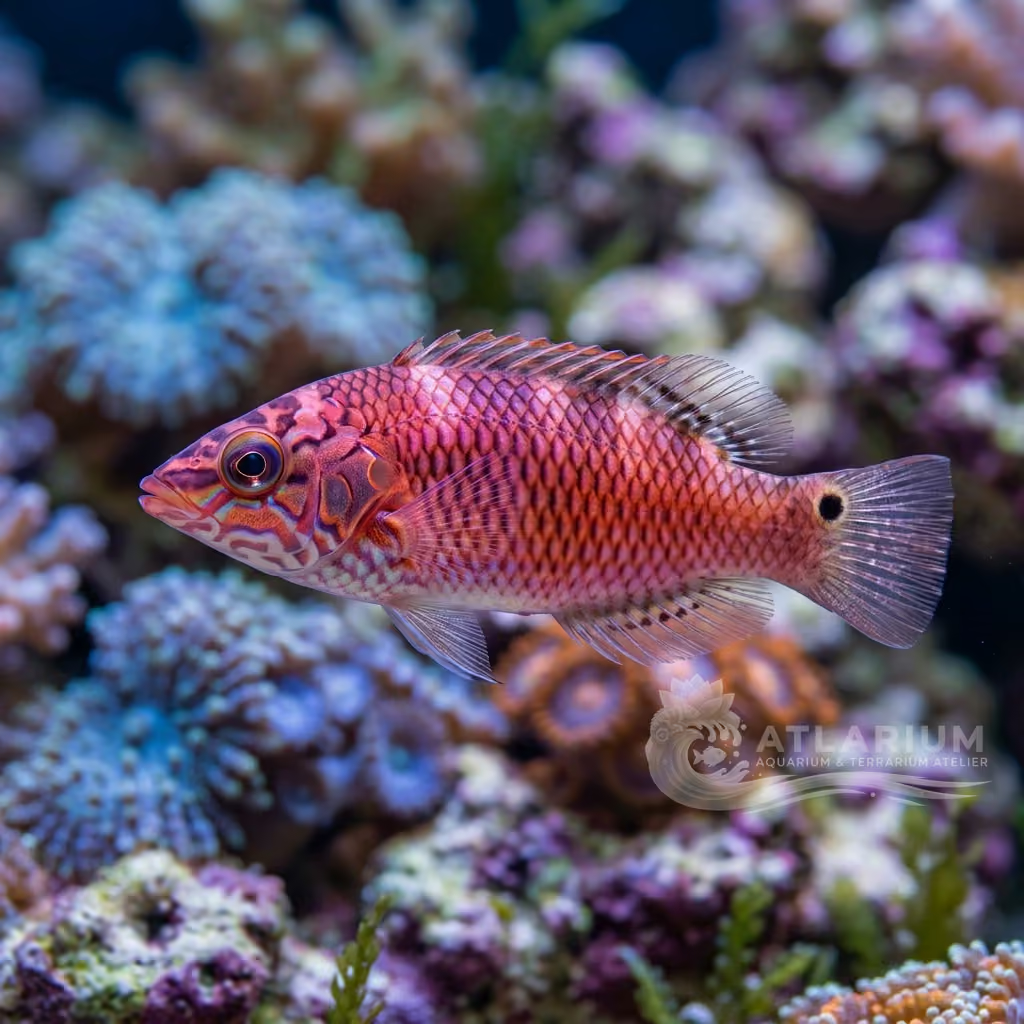
Coloration and Sexual Dimorphism: Sexual dimorphism is highly pronounced. Males showcase a brilliant orange-red body with electric blue longitudinal lines and a yellow anal fin with blue margins. Females are smaller, uniform pinkish-orange, with fainter blue stripes.

Care, breeding and tankmates
Aquarium Setup: Requires a tank of at least 200 liters with ample open swimming space and live rock structures forming caves. A fine sand bed of at least 2-3 cm is essential for burrowing. A tight-fitting lid is mandatory as they are notorious jumpers.
Diet and Feeding: Carnivorous and zooplanktivorous. Feed 2-3 times daily with small frozen or fresh foods like mysis, brine shrimp, and copepodi. Can eventually adapt to high-quality dry pellets or flakes.
Water Quality: Marine parameters must be kept stable: temperature 22-26°C, pH 8.1-8.4, specific gravity (SG) 1.020-1.025, GH 15-25, and KH 8-12. Efficient filtration and regular addition of trace elements help maintain its bright colors.
Compatibility and Cohabitation: Ideal for reef aquariums with corals (Reef Safe). Coexists peacefully with other mild-mannered fish of similar size. Avoid aggressive tankmates or fast feeders. House only one male per tank with a small group of females.
Aquarium Breeding: Extremely difficult in home aquariums. They are protogynous hermaphrodites. Captive breeding is restricted by a pelagic larval stage that demands microscopic food and controlled water flow.
Risks and Diseases: Prone to acclimation stress, during which it may hide in the sand bed for several days. If startled, it can collide with the glass or jump out of the aquarium. Susceptible to external parasites in poor water quality.

Geographic origin and distribution
Widespread in the Indo-Pacific, from Kenya and Madagascar to the Fiji Islands, north to the Ryukyu Islands of Japan. Inhabits seaward reefs and sheltered current-swept lagoons at depths of 15 to 40 meters, often near sandy slopes or rubble zones.
Origin
Tropical oceans and reefsAfrica and MadagascarEast Asia

Fish profile
- Temperament
- Peaceful
- They have an incredibly peaceful and shy disposition. Males flash their fins but rarely harm tank mates. They are easily bullied by more boisterous tank species.
- Diet
- Carnivore
- They are planktivores that feed on zooplankton. In captivity, they readily accept frozen mysis and brine shrimp. High-quality marine flakes can also be offered daily.
- Life expectancy
- 4-6 years
- Adult size
- 8 cm
- Sex ratio
- Harem
- Keep a single male with multiple females for natural behavior. Multiple males will fight unless the tank is massive. One male to three females is the ideal ratio.
- Feeding frequency
- 2-3 times daily
- They have a fast metabolism and need frequent feeding. Offer small meals two to three times per day. Consistent feeding maintains their vibrant colors and health.
- Bioload
- Low
- This species produces a low biological load. Their small size means they generate minimal waste. Standard protein skimming and regular water changes are adequate.
- Flow
- Moderate
- They prefer moderate to strong water movement. Good flow keeps their zooplankton food suspended for foraging. Ensure there are lower flow areas for resting at night.
- Jump risk
- Yes
- They have a notorious reputation for jumping. A tight-fitting lid or mesh screen is absolutely mandatory. Even tiny gaps can provide enough space to escape.
- Reproduction
- Oviparous
- They are protogynous hermaphrodites, with females becoming males. The dominant fish typically becomes a brightly colored male. Captive breeding is rare but courtship is common.
- Compatibility & tankmates
- Aggressive
- They are highly peaceful reef community fish. Avoid housing them with aggressive or large predatory species. They mix well with other peaceful wrasses in large tanks.
- Tank level
- All levels
- These wrasses swim in the middle to upper levels. They actively cruise open water looking for suspended food. At night, they seek shelter in bottom rock crevices.

Scientific Parameters & Models
FishBase
Window to the official scientific data of the species
FishBase v25.04Data synced on: 06/15/2026
- Trophic level
- 3.4 ± 0.45 se
- Resilience
- High (less than 15 months)
- Phylogenetic uniqueness (PD50)
- 0.5
- Bayesian Length-Weight
- a = 0.01072, b = 3.03
- VulnerabilityLow vulnerability (10 / 100)

Related species
Recommendations grouped by close relatives, companion choices, and similar care.