Encyclopaedia

Curated cards for behavior, feeding, and compatibility.

Copy the link or share this page so you can easily find it again.

FishFreshwaterIntermediate
©AI Generated·Proprietary

Teardrop Angelfish

Pterophyllum leopoldi

Less known than the common Angelfish and the imposing Altum, the Teardrop Angelfish (Pterophyllum leopoldi) is the smallest and rarest species in the genus. It is distinguished by a much stockier and squarer shape compared to its cousins, and above all by a characteristic black spot (teardrop-shaped) positioned below the base of the dorsal fin. Particularly appreciated for its more peaceful and less timid nature, it is a rare gem for fans of South American "blackwater" tanks who do not have extremely tall aquariums.

Water Temperature

25 - 29 °C

pH Value

5.5 - 7

Water type

Freshwater

Tank level

Middle

Adult size

10 cm

Minimum tank volume

>= 180 L

Minimum group

>= 5

GH

2 - 8 dGH

KH

1 - 4 dKH

TDS

40 - 160 ppm

Conductivity

63 - 250 uS/cm

Species description

Geographical Origin and Habitat: *Pterophyllum leopoldi* comes from the tropical whitewater and blackwater basins of the Rio Solimões, and in the Amazon River basin between the Manacapuru River and the Santarém region in Brazil. It almost exclusively frequents the marginal flooded zones (Igapó) of very slow-moving rivers, living camouflaged in the dense tangle of roots of trees fallen into the water.
Taxonomy and Morphology: It was described by Gosse in 1963 in honor of King Leopold III of Belgium. Morphologically, when compared to the common Angelfish, the *leopoldi* appears almost "compressed": it lacks the sharp vertical silhouette, presenting a surprisingly horizontal dorsal profile before the insertion of the dorsal fin. The snout also points slightly downward. It is the smallest of the genus, with a standard length rarely exceeding 10 cm (4 inches) and a wingspan (dorsal-anal) of about 15 cm (6 inches).
Social Behavior: Like all Angelfish, in their youth they form cohesive schools that move in unison among the roots. With sexual maturity, they tend to become less gregarious, but rarely fierce. Once the hierarchy is established, intimidating displays (flaring of the gills) replace actual biting. They become extremely trusting and curious if the aquarist avoids sudden movements in front of the tank.
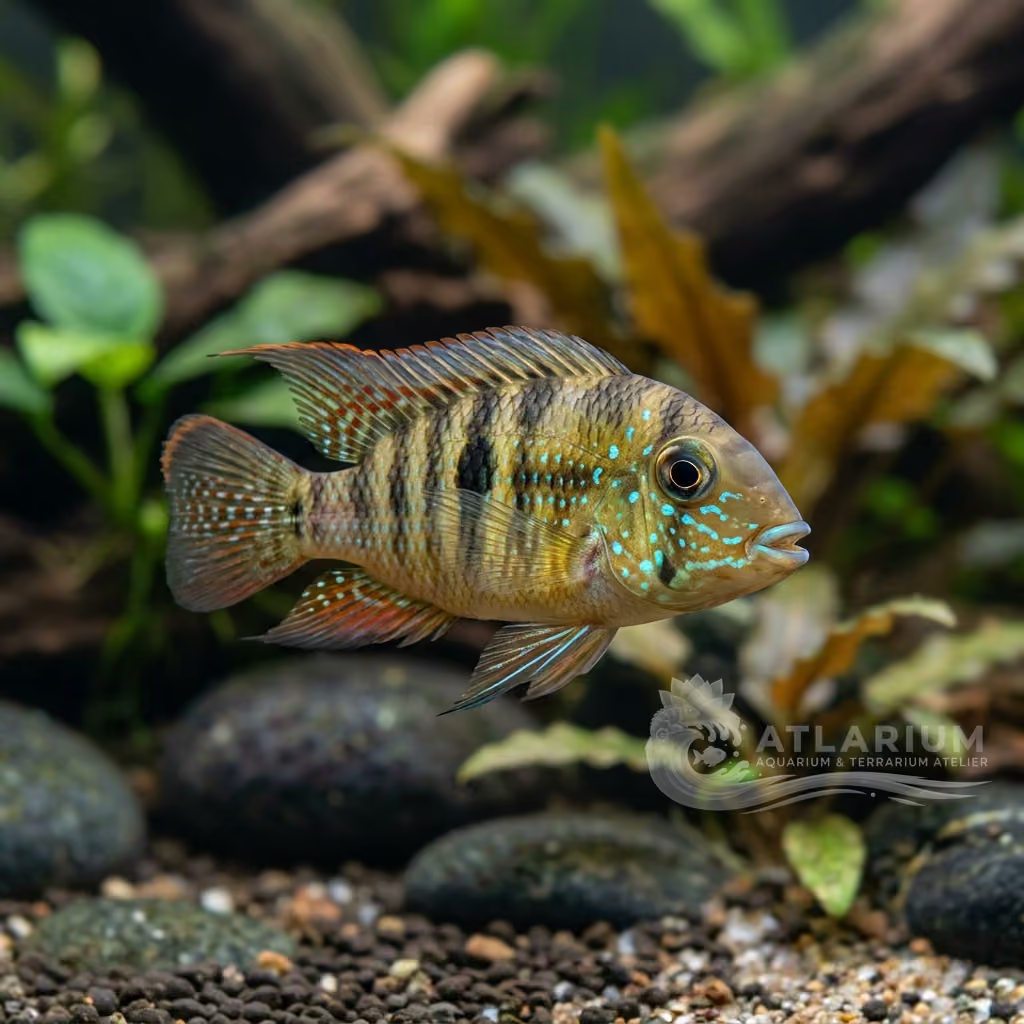
Coloration and Sexual Dimorphism: Its livery, while less flashy than its cousin Altum, is very characteristic. The body has a base color that shifts from pale green to golden-brown, crossed by irregular vertical black bands. The unmistakable distinguishing feature to identify it is the presence of a prominent and well-defined asymmetrical black spot (the so-called "teardrop") positioned on the flank, below the dorsal spine, between the first two broad vertical bands. There are often reddish speckles on the nape and in the eye. Sexual dimorphism is visually absent.

Care, breeding and tankmates

Aquarium Setup: Unlike *Pterophyllum altum*, the *leopoldi* has a much more compact profile and does not require an immense water column. A tank 45-50 cm (18-20 inches) high and at least 100 cm (3 feet) long (about 180-200 liters / 50 gallons) is perfectly adequate to house a group of adults. The ideal setup replicates a tangle of roots: branched bogwood placed vertically, a sand bottom, and an abundant leaf litter (Catappa or Oak). Peat filtration, which tints the water amber and lowers visibility, will drastically reduce their stress and highlight the brilliance of their scales.
Diet and Feeding: Being micropredators, in the wild they sift the biofilm and sludge on trunks in search of microcrustaceans, worms, and insect larvae. In the aquarium, they adapt quite quickly to a prepared diet. It is crucial to regularly feed small live or frozen food (daphnia, white and red bloodworms, brine shrimp) alternated with sinking micro-pellets. It must never be overfed with fatty foods or beef heart, which would irreparably compromise the fish's liver.
Water Quality: They are robust fish but sensitive to polluted parameters. The water must be maintained at consistently warm temperatures (25-29°C / 77-84°F), with a distinctly acidic pH (preferably between 5.5 and 6.5, although they tolerate 7.0) and soft water (GH 2-8). Nitrogenous compounds (ammonia and nitrites) must be strictly zero, and nitrates strictly under 15 ppm. Current in the tank must be limited, simulating a sheltered, slow-moving area of a river bend.
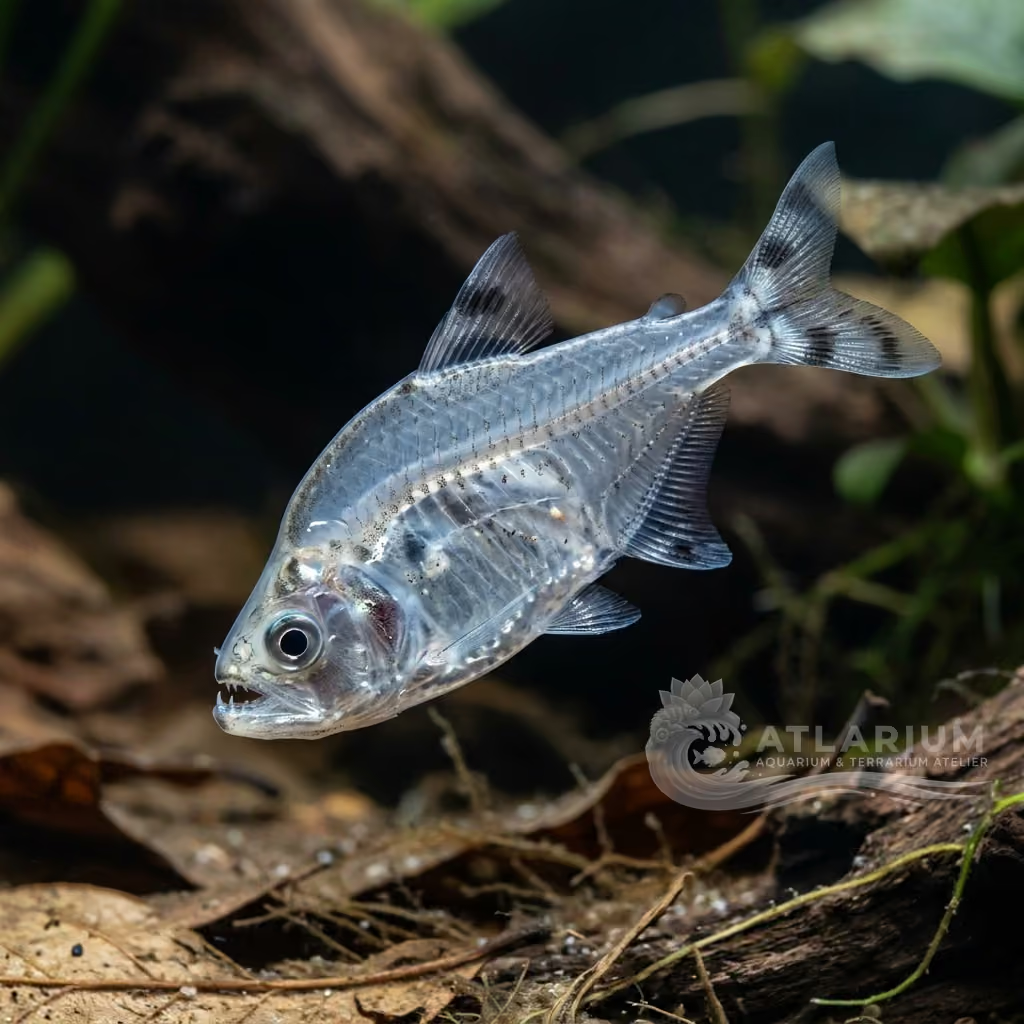
Compatibility and Cohabitation: It is arguably the most peaceful member of the *Pterophyllum* family. It is much less aggressive than the common Angelfish (*P. scalare*) and far less prone to preying on small torpedo-shaped fish (like Neon Tetras), partly due to its proportionally smaller mouth. The best tankmates are other docile Amazonian fish: large schools of Rummy-Nose Tetras (*Hemigrammus bleheri*), Cardinals, medium-small Corydoras, and Loricariids like *Otocinclus* or small *Peckoltia*.
Aquarium Breeding: Compared to domestic Angelfish that lay on any surface even in hard tap water, the *leopoldi* requires very specific conditions (often pure blackwater) to stimulate spawning. Pairs generally lay their eggs on broad vertical leaves (Echinodorus) or on the aquarium glass, often in much more shaded areas than other *Pterophyllum*. Both parents exhibit very strong parental care instincts, looking after the larvae until they are free-swimming.
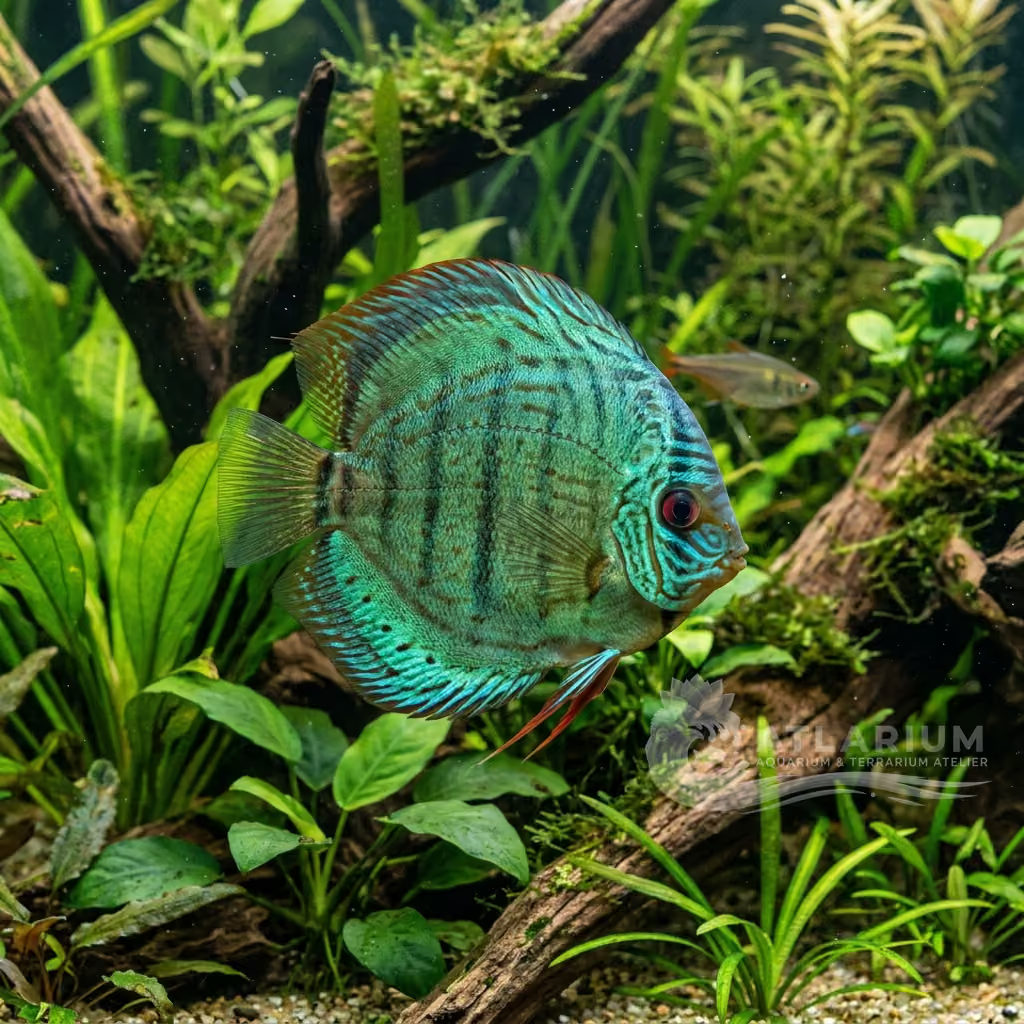
Risks and Diseases: Their natural shyness can become a problem if housed with overly boisterous or voracious fish, which will cause them to refuse food and waste away. As with Discus and Altums, they are highly sensitive to intestinal parasites (Spironucleus/Hexamita) in the presence of environmental stress or inadequate diets.

Geographic Origin and Distribution

*Pterophyllum leopoldi* comes from the tropical whitewater and blackwater basins of the Rio Solimões, and in the Amazon River basin between the Manacapuru River and the Santarém region in Brazil. It almost exclusively frequents the marginal flooded zones (Igapó) of very slow-moving rivers, living camouflaged in the dense tangle of roots of trees fallen into the water.

Origin

Amazon, Orinoco, and Guianas

Fish profile

Temperament
Aggressive
They are generally relaxed and highly observant. They occasionally bicker over territorial boundaries. Heavy planting keeps them feeling completely secure.
Diet
Omnivore
They accept a wide omnivorous diet readily. High-quality flakes form a solid baseline. Frozen daphnia provides excellent nutritional enrichment.
Life expectancy
8-12 years
The lifespan of Leopold's Angelfish in captivity ranges between 8 and 12 years when kept in a suitable environment. Being the most compact species of its genus, it is highly affected by stress caused by poor water quality or overcrowding. Adequate parameter maintenance and a balanced diet are the key factors in ensuring its longevity.
Adult size
10 cm
The catalog's scalar value is 10 cm. The FishBase SPECIES table (v25.04 snapshot) source reports a maximum adult measurement of 5 cm for this species, recorded as standard length (SL). The taxonomic record consulted is Pterophyllum leopoldi (v25.04); male or unsexed record. These figures are not interchangeable: the first is the profile's editorial reference, whereas the second is a published maximum under a specific measurement convention; differences among sources can reflect sex, population, life stage and measuring method.
Sex ratio
Group
Pairs naturally form from a larger group. Removing unpaired fish reduces tank aggression. A single pair dominates smaller aquarium setups.
Feeding frequency
Twice daily
Feeding them twice a day is optimal. Ensure all food is consumed within minutes. Avoid overfeeding to maintain pristine water.
Bioload
The Pterophyllum leopoldi produces a moderate bioload. Regular water changes maintain good quality. A mature aquarium handles their waste easily.
Flow
Weak
Gentle to moderate water flow is preferred. They navigate calmly through slow-moving currents. Extreme turbulence should be entirely avoided.
Jump risk
No
Reproduction
Oviparous
Breeding requires soft and highly acidic water. They clean broad leaves for spawning sites. Both parents attentively care for the eggs.
Compatibility & tankmates
Peaceful
They are peaceful in a community setting. Do not keep them with fin-nipping species. They peacefully coexist with medium-sized tetras.
Tank level
Middle
They favor the middle areas of aquariums. Tall plants provide them with essential structure. They occasionally surface during feeding times.

Scientific Parameters & Models

FishBase

Window to the official scientific data of the species

Data synced on: 06/15/2026
Trophic level
3.1 ± 0.4 se
Resilience
High (less than 15 months)
Phylogenetic uniqueness (PD50)
0.625
Bayesian Length-Weight
a = 0.02692, b = 3.02
VulnerabilityLow vulnerability (10 / 100)

Image gallery

Licensed images linked to the species or, when marked, to the closest representative taxon.

Related species

Recommendations grouped by close relatives, companion choices, and similar care.

Last updated: 05/13/2026
Teardrop Angelfish (Pterophyllum leopoldi) Care Guide & Tank Setup | Atlarium