Rhynchitis Demonfish
Satanoperca rhynchitis
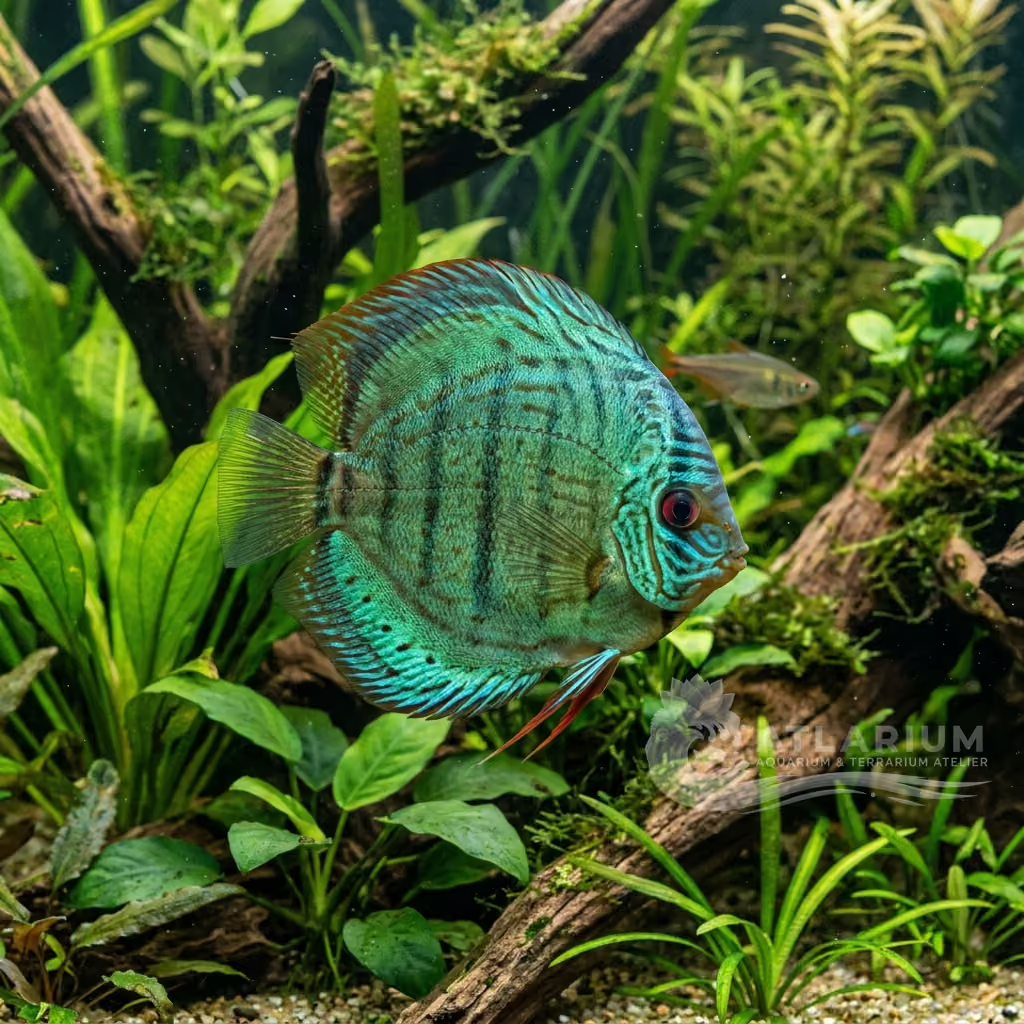
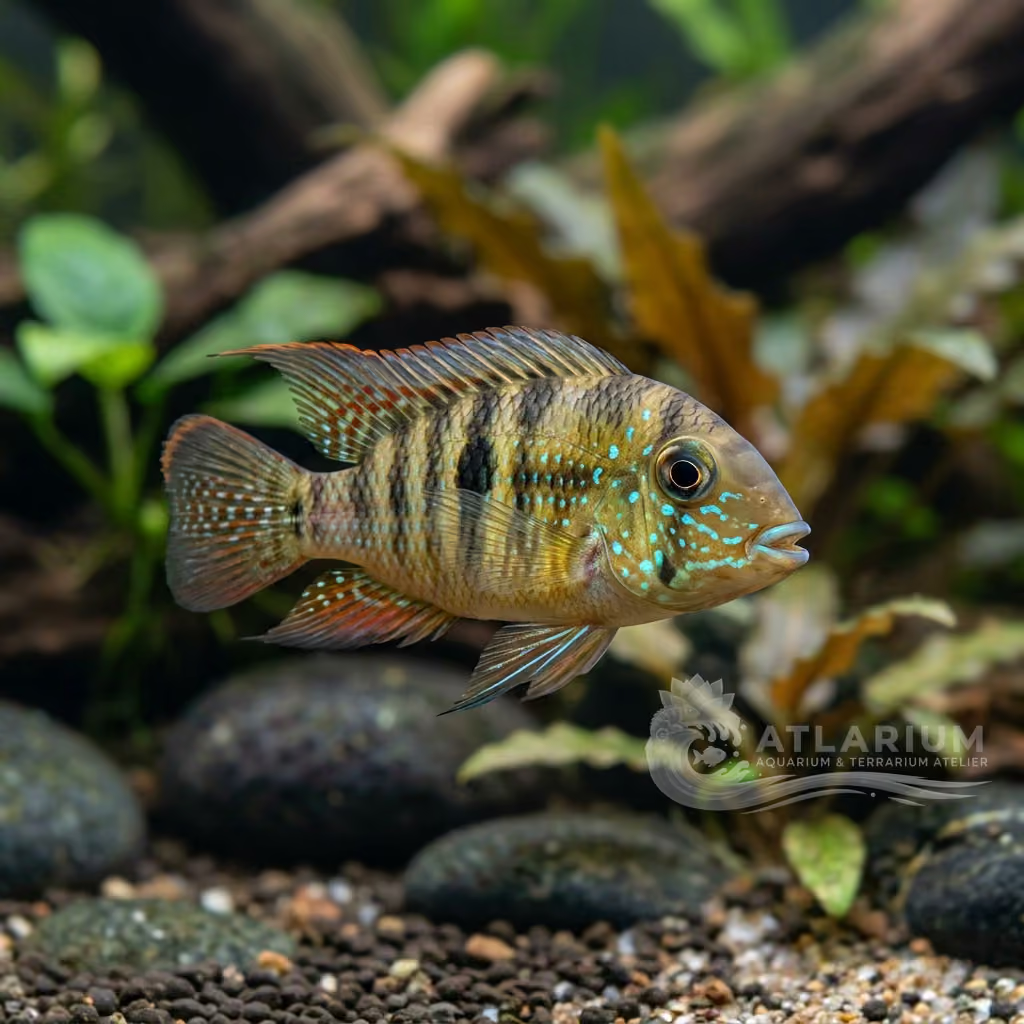
The 'Nosed Demon Eartheater' (18-20 cm). A relatively recent taxonomic discovery, in the past often confused with the very common Satanoperca jurupari. The Satanoperca rhynchitis is distinguished by the incredibly acute and elongated snout profile (hence the name rhynchitis, nose/beak bearer) and by a splendid pattern of irregular blue spots on the throat and cheeks. Originating from the eastern Amazonian border, it is a peaceful, moderately sensitive and schooling eartheater, which demands impalpable sand bottoms to be able to exercise its continuous, hypnotic and tranquil feeding dredging.
26 - 29 °C
5.5 - 7
Freshwater
Bottom
20 cm
>= 180 L
>= 1
1 - 6 dGH
1 - 3 dKH
25 - 120 ppm
39 - 188 uS/cm

Species description

Care, breeding and tankmates

Geographic origin and distribution
Origin

Fish profile
- Temperament
- Semi-aggressive
- They are very peaceful and can be somewhat shy. They will not bother other fish unless protecting a spawn. Providing adequate cover and conspecifics boosts their confidence.
- Diet
- Omnivore
- They sift sand continuously to find benthic invertebrates. Offer a diet of sinking cichlid pellets, blackworms, and frozen brine shrimp. Coarse substrate will severely limit their natural feeding behavior.
- Life expectancy
- 6-10 years
- Adult size
- 20 cm
- Sex ratio
- School
- Keep them in a shoal of 5 to 6 individuals. They are schooling cichlids that rely on group dynamics to feel secure. A healthy group will display interesting social hierarchies.
- Feeding frequency
- Twice daily
- Provide 2 to 3 small meals per day. This frequent feeding matches their natural constant grazing. Ensure food sinks quickly before top-feeders consume it all.
- Bioload
- Medium to High
- They produce a high bioload similar to other Satanoperca. Strict maintenance and high-end filtration are required. They are very susceptible to hole-in-the-head disease if water quality drops.
- Flow
- Stagnant
- A gentle to moderate current is highly preferred. Excessive flow will disturb the sandy bottom they rely on. They appreciate calm, shaded areas under driftwood.
- Jump risk
- No
- Reproduction
- Oviparous
- Breeding is difficult and infrequently seen in the hobby. They are delayed mouthbrooders that need very soft, acidic water to spawn. Raising the fry requires dedicated care and feeding.
- Compatibility & tankmates
- Peaceful
- They are peaceful and suitable for a peaceful South American community. Keep them with medium-sized peaceful tetras and peaceful bottom dwellers. Aggressive cichlids will outcompete them for food.
- Tank level
- Bottom
- They are strict bottom dwellers that rarely visit the upper water column. Their entire life revolves around the sandy substrate. A tank with a large footprint is much better than a tall tank.

Scientific Parameters & Models
Window to the official scientific data of the species
- Trophic level
- 3.1 ± 0.4 se
- Resilience
- High (less than 15 months)
- Phylogenetic uniqueness (PD50)
- 0.5039
- Bayesian Length-Weight
- a = 0.02754, b = 3.02
- VulnerabilityLow vulnerability (10 / 100)

Related species
Recommendations grouped by close relatives, companion choices, and similar care.