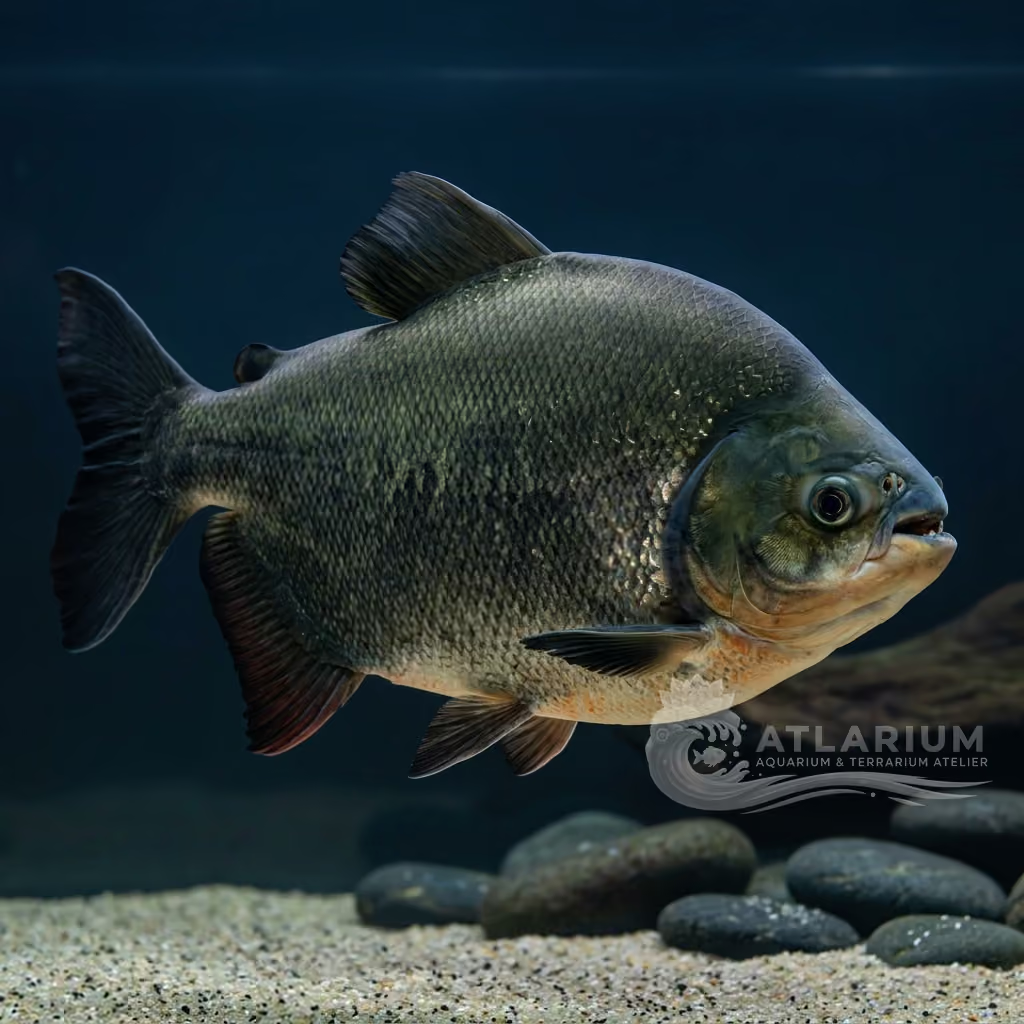
Black Piranha
Serrasalmus rhombeus
A solitary and highly aggressive predator from South America. The Redeye Piranha features a dark rhomboid body and ruby eyes. Requires a massive tank and strict solitary housing.
Water Temperature
24 - 28 °C
pH Value
5.5 - 7.5
Water type
Freshwater
Tank level
Middle
Adult size
45 cm
Minimum tank volume
>= 500 L
Minimum group
>= 1
GH
2 - 15 dGH
KH
1 - 7 dKH
TDS
40 - 295 ppm
Conductivity
63 - 461 uS/cm

Species description
Geographical Origin and Habitat: This species is widely distributed throughout the Amazon and Orinoco river basins, as well as coastal rivers of the Guianas in South America. It occupies a diverse range of freshwater habitats, including deep main river channels, flooded forests (igapó), and fast-flowing tributaries.
Taxonomy and Morphology: Belongs to the class Actinopterygii, order Characiformes, family Serrasalmidae, and genus Serrasalmus. Known as the Redeye Piranha, it features a distinctive laterally compressed rhomboid body shape, a powerful underslung jaw, and razor-sharp, triangular teeth.
Social Behavior: An extremely territorial and solitary predator. Unlike Pygocentrus piranhas, it does not form schools and exhibits intense intraspecific aggression. They will attack, mutilate, or consume any other fish in the enclosure, making them unsuitable for community tanks.
Coloration and Sexual Dimorphism: Juveniles are silvery with dark spots. As they mature, the body color darkens, eventually turning a deep charcoal grey or jet black in old specimens. The eyes develop a striking, intense ruby-red color. There is no visible sexual dimorphism between males and females.

Care, breeding and tankmates
Aquarium Setup: Requires a very large aquarium of at least 300-400 liters (80-100 gallons) for a single adult. The layout should include large driftwood roots, smooth rocks, and robust plants to provide shade. A secure, heavy lid is mandatory, along with a powerful external filtration system.
Diet and Feeding: Strictly carnivorous. Feed a varied diet of fresh or frozen fish fillets (such as trout or silversides), whole shrimp, mussels, and earthworms. Avoid feeding live feeder fish from stores, as they frequently carry pathogens and parasites that can infect the piranha.
Water Quality: Prefers soft, slightly acidic conditions: pH 6.0-7.2, water hardness (GH) 5-12 dGH, and temperature 24°C-28°C (75°F-82°F). Due to the high amount of waste produced by their meaty diet, large weekly water changes of 30% to 40% and strong filtration are required.
Compatibility and Cohabitation: Must be housed alone in a single-specimen aquarium. Do not attempt to keep with other fish, invertebrates, or conspecifics. Any tankmates will eventually be hunted and killed, as this species is an uncompromising solitary predator.
Aquarium Breeding: Breeding in home aquaria is exceptionally rare and poorly documented due to the extreme aggression between specimens. In nature, temporary pairs form to spawn in nests dug into the substrate, followed by fierce parental protection of the eggs.
Risks and Diseases: Prone to fungal skin infections and bacterial diseases if water parameters deteriorate. A significant risk is physical injury to the aquarist; their bite can cause severe lacerations. Use extreme caution during maintenance and never put hands near the fish.

Geographic origin and distribution
This species is widely distributed throughout the Amazon and Orinoco river basins, as well as coastal rivers of the Guianas in South America. It occupies a diverse range of freshwater habitats, including deep main river channels, flooded forests (igapó), and fast-flowing tributaries.
Origin
Amazon, Orinoco, and GuianasEurope, Mediterranean, and West Asia

Fish profile
- Temperament
- Semi-aggressive
- They are incredibly aggressive, territorial, and solitary predators. They will not hesitate to bite the hand that feeds them, so extreme caution is required during tank maintenance. Despite their fearsome reputation, they can be skittish and require a dark, quiet environment to feel secure.
- Diet
- Omnivore
- They are formidable predators that require a diet of meaty foods. Offer them fish fillets, shrimp, earthworms, and occasionally appropriately sized live foods if legally permitted and quarantined. Avoid mammalian or avian meats as the lipids cannot be properly digested.
- Life expectancy
- 15-20 years
- Adult size
- 45 cm
- Sex ratio
- Solitary
- Because they must be housed alone, sex ratio is irrelevant for the home aquarist. Sexing them visually is nearly impossible without observing breeding behaviors in the wild. You should only ever keep one individual per tank.
- Feeding frequency
- Twice daily
- Juveniles should be fed once a day to support their growth. Adults can be fed a large meal once every few days, replicating their feeding habits in the wild. Remove any uneaten food immediately to prevent severe water quality degradation.
- Bioload
- Extreme
- The Black Piranha produces a very heavy bioload due to its large size and predatory diet. They generate substantial amounts of waste after processing large, protein-rich meals. Over-filtration and frequent, large water changes are essential to maintain safe water parameters.
- Flow
- Stagnant
- They prefer moderate water flow that provides excellent oxygenation. They originate from various river environments in the Amazon basin, many of which have steady currents. Providing a powerhead can encourage them to swim and stay active.
- Jump risk
- Yes
- They have a moderate jump risk, especially when startled or aggressively striking at food at the surface. Their sheer power means they can easily dislodge a flimsy aquarium lid. A heavy, tightly secured cover is mandatory for their safety and yours.
- Reproduction
- Oviparous
- Breeding this species in captivity is virtually unheard of due to their extreme solitary aggression. In the wild, they reproduce during the wet season among flooded vegetation. Attempting to pair them in home aquariums almost always results in the death of one fish.
- Compatibility & tankmates
- Species only
- They are highly aggressive and absolutely intolerant of tank mates. Even fish larger than themselves or thick-scaled armored catfish will eventually be attacked or killed. They must be kept strictly as solitary specimens in a species-only aquarium.
- Tank level
- Middle
- They are mid-water swimmers that will utilize the entire aquarium space. They prefer having some cover, such as large driftwood pieces, to retreat behind. Ensure there is ample open swimming room for them to patrol their territory.

Scientific Parameters & Models
FishBase
Window to the official scientific data of the species
FishBase v25.04Data synced on: 06/15/2026
- Trophic level
- 4 ± 0.4 se
- Resilience
- High (less than 15 months)
- Phylogenetic uniqueness (PD50)
- 0.5
- Bayesian Length-Weight
- a = 0.01288, b = 3.19
- VulnerabilityModerate vulnerability (40 / 100)

Related species
Recommendations grouped by close relatives, companion choices, and similar care.