

Encyclopaedia
Red-Bellied Pacu
Piaractus brachypomus
The 'Vegetarian Piranha' and the Tank Buster (60-80 cm / 2-3 feet). The Pacu represents the most irresponsibly sold fish in the entire aquarium industry. At 2 inches long, they look absolutely identical to the deadly, bloodthirsty Red-Bellied Piranha, complete with a gorgeous, glowing red belly. Unknowing beginners buy them thinking they are getting a badass killer. Instead, the Pacu is a peaceful, fruit-eating, skittish giant that explodes in growth to the size of a trash-can lid (weighing up to 50 lbs). They possess horrifyingly human-like square teeth for crushing walnuts, completely destroy all aquarium plants, and strictly require massive 1,000+ gallon indoor ponds.
Share
Check out Red-Bellied Pacu on Atlarium
24 - 28 °C
6 - 7.5
Freshwater
All levels
88 cm
>= 500 L
>= 1
2 - 15 dGH
1 - 7 dKH
40 - 295 ppm
63 - 461 uS/cm
Species description
Care, breeding and tankmates
Geographic Origin and Distribution
Origin
Fish profile
- Temperament
- Semi-aggressive
- Diet
- Omnivore
- Sex ratio
- Solitary
- Feeding frequency
- Twice daily
- Bioload
- The Redbelly pacu produces a massive bioload due to its extremely large adult size and constant eating habits. Exceptional mechanical and biological filtration is absolutely essential. Keeping nitrates under control requires huge, routine water changes and meticulous tank maintenance.
- Flow
- Stagnant
- Reproduction
- Oviparous
- Compatibility & tankmates
- Despite their intimidating size and relation to piranhas, they are generally peaceful herbivores. They should be kept with other large, robust, and peaceful fish that will not nip their fins. Small fish may be accidentally eaten if they fit in the pacu's mouth, but they are not active predators.
- Tank level
- All levels
Window to the official scientific data of the species
Scientific Parameters & Models
- Trophic level
- 2.5 ± 0.22 se
- Resilience
- Low (4.5 - 14 years)
- Phylogenetic uniqueness (PD50)
- 0.625
- Bayesian Length-Weight
- a = 0.03162, b = 2.99
Image gallery
Licensed images linked to the species or, when marked, to the closest representative taxon.
Related species
Recommendations grouped by close relatives, companion choices, and similar care.
Variants and close relatives
Same atlas type, nearby scientific identity, genus, or family.

Silver Dollar
Metynnis argenteus

Black Spot Piranha (Orinoco Piranha / Cariba)
Pygocentrus cariba

Black Piranha
Serrasalmus rhombeus
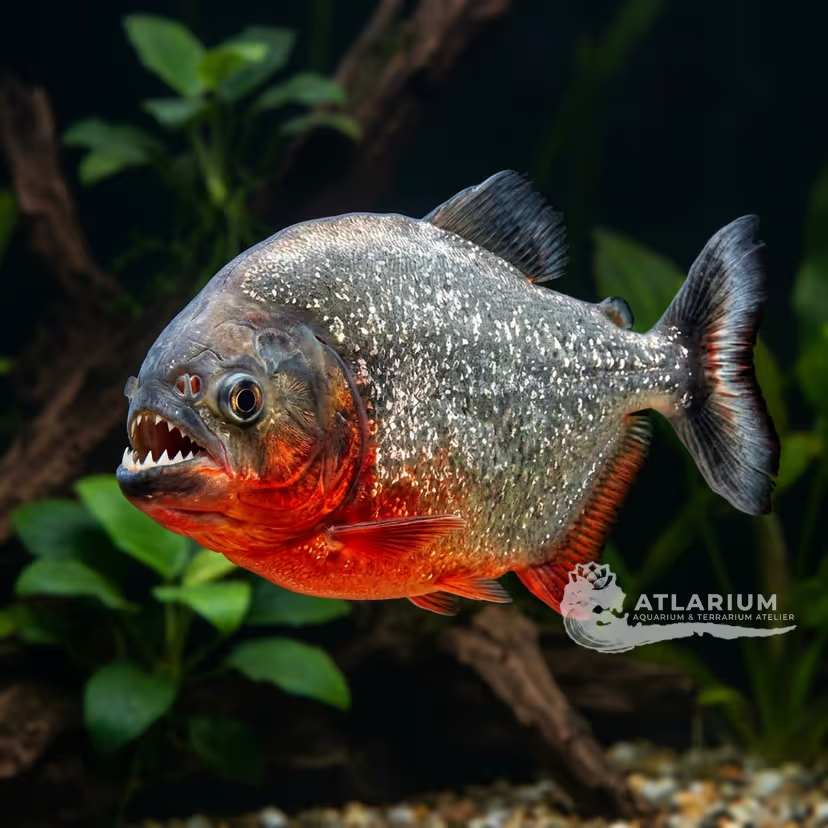
Red-Bellied Piranha
Pygocentrus nattereri

Tambaqui (Black Pacu)
Colossoma macropomum

Redhook Myleus
Myloplus rubripinnis
Recommended companions
Compatible cards from coherent ecosystems with matching parameters.

Ammannia sp. 'Bonsai'
Ammannia sp. 'Bonsai'

Bacopa sp. "Japan"
Bacopa sp. "Japan"

Bolbitis heteroclita
Bolbitis heteroclita

Arrowhead Anubias
Anubias hastifolia

Bucephalandra motleyana "Braun-rot narrow"
Bucephalandra motleyana "Braun-rot narrow"

Bucephalandra motleyana "Riam Macam"
Bucephalandra motleyana "Riam Macam"
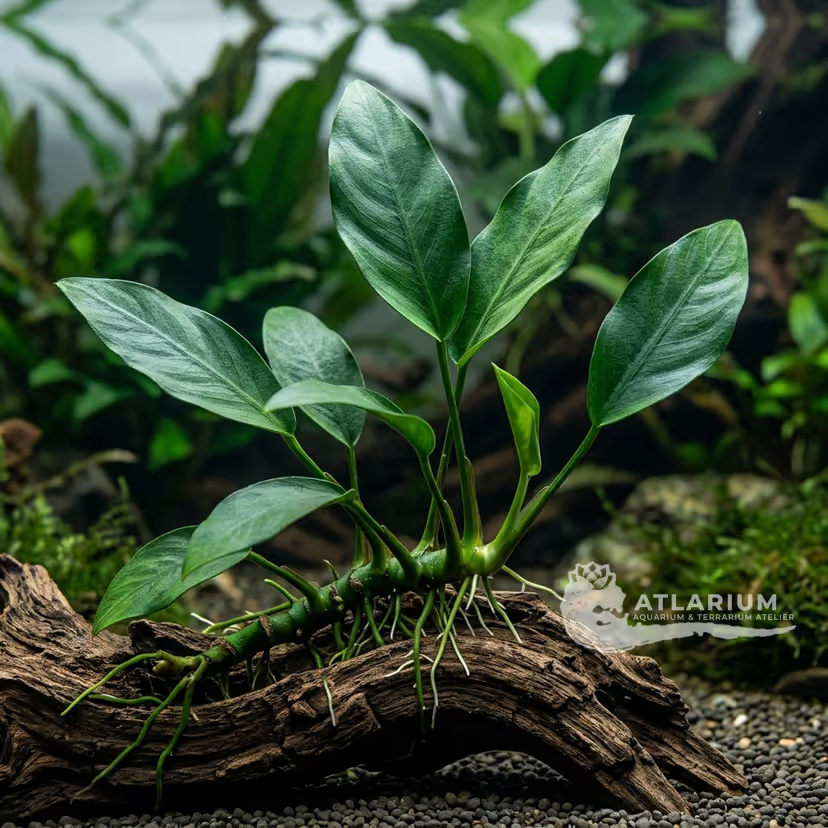
Anubias
Anubias barteri

Anubias nana
Anubias barteri var. nana

Bucephalandra motleyana "Braun-rot" ("Serimbu")
Bucephalandra motleyana "Braun-rot" ("Serimbu")

Bucephalandra motleyana "Kapit"
Bucephalandra motleyana "Kapit"

Bucephalandra motleyana "Pancuraji"
Bucephalandra motleyana "Pancuraji"

Bucephalandra sp. "Bukit Kelam / Sintang"
Bucephalandra sp. "Bukit Kelam / Sintang"

Bucephalandra sp. "Melawi"
Bucephalandra sp. "Melawi"

Anubias barteri var. nana 'Round Leaf'
Anubias barteri var. nana 'Round Leaf'

Anubias congensis
Anubias congensis

Anubias gigantea
Anubias gigantea
Similar care
Cards with similar requirements, difficulty, habitat, and husbandry profile.

Angelfish
Pterophyllum scalare

Rabaut's Corydoras / Rust Corydoras
Corydoras rabauti

Three Stripe Corydoras (False Julii)
Corydoras trilineatus

Zygatus Cory
Corydoras zygatus

Amazon Cichlasoma (Cichlasoma amazonarum)
Cichlasoma amazonarum

Blackmask Corydoras
Corydoras atropersonatus

Schwartz's Corydoras
Corydoras schwartzi

Bass Tetra
Hemigrammus marginatus

Coffee-bean Tetra
Hyphessobrycon takasei
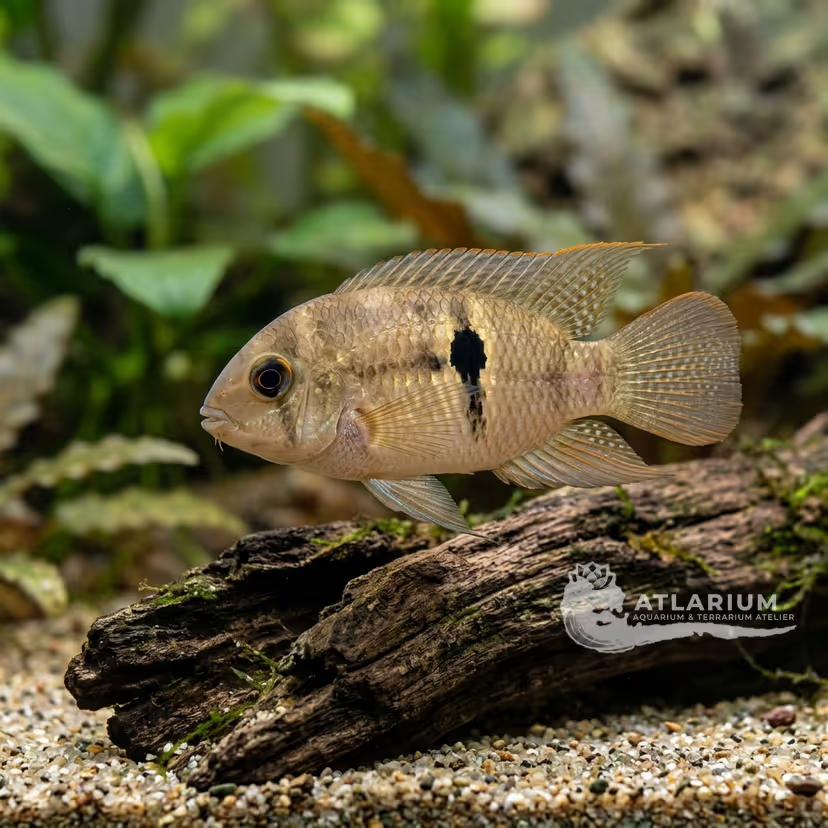
Keyhole cichlid
Cleithracara maronii
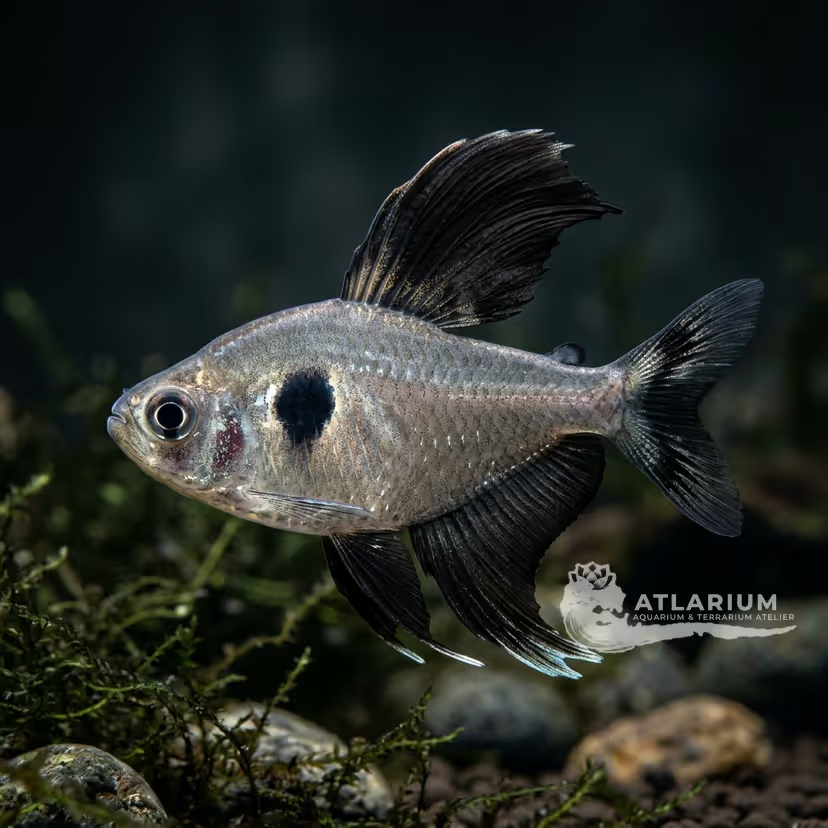
Black Phantom Tetra
Hyphessobrycon megalopterus

Blue Spotted Corydoras / Guianacara
Corydoras melanistius

False Spotted Corydoras
Corydoras leucomelas
Redbreast Acara
Laetacara dorsigera

Big-Eyed Ancistrus (L144a)
Ancistrus macrophthalmus

Blue Corydoras
Corydoras nattereri