Encyclopaedia
Maingano Cichlid
Melanochromis cyaneorhabdos
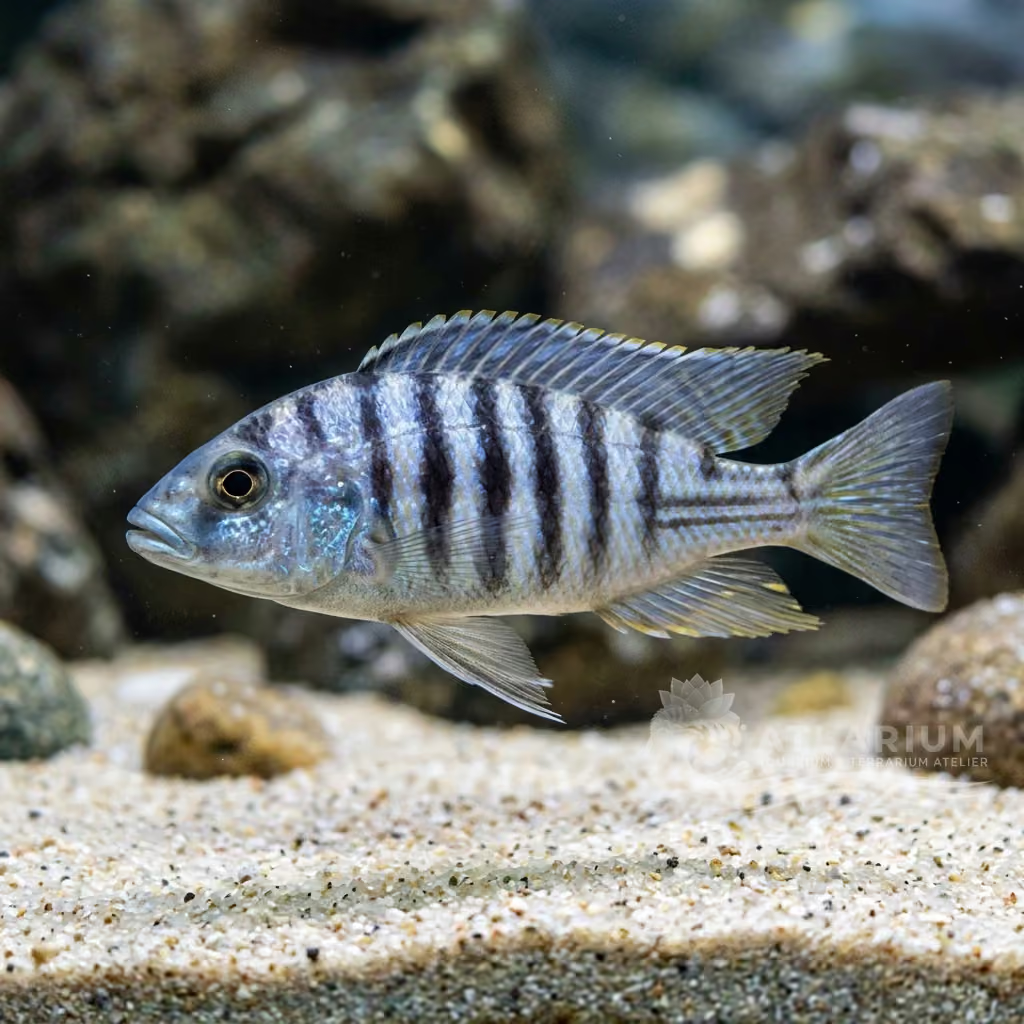
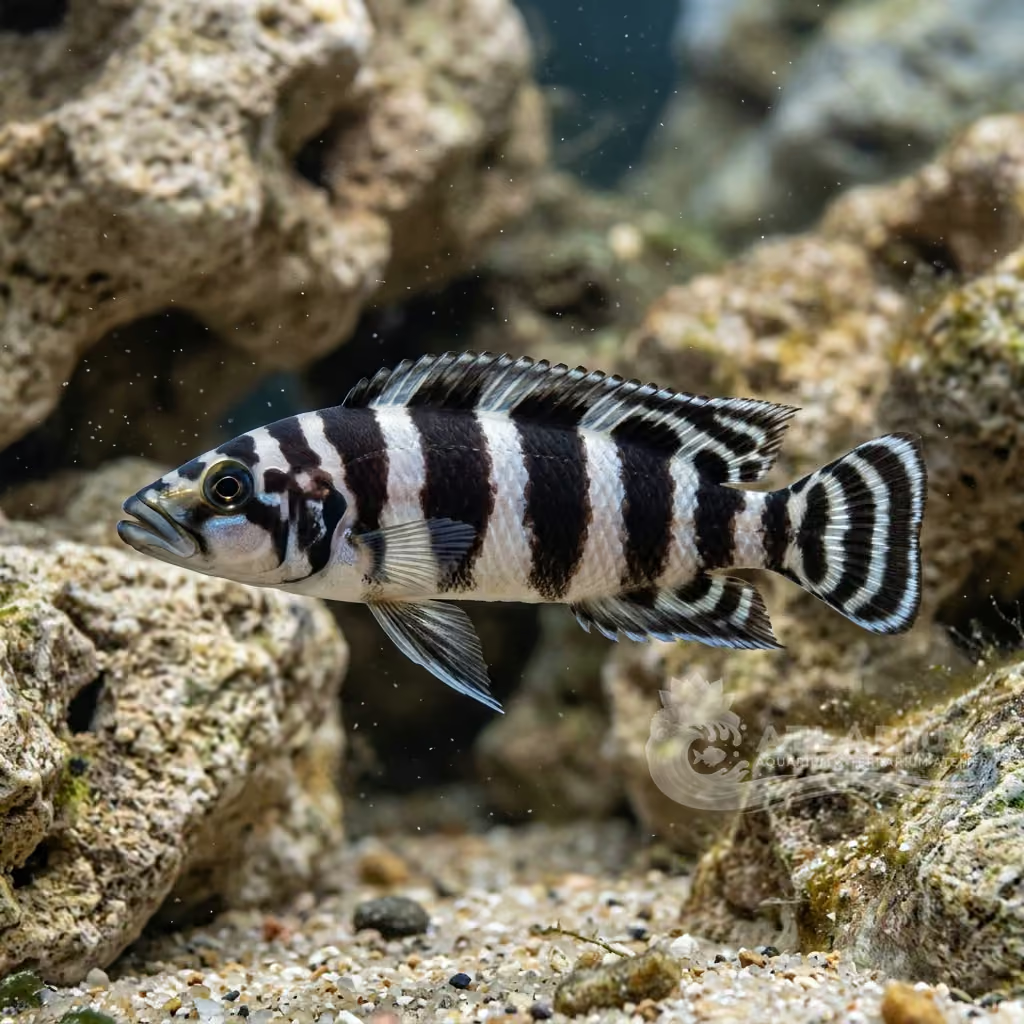
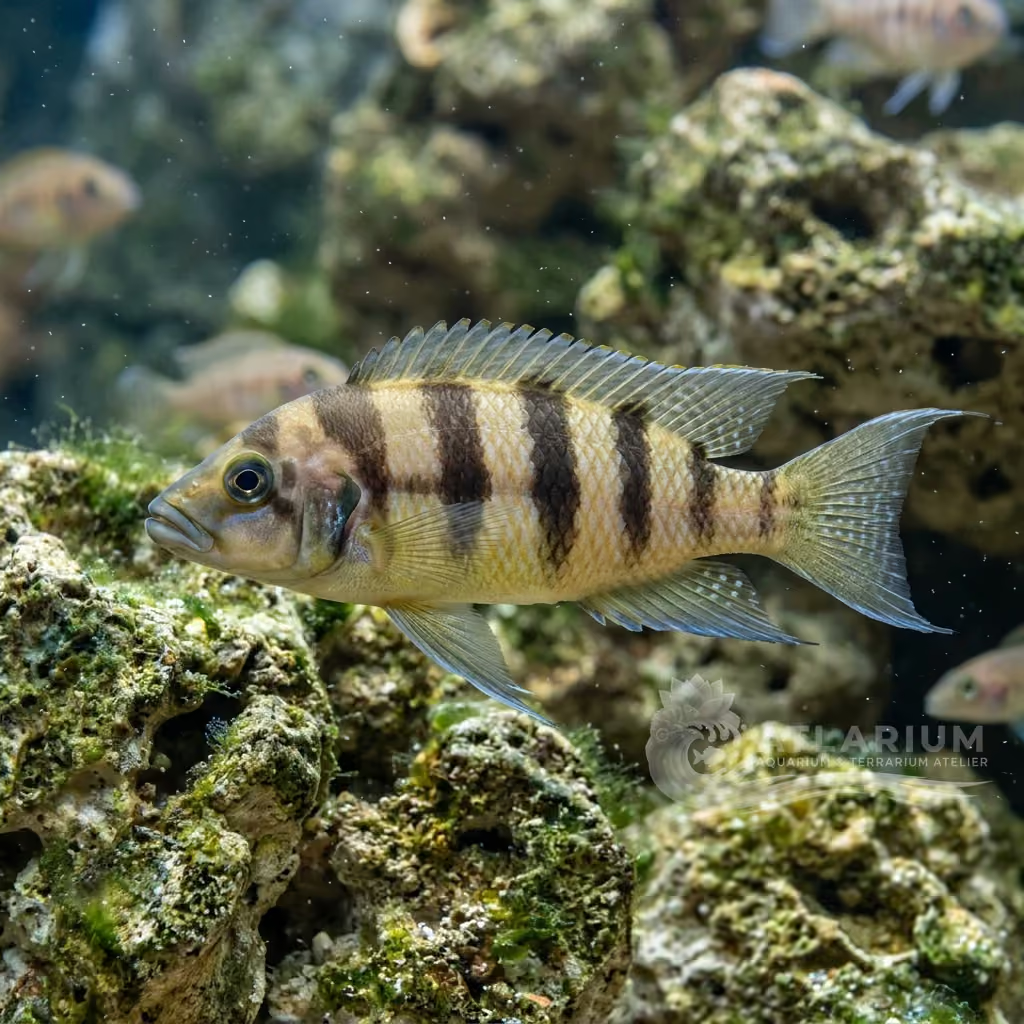
The Maingano Cichlid (*Melanochromis cyaneorhabdos*) is an enchanting and very elegant Mbuna famous for its hydrodynamic "torpedo" silhouette (typical of Melanochromis) and for its extraordinarily homogeneous livery: both males and females sport a dark blue or inky black background color, crossed horizontally by sharp luminescent electric blue (neon blue) stripes. This lack of evident chromatic sexual dimorphism distinguishes it from its close cousin *M. johannii* (where the females are yellow/orange). Behind this hypnotic and tapered beauty, however, lies a ruthless territorial killer: it is one of the most aggressive, intolerant and bellicose Mbuna of the lake, capable of literally exterminating any male of its own species or fish with similar striped patterns if not kept in huge rocky tanks.
- Family
- Cichlidae
- Origin
- Africa (Endemico del Lago Malawi, ristretto all'isola di Likoma, tra Maingano e Mbako Point)
- Origin
- Africa and Madagascar
- Tank use
- Used in 0 tanks
Share
24 °C - 28 °C
7.8 - 8.6
Freshwater
Bottom and middle
10 cm
Description
Geographic Origin and Biotope: Endemic to Lake Malawi in East Africa (specifically localized around Likoma Island). It is an "Mbuna" strictly confined to steeply sloping, rocky coastlines and sheer underwater cliffs devoid of sandy sediments, dwelling entirely within deep, dark rocky crevices.
Taxonomy and Morphology: Universally known in the hobby as the "Maingano". Belongs to the notorious Melanochromis genus, characterized by incredibly elongated, slender, torpedo-like bodies designed for rocketing through tight rocky labyrinths at blistering speeds. Reaches a maximum length of about 10 cm (4 inches).
Social Behavior: Highly dynamic, lightning-fast, and hyper-aggressive. It is considered one of the "bad boys" of the Malawi cichlid world, though slightly less psychotic and murderous than its infamous cousin, the Auratus (Melanochromis auratus). An incredibly tough fighter, it stubbornly claims a network of caves and relentlessly attacks trespassers with rapid-fire chases and lethal bites.
Coloration and Sexual Dimorphism: A spectacular display of horizontal striping. The entire body is slashed by alternating, thick horizontal bands of dark blue (almost black) and a blazing "Electric Neon Blue". **Extreme Lack of Dimorphism:** Unlike most Melanochromis (where males and females are opposite colors), Maingano BOTH males AND females share the exact same beautiful blue/black striped livery. Only an expert eye can tell them apart: dominant males have an intensely dark belly and brighter yellow "egg-spots" on the anal fin.
Care and observations
Tank Setup: Demands an extreme "Mbuna-style" setup. Minimum tank size is 120 cm / 4 feet (250+ liters / 65+ Gallons). It is absolutely imperative to build a massive, labyrinthine wall of rocks stacked almost to the water's surface, creating countless escape routes, dark caves, and visual barriers. Without dense rockwork to break lines of sight, the dominant male will systematically murder every tankmate in open water.
Feeding and Diet: Omnivore / "Aufwuchs" grazer. Requires a high-fiber, plant-based diet. Feed strictly with premium sinking Mbuna pellets rich in Spirulina and Kelp. While it can tolerate small amounts of animal protein (like occasional frozen mysis or krill), a diet based on heavy meaty carnivore foods will rapidly cause lethal intestinal bloating.
Water Quality: Strict African Rift Lake chemistry is required: hard and alkaline. pH must be locked between 7.8 and 8.6, with a high GH of 10-25. Temperature: 24-27°C (75-81°F). The controlled overstocking required to disperse Mbuna aggression demands titanic biological filtration and massive, weekly water changes to keep the water pristine and oxygen-rich.
Compatibility: Social management is a minefield. A Harem system is required (1 male to a strict minimum of 3-5 females); keeping a single female with a male is a death sentence for her. Compatible only with equally robust Mbuna (Metriaclima, Labeotropheus) that DO NOT have horizontal stripes and are NOT blue/black. Mixing them with similarly patterned fish (like Pseudotropheus johannii) will trigger mistaken-identity bloodbaths.
Reproduction in Captivity: Highly active Maternal Mouthbrooders. Spawning occurs deep within a dark cave. The male shivers violently to seduce the female. She lays up to 30 eggs, scoops them into her mouth, and inhales the male's sperm to fertilize them in her buccal cavity. Because the tank is a warzone, the brooding female (who fasts for 3 weeks) must have access to tiny, inaccessible crevices to survive the incubation without spitting her eggs from stress.
Risks and Diseases: 1. Stress-Induced Murder: the #1 cause of death is the dominant male butchering subdominant males or his own females due to a lack of hiding spots. 2. Identification Catastrophe: because males and females look identical, hobbyists often unknowingly buy multiple males at the store, leading to a guaranteed massacre. 3. Malawi Bloat from improper diet.
Fish profile
- Temperament
- Iper-aggressivo e dispotico. In perenne pattugliamento ad alta velocità lungo il perimetro delle rocce. Il maschio dominante instaura un regime di terrore verso ogni simile o pesce con strisce blu orizzontali.
- Diet
- Erbivoro / Brucatore di Aufwuchs. Altamente incline a morte per 'Malawi Bloat' se l'allevatore inesperto cede alla tentazione di fornirgli diete carnee per assecondare la sua voracità assassina. Solo e unicamente scaglie e granuli vegetali (Spirulina, Chlorella), supportati dalle alghe raschiate autonomamente dalle rocce dell'acquario.
- Tank level
- Bottom and middle
- Minimum group
- 4
- Adult size
- 10 cm
- Minimum tank
- 200 L
- GH
- 10 dGH - 25 dGH
- KH
- n/a
- TDS
- n/a
- Conductivity
- n/a
- Sex ratio
- Harem Gigante (1 Maschio e minimo 4-5 Femmine). Tenere una coppia o inserire 2 maschi in vasche medie porterà SEMPRE alla morte dei più deboli in pochi giorni. Entrambi i sessi sono blu a strisce azzurre, ma il maschio dominante avrà la pancia completamente blu scuro intenso/nera, mentre le femmine tendono ad avere la pancia più chiara (grigio-azzurra) e pinne ventrali più corte.
- Feeding frequency
- 1-2 volte al giorno in dosi minuscole. La competizione sul cibo è feroce e causerà scaramucce istantanee.
- Bioload
- Medio-Alto
- Flow
- Corrente da Moderata a Forte. Ottimi e scattanti nuotatori che tollerano forte movimento superficiale.
- Reproduction
- Incubatori orali materni. La riproduzione in acquario è frequentissima, ma il vero pericolo è post-deposizione: il maschio non perde la sua indole violenta e cercherà immediatamente di accoppiarsi ancora con la femmina sfinita (che non mangia per incubare le uova). Senza 4 o 5 nascondigli perfetti, la femmina incubatrice morirà stressata e sputerà le uova per difendersi.
- Compatibility
- Convivenza limitata e pericolosa. Mantenimento possibile solo in acquari Mbuna sovraffollati (per disperdere l'aggressività) con compagni aggressivi ma di fisionomia e colore COMPLETAMENTE diversi (es. Labidochromis caeruleus Gialli, o Metriaclima rossi/arancio). Il divieto assoluto: non mescolare mai con altri Melanochromis (es. Auratus o Johannii) o con Pseudotropheus blu a strisce (es. Demasoni), la somiglianza genererà un genocidio territoriale.
Image gallery
Licensed images linked to the species or, when marked, to the closest representative taxon.