Redhump Eartheater
Geophagus steindachneri
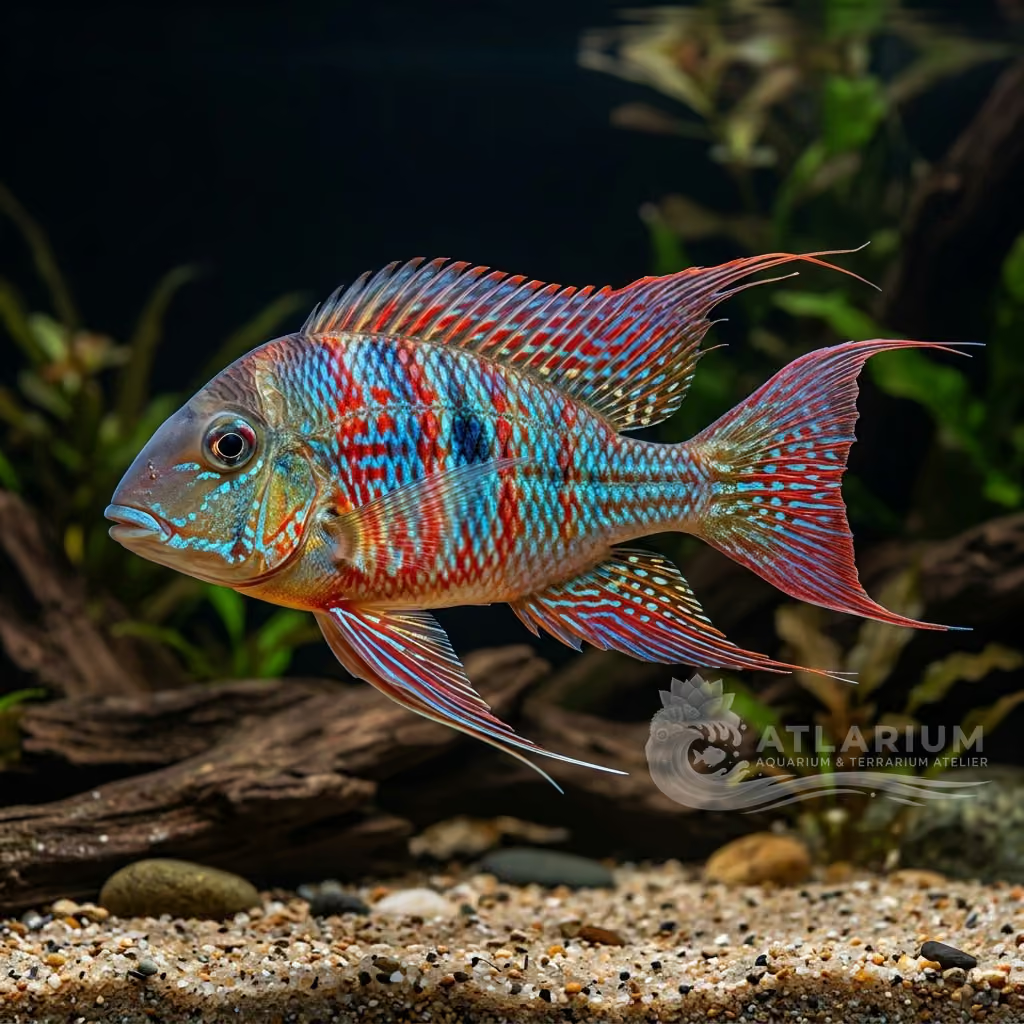
The hilarious and colorful 'Redhump Eartheater' (15 cm). A tireless rooting cichlid. The male is a bizarre masterpiece: shows off a facial mask and a gigantic carmine red frontal fatty hump. Females incubate eggs in the mouth.
Water Temperature
24 - 28 °C
pH Value
6.5 - 7.5
Water type
Freshwater
Tank level
Bottom
Adult size
15 cm
Minimum tank volume
>= 180 L
Minimum group
>= 1
GH
4 - 12 dGH
KH
2 - 6 dKH
TDS
80 - 240 ppm
Conductivity
125 - 375 uS/cm

Species description
Geographical Origin and Habitat: Magdalena and Cauca river basin in Colombia. Inhabits crystal clear mountain rivers with fast and oxygen-rich waters, on beds covered with gravel, smooth sand and round pebbles.
Taxonomy and Morphology: Redhump Eartheater (Geophagus steindachneri). Unique in its genus for its appearance: unlike classic "torpedo" Geophagus, it has a squat body, huge sucker-like lips and a disproportionate fleshy red "hump" on the forehead of dominant males.
Social Behavior: Polymorphic cichlid that lives in a "harem". The dominant male is a tireless despot who patrols the territory and drives away rivals, gathering a group of 3-5 females that he tolerates only if they are ready to reproduce.
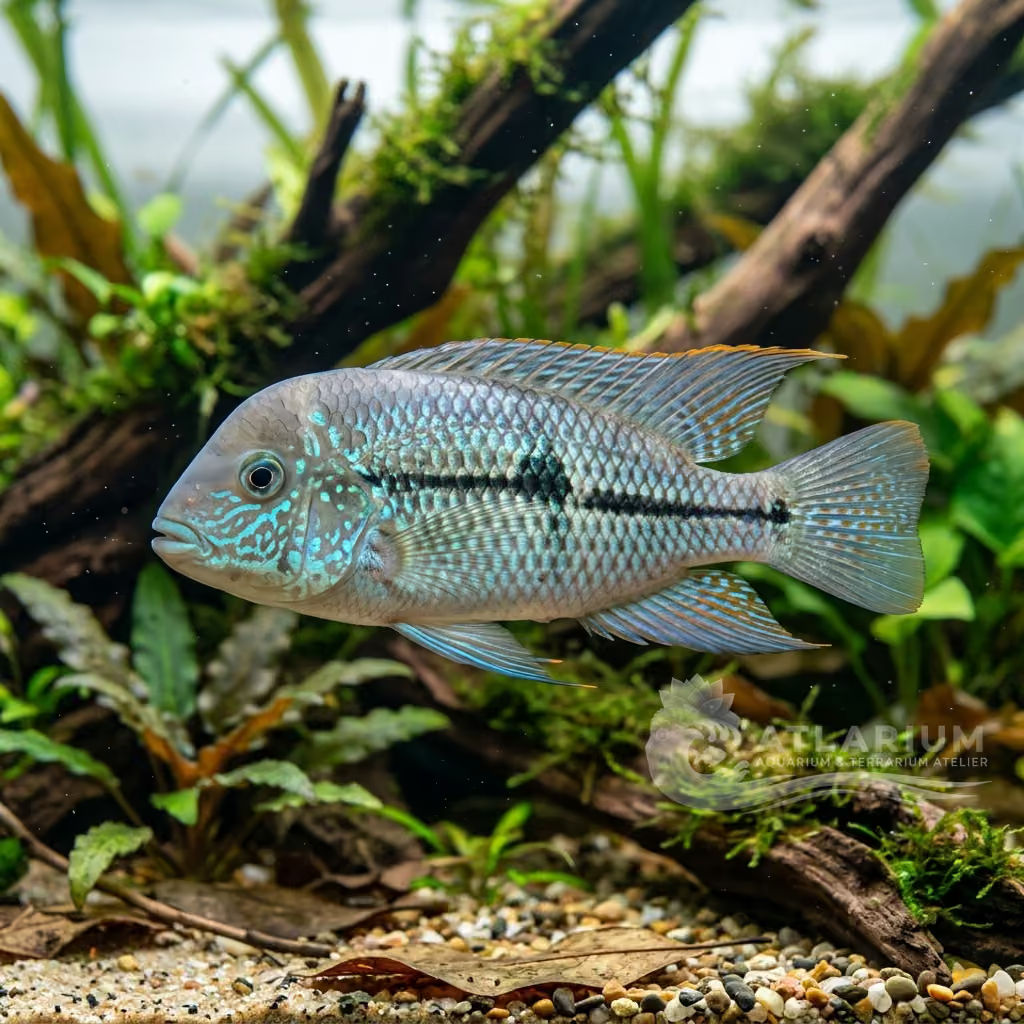
Coloration and Sexual Dimorphism: Sand-gray background with golden iridescence; lacks the lateral black spot typical of Geophagus. Dimorphism is drastic: the male is larger and develops a giant bright red bump (nuchal hump), as well as pointed filaments.

Care, breeding and tankmates
Aquarium Setup: Requires a lot of bottom surface area (minimum 120 cm / 48 inches). Fine sand MANDATORY (swallows sharp small stones that kill it). Many woods and smooth rocks to break the line of sight, so that females can escape the male's suffocating attentions.
Diet and Feeding: Sand sifter (Eartheater). Doesn't bite prey, sucks the sand and filters it. Offer small-sized sinking pellets, chopped krill and bloodworms. Also grazes encrusting algae on rocks.
Water Quality: Requires very clean waters and very strong currents. If nitrates exceed 20 ppm or the water is stagnant, the fish loses vitality, the male deflates the hump and they develop hole in the head (HITH).
Compatibility and Cohabitation: Excellent with lively schooling characins (Buenos Aires Tetra, Astyanax) which act as "dither fish" to reassure it. Terrible with aggressive Cichlids or with other Geophagus (which the male will attack incessantly).
Aquarium Breeding: Maternal Mouthbrooder. The male does not participate in care. The female lays on the sand and, comically, the male waves his sperm in her face. The mother will brood the young in her mouth for 3 weeks, starving herself.
Risks and Diseases: Exhaustion of females. If kept in single pairs (1 Male / 1 Female), the male will stress the partner to death by forcing her to spawn endlessly, until she dies of starvation.

Geographic origin and distribution
Magdalena and Cauca river basin in Colombia. Inhabits crystal clear mountain rivers with fast and oxygen-rich waters, on beds covered with gravel, smooth sand and round pebbles.
Origin
Extra-Amazon South AmericaCentral America and Caribbean

Fish profile
- Temperament
- Semi-aggressive
- It is a mild-mannered cichlid. Unprovoked aggression is very rare. It is a wonderful centerpiece fish.
- Diet
- Omnivore
- It is an eartheater. Feed sinking pellets and frozen bloodworms. A fine sand substrate is mandatory.
- Life expectancy
- 10-15 years
- Adult size
- 15 cm
- Sex ratio
- Pair
- Keep them in groups. This diffuses natural aggression. Pairs will emerge as they mature.
- Feeding frequency
- Twice daily
- It constantly sifts the sand. Feed multiple small meals daily. This mimics natural continuous foraging.
- Bioload
- Medium to High
- This fish produces a high bioload. Robust biological filtration is essential. Frequent water changes are necessary.
- Flow
- Stagnant
- It originates from riverine environments. It prefers moderate water flow. Provide resting areas with calm water.
- Jump risk
- Yes
- It is a bottom dweller. It can jump if startled. A secure lid is always recommended.
- Reproduction
- Oviparous
- Many are mouthbrooders. Parents fiercely guard eggs and fry. Breeding pairs form naturally over time.
- Compatibility & tankmates
- Peaceful
- It is generally peaceful. It fits well in community tanks. It becomes territorial during spawning.
- Tank level
- Bottom
- It stays at the bottom. It continuously sifts the sand. A large footprint is required.

Scientific Parameters & Models
FishBase
Window to the official scientific data of the species
FishBase v25.04Data synced on: 06/15/2026
- Trophic level
- 2 ± 0 se
- Resilience
- High (less than 15 months)
- Phylogenetic uniqueness (PD50)
- 0.5
- Bayesian Length-Weight
- a = 0.02399, b = 3.03
- VulnerabilityLow vulnerability (10 / 100)

Related species
Recommendations grouped by close relatives, companion choices, and similar care.