Winemiller's Eartheater
Geophagus winemilleri
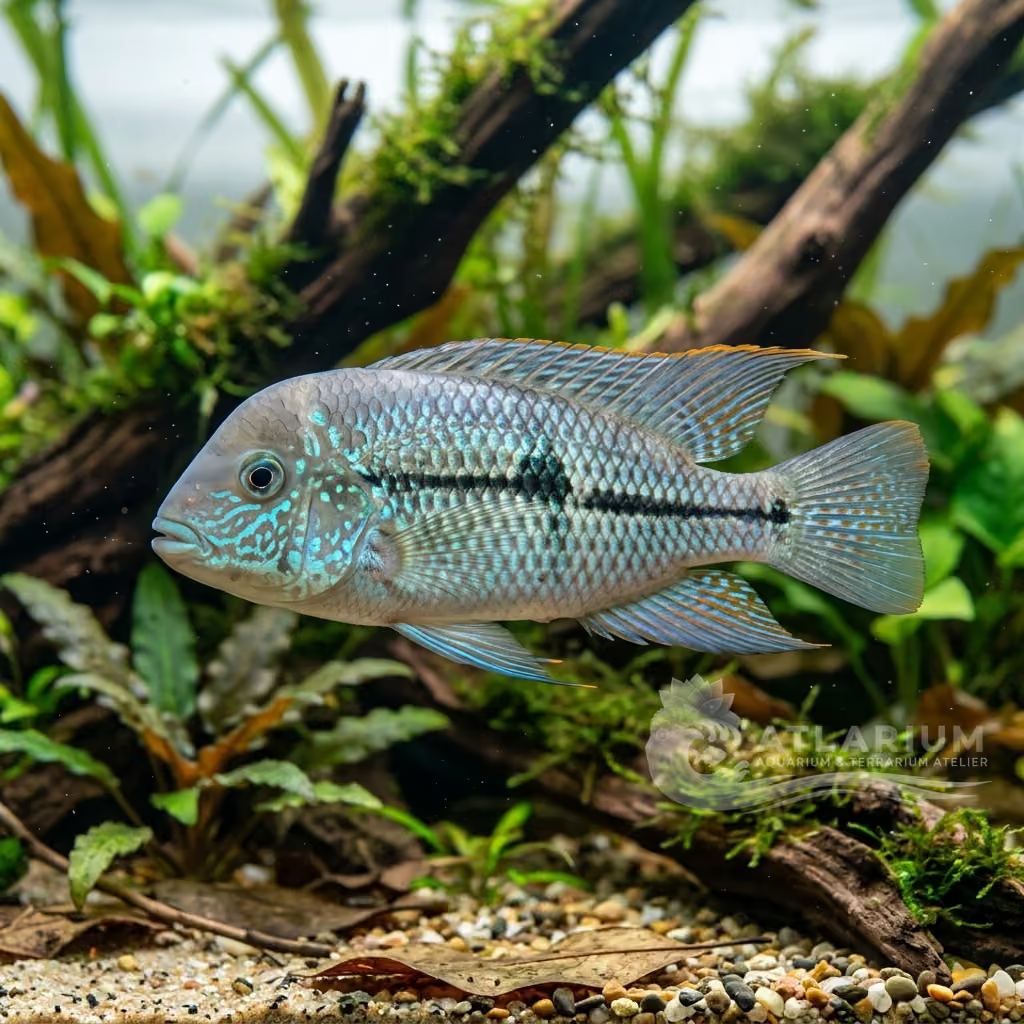
Imposing eartheater (25 cm) of the Orinoco, characterized by defined blue/red horizontal stripes. Peaceful, requires vast sandy bottoms for gill filtration. Mouthbrooder.
Water Temperature
26 - 30 °C
pH Value
5.5 - 7
Water type
Freshwater
Tank level
Bottom
Adult size
25 cm
Minimum tank volume
>= 300 L
Minimum group
>= 1
GH
1 - 10 dGH
KH
1 - 5 dKH
TDS
25 - 200 ppm
Conductivity
39 - 313 uS/cm

Species description
Geographical Origin and Habitat: Lower Rio Negro and Orinoco basin (Venezuela). Lives in the extreme "Blackwater" waters, dark tea or black colored rivers, saturated with tannins and with bottoms of very fine sand and carpets of decomposing leaves.
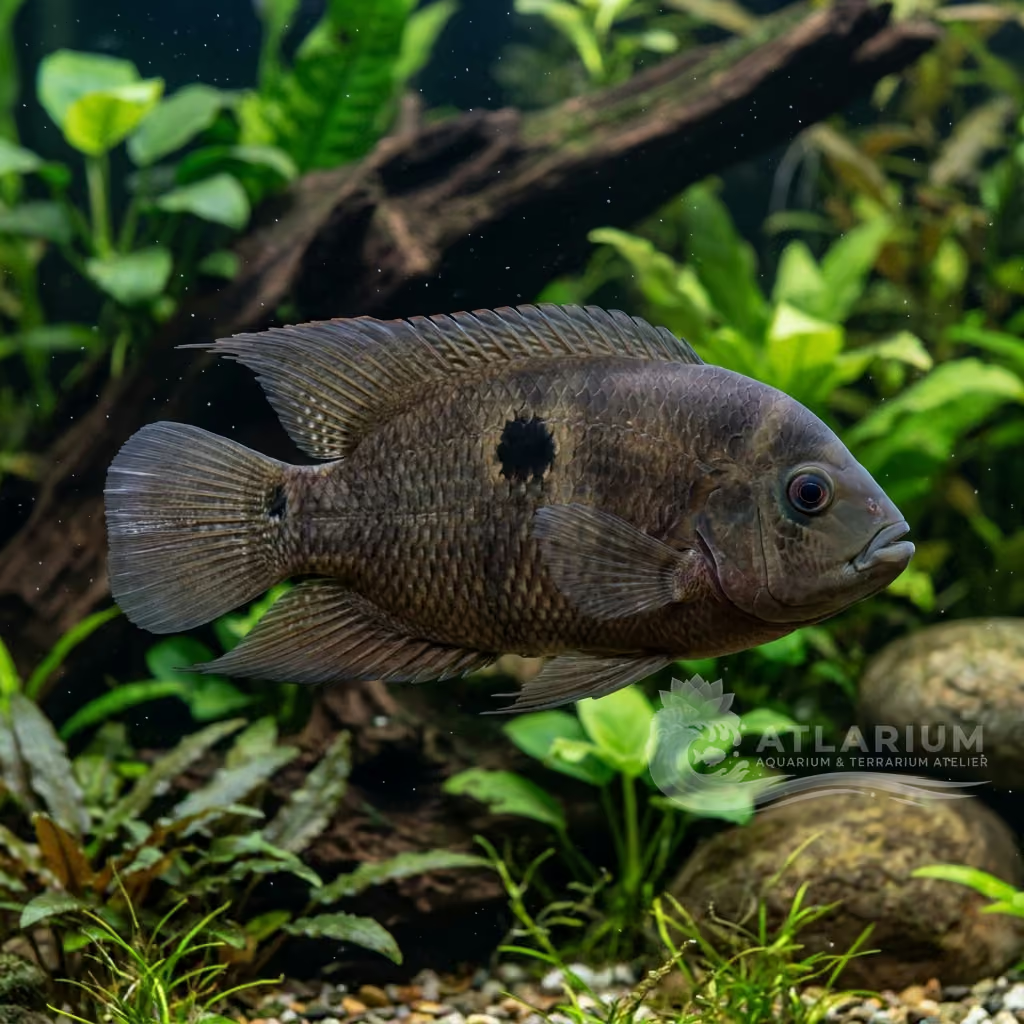
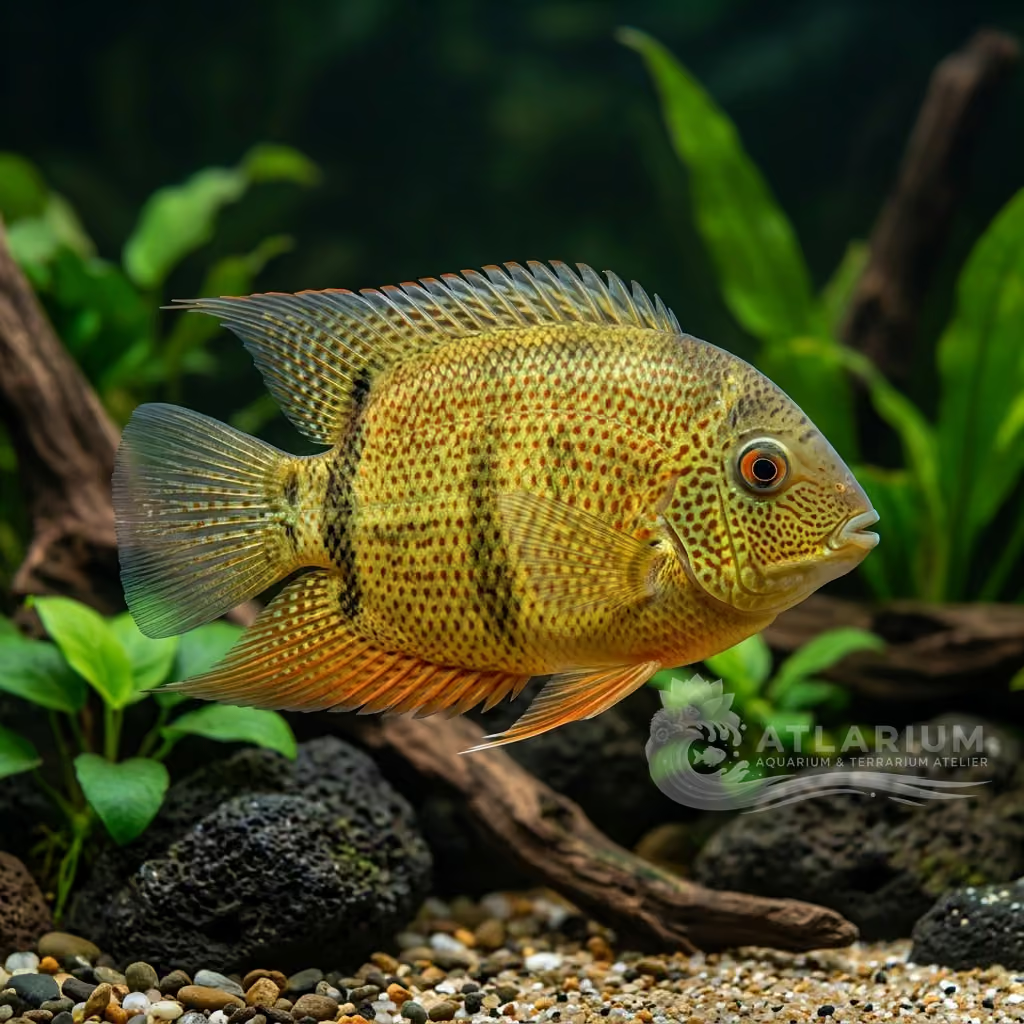
Taxonomy and Morphology: Striped Eartheater (Geophagus winemilleri). Belongs to the "Surinamensis" supergroup, described only in 2004. Gigantic; it is characterized by 4 very clear blackish stripes on the flanks and by the almost total absence of the usual single central black spot.
Social Behavior: A true gentle sovereign. It imposes itself by size, but does not kill conspecifics, limiting itself to majestic frontal displays by puffing its gills. To avoid depression and panic, it requires groups of 6-8 peers.
Coloration and Sexual Dimorphism: Stunning. Apricot-sand background livery, broken by 4 black bands. The enormous fins, in perfect conditions, show continuous phosphorescent blue "cobwebs" (not dotted like in the Dicrozoster). Males have impressive filiform extensions.

Care, breeding and tankmates
Aquarium Setup: Tank for titans (minimum 180-200 cm / 72-80 inches in length). Very deep fine sand is essential for their 24/7 digging. Wide and smooth roots. To recreate the ideal "Blackwater" biotope, use catappa leaves and peat; the lights must be very low.
Diet and Feeding: Extreme geophagous: it takes the sand non-stop all day. It has a weak intestine, so administer very high quality slow-sinking pellets (spirulina/krill mix), bloodworms and brine shrimp. Avoid polluted beef heart or tubifex at all costs.
Water Quality: Dark, amber water, devoid of carbonates (GH and KH close to 0) and with very high temperatures (28-30°C / 82-86°F). The biological filtration must be immense, since water changes with "hard" water ruin them.
Compatibility and Cohabitation: Fantastic as a focal fish in a Rio Negro biotope. Excellent combined with schools of Cardinals (which it will not eat), Corydoras adolfoi or sterbai, Heros severus and large Plecostomus or Hypancistrus.
Aquarium Breeding: Larvophile mouthbrooder. Lays over 200 eggs on roots or stones. Once hatched, the parents pick up and divide the newborns in their mouths, "spitting" them out in protected areas to feed them.
Risks and Diseases: Hygiene deficiency syndrome: they get sick very often with hole in the head disease (Hexamita) if the bottom stagnates and becomes polluted (secondary bacteriosis) due to poor sand maintenance.

Geographic origin and distribution
Lower Rio Negro and Orinoco basin (Venezuela). Lives in the extreme "Blackwater" waters, dark tea or black colored rivers, saturated with tannins and with bottoms of very fine sand and carpets of decomposing leaves.
Origin
Amazon, Orinoco, and Guianas

Fish profile
- Temperament
- Semi-aggressive
- It is a mild-mannered cichlid. Unprovoked aggression is very rare. It is a wonderful centerpiece fish.
- Diet
- Omnivore
- It is an eartheater. Feed sinking pellets and frozen bloodworms. A fine sand substrate is mandatory.
- Life expectancy
- 8-10 years
- Adult size
- 25 cm
- Sex ratio
- Pair
- Keep them in groups. This diffuses natural aggression. Pairs will emerge as they mature.
- Feeding frequency
- Twice daily
- It constantly sifts the sand. Feed multiple small meals daily. This mimics natural continuous foraging.
- Bioload
- High
- This fish produces a high bioload. Robust biological filtration is essential. Frequent water changes are necessary.
- Flow
- Stagnant
- It originates from riverine environments. It prefers moderate water flow. Provide resting areas with calm water.
- Jump risk
- Yes
- It is a bottom dweller. It can jump if startled. A secure lid is always recommended.
- Reproduction
- Oviparous
- Many are mouthbrooders. Parents fiercely guard eggs and fry. Breeding pairs form naturally over time.
- Compatibility & tankmates
- Peaceful
- It is generally peaceful. It fits well in community tanks. It becomes territorial during spawning.
- Tank level
- Bottom
- It stays at the bottom. It continuously sifts the sand. A large footprint is required.

Scientific Parameters & Models
FishBase
Window to the official scientific data of the species
FishBase v25.04Data synced on: 06/15/2026
- Trophic level
- 2.3 ± 0.1 se
- Resilience
- High (less than 15 months)
- Phylogenetic uniqueness (PD50)
- 0.5
- Bayesian Length-Weight
- a = 0.02291, b = 3.05
- VulnerabilityLow vulnerability (14 / 100)

Related species
Recommendations grouped by close relatives, companion choices, and similar care.